
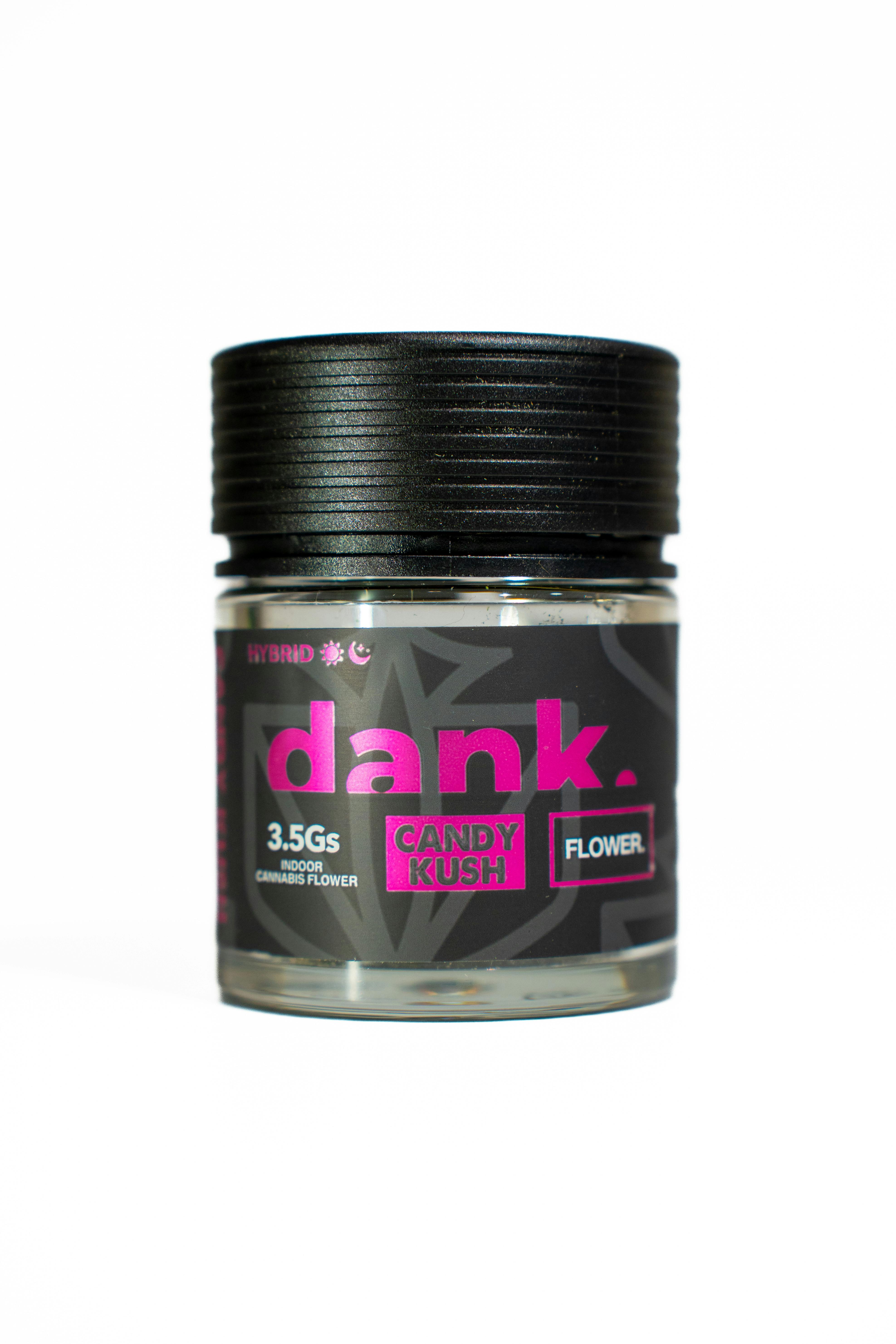
Indica-Hybrid
All strains Candy Kush
1 live products in stock
Quick answer · What is the Candy Kush cannabis strain?
Candy Kush arrives with the quiet confidence of a strain that needs no introduction — its honeyed sweetness and deep, grounding calm have made it a perennial favourite among those who appreciate the unhurried end of the day. A thoughtfully balanced indica-leaning hybrid, it layers confectionery aromatics over a foundation of earthy Kush depth, delivering an experience that is as composed as it is pleasurable.
Shop Candy Kush · 1 of 1 live products
About Candy Kush
Everything to know about Candy Kush.
Lineage & origin
Candy Kush is generally understood to be a cross of OG Kush and Trainwreck, a pairing that places it squarely within the Southern California legacy genetics movement of the late 1990s and early 2000s. OG Kush itself carries a famously debated lineage — most accounts point to a cross of Chemdawg with a Hindu Kush and Lemon Thai combination, popularised on the West Coast around 1993. Trainwreck, a Northern California sativa-leaning hybrid with Mexican, Thai, and Afghani roots, contributes a cerebral brightness that tempers the Kush's gravitational pull. Some seed banks and breeders market their own interpretations under the Candy Kush name, most notably Reserva Privada, which released a Candy Kush phenotype that gained considerable traction among European and North American cultivators in the early 2010s. The World of Seeds catalogue has also produced a distinct Candy Kush line. Because the name is not formally protected, phenotypic variation between sources is common and acknowledged within the community. Genetically adjacent expressions include OG Kush-dominant cuts like Tahoe OG and SFV OG, as well as candy-forward hybrids such as Zkittlez and Candyland, though the latter two share no direct lineage with Candy Kush. The strain's influence on the broader dessert-and-Kush flavour category is well documented across Leafly and Wikileaf community archives.
Effects
The onset of Candy Kush tends to arrive within five to fifteen minutes of inhalation, beginning as a mild warmth behind the eyes and a gentle loosening of tension across the shoulders and upper back. The opening phase carries a measured cerebral lift — clear enough to elevate mood and invite easy conversation, yet never sharp or anxious in character. This quality owes something to the Trainwreck parentage, which contributes just enough sativa luminosity to prevent an immediate descent into sedation. As the experience deepens toward its peak, typically between twenty and forty-five minutes in, the body component becomes more pronounced. Muscles soften, breath slows, and there is a pervasive sense of physical ease that is characteristic of the OG Kush genetic foundation. Myrcene, which is often the dominant terpene in well-grown Candy Kush phenotypes, is associated in the literature with potentiating the sedative qualities of cannabinoids, which likely accounts for the strain's reputation for encouraging rest. The comedown is gradual and gentle — the cerebral brightness dims first, leaving behind a settled, contented stillness rather than any abrupt crash. Most consumers report a total experience window of two to three hours at moderate consumption. Those newer to cannabis are encouraged to start low and go slow, as the indica-leaning body weight can feel pronounced if one's tolerance is not yet calibrated to this class of hybrid.
Aroma, flavor & terpenes
Candy Kush presents an aromatic profile that is immediately recognisable: a forward note of ripe stone fruit and spun sugar, underscored by the damp, piney earthiness that is the calling card of its Kush ancestry. Myrcene, when dominant, contributes the characteristic herbal musk and a faint tropical warmth that reads on the nose as overripe mango or nectarine left in afternoon sun. It is the foundational terpene that gives the strain its characteristic weight. Caryophyllene, a sesquiterpene found in black pepper and cloves, adds a quiet spice to the mid-register — a subtle complexity that prevents the sweetness from becoming cloying. Limonene, where present, brightens the top notes with a citrus lift, lending a lemon-drop quality that harmonises with the confectionery sweetness rather than competing with it. Some phenotypes also carry detectable linalool, which adds a faint floral nuance reminiscent of lavender, softening the overall profile toward something genuinely elegant. On the palate, the smoke is smooth and full-bodied, with the sweet, almost candy-like exhale that gives the strain its name. Vapour at moderate temperatures (roughly 185–200°C) opens up the fruit and floral layers more cleanly, while combustion brings a richer, earthier expression with a slight woodsy finish. The aftertaste lingers pleasantly — sweet, subtly spiced, and reminiscent of good confectionery rather than anything artificial.
Appearance
Well-cultivated Candy Kush produces compact, densely packed buds consistent with its Kush heritage — calyx-heavy structures that feel substantial in the hand and resist easy compression. The colour palette leans toward medium to deep forest greens, often with patches of muted sage and olive that deepen under cooler late-stage flowering temperatures. Purple phenotypes are not uncommon, particularly in cuts with more pronounced linalool expression, where anthocyanin production can tint the leaves and calyxes in shades of dusty violet and aubergine. Trichome coverage is generous and even, giving mature buds a frosted, almost luminous quality under direct light — a visual marker of the OG Kush lineage's well-documented resin production. Pistils range from amber to deep russet, weaving through the bud in dense clusters that signal a complete, unhurried cure. The overall impression is one of careful, unhurried cultivation — a bud that rewards close inspection.
Growing notes
Candy Kush is considered a moderately approachable cultivar, suitable for growers with at least one or two prior cycles of experience. Its Kush-dominant structure means it stays relatively compact — typically reaching between 80 and 120 centimetres indoors — making it well suited to space-conscious setups such as Screen of Green (ScrOG) or Low Stress Training (LST) configurations. Indoor flowering time sits at approximately eight to nine weeks, with yields that growers report in the moderate-to-generous range when environmental conditions are well managed. It responds favourably to consistent temperatures in the 20–26°C range and benefits from good airflow around the dense bud sites to mitigate the humidity sensitivity that is common to Kush-lineage plants. Outdoor cultivation in temperate climates — think Northern California, Southern Europe, or comparable New York seasons — is viable, with harvest typically falling in early to mid-October. The strain's resin density also makes it a popular choice for those interested in solventless extraction. Difficulty is generally rated as intermediate.
When it's best enjoyed
Candy Kush belongs to the unhurried hours — the stretch of an evening after obligations have settled and the pace of the day has slowed to something more deliberate. It is a companion for the solo unwinding ritual: a long bath, a considered playlist, the gradual transit from wakefulness into genuine rest. Its mood-elevating opening phase also makes it a natural fit for intimate, low-key social settings where easy conversation and shared comfort are the desired register. In terms of sensory pairings, the strain's sweetness and spice profile finds a natural counterpart in warm, aromatic foods — a tahini-dressed grain bowl, dark chocolate with sea salt, or a good jasmine tea. Musically, the myrcene-forward body ease pairs well with music that shares its unhurried tempo: late-period Coltrane, ambient electronic, or the more contemplative corners of neo-soul. For those inclined toward activity, an early evening walk in which the city's pace begins to gentler is an ideal frame — Candy Kush meets the world at dusk.
If you like Candy Kush, also explore
OG Kush
As a direct parent of Candy Kush, OG Kush shares the same earthy, piney foundation and delivers a comparable body-forward, mood-lifting experience for those who want less confectionery sweetness and more raw Kush character.
Bubba Kush
Bubba Kush's deep physical sedation, chocolate and coffee-tinged earthiness, and Afghani genetic roots make it a natural next step for Candy Kush admirers drawn primarily to the indica-leaning body experience.
Zkittlez
For consumers who gravitate toward Candy Kush's confectionery aroma and gentle full-body ease, Zkittlez offers a similarly sweet, fruit-forward profile with a comparably relaxed, mood-softening character.
Tahoe OG
Sharing the OG Kush lineage, Tahoe OG delivers a heavier, more pronounced physical weight alongside a citrus-lemon aroma that will resonate with Candy Kush fans who appreciate Kush complexity with a clean finish.
Blue Dream
Candy Kush admirers who enjoy its cerebral opening phase but occasionally want a lighter, more sativa-expressive version of that balanced hybrid arc will find Blue Dream's haze-berry profile a comfortable lateral move.
Common questions
Is Candy Kush indica or sativa?+
Candy Kush is an indica-leaning hybrid, generally understood to be a cross of OG Kush and Trainwreck. Its effects reflect this balance: an initial cerebral lift inherited from the Trainwreck parentage gives way to a deeper, more pronounced body ease that is characteristic of its Kush foundation. Most consumers and cultivators categorise it firmly on the indica side of the hybrid spectrum.
What does Candy Kush taste like?+
Candy Kush presents a sweet, confectionery-forward flavour profile with notes of ripe stone fruit and spun sugar on the inhale, followed by a subtle earthiness and quiet spice — largely attributed to caryophyllene — on the exhale. The aftertaste is lingering and pleasantly sweet, with a faint floral quality in some phenotypes. Vapour at moderate temperatures tends to highlight the fruit and citrus notes most clearly.
What are the typical effects of Candy Kush?+
Candy Kush typically opens with a warm, mood-elevating cerebral phase before transitioning into a substantial, full-body physical ease. The experience arc is gradual and composed — rarely sharp or anxious. Most consumers describe it as deeply relaxing without being disorienting, with a gentle comedown and a total window of roughly two to three hours at moderate consumption. It is well regarded as an evening-oriented strain.
What strains are similar to Candy Kush?+
Consumers who enjoy Candy Kush often also appreciate OG Kush for its shared earthy Kush foundation, Bubba Kush for comparable indica body depth, Zkittlez for a similarly sweet aromatic profile, and Tahoe OG for its OG lineage complexity. Blue Dream is a useful lateral suggestion for those who favour the strain's hybrid balance but occasionally prefer a lighter, more sativa-expressive character.
Is Candy Kush good for beginners?+
Candy Kush can be approachable for newcomers to cannabis, but its indica-leaning body weight and pronounced physical sedation deserve respect. Those new to the plant are encouraged to start with a modest amount and allow adequate time — at least fifteen to twenty minutes — to assess the onset before consuming further. The general principle of starting low and going slow applies here, particularly in the evening.
What are the dominant terpenes in Candy Kush?+
Myrcene is most commonly identified as the dominant terpene in Candy Kush, contributing its characteristic herbal musk, subtle tropical warmth, and association with a more pronounced physical effect. Caryophyllene adds a quiet spice note, while limonene provides citrus brightness on the top register. Some phenotypes also carry linalool, lending a soft floral quality that rounds out the profile elegantly.
Where does the name Candy Kush come from?+
The name reflects both the strain's lineage — its Kush genetic foundation — and its defining aromatic characteristic: a pronounced sweetness reminiscent of confectionery. The name is not formally trademarked, which has led to multiple seed banks releasing their own interpretations under the same label. Reserva Privada and World of Seeds are among the most widely cited sources, though phenotypic variation between versions is common and openly acknowledged within the community.
When is the best time of day to enjoy Candy Kush?+
Given its indica-leaning profile and the gradual physical sedation that tends to define its peak and comedown, Candy Kush is best suited to the evening hours or periods when the demands of the day have concluded. It is a poor fit for mornings or times requiring sustained focus, but it excels as a transitional companion between the activity of the day and the quieter rhythms of the night.
Related strains