Sativa
All strains Blue Dream
36 live products in stock
Quick answer · What is the Blue Dream cannabis strain?
Blue Dream arrived from California's coastal cannabis culture and never quite left the collective imagination. A sativa-dominant cross whose balanced profile threads the needle between gentle cerebral lift and full-body ease, it has anchored dispensary menus for well over a decade — not through novelty, but through a reliable, approachable character that rewards the curious newcomer and the seasoned connoisseur in equal measure.
Shop Blue Dream · 36 of 36 live products
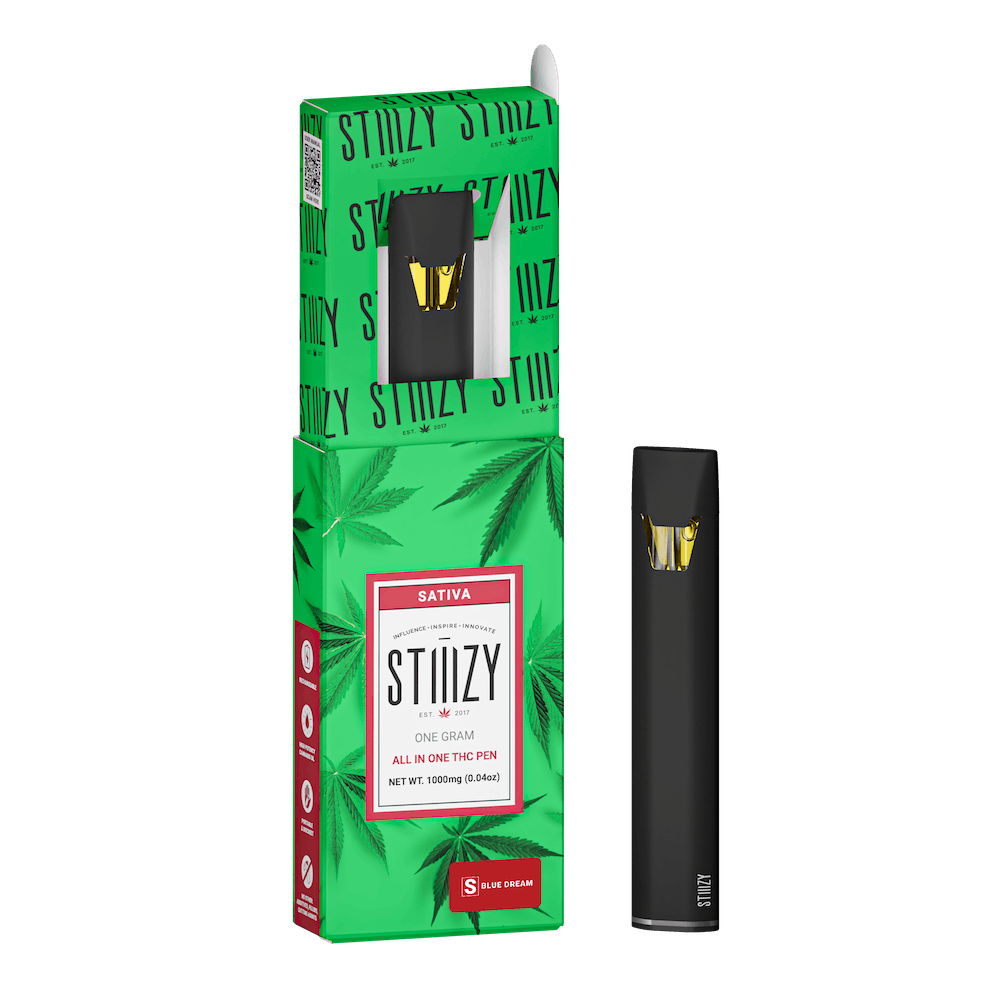
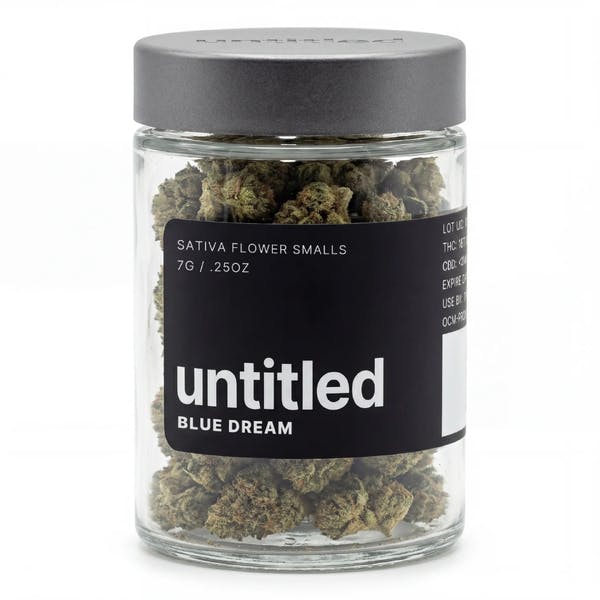
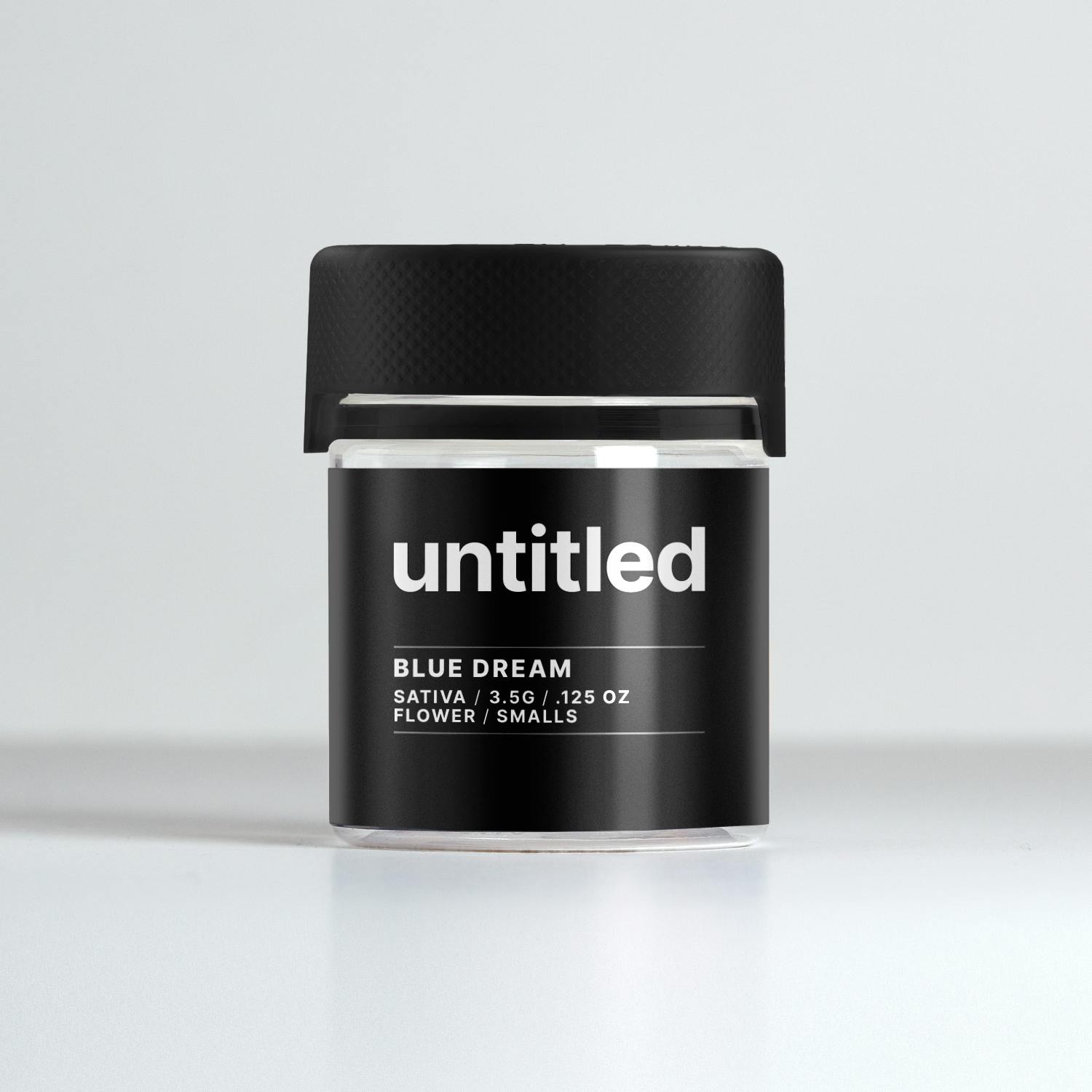
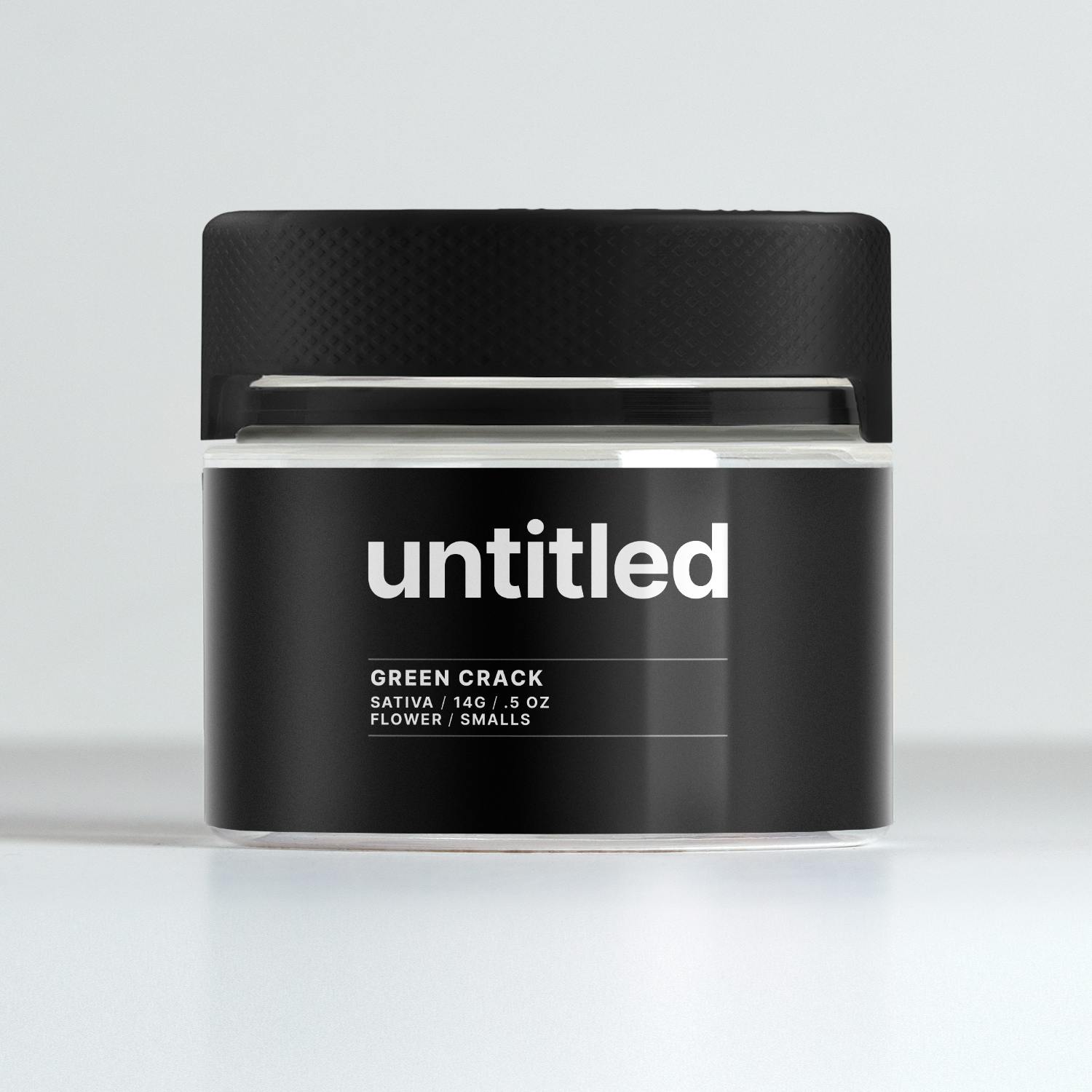
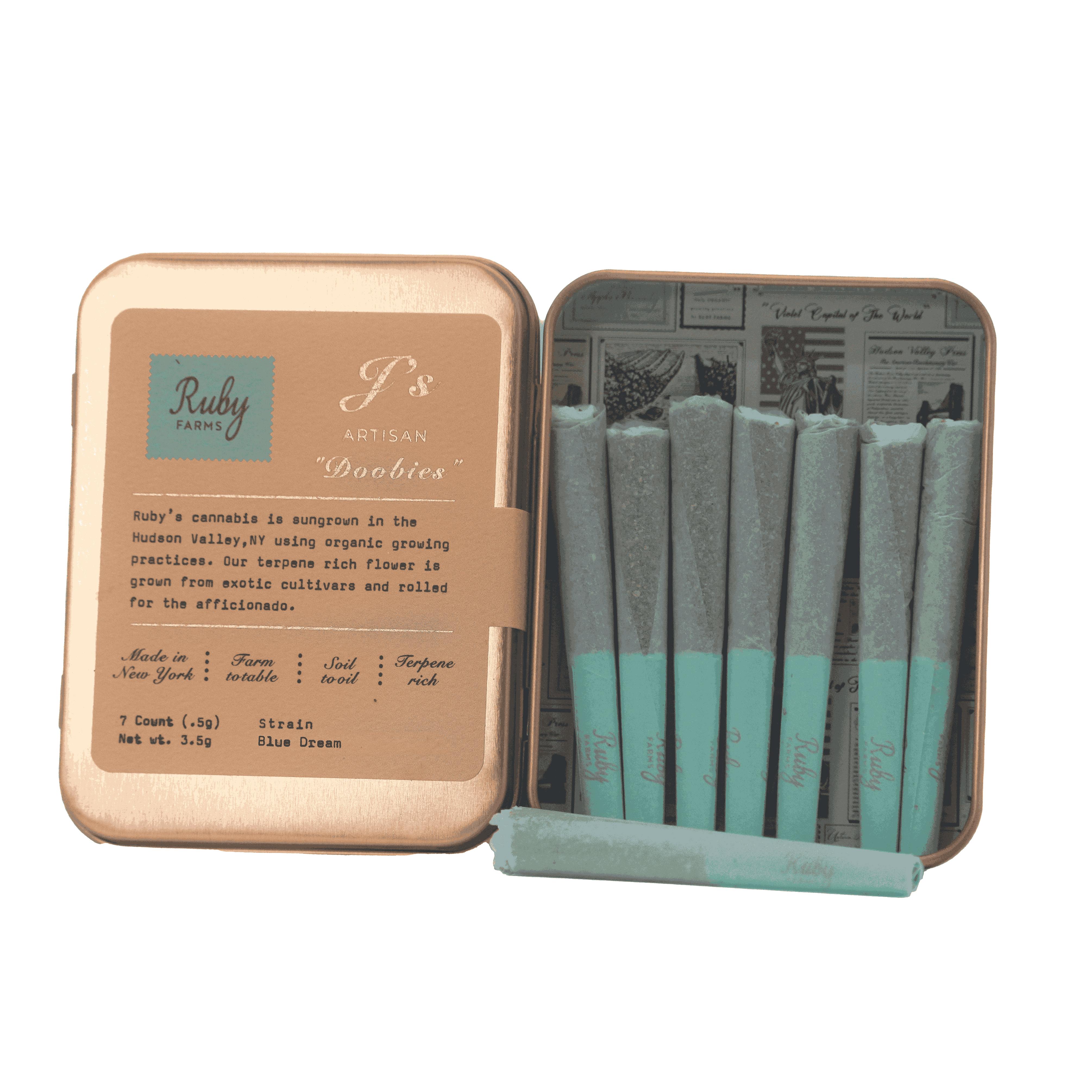

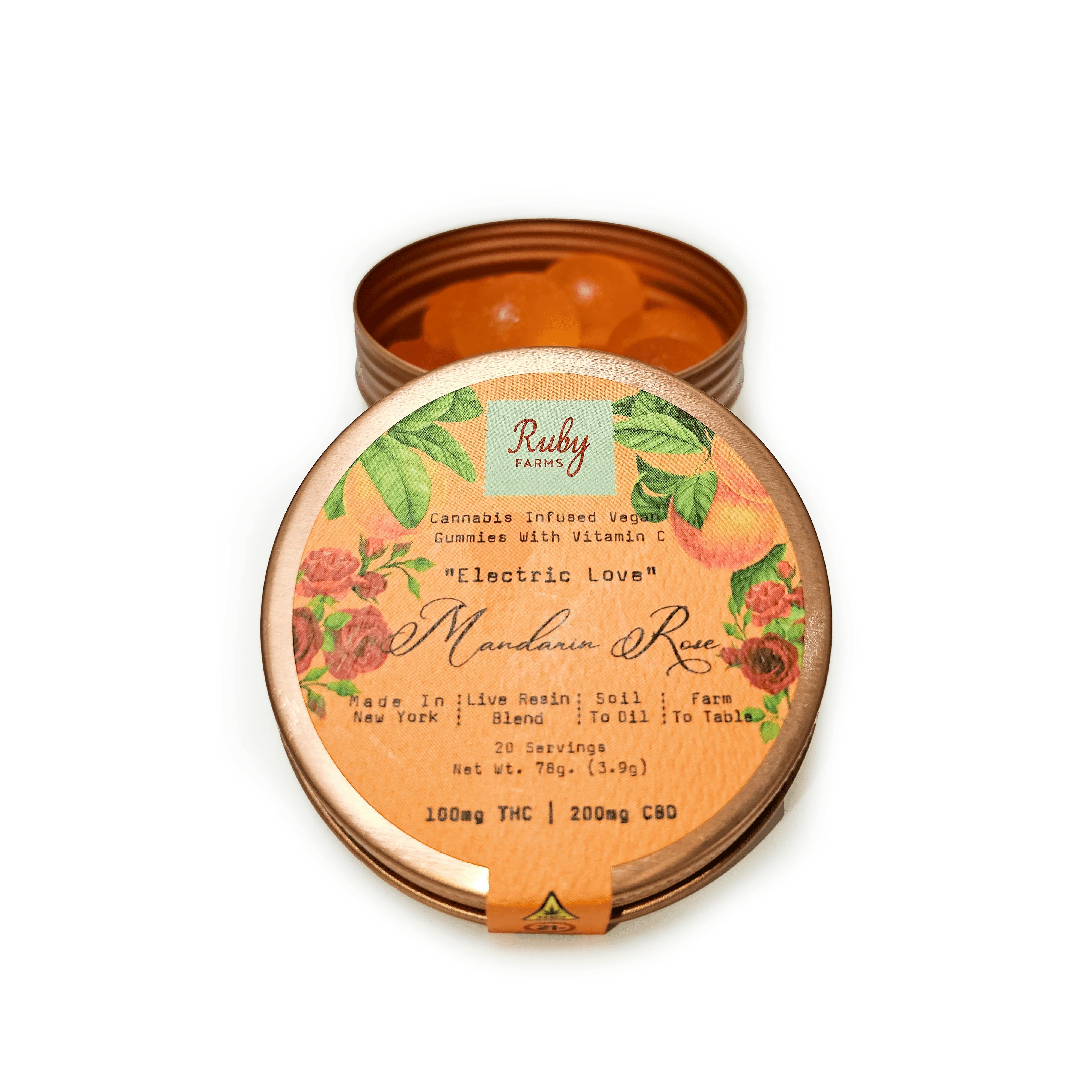
THC 0.13%·CBD 0.23%Sativa
Ruby FarmsLive Resin Blend Gummies | 20 Count | ''Electric Love'' Mandarin Rose | Strain: Blue Dream · .1g
$25.00
$28after tax
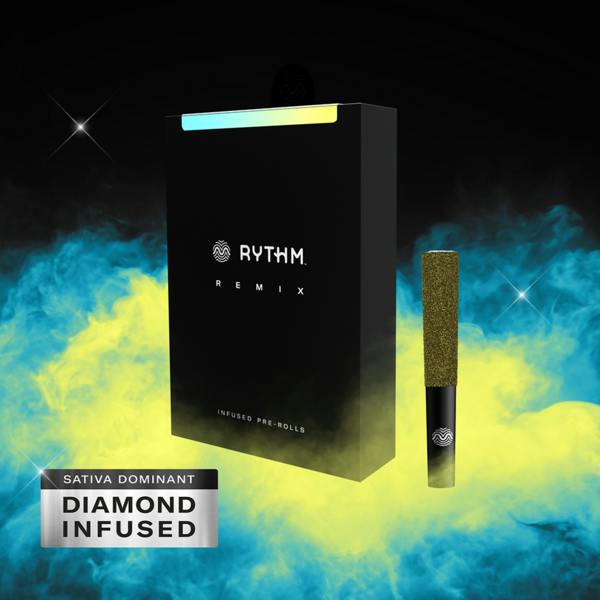
On sale· 20% OFF
THC 41.14%Sativa
RYTHMBlue Dream | Pre-Roll | 5 Pack Infused | Sativa | 2.5g · 5-pk2.5g
$36.00$45.00
$42after tax
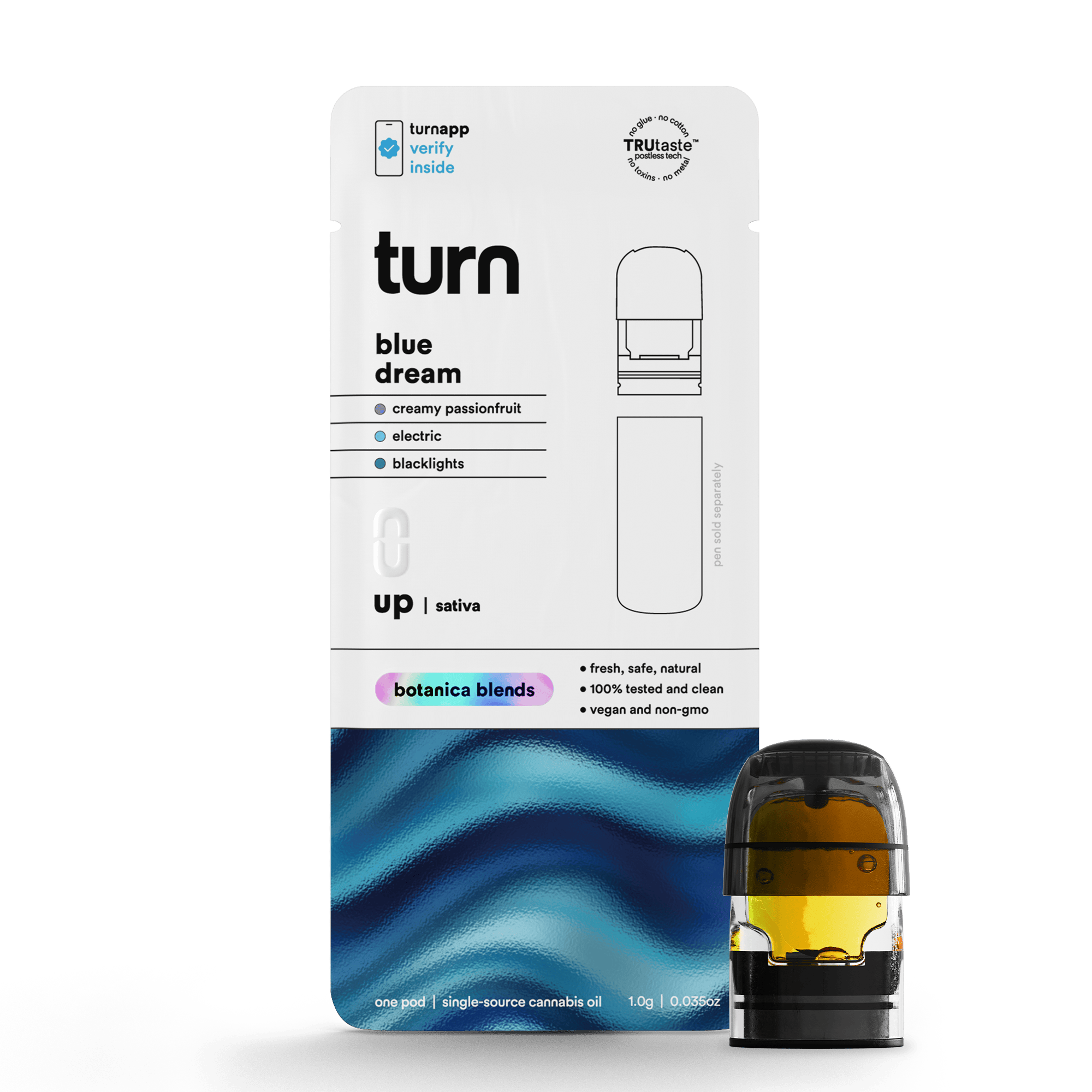
On sale· 25% OFF
THC 31.84%Sativa
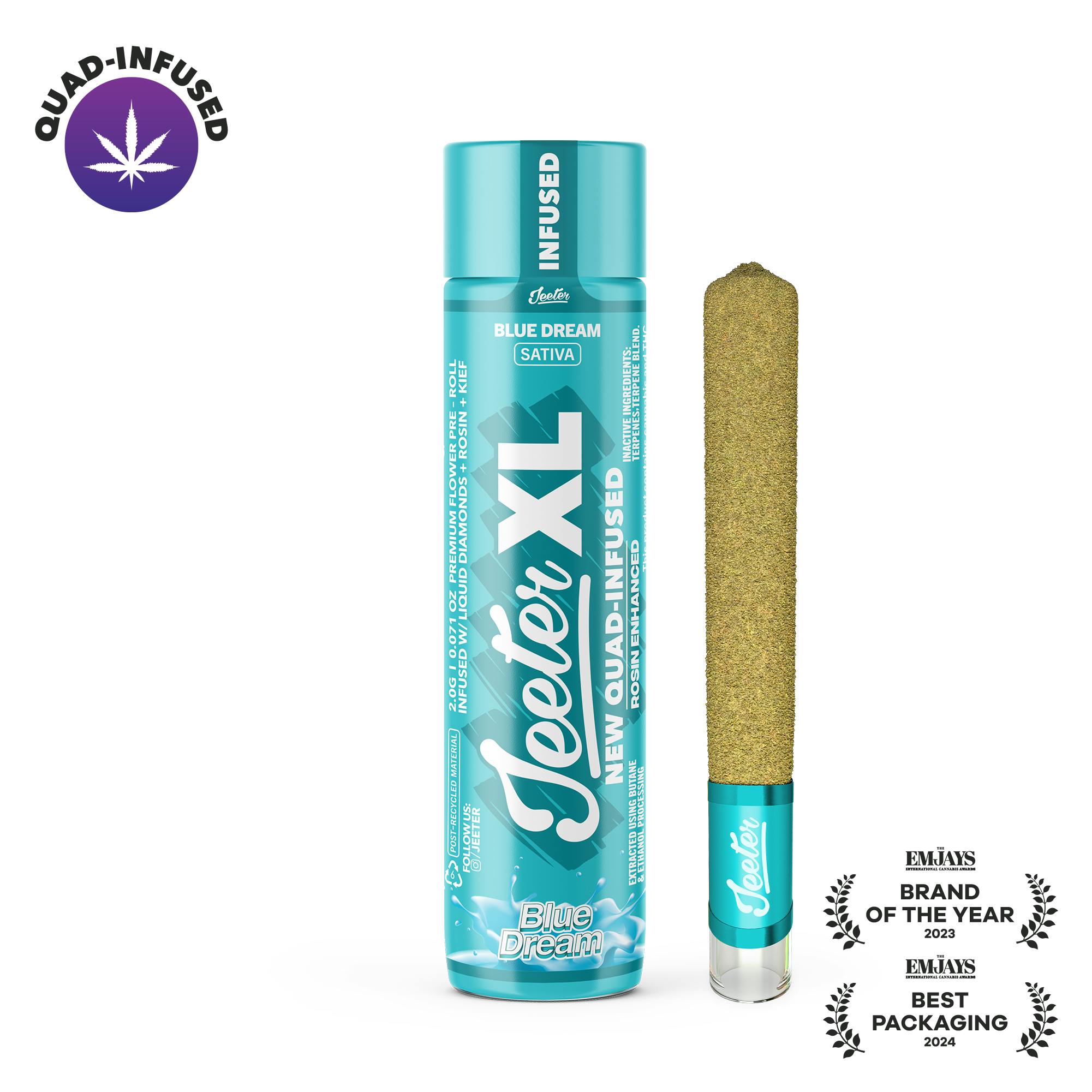
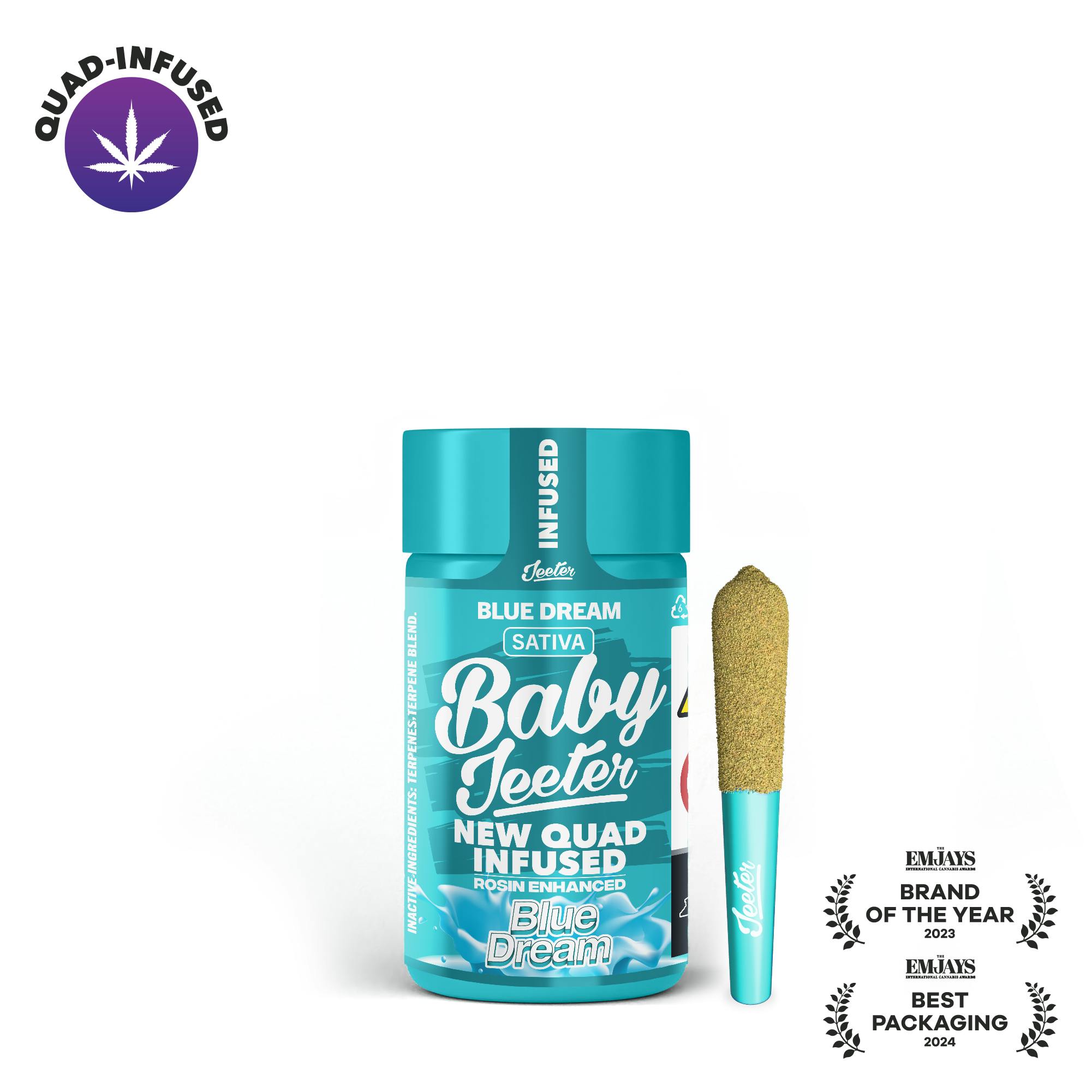
JeeterBlue Dream Quad-Infused XL Jeeter Joint | 2g · 2g
$29.86$39.82
$35after tax
THC 86.51%·CBD 0.15%Sativa
JeeterJeeter Blue Dream All In One Liquid Diamonds Vape · 1g
$47.79
$54after tax
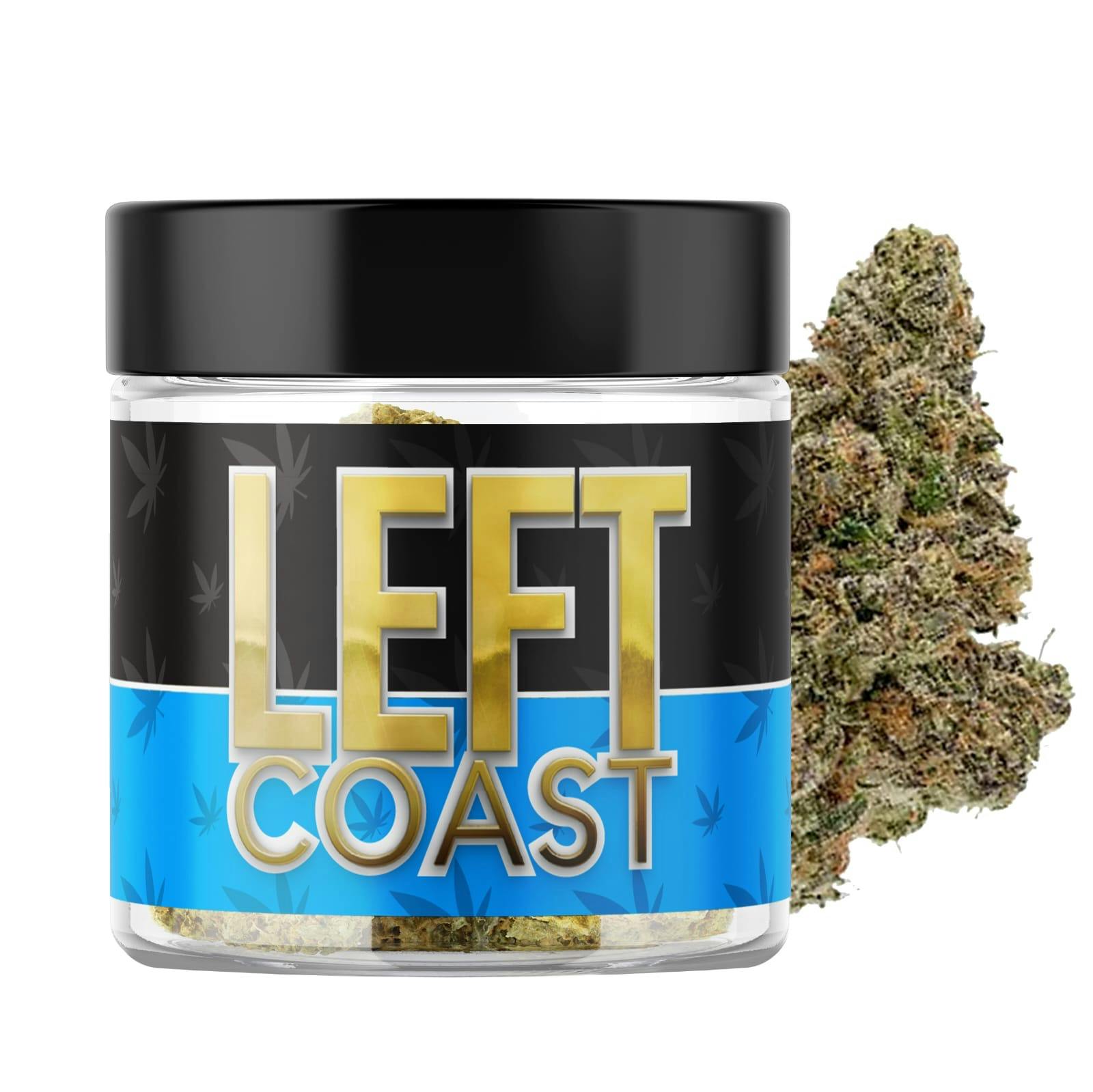
On sale· 20% OFF
THC 42.04%Hybrid
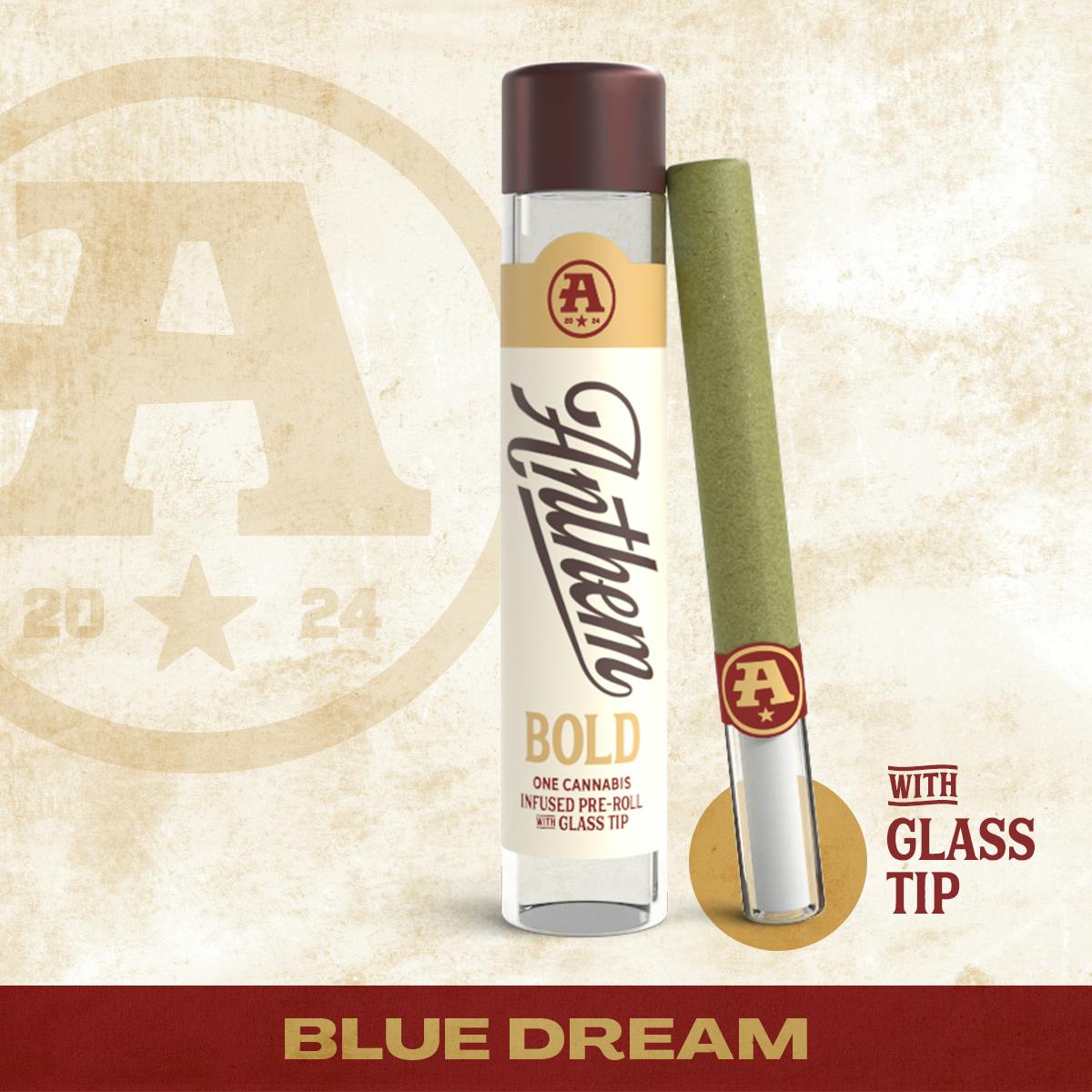
AnthemAnthem Bold Glass Tip Preroll - Hybrid : Blue Dream · 1g
$16.28$20.35
$19after tax
On sale· 25% OFF
THC 80.48%·CBD 1.72%Sativa
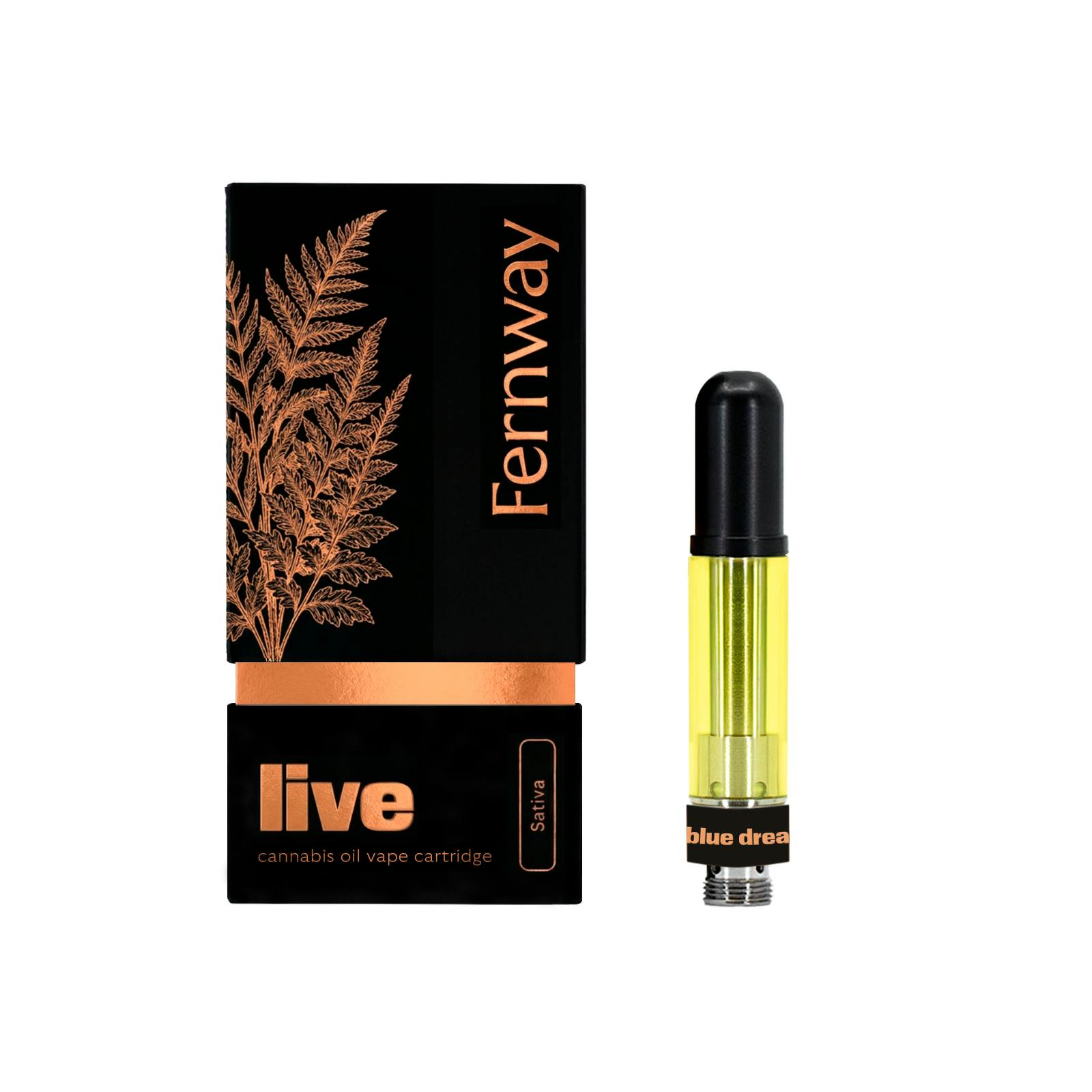
FernwayFernway Blue Dream Live Series Cartridge - Sativa · 1g
$41.15$54.87
$48after tax
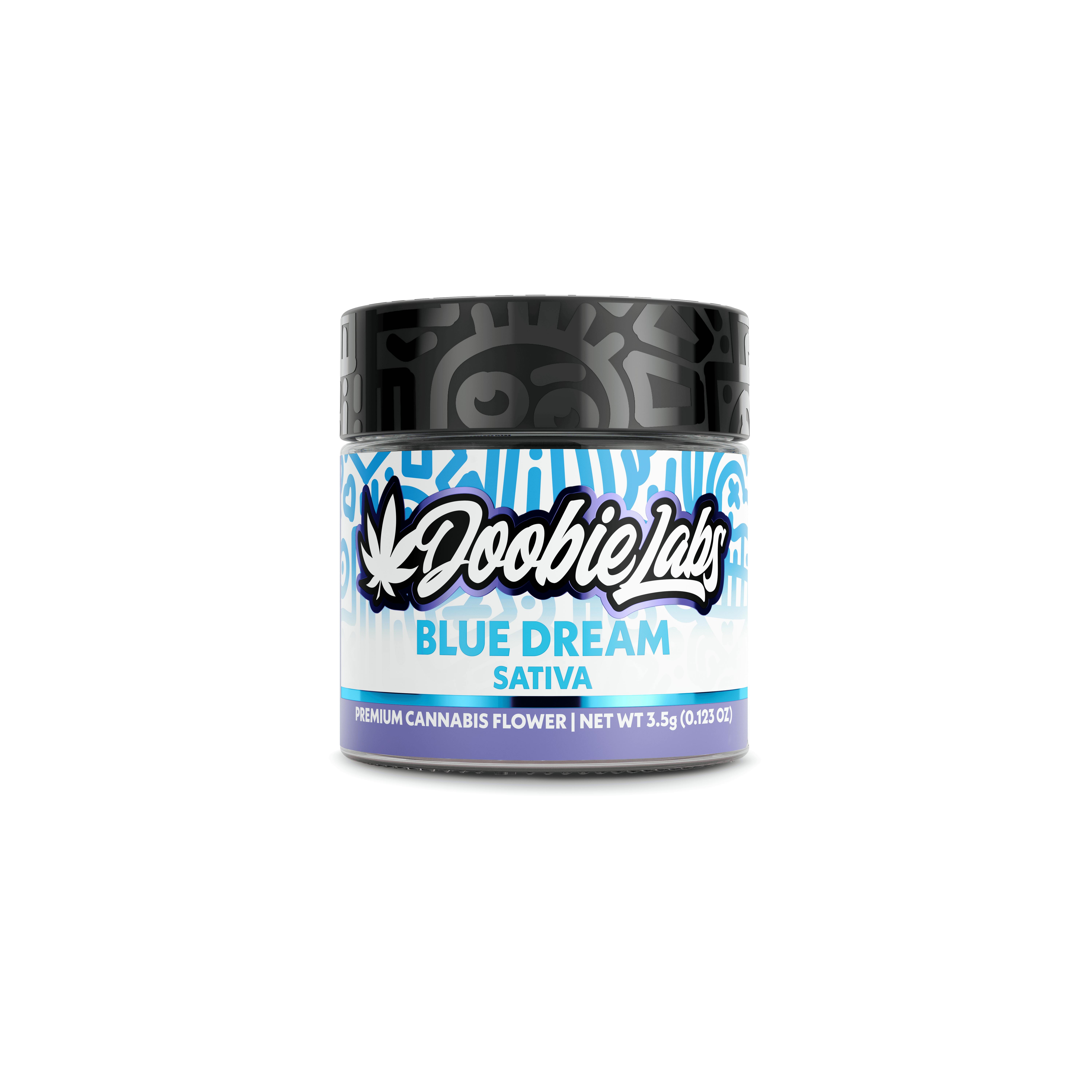
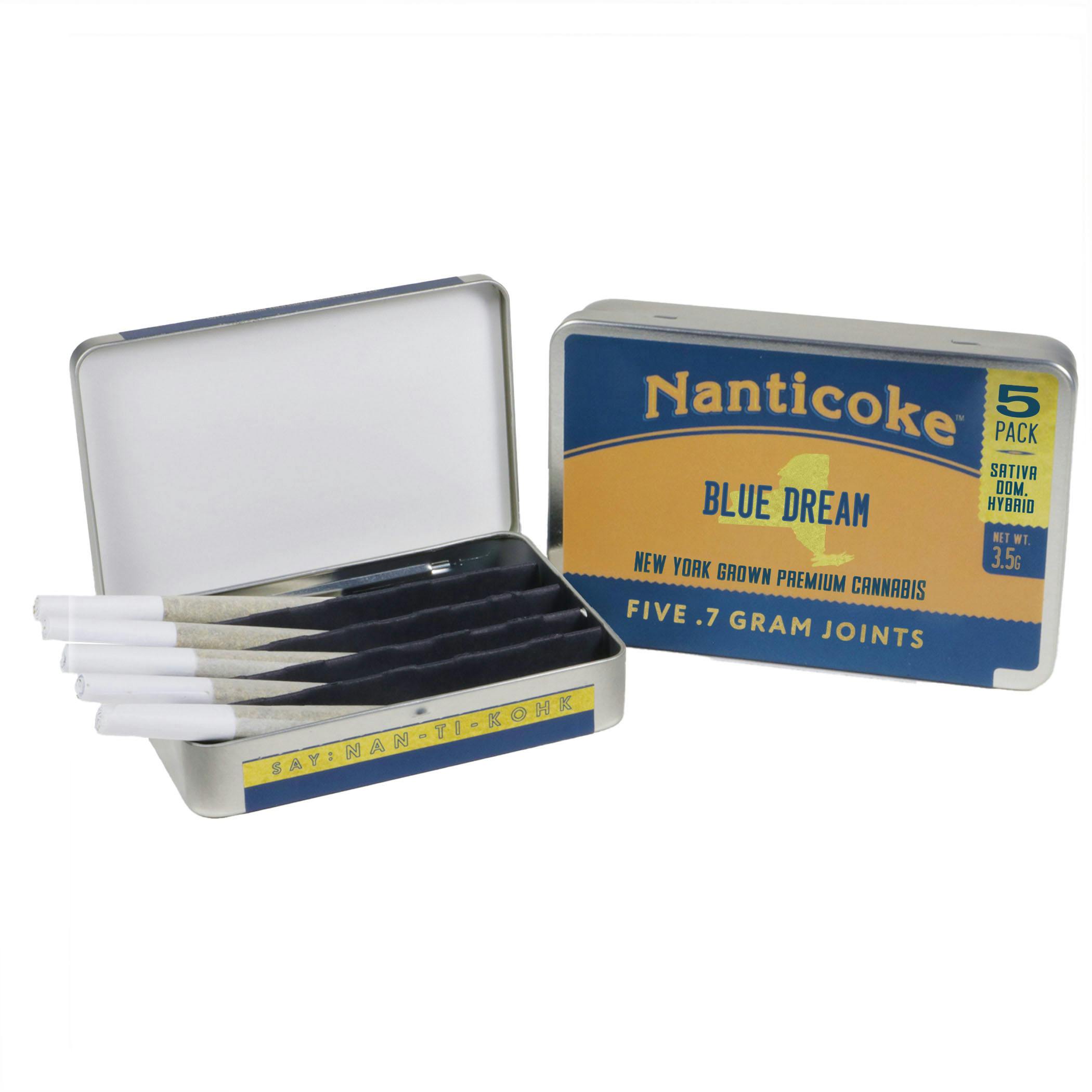
THC 51.02%Sativa-Hybrid
NanticokeNanticoke | Blue Dream | Infused Pre-Roll 5pk · 3.5g
$39.82
$45after tax
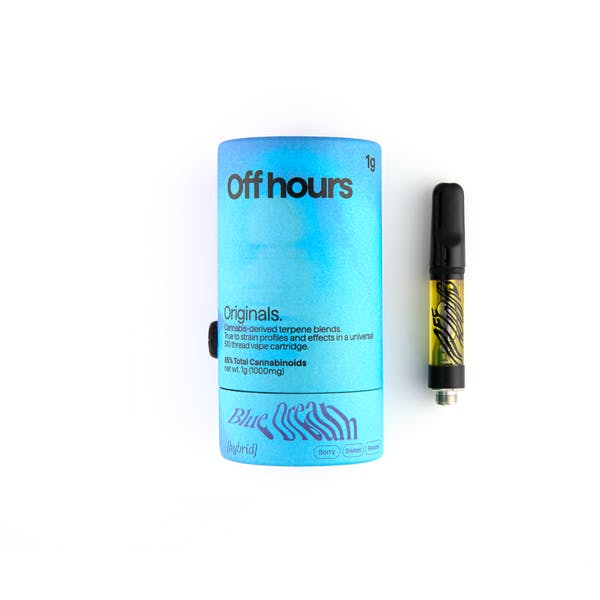
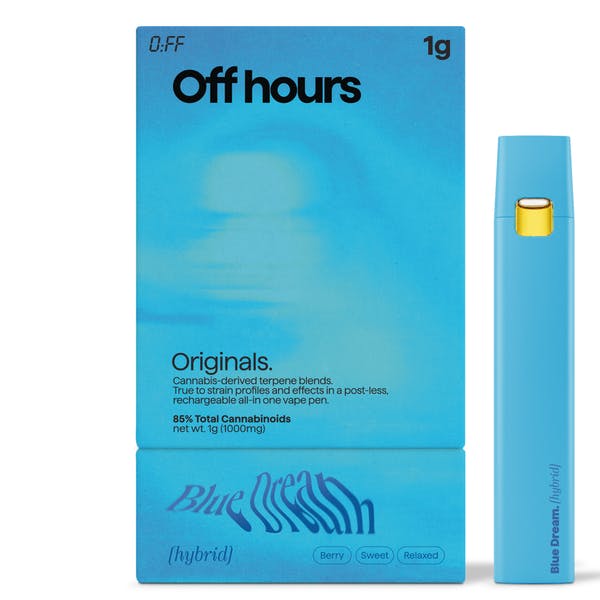
THC 87.28%Hybrid
Off HoursOff Hours All-in-one Vape Pen - Off hours Blue Dream · 1g
$30.09
$34after tax
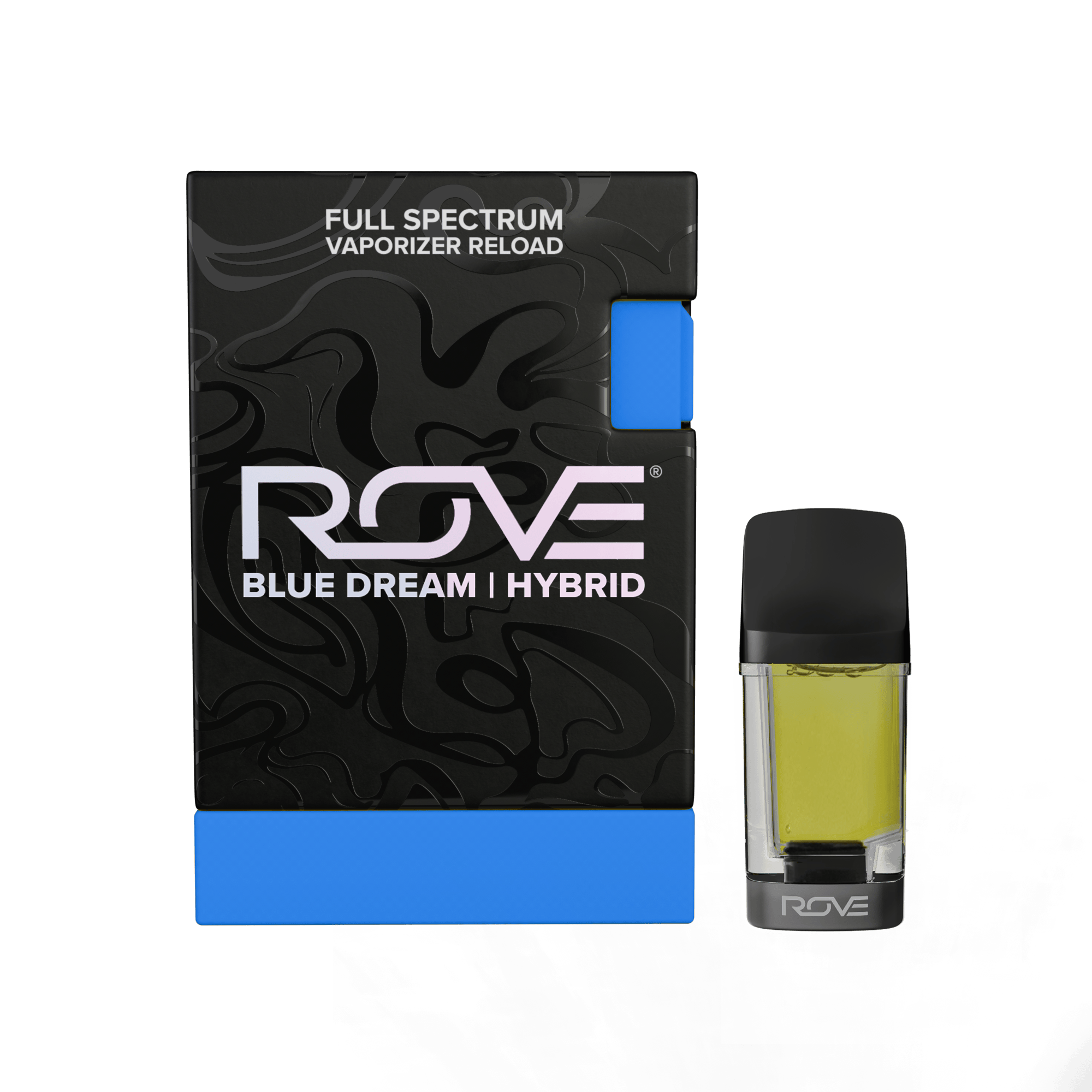
On sale· 30% OFF
THC 90.61%·CBD 0.19%Hybrid
RoveBlue Dream | Melted Diamond Live Resin Vaporizer | 1.0g (Reload) · 1g
$56.00$80.00
$66after tax
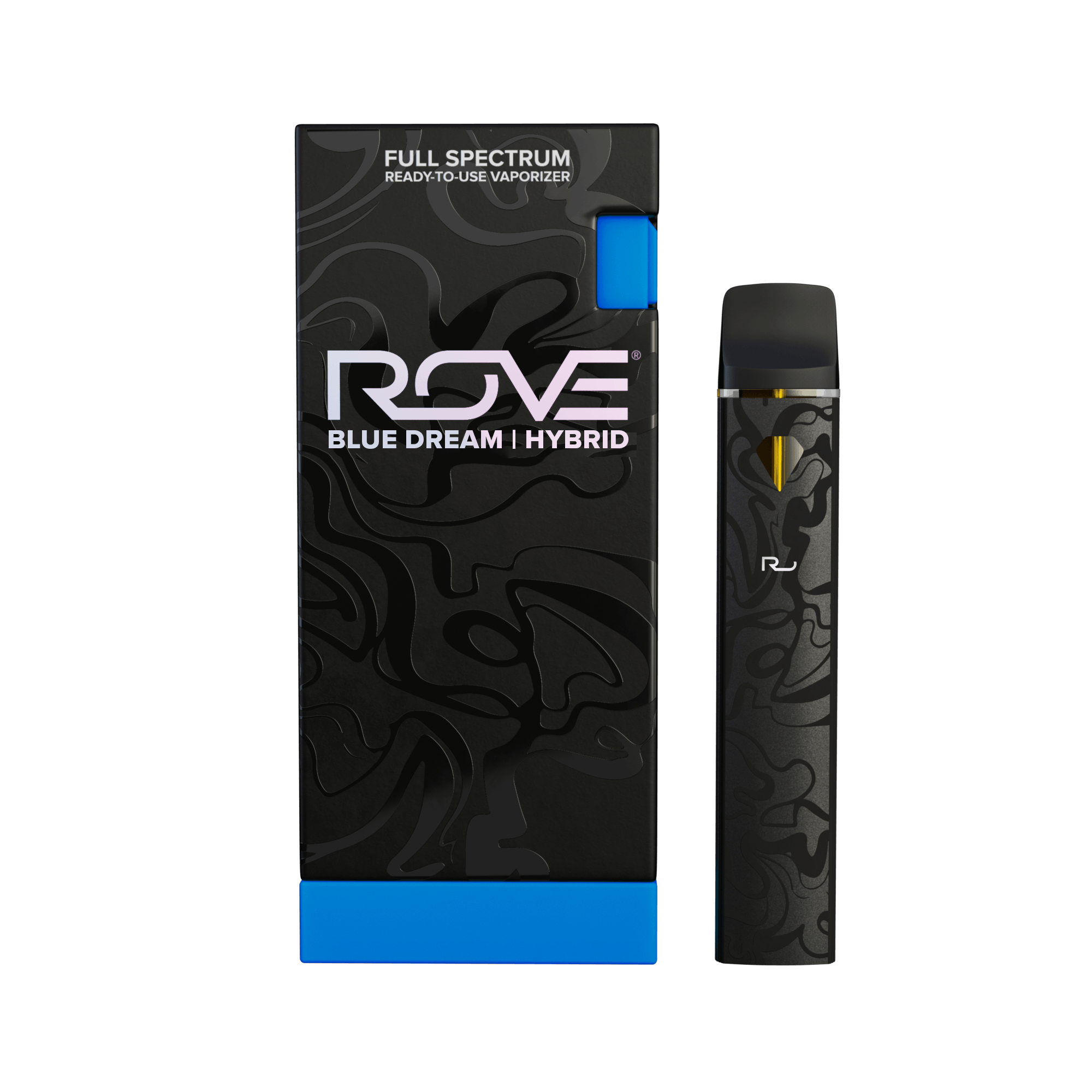
On sale· 30% OFF
THC 88.64%·CBD 0.2%Sativa
RoveRove | Ready-To-Use Live Resin Diamond Vaporizer | Blue Dream - Hybrid · 1g
$59.50$85.00
$71after tax

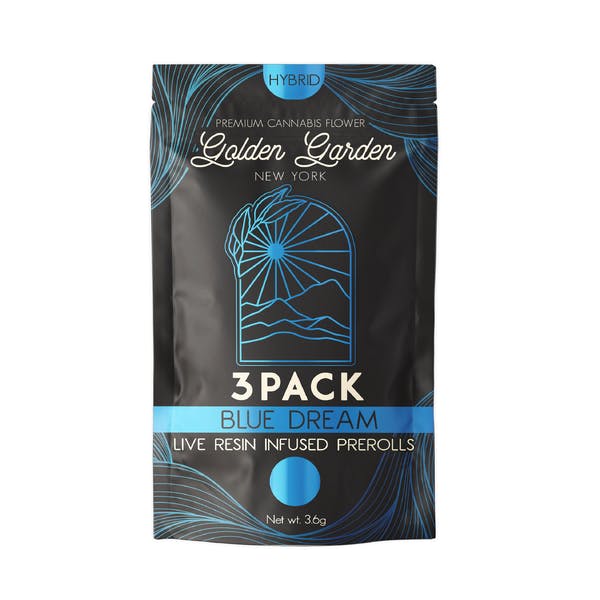
THC 50.89%Hybrid
Golden GardenGolden Garden Live Resin Pre Roll Blue Dream x 3pk · 3.6g
$40.71
$46after tax
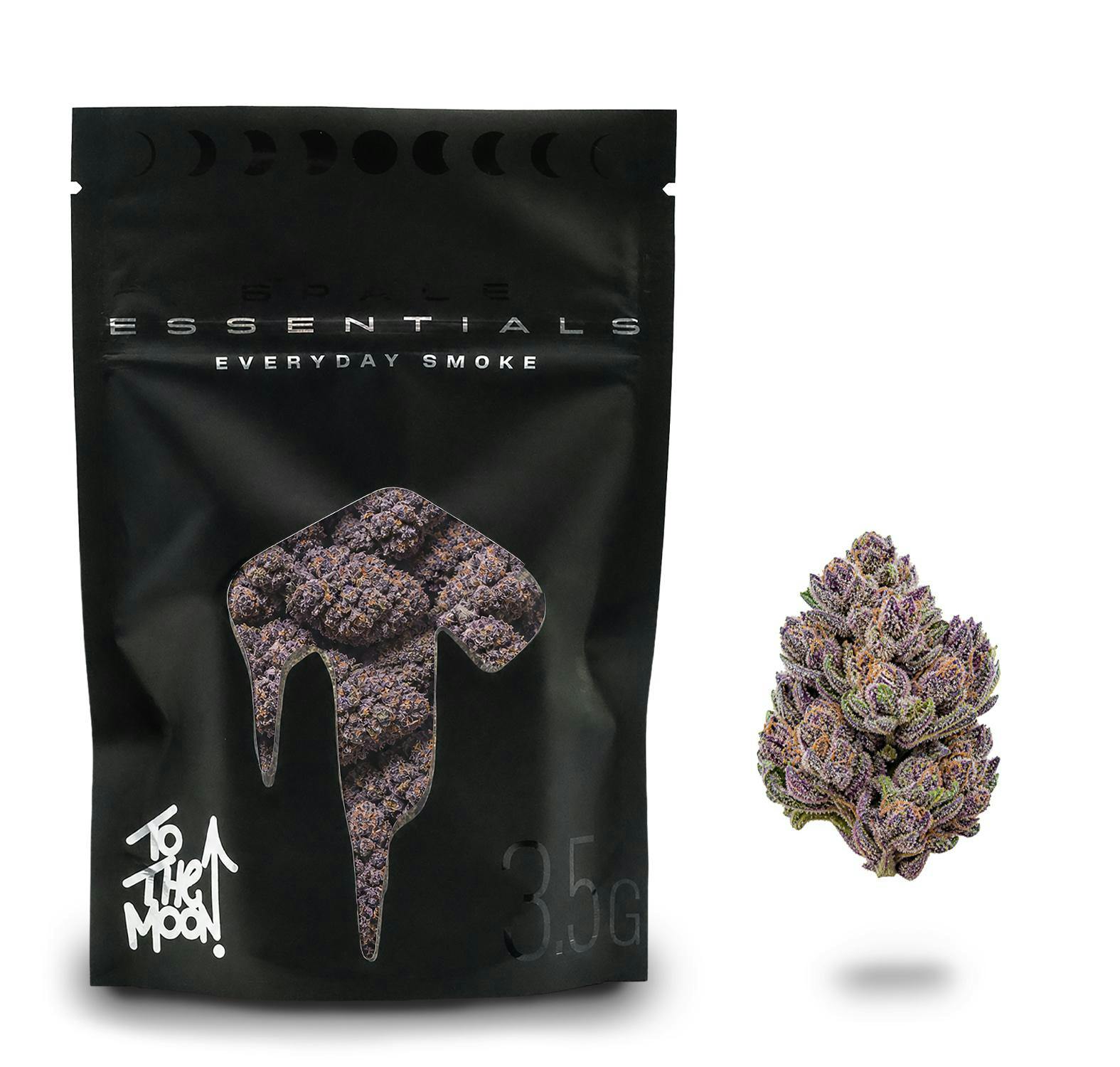
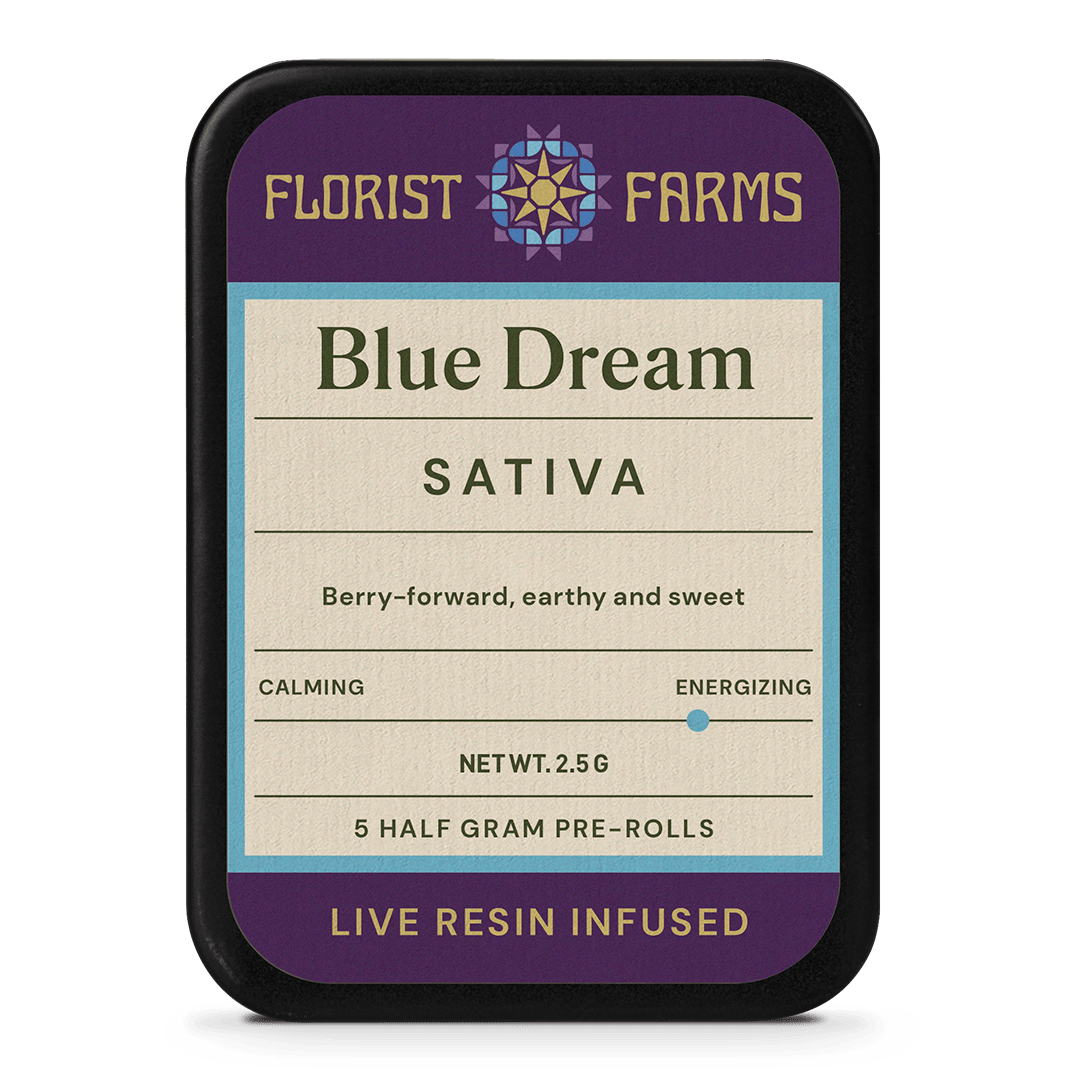
THC 38.04%Sativa
Florist FarmsFlorist Farms Blue Dream Live Resin Infused Preroll .5g 5pk · 2.5g
$39.82
$45after tax
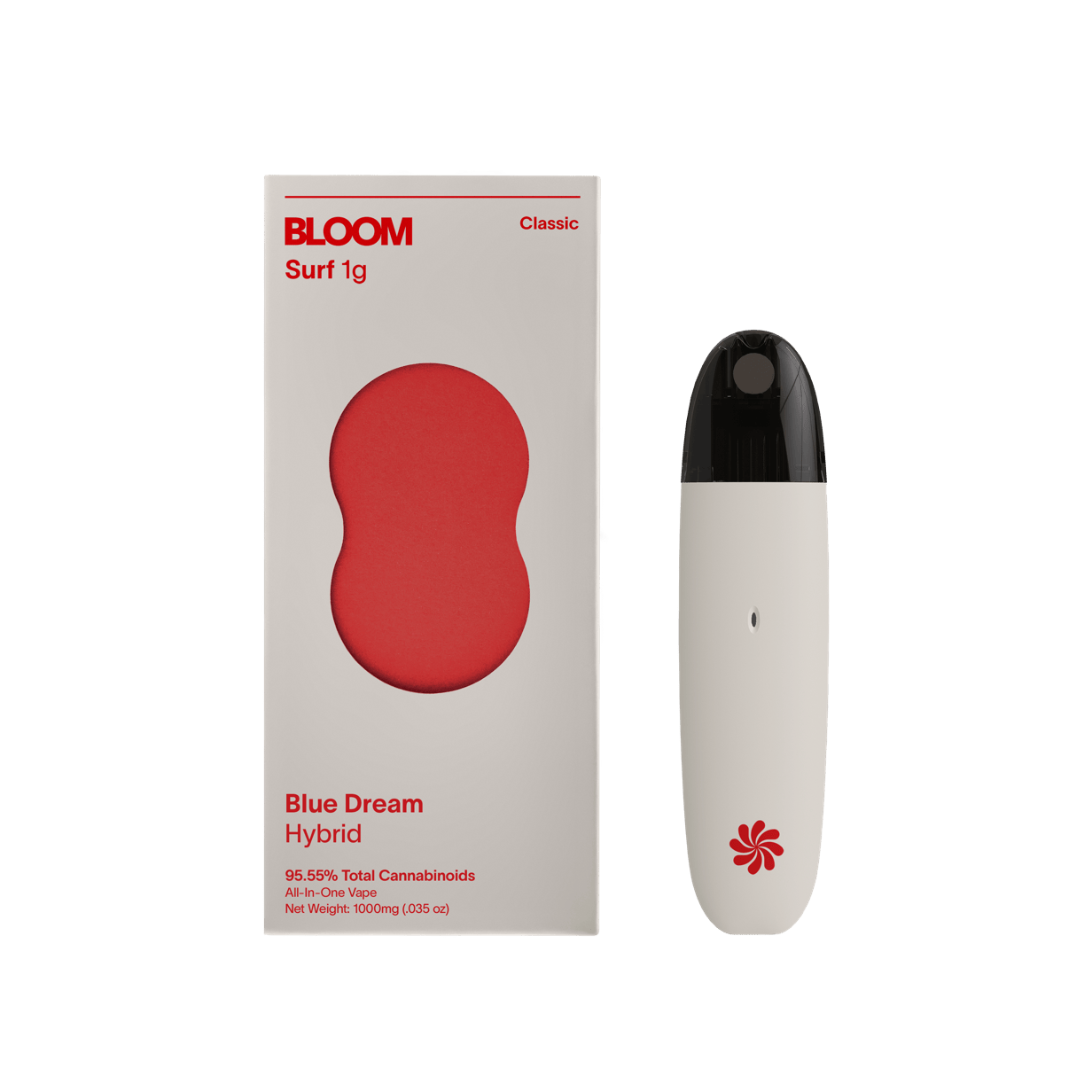
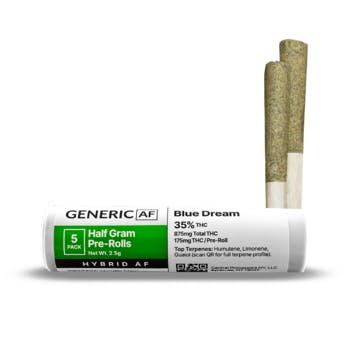
THC 33.09%Hybrid
Generic AFGeneric Pre-Rolls | Hybrid AF | Blue Dream 5pk · 0.5g/5pk
$24.78
$28after tax
About Blue Dream
Everything to know about Blue Dream.
Lineage & origin
Blue Dream is widely attributed to the Santa Cruz, California cannabis community, with most sources placing its emergence in the mid-2000s. The consensus lineage pairs Blueberry — DJ Short's landmark indica, itself a careful selection of Highland Thai, Purple Thai, and Afghani genetics — with Haze, the legendary sativa that traces its own roots to Colombian, Mexican, South Indian, and Thai landrace varieties. The Haze parent is sometimes specified as Super Silver Haze or simply Santa Cruz Haze, and this point remains a matter of some debate among breeders and historians; no single commercial breeder has been formally credited with fixing the line. What is better documented is the strain's rapid ascent through California's medical dispensary network after 2003's Proposition 215 era, where it became a staple for its forgiving growth traits and broad consumer appeal. Its influence on subsequent breeding programs has been considerable: Dream-cross offspring such as Blue Magoo, Blue Dream'atic, and Blueberry Headband all borrow from its genetic foundation, each amplifying a different facet of the original profile. Genetically, Blue Dream expresses the sativa-dominant balance its parentage would predict — approximately 60 percent sativa character in most phenotypic expressions — though certain cuts lean more indica-forward, reflecting the variability inherent in a strain whose origins predate rigorous commercial stabilization.
Effects
Onset with Blue Dream typically arrives within the first few minutes when smoked or vaped, presenting first as a gentle pressure behind the eyes and a brightening of sensory focus. The experience does not announce itself with abrupt intensity; instead, it builds incrementally, which is one reason it has historically been well-regarded by those calibrating their relationship with cannabis. The cerebral component — attributable in part to the elevated terpinolene and myrcene interplay alongside the strain's sativa-leaning cannabinoid expression — tends to manifest as mild mental clarity and an easy, unhurried sense of engagement with one's surroundings. At peak, Blue Dream occupies a middle register: alert enough to permit conversation, creative thought, or light physical activity, yet sufficiently relaxed in the body to discourage restlessness. The Blueberry indica heritage contributes a discernible physical warmth that settles across the shoulders and upper back without tipping into sedation for most consumers at moderate quantities. The duration tends toward the moderate range — roughly two to three hours for the primary arc, with a gentle tapering rather than an abrupt drop. The comedown is characteristically smooth, making the transition back to everyday tasks relatively seamless. As with all cannabis, individual response varies considerably, and those new to the plant are well served by the universal counsel to start low and go slow.
Aroma, flavor & terpenes
The terpene profile of Blue Dream is anchored by myrcene, the most prevalent terpene in cannabis broadly, which lends the strain its characteristic musky, lightly herbal base note — the olfactory equivalent of damp earth after rain, softened by something faintly fruity. Layered above that foundation, terpinolene introduces a floral, almost piney brightness that keeps the aroma from reading as heavy or dank. This pairing is characteristic of Haze-lineage cultivars and distinguishes Blue Dream from sweeter blueberry-forward crosses. Caryophyllene, a sesquiterpene also found in black pepper and clove, appears as a secondary contributor, providing a faint spiced warmth on the exhale and what the emerging science tentatively links to a degree of physical ease through CB2 receptor interaction — though the clinical picture remains incomplete. Ocimene occasionally surfaces in well-grown specimens, adding a bright, waxy, almost tropical overtone that elevates the fruit impression without making it cloying. On the palate, Blue Dream smokes with a notable smoothness relative to high-Haze cultivars; the sweetness of the Blueberry lineage rounds the edges of what could otherwise be a sharp, piney vapor. The inhale typically delivers that berry-adjacent sweetness, while the exhale opens into an herbal, faintly floral finish. Vaped at lower temperatures, the profile expresses with greater nuance — the terpinolene florality becomes more pronounced, and the myrcene earthiness recedes to a pleasant, grounding backdrop.
Appearance
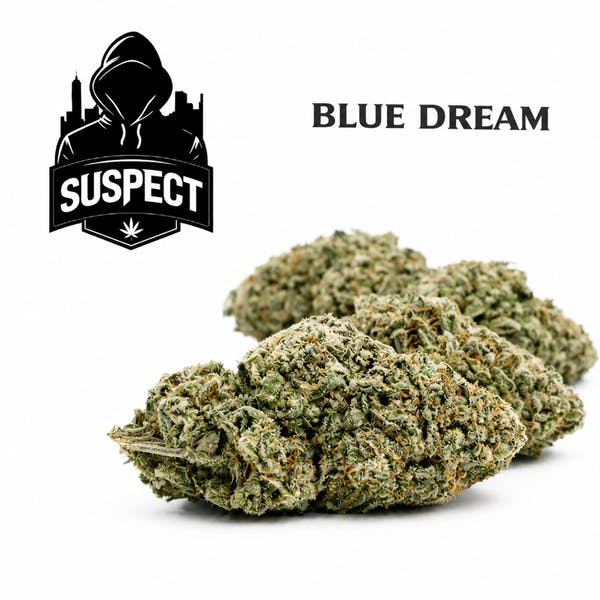
Blue Dream buds present with the elongated, somewhat loosely structured calyxes characteristic of sativa-dominant genetics, though well-cultivated indoor specimens can achieve a satisfying density that belies their heritage. The color palette runs from a vivid medium green toward deeper sage tones, with occasional blue-grey undertones in cooler grow environments — a visual nod to the strain's name that is more pronounced in some phenotypes than others. Pistils tend toward a warm amber-orange at maturity, weaving visibly through the bud structure and contrasting pleasingly against the green backdrop. Trichome coverage is generous without being the dense, almost opaque frosting seen on some indica-dominant cultivars; the crystal layer reads as bright and resinous under light, giving the flower a luminous quality. Overall, the visual presentation is clean and inviting — a commercially refined aesthetic that reflects decades of selection pressure within California's discerning market.
Growing notes
Blue Dream is broadly regarded as a forgiving cultivar, which has contributed as much to its longevity on dispensary shelves as its consumer profile. It adapts to both indoor and outdoor environments with relative ease, though it expresses most fully in the mild, Mediterranean-adjacent climates that mirror its Northern California origins. Outdoors, plants can reach considerable height — a sativa trait requiring thoughtful canopy management — with harvests typically falling in mid-October in the Northern Hemisphere. Indoors, flowering runs approximately nine to ten weeks, and the strain responds well to training techniques such as low-stress training or screen-of-green setups that manage its vertical ambition. Yields are considered above average for the category, rewarding attentive cultivators with a generous return. Humidity management during the late flowering window matters, as the somewhat open bud structure can invite moisture retention if airflow is insufficient. For the cultivator-curious shopper, Blue Dream represents a reliable introduction to sativa-dominant growing — demanding enough to reward skill, forgiving enough not to punish early errors.
When it's best enjoyed
Blue Dream occupies a particular niche in the canon of social and creative cannabis experiences. Its balance of cerebral engagement and physical ease makes it well-suited to the unhurried afternoon — a long Sunday walk through a city neighborhood, a collaborative creative project undertaken with a trusted friend, or the quiet ritual of settling into a record collection with genuine attention to spare. It is not a strain that demands solitude, nor one that overwhelms the texture of ordinary social interaction. The terpinolene-myrcene pairing lends itself naturally to pairings with food and music that share a similar quality of brightness balanced by warmth. At the table, Blue Dream sits comfortably alongside fresh herb-forward dishes — a Vietnamese summer roll spread, a Provençal ratatouille, anything where brightness and earthiness coexist on the plate. In the listening room, melodic, mid-tempo music with textural depth — classic soul, West Coast jazz, or early-period Joni Mitchell — tends to resonate with the strain's own character: engaging without excess, thoughtful without severity.
If you like Blue Dream, also explore
Blueberry
As one of Blue Dream's parent strains, Blueberry shares the same sweet, berry-forward fruit profile and delivers a comparably relaxed physical sensation, making it a natural companion for those drawn to the indica side of Blue Dream's character.
Super Silver Haze
Sharing probable Haze lineage, Super Silver Haze offers a similarly uplifting, cerebral sativa arc with an herbal-citrus terpene profile that will feel familiar to Blue Dream enthusiasts seeking a more pronounced head-forward experience.
Strawberry Cough
Another beloved sativa-dominant cultivar with a fruit-inflected aroma and a smooth, socially approachable effect profile, Strawberry Cough appeals to the same consumer who values accessibility and clarity over intensity.
Trainwreck
For Blue Dream fans curious about a more energetic, piney sativa expression with comparable hybrid balance, Trainwreck delivers a similar onset speed and creative lift with a sharper, more resinous aromatic character.
Durban Poison
Those drawn to Blue Dream's clear-headed, daytime-suitable sativa lift will find a kindred spirit in Durban Poison, a South African landrace-derived cultivar whose anise-and-pine profile offers a distinct but similarly focused experience.
Common questions
Is Blue Dream indica or sativa?+
Blue Dream is sativa-dominant, generally described as approximately 60 percent sativa and 40 percent indica in its most common phenotypic expressions. This balance reflects its parentage — the sativa-leaning Haze and the indica-leaning Blueberry — and is what gives the strain its distinctive combination of cerebral engagement and physical ease. Some phenotypes trend more indica-forward, so bud-to-bud variation is possible depending on the cultivation source.
What does Blue Dream taste like?+
Blue Dream presents a flavor profile that leads with a soft, berry-adjacent sweetness inherited from its Blueberry parentage, transitioning on the exhale into an herbal, lightly floral finish shaped by terpinolene and myrcene. The overall palate impression is smooth and approachable rather than sharp or pungent. Vaped at lower temperatures, the fruit notes become more distinct, while the earthy, spiced undertones from caryophyllene become more perceptible at higher heat.
What are the typical effects of Blue Dream?+
Blue Dream typically produces a gently uplifting, mentally clear experience that builds gradually rather than arriving abruptly. Most consumers report a sense of relaxed focus, mild mood elevation, and a physical warmth that settles without sedating. The effect arc generally spans two to three hours, with a smooth comedown. Its balanced character makes it one of the more broadly accessible strains on any well-curated menu. As always, individual response varies, and first-time consumers should start with a modest quantity.
What strains are similar to Blue Dream?+
Consumers drawn to Blue Dream's approachable sativa-dominant balance often enjoy Blueberry for its shared fruit-forward genetics, Super Silver Haze for a more pronounced Haze-lineage cerebral lift, or Strawberry Cough for a comparably smooth and socially oriented experience. Trainwreck and Durban Poison are worth considering for those who want a similar daytime-suitable profile with a distinctly different aromatic character.
Is Blue Dream good for beginners?+
Blue Dream is frequently cited as one of the more approachable entry points for adult-use consumers new to cannabis, owing to its gradual onset, moderate effect intensity at typical quantities, and smooth, palatable flavor. That said, no strain is universally suitable for every individual, and the universal guidance applies: start with the smallest practical amount, allow adequate time for onset before considering more, and consume in a comfortable, familiar setting.
What are the dominant terpenes in Blue Dream?+
The terpene profile of Blue Dream is most consistently characterized by myrcene as the dominant compound, contributing the strain's earthy, faintly fruity base aroma. Terpinolene follows as a significant secondary terpene, providing floral and piney brightness, while caryophyllene adds a subtle spiced warmth on the exhale. Ocimene appears in select phenotypes, lending a waxy, tropical note. This combination of terpenes is considered a hallmark of well-grown Blue Dream across multiple cultivation sources.
Where does Blue Dream come from?+
Blue Dream originated in the Santa Cruz, California cannabis community, with most historical accounts placing its emergence in the mid-2000s within the state's early medical dispensary ecosystem. It is a cross of DJ Short's Blueberry indica and a Haze variety — the specific Haze parent is sometimes contested in breeding circles. No single commercial breeder has been formally and publicly credited with originating the stable line, which contributes to the variation seen across different cuts of the strain.
What time of day is best for Blue Dream?+
Blue Dream's sativa-dominant character and tendency toward mental clarity and mild energy make it most commonly associated with daytime or early-evening use — circumstances where alertness and ease of engagement are desirable. It generally lacks the sedative weight that would suit a late-night, wind-down context, though individual responses vary. Many consumers find it particularly well-suited to creative work, outdoor activity, or relaxed social settings in the afternoon hours.
Related strains