
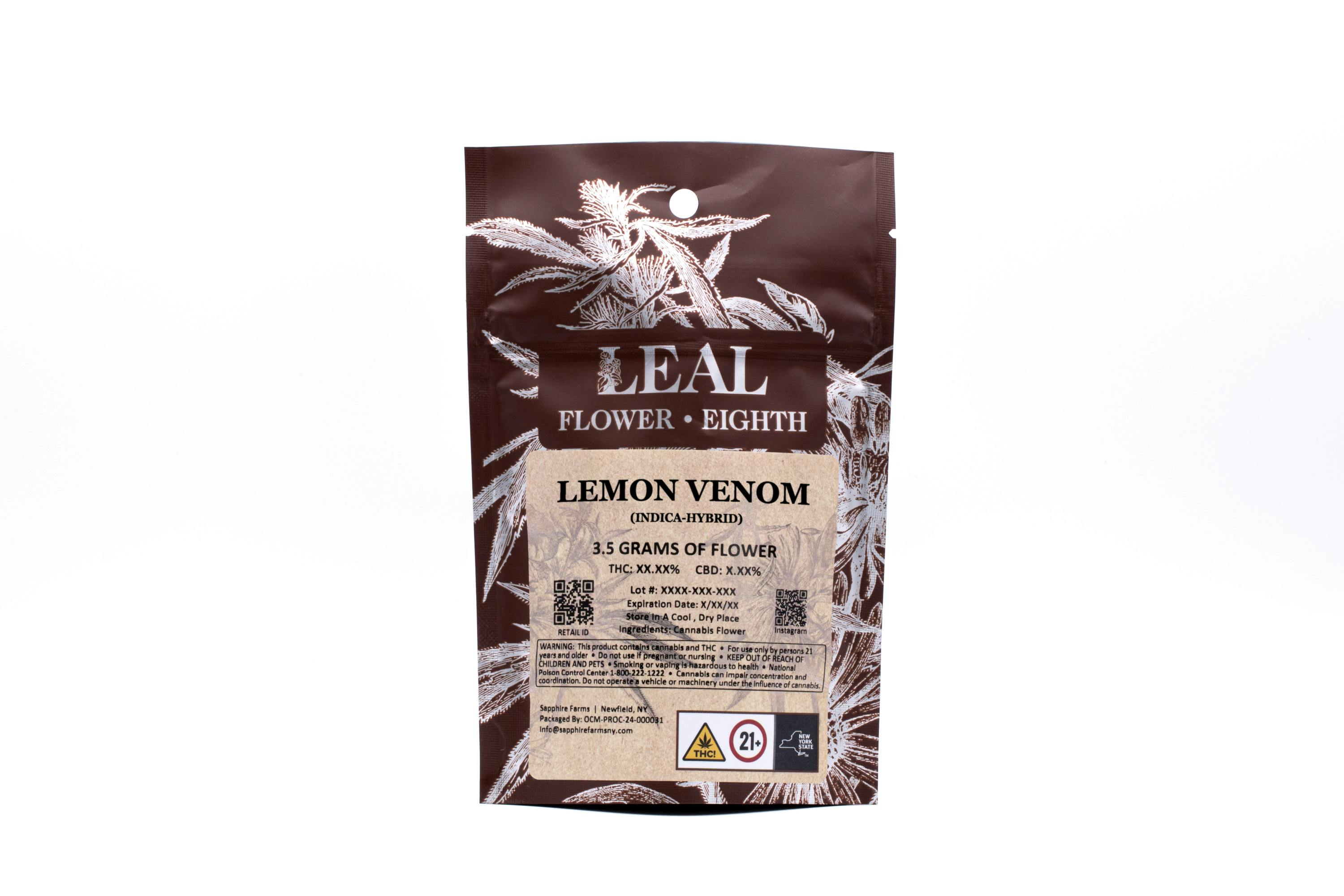
Indica-Hybrid
All strains Lemon Venom
3 live products in stock
Quick answer · What is the Lemon Venom cannabis strain?
Lemon Venom arrives with the quiet authority of a well-aged citrus liqueur — bright on the surface, deliberate underneath. This indica-leaning hybrid carries a tart, resinous character that unfolds in measured waves, balancing a clarifying initial lift with a grounding physical ease. It is the kind of cultivar that rewards patience and attention, suited to the discerning shopper who appreciates complexity over brute force.
Shop Lemon Venom · 3 of 3 live products
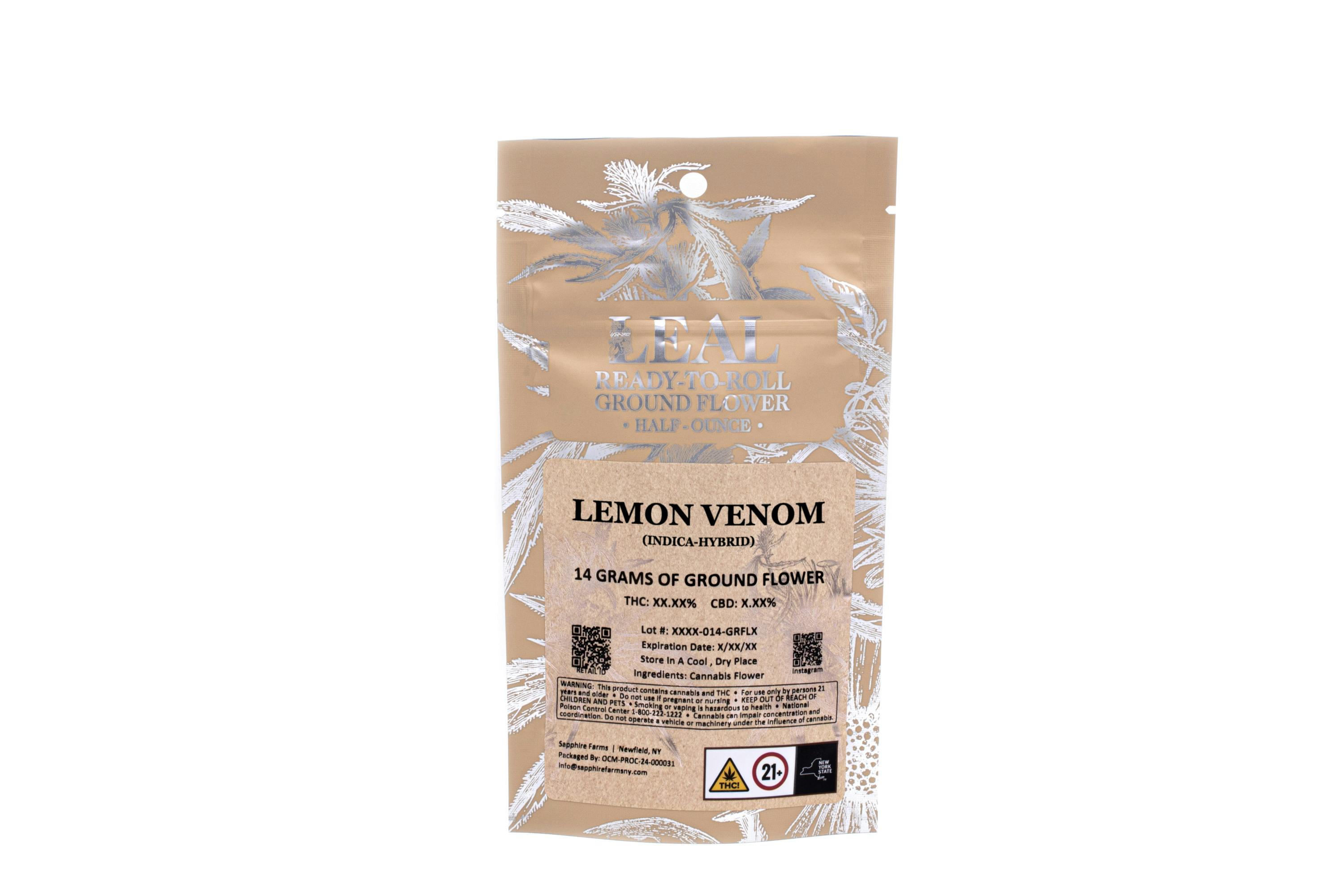

About Lemon Venom
Everything to know about Lemon Venom.
Lineage & origin
Lemon Venom is generally understood to be a cross of Lemon OG and Venom OG, two resin-forward cultivars with deep roots in the West Coast OG Kush tradition. Lemon OG — itself a union of Las Vegas Lemon Skunk and The OG #18 — contributed the strain's characteristic citrus brightness and its tendency toward a relaxed, well-tempered body effect. Venom OG, bred by Rare Dankness Seeds in Colorado, brought a heavier, more sedative OG backbone along with exceptional trichome production and a diesel-tinged aromatic depth. Rare Dankness, the Colorado-based seed company responsible for a number of influential OG-adjacent releases in the early-to-mid 2010s, is frequently cited in connection with the Venom OG parent, though the precise timeline of the Lemon Venom cross itself has not been thoroughly documented in the public record. The breeder of the final Lemon Venom combination has not been conclusively named in widely available sources, and lineage details should be regarded as the prevailing community consensus rather than confirmed fact. Genetic siblings in spirit — strains sharing significant OG Kush and Lemon Skunk heritage — include Lemon Skunk, Lemon OG Haze, and various Rare Dankness phenotypes. The strain occupies a lineage space that prizes terpene density and structural potency, consistent with the mid-2010s premium OG market that elevated resin quality as a primary indicator of value.
Effects
The onset of Lemon Venom tends to arrive within five to ten minutes of inhalation, initially presenting as a mild pressure behind the eyes and a gentle elevation of mood. This early phase carries a faintly cerebral quality — thoughts may feel more fluid and associative — though it lacks the sharp, racing energy of a true sativa-dominant cultivar. The experience is better described as a thoughtful loosening than an acceleration. As the session deepens into its peak, typically between twenty and forty-five minutes in, the indica heritage asserts itself through a progressive body warmth that travels from the shoulders downward. Myrcene, the dominant terpene in most analyzed samples, is associated in cannabis literature with sedative and muscle-relaxing qualities, and its presence here is felt in the physical ease that characterizes the middle arc. Caryophyllene contributes a mild analgesic character that rounds the edges further without pushing toward heaviness. The duration of the full experience generally spans one and a half to two and a half hours, with the comedown being notably gentle — a gradual softening rather than an abrupt drop. Appetite stimulation is commonly reported during the later phase, consistent with myrcene-heavy profiles. Those newer to cannabis are encouraged to follow a start-low, go-slow approach, as the delayed body onset can be underestimated on first encounter.
Aroma, flavor & terpenes
The aromatic profile of Lemon Venom opens with an immediate brightness — a tart, almost candied lemon rind note that owes its character primarily to limonene, a monoterpene found widely in citrus essential oils and associated in research with uplifting and stress-modulating qualities. Beneath this citrus top note lies a more complex foundation shaped by myrcene, which introduces an earthy, faintly tropical musk reminiscent of overripe mango or damp forest floor. Caryophyllene, a sesquiterpene notable for its spicy, peppery facet, threads through the mid-profile and adds a subtle diesel-adjacent sharpness that anchors the otherwise bright aromatic experience. This is the inheritance from the Venom OG lineage — a resinous, fuel-tinged undercurrent that prevents the profile from reading as purely sweet or one-dimensional. Some phenotypes also display a whisper of humulene, lending a dry, herbaceous quality akin to fresh hops or dried sage. On the palate, whether consumed via combustion or vapor, Lemon Venom delivers a smooth initial pull with pronounced citrus character on the front of the tongue. The midpalate transitions into a richer, earthier body, and the finish carries a mild spiced warmth from the caryophyllene. Vapor tends to preserve the limonene brightness most faithfully, while combustion softens the citrus and amplifies the diesel and earth notes. The smoke is moderately dense and not particularly harsh for a resin-forward cultivar.
Appearance
Lemon Venom typically presents as a moderately dense, medium-to-large formation that sits somewhere between the tight, golf-ball structure of classic OG phenotypes and a slightly more elongated, hybrid bud shape. The calyx structure is pronounced, with individual calyxes stacking compactly and contributing to an overall impression of solidity. The colour palette leans toward a deep, muted olive green punctuated by occasional sage and pale yellow-green hues, reflecting both its OG and Lemon heritage. Pistils — the hair-like structures that signal reproductive maturity — appear in vivid amber and burnt orange tones against the darker green backdrop, a contrast that becomes more pronounced in well-flushed, late-harvested cuts. Trichome coverage is a defining visual feature: a heavy, almost crystalline frost blankets both the sugar leaves and the primary calyxes, giving the bud a pale, slightly luminous quality under direct light that speaks directly to the Venom OG parentage's legacy of exceptional resin production.
Growing notes
Lemon Venom performs well in both indoor and outdoor cultivation environments, though indoor growing under controlled conditions is generally considered the more reliable path to fully realizing its terpene and resin potential. The plant exhibits typical indica-leaning structure: relatively compact height, broad fan leaves, and a branching pattern that responds well to low-stress training and screen-of-green (SCROG) techniques. Flowering time indoors generally falls within the eight-to-nine-week range, consistent with its OG-dominant genetics. Outdoor harvests in the Northern Hemisphere typically conclude in early to mid-October. Indoor yields are described in community cultivation logs as moderate to above-average, with outdoor plants capable of more generous production given adequate canopy space and a warm, Mediterranean-style climate. Humidity management during the late flowering phase is advised, as the dense bud structure and heavy trichome production can create conditions favorable to mold in high-moisture environments. Overall, the strain is considered intermediate in difficulty — accessible to cultivators with some experience, but perhaps not the most forgiving starting point for a first-time home grower.
When it's best enjoyed
Lemon Venom is well suited to the transitional hours of the day — the interval between the close of an active afternoon and the unhurried beginning of an evening. Its initial cerebral lift offers enough clarity for reflective solo pursuits: reading, sketching, working through a playlist with genuine attention. The subsequent body ease makes it equally agreeable for a quiet gathering of two or three people where conversation is the primary event rather than a background activity. Given its limonene-forward aromatic profile, which research associates with elevated mood and stress modulation, pairing with a light, acid-driven meal aligns naturally. A plate of ceviche, a citrus-dressed seafood crudo, or a Sicilian-style pasta with preserved lemon would complement rather than compete with the strain's tart brightness. On the audio front, the measured, deliberate character of the experience pairs well with something equally unhurried — mid-period Bill Evans, the quieter passages of Nils Frahm, or a considered jazz-adjacent playlist. It is a strain for savoring, not rushing.
If you like Lemon Venom, also explore
Lemon OG
As a direct parent of Lemon Venom, Lemon OG shares the citrus-forward terpene profile and relaxed OG body, making it the most natural next step for a fan of the daughter strain.
Venom OG
The other parent cultivar, Venom OG offers the same resin-heavy density and diesel-tinged earthiness for those drawn to the heavier, more sedative side of Lemon Venom's character.
Lemon Skunk
Sharing a prominent limonene-driven citrus identity, Lemon Skunk appeals to the same shopper who values bright aromatic clarity alongside a manageable, balanced physical effect.
Banana OG
Another indica-leaning OG hybrid with high myrcene expression and a notably smooth, fruit-adjacent flavor profile, Banana OG suits those who appreciate Lemon Venom's easygoing body weight.
Tahoe OG
For shoppers drawn to the deeper, more sedative end of Lemon Venom's spectrum, Tahoe OG offers a similarly resinous OG foundation with a pronounced and deliberate physical effect.
Common questions
Is Lemon Venom indica or sativa?+
Lemon Venom is classified as an indica-leaning hybrid. It carries genetics from Lemon OG and Venom OG, both of which have strong OG Kush lineage. The experience reflects that balance: an initial, mild cerebral lift that transitions into a more dominant body effect, leaning toward physical ease rather than energizing stimulation as the session matures.
What does Lemon Venom taste like?+
Lemon Venom tastes primarily of tart citrus — a bright, slightly candied lemon rind quality that dominates the front palate. The mid and finish introduce earthier, spicier notes from its caryophyllene and myrcene content, alongside a faint diesel undertone inherited from the Venom OG parentage. Vapor tends to preserve the citrus character most clearly, while combustion softens it toward earth and spice.
What are the typical effects of Lemon Venom?+
Lemon Venom typically produces a gentle initial mood elevation followed by a progressive, warming body relaxation. The cerebral onset is present but measured — fluid and calm rather than sharp or anxious. Physical ease builds steadily through the peak and is often accompanied by appetite stimulation in the later phase. The comedown is soft and gradual, making the overall arc well-tolerated by most experienced adult consumers.
What strains are similar to Lemon Venom?+
Shoppers who enjoy Lemon Venom often appreciate Lemon OG and Venom OG, its two parent strains. Lemon Skunk offers a comparable citrus-forward terpene experience with slightly less body weight. Banana OG and Tahoe OG both share the myrcene-dominant, indica-leaning OG character for those drawn specifically to the physical, grounding side of Lemon Venom's profile.
Is Lemon Venom good for beginners?+
Lemon Venom can be approachable for adults who are new to cannabis, but its indica-leaning potency and delayed body onset deserve respect. The physical effect can intensify more than expected if the initial lift is mistaken for the full experience. As with any cultivar, a start-low, go-slow approach is advisable — particularly for first-time or infrequent consumers who may be sensitive to myrcene-heavy profiles.
What are the dominant terpenes in Lemon Venom?+
The dominant terpenes in Lemon Venom are typically myrcene, limonene, and caryophyllene. Myrcene contributes the earthy, mildly sedative body character. Limonene drives the bright citrus aroma and is associated with mood elevation. Caryophyllene adds spice and a diesel-adjacent depth while contributing a grounding quality. Some phenotypes also exhibit secondary notes of humulene, which introduces a dry, herbaceous dimension.
When is the best time of day to enjoy Lemon Venom?+
Lemon Venom is best suited to late afternoon or early evening consumption. Its initial lift offers enough presence for reflective, low-intensity activities, while the building body ease makes it less ideal for productive morning hours. It sits comfortably in the transitional window between an active day and a relaxed evening — a deliberate pause rather than a morning beginning or a heavy nightcap.
What is the lineage of Lemon Venom?+
Lemon Venom is widely understood to descend from Lemon OG and Venom OG. Lemon OG is itself a cross of Las Vegas Lemon Skunk and The OG #18, while Venom OG was developed by Rare Dankness Seeds in Colorado. The specific breeder responsible for combining these two parents into Lemon Venom has not been conclusively documented in publicly available sources, and lineage details reflect community consensus.
Related strains