
Indica
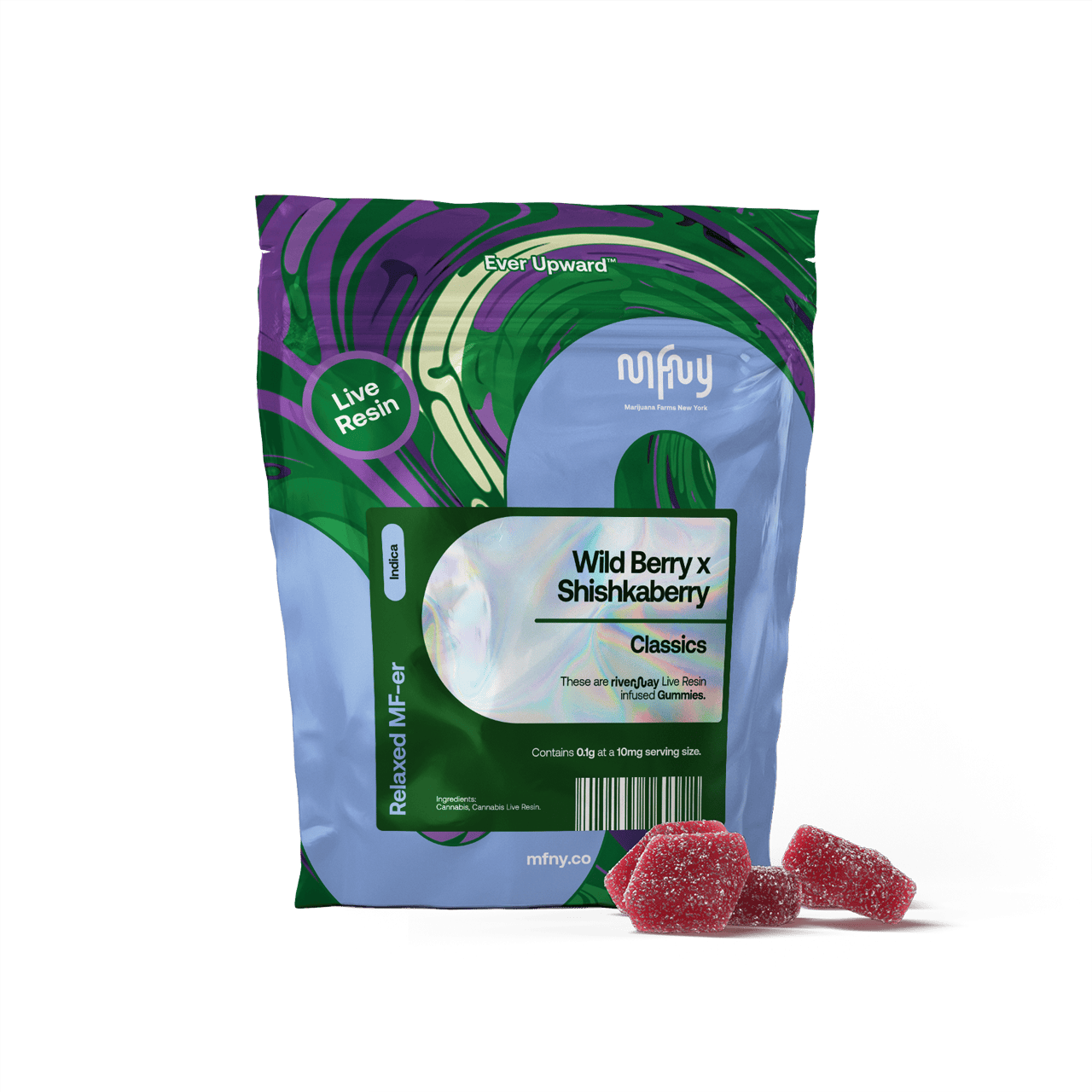
All strains Wild Berry x Shishkaberry
1 live products in stock
Quick answer · What is the Wild Berry x Shishkaberry cannabis strain?
Wild Berry x Shishkaberry is a deeply indica-rooted cross that draws from two berry-forward lineages to deliver a lush, fruit-saturated aroma and a grounding physical experience. Cultivated for those who appreciate the quieter hours — a long evening, a comfortable chair, the kind of stillness that earns its ease — this strain rewards patience with a slow, enveloping warmth that settles across the body like the last light of a late summer afternoon.
Shop Wild Berry x Shishkaberry · 1 of 1 live products
About Wild Berry x Shishkaberry
Everything to know about Wild Berry x Shishkaberry.
Lineage & origin
Wild Berry x Shishkaberry unites two strains that share a common aesthetic language: ripe fruit, deep pigmentation, and indica-dominant architecture. Shishkaberry, the more documented of the two parents, is widely credited to DJ Short — the legendary Canadian breeder whose work with Afghan and Blueberry-adjacent genetics in the 1990s produced some of the most celebrated fruit-forward indicas in North American cannabis culture. Shishkaberry is generally understood to be a cross of an Afghani landrace with Blueberry, inheriting the dense bud structure and sweet, jam-like terpene profile that Afghani genetics are known to anchor. Wild Berry, by contrast, has a less thoroughly documented lineage; the name appears across multiple seed banks and regional growers, and its precise parentage is debated. It is broadly accepted as a berry-phenotype indica, likely deriving from Blueberry-adjacent or Afghan-leaning stock, though no single breeder has publicly claimed a definitive origin. The pairing of these two cultivars amplifies their shared strengths — berry aromatics, resin production, and sedating physical effects — while the combination introduces enough genetic overlap to produce notably consistent phenotypic expression across runs. The cross does not appear to have been formally released by a named seed company, suggesting it may have originated as a boutique or small-batch collaboration, a pattern common in the craft cannabis communities of the Pacific Northwest and Canada. Genetic siblings in the broader Shishkaberry family include cuts circulating as Shishka-B and various Afghani x Blueberry hybrids that share the strain's recognizable jammy character.
Effects
The experience of Wild Berry x Shishkaberry tends to follow the measured, deliberate rhythm that well-grown indica cultivars are known for. Onset typically arrives within five to fifteen minutes when smoked or vaped, beginning as a gentle pressure behind the eyes and across the temples — a subtle signal that the cerebral environment is shifting toward calm. Early in the arc, some consumers report a mild mood lift, a quiet brightening that clears away the residual noise of the day without producing the energized or race-minded quality associated with sativa-dominant cultivars. As the experience deepens into its peak, the physical dimension becomes more pronounced. Myrcene — almost certainly the dominant terpene given the lineage — is associated with sedating, muscle-relaxing qualities, and its presence here is evident in the way tension seems to ease from the shoulders and lower back over the course of the first thirty to sixty minutes. The body component is substantial rather than overwhelming in moderate consumption, producing a sense of heaviness that invites stillness without necessarily demanding sleep. Duration is typically two to three hours at moderate intake, with the comedown gradual and undemanding — a slow return to baseline rather than an abrupt drop. New consumers and those with lower tolerance should approach this cultivar with particular care; its indica character is earnest, and the start-low, go-slow principle applies with genuine emphasis here.
Aroma, flavor & terpenes
The terpene architecture of Wild Berry x Shishkaberry is anchored by myrcene, the most prevalent terpene in cannabis broadly, and one that gives this cross its characteristic earthy sweetness. Myrcene's contribution here reads as overripe berry and musky fruit — think blackcurrant preserves set against a base of warm earth. Caryophyllene, the only terpene known to interact with the body's endocannabinoid system as a cannabinoid itself, adds a gentle spice beneath the fruit, lending depth and a faint peppery finish that prevents the aroma from reading as one-dimensional. Linalool, commonly associated with lavender, appears to play a supporting role, contributing a floral softness that rounds the profile toward something almost perfumed in the most restrained sense. On the palate, the smoke or vapor opens with an immediate rush of sweet berry — closer to grape and mixed berry preserves than fresh fruit — before the earthier, Afghan-derived undertones emerge on the mid-palate. The caryophyllene spice registers more clearly on the exhale, where it meets a lingering floral note. Pinene, if present in meaningful quantity, would typically introduce a brightness or forest-floor crispness, though in this cross it appears subordinate to the warmer, sweeter primary notes. The overall flavor profile is generous and cohesive, with each component reinforcing rather than competing with the others. Vapor delivery tends to preserve the floral and berry top notes with greater fidelity than combustion, which deepens the earthy, hashy base characteristic of its Afghani ancestry.
Appearance
Wild Berry x Shishkaberry produces buds that reflect its indica heritage without apology — compact, densely packed calyxes that feel substantial in the hand, with a structure closer to the squat, resinous architecture of Afghani-lineage cultivars than to the elongated, airy formations of sativa-dominant strains. Trichome coverage is notably generous, giving well-cured examples a frosted, almost silvery quality at the surface that hints at the resin production embedded in both parent lines. The color palette leans toward deep forest greens, with phenotypes that receive cooler temperatures during the final weeks of flowering developing the purple and burgundy tones that Shishkaberry is particularly known for expressing. Pistils run from amber to deep rust-orange and are distributed densely across the bud surface, adding warmth to the visual profile. When broken apart, the interior of the bud reveals a similarly deep green with flashes of violet, and the aroma released is immediate and pronounced — a reliable indicator of terpene integrity in a well-preserved cut.
Growing notes
Wild Berry x Shishkaberry follows the cultivation patterns one would expect from a lineage so deeply rooted in Afghani and Blueberry genetics: it is a relatively forgiving plant that rewards attentive growing without demanding expert-level intervention. Flowering time indoors typically falls in the eight to nine week range, consistent with its indica-dominant structure. Yields indoors are moderate to generous, and the plant tends toward a compact canopy, making it well-suited to space-conscious indoor setups. Outdoor cultivation is viable in climates with a long, warm summer and a dry late season — the dense bud structure that makes this strain visually impressive also makes it susceptible to mold and botrytis if humidity is not managed in the final weeks of flowering. The purple phenotypes that draw so much attention to the Shishkaberry side of this cross are most reliably expressed when nighttime temperatures drop into the mid-to-low 60s Fahrenheit during the last two weeks before harvest. Home cultivators at the curious-beginner level will find this cross accessible relative to many boutique hybrids, though attention to airflow and late-season humidity remains essential. The resin production that defines this strain's appearance also makes it a favored candidate for small-batch concentrate production among craft processors.
When it's best enjoyed
Wild Berry x Shishkaberry belongs to the unhurried hours. It is a strain that performs best when the calendar is clear and the evening is genuinely one's own — a Friday night with no obligations attached to Saturday morning, or a slow Sunday afternoon that has no ambition beyond comfort. Solo, it pairs well with absorptive, sensory-forward activities: listening to a record in its entirety, moving through a long-form documentary, or settling into a novel that rewards slow reading. The berry and floral terpene profile makes it a natural companion for food experiences built around richness and sweetness — a cheese board anchored by aged gouda or a dark-fruit jam, or a dessert that leans into chocolate and preserved fruit. In a small social setting — two or three people who know each other well — this strain encourages the kind of conversation that has nowhere particular to go: unhurried, tangential, genuinely warm. Musically, it aligns with recordings that share its character: the slower end of soul and R&B, ambient electronic work with harmonic depth, or acoustic folk that prioritizes texture over tempo. It is not a strain for the first half of the evening; it is, distinctly, for the second.
If you like Wild Berry x Shishkaberry, also explore
Blueberry (DJ Short)
Sharing significant genetic lineage through Shishkaberry's Blueberry-adjacent parentage, Blueberry delivers the same sweet, berry-forward aromatics and deeply relaxing indica body effect that defines Wild Berry x Shishkaberry.
Granddaddy Purple
GDP's grape and berry terpene profile, pronounced body sedation, and tendency to express vivid purple coloration make it a natural companion for consumers drawn to Wild Berry x Shishkaberry's aesthetic and physical character.
Purple Punch
A cross of Larry OG and Granddaddy Purple, Purple Punch shares the dessert-like berry and grape sweetness, dense bud structure, and evening-oriented indica effect profile that characterize Wild Berry x Shishkaberry.
Afghani
For consumers who appreciate the earthier, resinous depth that the Afghani side of Shishkaberry contributes to this cross, a pure Afghani landrace offers that same grounding physicality in its most direct expression.
Blackberry Kush
Blackberry Kush echoes the dark-berry aroma, heavy indica sedation, and Afghani-rooted bud density that Wild Berry x Shishkaberry fans consistently seek out in an evening cultivar.
Common questions
Is Wild Berry x Shishkaberry indica or sativa?+
Wild Berry x Shishkaberry is a firmly indica-dominant cultivar. Both parent strains draw from Afghani and Blueberry-adjacent genetics — lineages that represent the traditional indica archetype. The resulting cross exhibits the compact bud structure, sedating body effects, and short, bushy growth pattern that characterize indica-leaning cannabis. Consumers seeking an energizing or cerebral-forward experience would be better served by a sativa-dominant cultivar.
What does Wild Berry x Shishkaberry taste like?+
The flavor profile is dominated by sweet, dark berry — closer to blackcurrant preserves or mixed-berry jam than to fresh fruit. A warm earthiness inherited from the Afghani side of Shishkaberry's lineage grounds the sweetness on the mid-palate, while caryophyllene introduces a subtle peppery finish on the exhale. Linalool contributes a delicate floral note that keeps the overall profile cohesive. Vapor delivery tends to emphasize the berry and floral elements most clearly.
What are the typical effects of Wild Berry x Shishkaberry?+
Effects typically begin with a mild, quieting mood shift before deepening into a substantial physical relaxation. The body component is the dominant feature — a gradual easing of tension that encourages stillness and rest. The experience is generally described as calm and enveloping rather than euphoric or stimulating. Duration is typically two to three hours at moderate consumption, with a gentle, unhurried comedown. This cultivar is best suited to evening or late-night use.
What strains are similar to Wild Berry x Shishkaberry?+
Consumers who enjoy Wild Berry x Shishkaberry tend to appreciate other berry-forward, indica-dominant cultivars with Afghani or Blueberry lineage. Granddaddy Purple, Purple Punch, Blackberry Kush, and DJ Short's original Blueberry share its sweet-fruit aromatics and sedating physical character. For those drawn specifically to the earthier, resinous depth of this cross, Afghani landrace cultivars offer a direct window into that foundational influence.
Is Wild Berry x Shishkaberry good for beginners?+
New consumers should approach Wild Berry x Shishkaberry with measured caution. Its indica character is pronounced, and its effects can feel more intense than anticipated for those with limited experience. The start-low, go-slow principle is particularly relevant here — beginning with a small amount and allowing ample time before considering more is the responsible approach. The strain's sedating quality can be disorienting for those unfamiliar with deeply relaxing cannabis experiences.
What are the dominant terpenes in Wild Berry x Shishkaberry?+
Given its lineage, myrcene is almost certainly the dominant terpene, responsible for the musky berry sweetness and the sedating, relaxing physical quality. Caryophyllene contributes a spiced, peppery depth and is the only terpene known to interact directly with cannabinoid receptors. Linalool adds a floral softness to the aroma. Pinene may appear in subordinate quantities, though it is not the defining characteristic of this particular profile.
When is the best time of day to consume Wild Berry x Shishkaberry?+
Wild Berry x Shishkaberry is unambiguously an evening or nighttime cultivar. Its sedating indica effects and prominent myrcene content make daytime or early-afternoon use impractical for most consumers who need to remain engaged or active. It is best suited to the hours when obligations have concluded — after dinner, before sleep, or during the kind of slow, unhurried evening that invites rest rather than productivity.
Does Wild Berry x Shishkaberry express purple coloration?+
Yes, certain phenotypes of this cross are capable of expressing notable purple and burgundy hues, a trait inherited directly from the Shishkaberry side of the lineage. This coloration is caused by anthocyanin pigments and is most reliably triggered by cooler nighttime temperatures during the final weeks of flowering. Not every cut will purple dramatically, but well-grown examples in appropriate conditions frequently display deep violet tones alongside the characteristic forest-green base.
Related strains