On sale· 50% OFF
THC 38.2%Indica
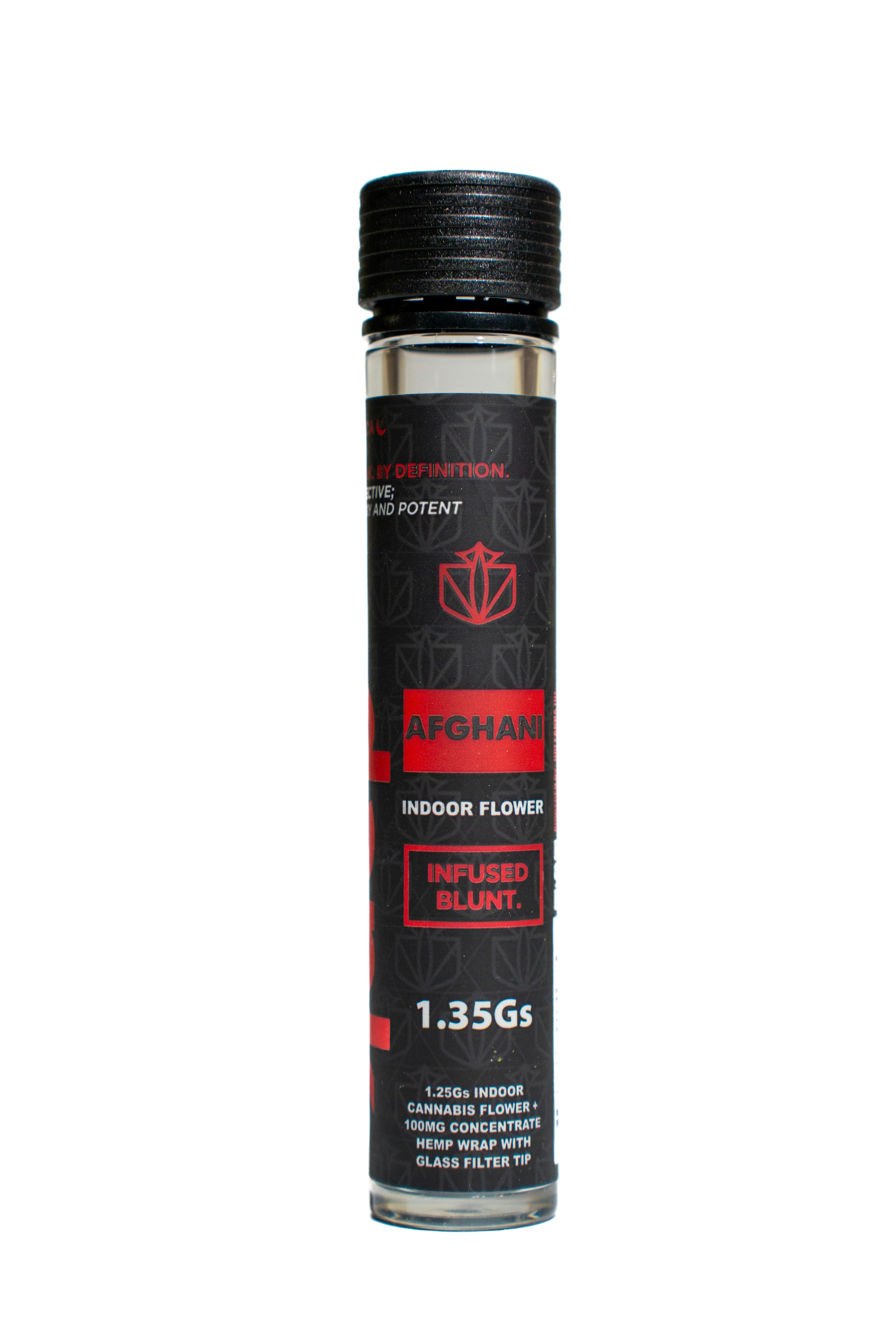
Dank By Definition.AFGHANI 1.35G PRE-ROLL INFUSED BLUNT · pre-roll
$12.39$24.78
$16after tax

weeddispensarynearme.com
You must be 21 years or older to enter. By entering, you confirm you’re of legal age in your state to purchase cannabis.
For use only by adults 21+ • Keep out of reach of children
3 live products in stock
Quick answer · What is the Afghani cannabis strain?
Afghani is the quiet foundation beneath much of modern cannabis culture — a pure indica landrace whose resinous buds and deeply calming character have shaped generations of breeding programs. Cultivated for centuries in the Hindu Kush mountain range, it carries an earthen gravity and hash-like richness that speaks directly to the plant's ancient origins. For those who appreciate provenance and unhurried depth, Afghani remains a singular and irreplaceable reference point.
$16after tax
About Afghani
Afghani is a landrace strain, meaning it developed over centuries through natural selection in its native environment rather than through deliberate human hybridization. Its homeland is the Hindu Kush mountain range, a rugged corridor stretching across present-day Afghanistan and Pakistan. The harsh, arid climate and high altitude of the region shaped the plant into a compact, resilient specimen with an extraordinarily dense trichome coat — a natural defense mechanism that also happens to produce some of the most resin-saturated flower in the cannabis world. Western seed banks and breeders began acquiring and preserving Afghani genetics during the 1970s, when travelers along the so-called Hippie Trail brought seeds back to Europe and North America. Sensi Seeds is among the most recognized custodians of authentic Afghani lines, and their preservation work helped stabilize the genetics that circulate today. The strain is sometimes listed under regional variants such as Afghani #1, each representing a slightly different phenotypic expression of the same broad landrace population. Afghani's genetic influence on the modern cannabis landscape is profound and well-documented. It is a foundational parent — directly or indirectly — in landmark hybrids including Northern Lights, Blueberry, and Hash Plant. Its contribution of dense structure, heavy resin production, and sedative body effects can be traced through decades of selective breeding, making it less a single strain than an entire genetic vocabulary.
The Afghani experience tends to begin with a measured, warm onset that arrives within five to fifteen minutes of inhalation. Unlike sativa-leaning cultivars that lead with sharp cerebral clarity, Afghani opens gradually — a subtle softening of muscular tension, a quieting of mental noise. The transition from baseline to effect is rarely abrupt, which many experienced consumers find to be one of the strain's more appealing qualities. At its peak, the character is firmly body-forward. A heavy, enveloping physical relaxation is the dominant note, occasionally accompanied by a mild euphoric undercurrent that keeps the experience from becoming purely sedative in its early stages. The myrcene-heavy terpene profile likely contributes to this pronounced physical effect, as myrcene has been associated in preliminary research with muscle relaxation and sedative qualities, though the science remains evolving. The high can carry a pleasant mental stillness — not the racing, idea-generating energy of a cerebral sativa, but a calm clarity that some find useful for introspective or meditative states. As the session progresses into its later arc — typically between ninety minutes and three hours depending on tolerance and consumption method — deeper sedation becomes more apparent. Afghani is widely regarded as an evening cultivar, and the comedown reinforces this: a gradual, unhurried descent into heaviness that invites rest. Those new to high-resin indicas are well advised to start low and go slow with this strain.
The aromatic profile of Afghani is anchored in myrcene, the most prevalent terpene in the strain and the source of its characteristic earthy musk. Myrcene imparts a dense, almost humid quality to the nose — reminiscent of damp soil, warm wood, and the interior of a well-aged apothecary cabinet. It is not a bright or sharp aroma but a rounded, enveloping one that settles rather than announces itself. Secondary terpenes add meaningful complexity. Caryophyllene contributes a subtle spice — dry, slightly peppery — that threads through the earthen base and adds a faint herbal edge. Pinene, where present in Afghani phenotypes, lifts the profile with a resinous, forest-floor quality that keeps the aroma from feeling too heavy. Some expressions carry traces of humulene, which deepens the herbal character and adds the slightest woody bitterness. Collectively, these terpenes produce an olfactory experience that is dense, ancient-feeling, and entirely without artifice. On the palate, Afghani tends toward rich hash and sweet earth on the inhale — a flavor that experienced consumers often describe as quintessentially old-world. The smoke is smooth but full-bodied, with a warm, slightly spiced exhale that lingers pleasantly. When vaporized at lower temperatures, the sweetness becomes more apparent, revealing a faint floral or fruit-adjacent quality beneath the dominant earthen register. The finish is clean and long, with the hash-like character persisting well after the session ends.
Afghani buds are a textbook expression of what the indica growth pattern produces at its most refined: dense, tightly wound calyxes that stack into compact, chunky structures. The bud architecture is low and broad rather than tall and elongated, reflecting the plant's adaptation to harsh mountain climates where short, robust growth provides resilience against wind and cold. The colour palette tends toward deep forest and olive greens, occasionally shading into muted purples in phenotypes exposed to cooler temperatures during late flowering. Burnt-orange pistils wind through the dense structure in quantity, giving the bud a warm, amber-flecked appearance when viewed closely. What is most immediately striking, however, is the trichome coverage: a dense, almost silvery frost that coats every surface uniformly, giving even trimmed flower a tactile stickiness and a visual luminosity under direct light. This resin density is the genetic trait that made Afghani the raw material of choice for traditional hash production across Central Asia for centuries.
Afghani is considered one of the more accessible landrace indicas for cultivators who are new to growing, largely because its genetics were shaped by centuries of surviving in extreme and uncontrolled environments. The plant is notably resilient — tolerant of temperature fluctuation, lower humidity, and less-than-ideal soil conditions compared to more refined modern hybrids. Indoors, Afghani typically reaches its flowering stage within seven to eight weeks, a relatively short window that appeals to those who prefer faster turnaround. Yields under artificial light are generally moderate to generous, with the dense bud structure translating to meaningful weight per plant when conditions are managed well. Outdoors, the strain prefers a semi-arid or temperate climate — not unlike its Central Asian homeland — and is typically ready for harvest in early October in the Northern Hemisphere. The compact plant height makes it manageable in confined indoor spaces. One area that warrants attention is airflow: the extremely dense bud structure can be susceptible to moisture retention and associated mold pressure in humid environments, so adequate ventilation is an important consideration for any cultivator working with this strain.
Afghani belongs to the evening hours — specifically the quiet, unhurried kind that follow a complete day. It is well suited to solitary unwinding, the kind of deliberate pause one takes after sustained effort: a long week concluded, a project delivered, a city noise finally silenced. Its weight and warmth make it a natural companion for activities that require nothing more than presence — reading something unhurried, listening to music with full attention, or simply allowing thought to settle without agenda. For food pairings, Afghani's earthy, hash-forward profile finds resonance alongside slow-cooked, aromatic dishes — a lamb tagine with warm spices, a mushroom-based risotto, or a simple spread of aged cheeses and dried fruit. The caryophyllene-driven spice note in the strain echoes these flavors rather than competing with them. Musically, the strain aligns with anything that rewards patient listening: minimalist compositions, deep ambient records, or the kind of unhurried jazz that unfolds across a full side of vinyl. This is not a strain for high-intensity social settings or creative brainstorming sessions — it is a strain for closure, stillness, and the particular pleasure of doing very little exceptionally well.
Northern Lights
As one of Afghani's most celebrated offspring, Northern Lights carries the same resinous body sedation and earthy-sweet aroma while adding a slightly warmer, more refined sweetness that fans of Afghani's classic profile will find immediately familiar.
Hash Plant
Hash Plant shares direct Afghani lineage and doubles down on the dense trichome production and old-world hash aroma that define the landrace experience, making it a natural next step for Afghani devotees.
Blueberry
DJ Short's Blueberry draws heavily on Afghani genetics for its body-heavy sedation and resin density, while layering a distinctive fruit sweetness over the earthy base that offers a complementary but distinct sensory experience.
Bubba Kush
Bubba Kush shares Afghani's compact structure, deep physical relaxation, and earthy-spiced aroma profile, appealing to the same consumer who values a grounded, unhurried indica with historical roots.
Hindu Kush
Another pure indica landrace from the same mountain range, Hindu Kush offers a near-parallel experience to Afghani — dense resin, earthy musk, and a profoundly calming body effect — for those who want to explore the regional spectrum of Central Asian genetics.
Afghani is a pure indica landrace, one of the most historically significant in the cannabis world. Its genetic lineage traces back to the Hindu Kush mountain range of Central Asia, where centuries of natural selection produced a compact, heavily resinous plant with firmly body-dominant effects. There is no meaningful sativa influence in authentic Afghani lines, and its growth structure, bud density, and effect profile all reflect classic indica characteristics.
Afghani presents a rich, hash-forward flavor profile built on earthy musk, warm wood, and a subtle spiced sweetness. The dominant terpene myrcene drives the deep, damp-earth quality on the inhale, while caryophyllene adds a dry, peppery finish on the exhale. Some phenotypes reveal a faint floral or sweet undertone — particularly when vaporized — but the overall character is consistently earthy, resinous, and reminiscent of traditional Central Asian hash.
Afghani produces a gradual, body-forward experience characterized by deep muscular relaxation, a quieting of mental activity, and a warm physical heaviness that becomes more pronounced as the session progresses. Early stages may carry a mild euphoric undercurrent, but the overall arc moves firmly toward sedation. It is widely considered an evening strain. As always, those new to potent indicas should start low and go slow to find a comfortable level of effect.
Consumers who appreciate Afghani's earthy depth and sedative body character often find common ground with Northern Lights and Hash Plant, both of which carry direct Afghani lineage. Hindu Kush, a neighboring Central Asian landrace, offers a closely parallel experience. Bubba Kush and Blueberry — both partially Afghani-derived — provide related but distinctly evolved expressions of the same foundational genetic character.
Afghani can be approachable for beginners given its smooth, unhurried onset and lack of sharp cerebral intensity, but its potency warrants genuine respect. The strain's high resin density typically corresponds to a robust cannabinoid profile, and those unaccustomed to heavy indicas may find the body sedation more pronounced than expected. A cautious, start-low-go-slow approach is the most sensible path for anyone new to this landrace or to indica-dominant cannabis generally.
Myrcene is the defining terpene in Afghani, responsible for its characteristic earthy musk, damp-soil aroma, and the sedative body quality associated with the strain. Caryophyllene follows as a significant secondary terpene, contributing dry spice and a faint herbal edge. Pinene appears in some phenotypes, adding a resinous, forest-floor lift. Humulene may also be present, deepening the woody, herbal complexity of the overall aromatic profile.
Afghani is a landrace strain indigenous to the Hindu Kush mountain range, spanning present-day Afghanistan and Pakistan. It was cultivated in the region for centuries, primarily as the raw material for traditional hash production. Western seed banks, notably Sensi Seeds, began preserving and distributing Afghani genetics in the 1970s following the seed-collecting journeys of early cannabis travelers. Its genetics form the backbone of a significant portion of the indica-leaning strains available in the modern market.
Afghani is firmly an evening or nighttime cultivar. Its progressive body sedation, quieting mental character, and tendency toward a heavy, restful comedown make it poorly suited to mornings, active social settings, or situations requiring sustained focus or physical coordination. It is best appreciated in calm, low-demand environments — ideally in the hours designated for rest, reflection, or deliberate unwinding after a full day.
Related strains
Pick your store
We'll show pricing, deals, and delivery zones for the store you pick. You can switch any time from the header.