
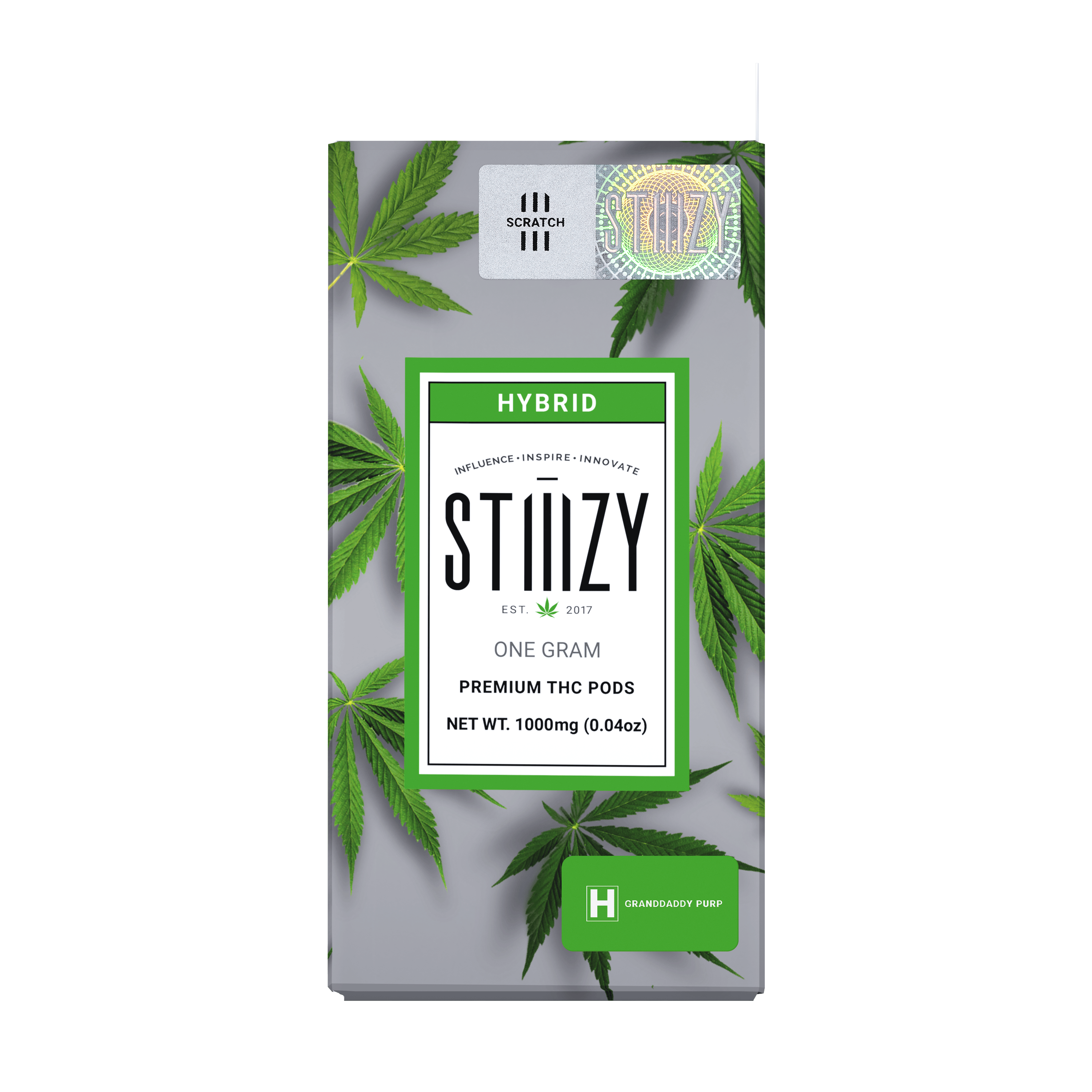
Indica
All strains Grand Daddy Purple
9 live products in stock
Quick answer · What is the Grand Daddy Purple cannabis strain?
Granddaddy Purple arrives like a deep exhale at the end of a long week — its dense, violet-shadowed buds releasing a perfume of ripe Concord grape and sun-warmed berry that lingers in the air long before the first draw. A cornerstone of West Coast indica culture, this Ken Estes classic commands quiet attention. It settles the body with measured authority while carrying just enough mental softness to keep the evening interesting.
Shop Grand Daddy Purple · 9 of 9 live products
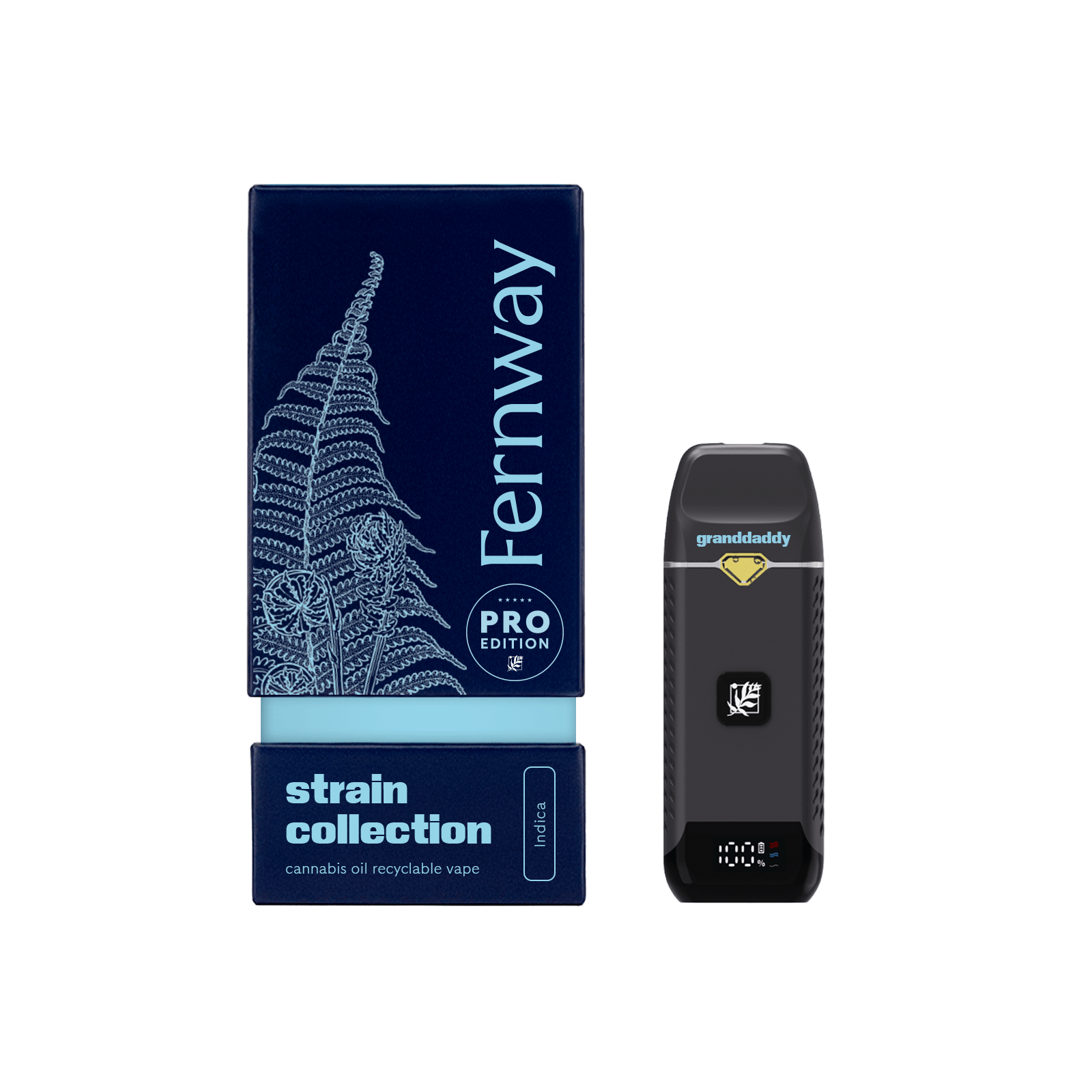
On sale· 25% OFF
THC 80.28%·CBD 1.09%Indica
FernwayFernway Granddaddy Purple Disposable Traveler Pro Vape - Indica · 1g
$42.48$56.64
$50after tax

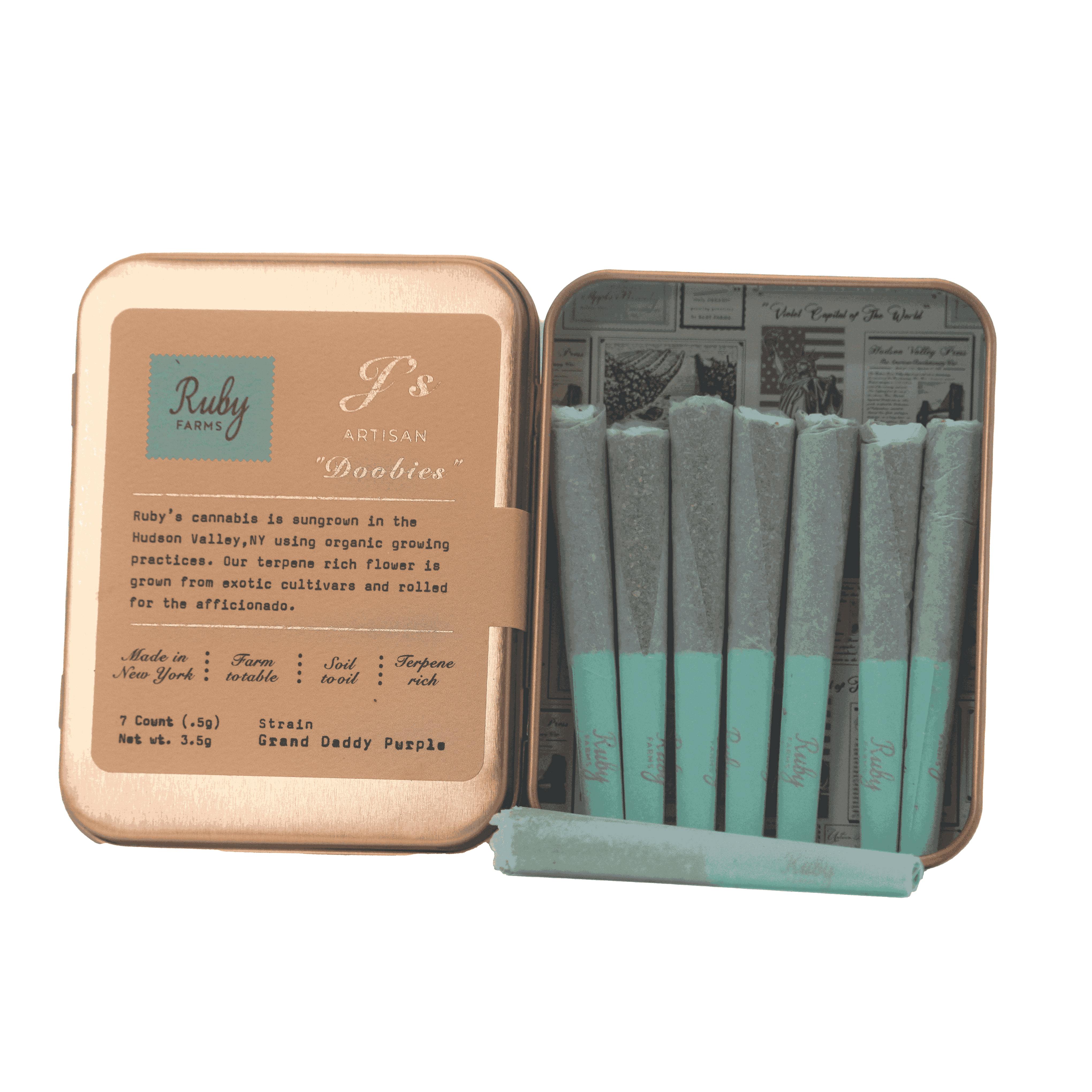
THC 28.51%Indica
Ruby FarmsGrand Daddy Purple | 7 Count Doobies | .5G/3.5G · 0.5g/7pk
$38.05
$43after tax
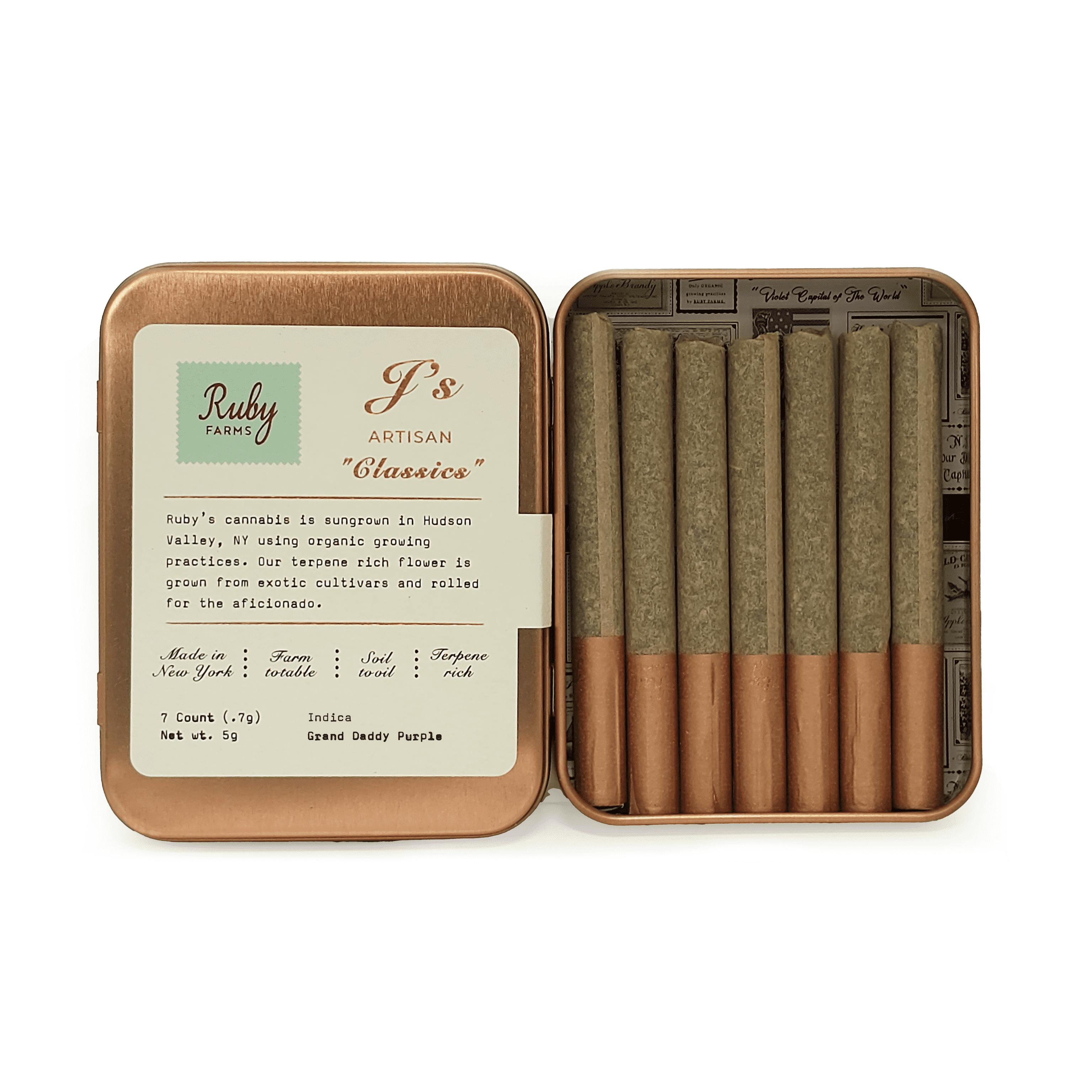

THC 42.45%Indica
Ruby FarmsRuby Farms | Granddaddy Purple | Rose Petals | Infused Pre-roll · 1.5g
$30.00
$34after tax
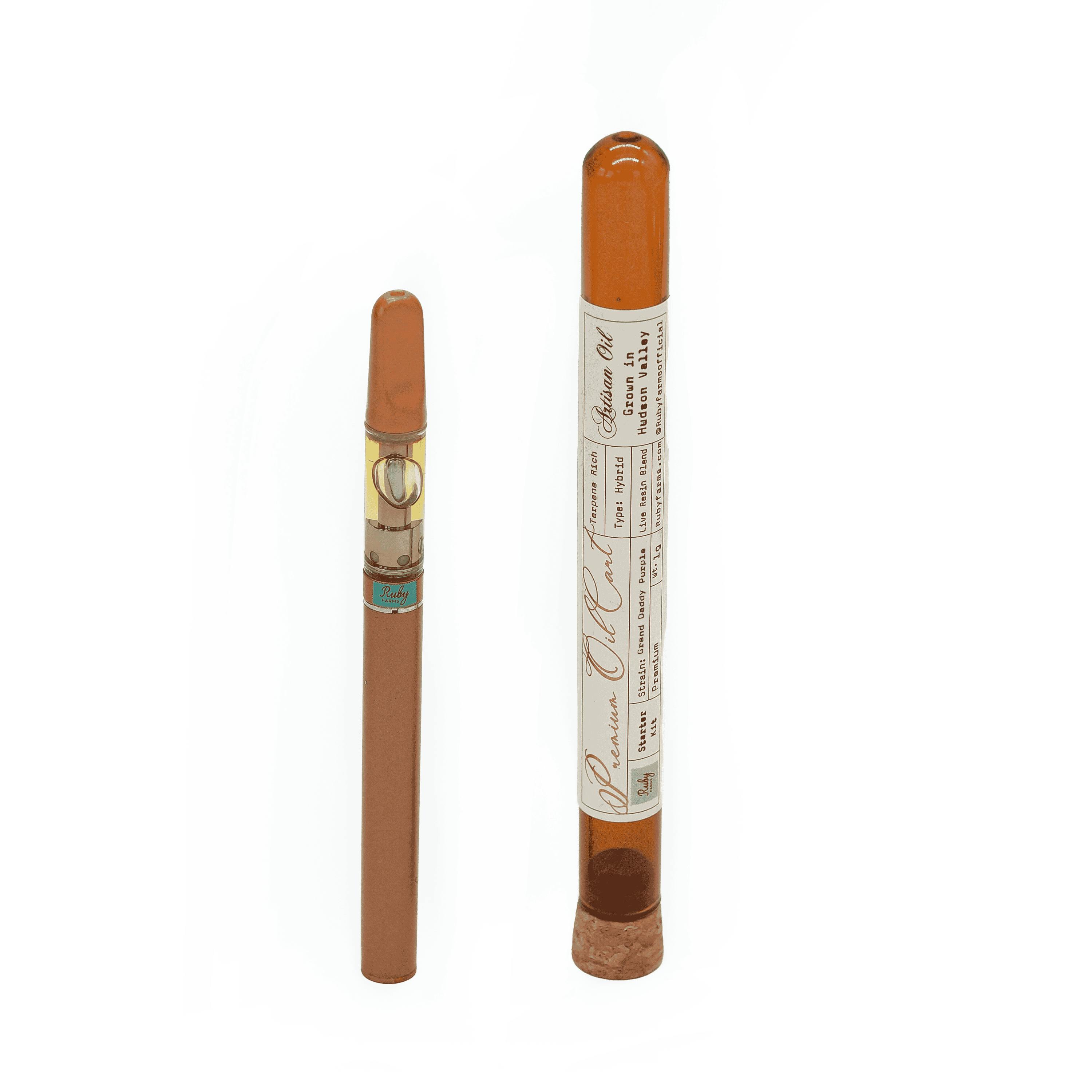
THC 88.78%·CBD 0.27%Indica
Ruby FarmsGrand Daddy Purple | Live Resin Blend Oil Starter Kit · 1g
$54.87
$62after tax
On sale· 50% OFF
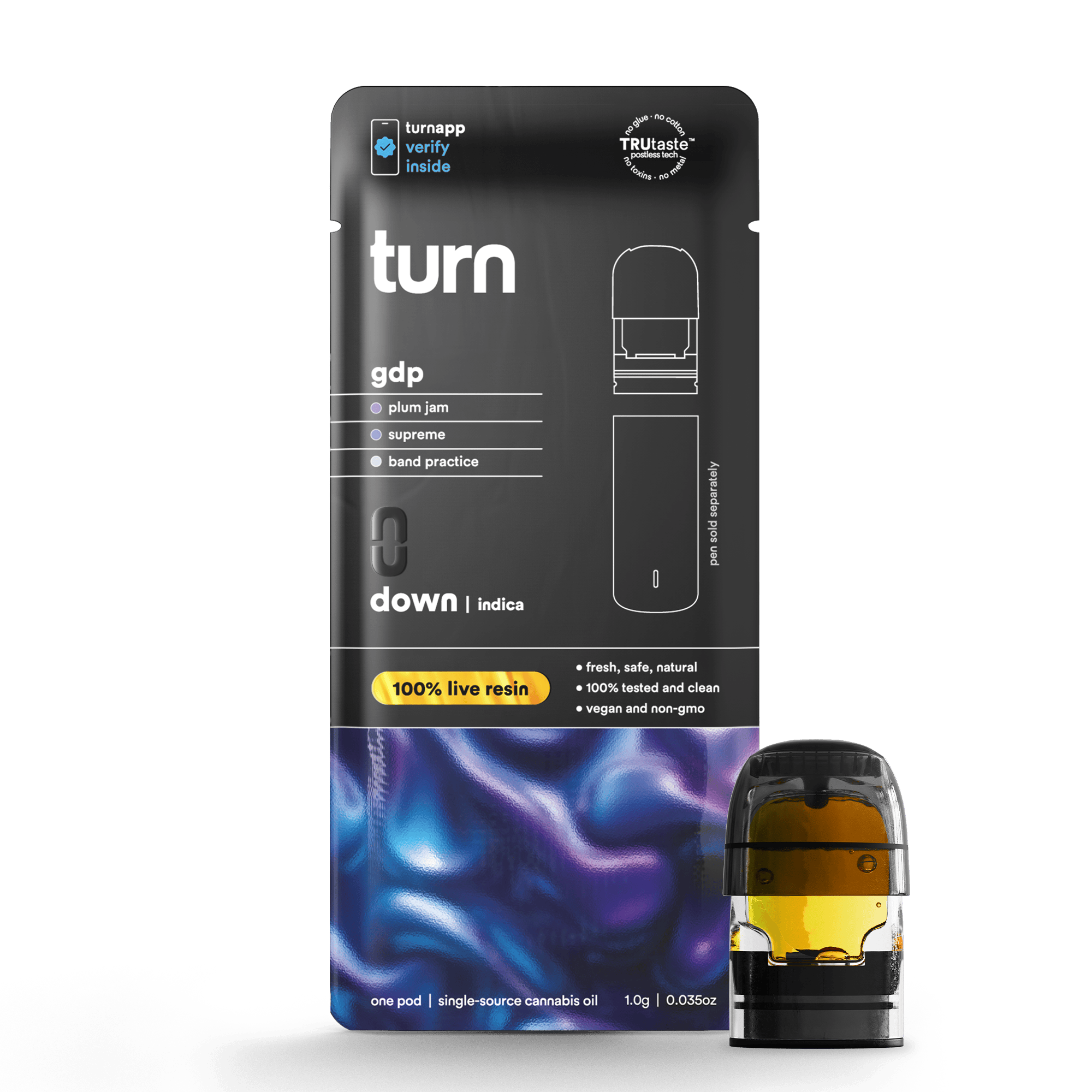
THC 79.97%·CBD 0.19%Indica
turnGranddaddy Purple | Botanica Blends | AIO · 1g
$30.00$60.00
$38after tax
About Grand Daddy Purple
Everything to know about Grand Daddy Purple.
Lineage & origin
Granddaddy Purple — often abbreviated GDP — was introduced to the California cannabis market in 2003 by Bay Area cultivator Ken Estes, who operated out of the San Francisco Bay region. The strain is a deliberate cross of two established West Coast heavyweights: Purple Urkle, itself a mysterious Mendocino County phenotype long prized for its grape-forward aroma and sedative character, and Big Bud, the Dutch-bred commercial powerhouse developed by Sensi Seeds in the 1980s and known for its outsized floral clusters and reliable yields. The marriage was intentional — Estes sought to combine Big Bud's generous structure with Purple Urkle's distinctive pigmentation and deeply relaxing effect profile. The result proved broadly influential. GDP arrived at a moment when the California medical scene was codifying its preferences, and the strain's visual drama — those unmistakable purple calyxes — made it a natural anchor for dispensary display cases. Its anthocyanin-driven coloration, triggered by cooler night temperatures during late flower, became a template that dozens of subsequent purple-forward varieties would attempt to replicate. Genetic descendants and close relatives are numerous. Grape Ape, another purple indica of the era, shares overlapping Purple Urkle heritage. More directly, GDP has been used as a parent or reference point in breeding projects that include Granddaddy Bruce, a GDP-Blue Dream hybrid, and various proprietary GDP phenotypes that circulate under Ken Estes's own Grand Daddy Purp branded line. The strain's lineage is well-documented by breeder accounts and widely corroborated across major cannabis reference databases.
Effects
The onset of Granddaddy Purple tends to arrive within the first five to ten minutes of inhalation — and it announces itself through the head before it settles into the body. A gentle cerebral warmth tends to surface first: thoughts slow and soften at the edges, and an unhurried sense of ease takes hold without producing any significant cognitive sharpness or energetic uplift. This initial phase is notably pleasant for those who prefer a calm mental environment rather than a stimulating one. As the experience deepens into its peak — generally between thirty minutes and an hour in — the physical dimension becomes more pronounced. Myrcene, the dominant terpene in most GDP expressions, is widely associated with the heavy, couch-settling body sensation that characterises mature indica strains. The muscles release tension with a measured, unhurried quality, and a pervasive physical comfort tends to pervade the limbs. This is not the kind of alertness-preserving relaxation of a balanced hybrid; it is, openly, a sedative-leaning experience. Duration typically runs two to three hours for moderate consumption, with the comedown gradual rather than abrupt. Drowsiness often follows the peak, making late-evening timing the most appropriate context for most adults. Caryophyllene, present as a secondary terpene, may contribute a grounding quality to the overall sensation. As with any potent indica, the principle of starting low and going slowly applies — particularly for consumers new to high-myrcene varieties.
Aroma, flavor & terpenes
The terpene architecture of Granddaddy Purple is one of its most recognisable features. Myrcene dominates — and it expresses here not in its more earthy, herbal register, as it does in many strains, but in a distinctly fruity, almost fermented-grape direction, a nuance likely inherited from the Purple Urkle parentage. On the nose, the effect is immediate and opulent: ripe dark berries, Concord grape skin, and a faint floral sweetness that recalls lavender or violet, the latter potentially reflecting trace amounts of linalool present in some phenotypes. Caryophyllene provides a subtle structural contrast — a dry, faintly peppery undertone that keeps the sweetness from becoming cloying and adds a degree of complexity that more purely fruity strains often lack. Some phenotypes carry a whisper of pinene, which introduces the faintest green herbal note, like a walk through a cool vineyard, brightening the bouquet without redirecting it. On the palate — whether in flower or vapor form — the grape and berry notes carry through the initial draw with considerable fidelity. The smoke tends toward the smooth side for a flower of this density, with the sweetness persisting through mid-palate and a mild earthiness emerging on the exhale. Vapor tends to express the terpene profile with greater clarity and less combustion-derived roughness, allowing the floral and berry top notes to remain distinct rather than blending into a generalised sweetness. The finish is clean, slightly musky, and lingers agreeably.
Appearance
Few strains are as visually arresting as a well-grown Granddaddy Purple, and the appearance carries genuine informational value for the shopper: deep purple hues across the calyxes and sugar leaves signal proper cool-temperature finishing, while a blanketing of milky, amber-tipped trichomes confirms the maturity that drives the strain's characteristic depth of effect. The bud structure is dense and compact, inheriting Big Bud's tendency toward tight, heavy floral clusters. Individual nugs hold together firmly, with a slight stickiness from the resin load that makes them resistant to casual crumbling. Pistils — the fine hair-like structures — are typically a warm burnt orange or rust-red, providing vivid contrast against the violet and deep green of the underlying plant tissue. Under magnification, the trichome coverage is generous and evenly distributed, extending from the dense inner calyxes outward to the smaller surrounding leaves. The overall colour palette, at its most expressive, reads like a still life of late-autumn fruit.
Growing notes
Granddaddy Purple is cultivated both indoors and outdoors, and Ken Estes has made seeds and clones available through his Grand Daddy Purp branded operation, lending the strain a degree of genetic consistency uncommon among widely-distributed varieties. Flowering time indoors typically falls in the range of eight to eleven weeks, with most phenotypes expressing fully around nine to ten weeks. Outdoor harvests in Northern California — the strain's native climate — generally occur in late October. Indoor yields are considered moderate to generous, rewarding attentive growers with substantial floral clusters. The signature purple coloration is not guaranteed by genetics alone; it requires a deliberate temperature differential, with nighttime temperatures dropped meaningfully in the final two weeks of flowering to activate the anthocyanins responsible for the violet pigmentation. Without this technique, the plant may flower green. The strain is considered moderately approachable for experienced home cultivators, though its sensitivity to humidity and its preference for well-managed nutrient levels mean it rewards careful oversight. It is not typically recommended as a beginner's first grow. A Mediterranean-style climate — warm days, cool nights, low humidity in late season — suits it well outdoors.
When it's best enjoyed
Granddaddy Purple is most at home in the unhurried hours after the working day has concluded — the stretch between dinner and sleep when conversation slows of its own accord and the appeal of a book, a record, or simply a comfortable chair asserts itself. Its sedative lean and grape-forward warmth make it a natural companion for solitary evening rituals rather than social occasions requiring sustained engagement or quick wit. For food pairing, the myrcene-and-linalool profile of GDP finds an appealing counterpart in dark fruit desserts — a Concord grape tart, a bowl of fresh blackberries with cream, or a square of high-percentage dark chocolate with fruit notes. The sweetness of the strain's aroma does not compete with these flavors so much as extend them. Musically, the experience aligns well with slow, textured recordings — late-era Bill Evans, the more meditative passages of Portishead, or a classic soul album played at low volume. The strain does not accelerate thought; it does not sharpen focus. What it offers is the particular pleasure of settling fully into a single moment, without urgency. For that purpose, consumed thoughtfully by adults in a comfortable private setting, it remains a considered and reliable choice.
If you like Grand Daddy Purple, also explore
Purple Urkle
As one of GDP's direct parent strains, Purple Urkle shares the grape-forward aroma and deeply sedative body character that define the Granddaddy Purple experience, with a slightly more singular, less complex profile.
Grape Ape
Grape Ape draws on overlapping Purple Urkle genetics and delivers a similarly sweet, berry-dominant aroma alongside pronounced physical relaxation, making it a natural transition for GDP admirers.
Blackberry Kush
Sharing the dark-fruit aromatic register and indica-dominant body heaviness of GDP, Blackberry Kush offers a comparably immersive evening experience with an added earthy, fuel-tinged depth.
Northern Lights
A foundational indica of comparable historical significance, Northern Lights delivers the same measured physical sedation and resinous depth for those who prefer a less fruit-forward, more classically earthy profile.
9 Pound Hammer
For consumers drawn to GDP's unambiguous body-first experience and sweet, berry-adjacent terpene profile, 9 Pound Hammer offers a structurally similar arc with a grape and lime aromatic character.
Common questions
Is Granddaddy Purple indica or sativa?+
Granddaddy Purple is an indica-dominant strain, the product of a cross between Purple Urkle and Big Bud — both firmly indica in character. It expresses the hallmarks of that classification: dense bud structure, a body-forward effect profile that leans sedative, and a warm, fruit-driven terpene palette. It is not a balanced hybrid and does not carry the energetic or cerebral orientation typically associated with sativa-dominant varieties.
What does Granddaddy Purple taste like?+
Granddaddy Purple tastes predominantly of ripe grape and dark berry — a profile that is unusually direct and persistent compared with many strains. The sweetness is broad rather than sharp, rounded by a mild earthy undertone on the exhale. Caryophyllene contributes a faint peppery note that prevents the flavor from becoming one-dimensional. In vapor, the fruit notes express with particular clarity, while combustion adds a pleasant, mild musk to the finish.
What are the typical effects of Granddaddy Purple?+
Granddaddy Purple typically produces a two-stage experience: a gentle, softening mental ease arrives first, followed by a deepening physical relaxation that can become quite sedative in the peak window. The body sensation is unhurried and pervasive, driven largely by its high myrcene content. The experience tends toward stillness rather than engagement. Duration is generally two to three hours, with drowsiness common as the peak subsides. Adults new to the strain are encouraged to start conservatively.
What strains are similar to Granddaddy Purple?+
Consumers who enjoy Granddaddy Purple often appreciate Purple Urkle for its shared grape-forward character, Grape Ape for its overlapping genetic heritage and body sedation, and Blackberry Kush for its comparable dark-fruit aroma and indica depth. Northern Lights offers a similarly grounding physical experience in a more classically earthy register. 9 Pound Hammer provides a related effect arc with a slightly different terpene emphasis.
Is Granddaddy Purple good for beginners?+
Granddaddy Purple can be approachable for newer cannabis consumers provided the standard guidance applies: start with a small amount, allow sufficient time to assess the effects before consuming further, and choose a comfortable, familiar setting. Its sedative lean is pronounced relative to many entry-level varieties, and the body sensation can feel more intense than anticipated for those unaccustomed to high-myrcene indicas. Afternoon or evening consumption is more appropriate than daytime for most first-time encounters with this strain.
What are the dominant terpenes in Granddaddy Purple?+
Myrcene is the dominant terpene in most Granddaddy Purple expressions, contributing the characteristic grape and berry aroma along with the heavy, body-settling quality associated with the strain. Caryophyllene is consistently present as a secondary terpene, lending a mild peppery complexity and a grounding character. Trace amounts of linalool — associated with floral, lavender notes — and pinene appear in some phenotypes, adding aromatic nuance without redirecting the overall profile.
Why does Granddaddy Purple turn purple?+
The purple coloration in Granddaddy Purple results from pigments called anthocyanins, which are present in the plant's genetics — inherited primarily from the Purple Urkle parent. These pigments are activated by cooler temperatures during the final weeks of the flowering cycle. When nighttime temperatures are deliberately reduced, the anthocyanins express visually across the calyxes and leaves, producing the violet and deep blue-purple hues the strain is known for. Without that temperature management, the plant may flower predominantly green.
When is the best time of day to consume Granddaddy Purple?+
Granddaddy Purple is most suited to late evening consumption for most adults, given its sedative-leaning effect profile and the likelihood of drowsiness following the peak experience. It is not well-matched to contexts requiring alertness, quick decision-making, or sustained social engagement. Evening rituals — reading, listening to music, quiet conversation before sleep — represent the natural setting for this strain. Those with a higher tolerance to indica effects may find early evening more versatile.
Related strains