THC 30.3%Sativa-Hybrid
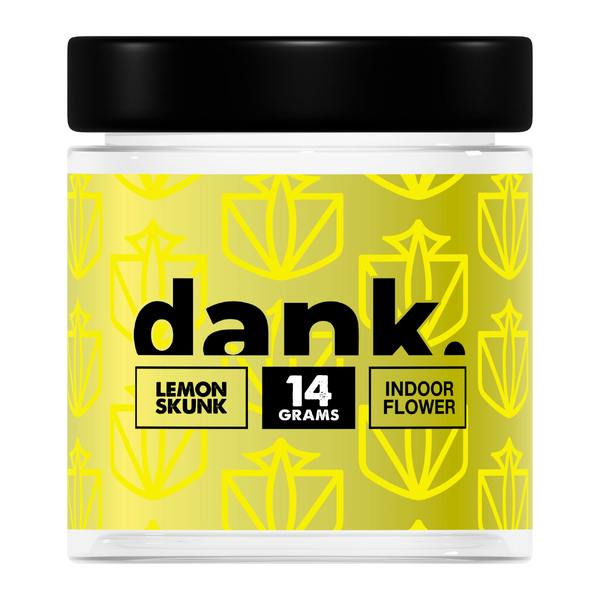
Dank By Definition.Dank | Flower | Premium | Lemon Skunk · 14g
$100.00
$113after tax

weeddispensarynearme.com
You must be 21 years or older to enter. By entering, you confirm you’re of legal age in your state to purchase cannabis.
For use only by adults 21+ • Keep out of reach of children
1 live products in stock
Quick answer · What is the Lemon Skunk cannabis strain?
Lemon Skunk arrives with the kind of confident brightness that needs no introduction — a crisp, citrus-forward cultivar whose Dutch roots and spirited lineage have earned it a devoted following among connoisseurs who appreciate a well-structured sativa experience. Equal parts energizing and approachable, it carries a golden character that feels as considered as a carefully pressed olive oil or a first-press sparkling wine, making it a natural centerpiece for the discerning New York adult-use shopper.
$113after tax
About Lemon Skunk
Lemon Skunk traces its origins to DNA Genetics, the Amsterdam-based seed company that first catalogued and commercialized the strain in the mid-2000s. The breeders selected two distinct phenotypes of Skunk — the foundational hybrid that itself descends from Acapulco Gold, Colombian Gold, and Afghani landrace genetics — specifically seeking out plants that expressed an unusually pronounced lemon character. By crossing these two lemon-forward Skunk cuts, DNA Genetics isolated the citrus expression as a dominant trait rather than a secondary note. The strain gained considerable traction in the European cannabis community throughout the late 2000s, earning a High Times Cannabis Cup win in 2009 as the best hybrid, which accelerated its spread into North American markets. Its timing coincided with a broader industry shift toward terpene-conscious breeding, and Lemon Skunk became something of an early standard-bearer for that movement. Notably, Lemon Skunk appears in the lineage of several influential descendants. Super Lemon Haze — a two-time Cannabis Cup champion bred by Green House Seeds — is a cross of Lemon Skunk and Super Silver Haze, and it remains one of the most recognizable sativa-leaning strains in the world. Lemon OG and various 'Lemon' phenotype selections in contemporary breeding programs also owe a philosophical, if not always direct, genetic debt to the work DNA Genetics conducted with this cultivar.
The onset of Lemon Skunk is characteristically swift for a sativa-leaning cultivar, with initial effects often perceived within the first few minutes of inhalation. The opening phase is predominantly cerebral — a gentle but distinct lift in mood and mental clarity that tends to quiet the low-level noise of a busy day without inducing the kind of overstimulation sometimes associated with more potent sativa expressions. Thoughts feel more ordered, conversational, and occasionally more playful. At its peak, the experience leans emphatically toward the head rather than the body, though a mild physical ease typically accompanies the mental activation. This balance is partly attributable to the strain's terpene profile: myrcene contributes a subtle grounding quality that softens what might otherwise feel too wired, while limonene supports the mood-brightening and alert character that defines the strain's reputation. Caryophyllene adds a layer of ease that prevents any edge from developing. Duration is moderate by sativa standards — most consumers report a peak window of one to two hours, followed by a gradual and generally comfortable tapering rather than an abrupt landing. The comedown tends to leave the consumer in a calm, reflective state rather than a sedated one, which makes Lemon Skunk a practical choice for those who need to remain functional throughout their day. As with all cannabis, individual response varies considerably; starting with a measured amount is consistently advisable.
The aromatic profile of Lemon Skunk is anchored by an assertive, sunlit citrus character that reads first as fresh lemon zest — bright, slightly tart, and clean rather than synthetic. This quality is driven primarily by limonene, the monoterpene found abundantly in citrus rind, which is well-documented for contributing an uplifting, mood-associated sensory quality. The lemon note here is accompanied by a mild sweetness underneath, reminiscent of lemon curd or a properly made tarte au citron. Myrcene is present in the background, contributing an herbal, slightly musky warmth that keeps the strain from reading as purely sharp or one-dimensional. Caryophyllene introduces a faint peppery undercurrent that becomes more apparent on the exhale, adding complexity and preventing the citrus from becoming saccharine. Trace levels of humulene lend a subtle earthiness — a distant whisper of damp forest floor — that sits at the very edge of perception and reveals itself primarily on the finish. On the palate, whether consumed via flower or vapor, Lemon Skunk delivers a remarkably clean initial impression. The citrus is immediate and honest, followed by a mild skunky funk — the unmistakable genetic inheritance from its Skunk parent — that gives the strain its savory depth and prevents the experience from becoming monolithic. The vapor character is smoother than the skunk heritage might suggest, finishing with a light earthiness and a faint floral accent that lingers on the palate without overstaying its welcome.
Lemon Skunk presents with the kind of well-formed, medium-density bud structure one would expect from a cultivar with Skunk heritage — not as compact as a classic indica, but structured enough to feel substantial in hand rather than airy or loosely assembled. The calyxes are elongated and moderately tapered, stacking in a way that gives each cola a slightly irregular, organic silhouette. Coloration tends toward a medium to bright green, occasionally accented with pale yellow undertones that complement the strain's citrus identity in a subtly theatrical way. Pistils run warm amber to pale orange, distributed generously across the surface. Trichome coverage is noteworthy — a dense, even frost of capitate-stalked resin glands gives well-cured examples a softly luminous appearance under direct light, lending the flower a quality finish that signals careful cultivation and post-harvest handling.
Lemon Skunk is considered a moderately accessible cultivar for experienced home growers, though its sativa-forward stretch during the early flowering phase requires planning in terms of vertical space. Indoor cultivation typically yields results within a flowering window of approximately eight to nine weeks, with indoor yields that reward attentive environmental management. The plant tends to respond well to low-stress training techniques that help manage canopy height while encouraging lateral branching. Outdoor cultivation is feasible in temperate to warm climates with reliable late-season sun, with harvest typically falling in early to mid-October in the Northern Hemisphere. The strain's Skunk genetics contribute a degree of resilience to humidity fluctuations, though adequate airflow remains important to protect the denser lower bud sites. For the cultivator-curious shopper, Lemon Skunk represents a strain whose aromatic payoff — particularly the intensity of the fresh lemon terpene expression at harvest — is closely tied to the quality of light exposure and the patience applied during a proper dry and cure.
Lemon Skunk is well-suited to the daylight hours — a mid-morning companion to a creative project, or an early-afternoon companion to a walk through a neighborhood that rewards slower observation. Its energizing but even-tempered character makes it a natural fit for solo work that benefits from sustained attention without the rigidity of focus: writing, sketching, or the kind of meandering research that leads somewhere unexpected. For those who prefer a social context, Lemon Skunk carries well into a relaxed gathering of close friends — a Sunday brunch on a sun-lit terrace, or a long, unhurried afternoon in a park. Its citrus and slightly skunky aromatic profile pairs naturally with dishes that share its brightness: a well-dressed ceviche, a lemon-forward pasta with fresh herbs, or a sparkling water with a squeeze of citrus alongside a cheese board. Musically, the strain aligns with something dynamic but not frenetic — Khruangbin's warm, groove-forward instrumental work or early Stereolab comes to mind as a fitting backdrop, both sharing that quality of sustained, pleasantly alert attention that Lemon Skunk tends to cultivate.
Super Lemon Haze
As a direct descendant of Lemon Skunk crossed with Super Silver Haze, Super Lemon Haze shares the citrus-forward terpene profile and alert sativa character, while adding a slightly more complex, layered sweetness.
Lemon Haze
Lemon Haze delivers a comparable bright, zesty citrus aromatic experience with an energizing, sociable effect profile that will feel immediately familiar to Lemon Skunk enthusiasts.
Skunk No. 1
As the foundational parent behind Lemon Skunk's genetic heritage, Skunk No. 1 offers the same earthy-skunky backbone with a more balanced, less citrus-dominant expression for those curious about the roots of the cultivar.
Tangie
Tangie's pronounced citrus-forward terpene profile — particularly its tangerine-heavy limonene expression — appeals to the same palate that gravitates toward Lemon Skunk's fresh, clean aromatic character.
Amnesia Haze
Amnesia Haze shares Lemon Skunk's Dutch-scene heritage and similarly delivers a cerebral, mood-lifting sativa arc with a citrus and earthy complexity that rewards experienced consumers who appreciate a well-defined peak.
Lemon Skunk is classified as a sativa-dominant hybrid. Bred by DNA Genetics from two lemon-expressing Skunk phenotypes — which themselves carry Acapulco Gold, Colombian, and Afghani genetics — the strain leans decidedly toward the cerebral, energizing side of the spectrum. Its effects reflect that orientation: alert and mood-brightening rather than sedating or heavily physical, making it better suited to daytime use than an evening wind-down.
Lemon Skunk delivers a clean, bright citrus flavor on the inhale — fresh lemon zest with a mild underlying sweetness, reminiscent of lemon curd. The exhale introduces the strain's Skunk heritage as a subtle, savory funk that adds depth without overwhelming the citrus. A faint pepper note from caryophyllene and a distant earthiness round out the finish, giving the overall flavor profile a complexity that distinguishes it from simpler lemon-forward cultivars.
Consumers consistently report a swift, cerebral onset characterized by elevated mood, improved mental clarity, and a light, sociable energy. The experience is sativa-dominant throughout its arc — the head effect leads, while a mild physical ease accompanies it without inducing sedation or heaviness. The peak typically lasts one to two hours, tapering into a calm, grounded state. Effects vary by individual; those newer to cannabis are encouraged to begin with a modest amount and allow sufficient time before assessing.
Consumers who appreciate Lemon Skunk often gravitate toward Super Lemon Haze, which is a direct descendant and shares its citrus-forward, energizing profile. Tangie and Lemon Haze offer comparable bright, zesty aromatic experiences. Skunk No. 1 provides an interesting reference point for the foundational genetic heritage. Amnesia Haze, another Dutch-scene cultivar, echoes the mood-lifting sativa arc with its own citrus and earthy complexity.
Lemon Skunk is approachable relative to some high-potency sativa expressions, but its energizing cerebral character may feel pronounced for consumers with little prior experience. Those new to cannabis are encouraged to follow a start-low, go-slow approach regardless of strain. The absence of a heavy body effect makes the experience less disorienting than some indica-dominant cultivars, but the mental activation can feel unfamiliar to first-time consumers. Choosing a comfortable, familiar setting is always advisable.
The dominant terpene in Lemon Skunk is limonene, which drives the strain's signature citrus aroma and contributes to its mood-brightening character. Myrcene is present as a secondary terpene, lending a mild herbal warmth and subtle grounding quality. Caryophyllene rounds out the primary profile with a faint peppery note and an ease that tempers any potential edge in the experience. Trace humulene contributes a distant earthiness that becomes most apparent on the finish.
Lemon Skunk, as developed by DNA Genetics, won a High Times Cannabis Cup award in 2009 in the best hybrid category. That recognition proved pivotal in establishing the strain's international reputation and accelerating its adoption across North American markets. The win also helped cement DNA Genetics' standing as one of the more influential seed companies to emerge from the Amsterdam breeding scene during the mid-2000s cannabis genetics boom.
Given its sativa-dominant, cerebral effect profile, Lemon Skunk is most naturally suited to daytime and early-evening use — mornings when mental engagement is welcome, or afternoons when sustained attention and a light social energy are an asset. Its moderate duration and clean comedown make it practical for those who need to remain functional. Using it late in the evening is generally less advisable, as the energizing quality may not be conducive to settling into restful sleep.
Related strains
Pick your store
We'll show pricing, deals, and delivery zones for the store you pick. You can switch any time from the header.