
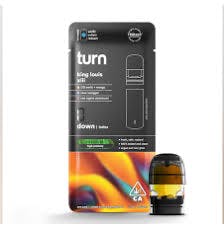
Indica
All strains King Louis
4 live products in stock
Quick answer · What is the King Louis cannabis strain?
King Louis — sometimes listed as King Louis XIII — is a celebrated California indica whose reputation rests on a dense, resinous bud structure and an earthen pine aroma that lingers long after the jar is opened. Rooted in the storied OG Kush lineage, this strain carries the measured authority of its royal namesake: unhurried, deliberate, and deeply grounding. It is the kind of flower that rewards patience and a quiet evening.
Shop King Louis · 4 of 4 live products
THC 27.8%Indica
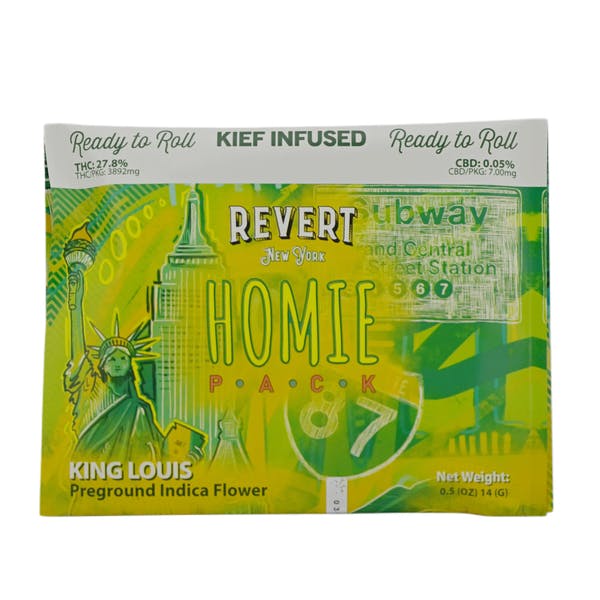
Revert CannabisRevert Kief Infused Pre Ground Flower King Louis Homie Pack · 14g
$60.00
$68after tax
THC 84.9%Hybrid
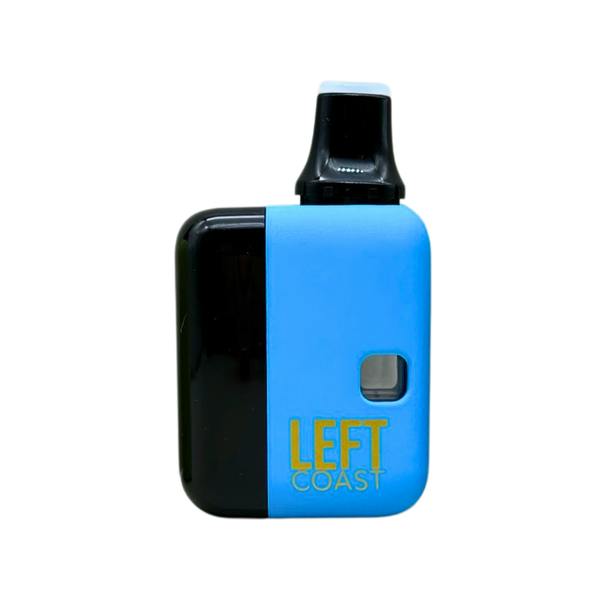
Left CoastLeft Coast Grandaddy Purp x King Louis Dual Chamber Vape · 2g
$75.22
$85after tax
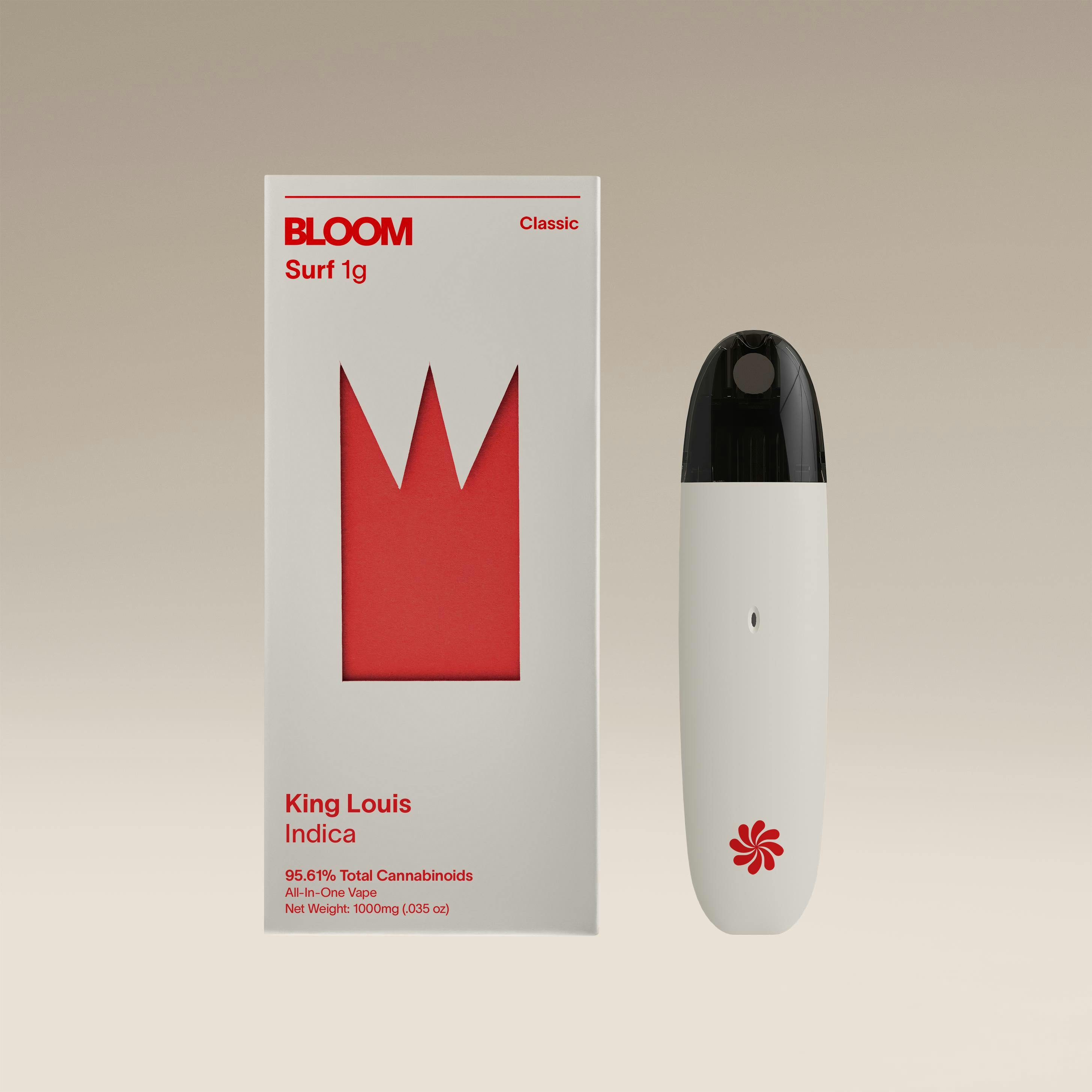
About King Louis
Everything to know about King Louis.
Lineage & origin
King Louis XIII is widely understood to be a phenotype or direct cross rooted in OG Kush genetics, with most accounts citing OG Kush and LA Confidential as its parent strains. LA Confidential, itself a cross of Afghani and OG LA Affie developed by DNA Genetics, contributes the compact bud architecture and the deep sedative body character that distinguishes King Louis from more cerebral OG expressions. OG Kush, whose own lineage remains one of cannabis culture's enduring debates — likely a descendant of Chemdawg, Lemon Thai, and a Hindu Kush landrace — supplies the fuel-and-pine aromatic signature that defines the broader OG family. King Louis emerged from the Southern California medical market in the mid-to-late 2000s, a period when the Los Angeles dispensary scene was actively curating and naming regionally significant OG phenotypes. Strains such as SFV OG, Fire OG, and Tahoe OG were being distinguished from one another during the same era, and King Louis earned its place alongside them through consistent resin production and a particularly pine-forward, almost regal character. The breeder of origin has not been definitively established in public records, and sourcing accounts vary. However, the strain has been stabilized and distributed by several respected California seed and clone operations over the subsequent decade, cementing its status as a canonical West Coast indica alongside its OG Kush siblings.
Effects
The onset of King Louis arrives with a measured deliberateness that reflects its indica dominance. Most consumers report the first wave within five to fifteen minutes of inhalation — a gentle pressure settling behind the eyes and across the temples, accompanied by an initial lift of mood that softens rather than sharpens mental focus. This cerebral warmth is brief compared to many hybrids; it serves more as a transition than a destination. As the experience deepens toward the twenty-to-forty-minute mark, the body component becomes the primary character. A full, even relaxation moves through the shoulders, chest, and limbs, the kind that discourages ambition without producing discomfort. This quality is often attributed to the combined influence of myrcene — the most prevalent terpene across most King Louis samples, known for its synergistic relationship with cannabinoids in producing sedative qualities — and the elevated indica-profile cannabinoid content inherited from both parent lines. The peak tends to plateau over one to two hours before gradually softening into a heavy, restful drowsiness. The comedown is gentle rather than abrupt; many consumers find themselves simply unwilling to move rather than experiencing any sharper cognitive drop. Those newer to high-potency indicas are well advised to begin with a conservative amount and allow adequate time before reassessing — the full body character of King Louis can catch the uninitiated by surprise.
Aroma, flavor & terpenes
King Louis opens with one of the more immediately recognizable aromatic profiles in the OG family: a sharp, resinous pine that calls to mind a walk through a coniferous forest after rain, undercut immediately by a damp, dark earthiness. This foundational character is driven by elevated levels of myrcene, which contributes the musky, herbal earthiness, and beta-caryophyllene, a spicy, woody terpene that adds both depth and a subtle warmth to the initial impression. Alpha-pinene and beta-pinene account for the pronounced pine quality that gives King Louis its distinctive nose — pinene is among the most commonly identified terpenes in OG Kush phenotypes and is largely responsible for the forest-floor freshness that differentiates King Louis from sweeter California indicas. Secondary notes of fuel and a faint citrus peel, often attributed to trace limonene, emerge on closer inspection, rounding the profile with just enough brightness to keep the aroma from reading as purely dank. On the palate, King Louis tends to deliver a smooth, full smoke or vapor with a slow-building spice on the exhale. The pine and earth notes translate faithfully from nose to taste, and the caryophyllene-driven pepper quality becomes more apparent mid-palate. The finish is clean and dry with a light resinous aftertaste that persists pleasantly. Well-cured flower amplifies all of these qualities; improperly dried material can mute the aromatic complexity considerably.
Appearance
King Louis produces compact, densely packed buds that reflect both its Afghani heritage through LA Confidential and the classic OG Kush structure. The calyxes stack tightly, forming an almost rigid nugget shape that feels substantial in the hand relative to its volume. The color palette tends toward deep, forest greens with occasional olive and moss tones, and well-grown examples display subtle dark purple highlights along the inner leaves — a phenotypic expression that becomes more pronounced when plants are finished at cooler temperatures. Orange-to-amber pistils weave through the bud in moderate density, providing warm contrast against the cooler greens. The trichome coverage is one of King Louis's most immediately striking visual qualities: a thick, even blanket of milky-to-amber glandular resin that gives even moderate-sized buds a visually frosted, almost sculptural appearance. This resin density is part of what made the strain commercially significant in California's early dispensary culture and continues to signal quality to experienced shoppers.
Growing notes
King Louis is considered an intermediate-level cultivation project, demanding more attentive environmental management than many hybrid strains but rewarding patient growers with exceptional resin production and consistent phenotypic expression. Indoors, the strain typically finishes flowering in approximately eight to nine weeks, yielding moderately — experienced indoor cultivators working with well-dialed lighting and canopy management can expect solid returns, though King Louis is not among the highest-yielding OG expressions. The plant prefers a warm, dry Mediterranean-style climate that mirrors its Southern California origins. Indoor environments should maintain low relative humidity during the flowering period, particularly in the final weeks, to protect the dense bud structure from moisture-related issues. The compact architecture makes King Louis a reasonable candidate for Sea of Green methods. Outdoors, the strain performs best in climates that offer reliable late-summer warmth and dry conditions through harvest, typically arriving in early-to-mid October in the Northern Hemisphere. Those with a cultivator's curiosity will find King Louis a worthy study in terpene-preserving finishing techniques.
When it's best enjoyed
King Louis is fundamentally an evening strain — one suited to the hours when the day's obligations have fully resolved and the body is ready to shift into a quieter register. It is at its best when there is no remaining agenda: a long dinner already finished, plans fully cancelled, a comfortable piece of furniture nearby. Solo use is where it most naturally lands, providing the internal stillness that suits reflection, passive listening, or simply the pleasure of doing very little with complete presence. For those inclined toward pairing, the earthy pine and spice of King Louis's terpene profile finds a natural counterpart in similarly grounded flavors. A slowly consumed aged cheese board — aged gouda, a firm manchego — or a dark chocolate with high cacao content complements the strain's resinous, slightly bitter finish without competing with it. On the audio side, the measured tempo of late-period jazz, drone, or acoustic minimalist composition tends to suit the pace at which King Louis settles in. It is not a strain for galleries or conversation-heavy dinner parties; it is a strain for the quiet room and the long exhale.
If you like King Louis, also explore
OG Kush
As the foundational parent of King Louis, OG Kush shares the same pine-and-fuel aromatic DNA and a familiar relaxing body quality, making it the most natural stepping stone for fans of either strain.
LA Confidential
The other direct parent of King Louis, LA Confidential delivers the same compact structure and deep Afghani-influenced sedation with a slightly more pronounced sweet-earthy nose.
Tahoe OG
A fellow Southern California OG phenotype, Tahoe OG shares King Louis's heavy indica character and resinous profile while adding a lemon-forward element that appeals to fans of brighter OG expressions.
SFV OG
San Fernando Valley OG occupies a similar place in West Coast indica culture, offering pine and earth alongside a slightly more functional body effect for those who find King Louis's sedation a degree more than they prefer.
Bubba Kush
Those drawn to King Louis for its nighttime body relaxation and hash-like earthiness will find Bubba Kush equally accommodating, with a sweeter, coffee-tinged aromatic variation on the same deeply calming theme.
Common questions
Is King Louis indica or sativa?+
King Louis is a firmly indica-dominant strain, a phenotype or direct cross rooted in OG Kush and LA Confidential genetics. Its effects lean heavily toward physical relaxation and a grounding body presence rather than cerebral stimulation or energetic uplift. Most categorizations across Leafly, AllBud, and similar platforms list it consistently as indica, and the consumer experience generally confirms that classification.
What does King Louis taste like?+
King Louis delivers a pine-forward, earthy flavor profile on the inhale, with a spicy, mildly peppery quality on the exhale driven by beta-caryophyllene. Faint notes of fuel and citrus peel emerge in well-cured examples. The smoke or vapor character is smooth and full-bodied, finishing clean and dry with a pleasant resinous aftertaste. The flavor closely mirrors the strain's aroma, making the experience feel cohesive from nose to palate.
What are the typical effects of King Louis?+
King Louis typically produces a brief, mood-softening mental onset followed by a deep, even body relaxation that builds steadily over the first thirty to forty minutes. The peak is characterized by physical heaviness and a quiet mental stillness. The experience tends to last one to two hours at its plateau before easing into restful drowsiness. It is broadly considered a nighttime strain and is not well suited to active or socially demanding occasions.
What strains are similar to King Louis?+
Those who appreciate King Louis will likely find common ground with OG Kush and LA Confidential — its direct parent strains — as well as with other West Coast OG phenotypes such as Tahoe OG and SFV OG. Bubba Kush is another natural comparison point for its shared Afghani-influenced body sedation and earthy aromatic depth. All of these strains occupy the same broad category of resinous, pine-and-earth California indicas.
Is King Louis good for beginners?+
King Louis is a high-potency indica that can catch inexperienced consumers off guard, particularly because its full body effect unfolds gradually over thirty minutes or more. Beginners curious about this strain are advised to follow a start-low, go-slow approach, allow significant time between sessions, and choose a setting where deep relaxation is appropriate and comfortable. It is not recommended as a first introduction to cannabis, but informed new consumers can approach it with care.
What are the dominant terpenes in King Louis?+
King Louis is generally dominant in myrcene, which contributes its musky, herbal earthiness and is associated with its sedative body quality. Beta-caryophyllene is a prominent secondary terpene, adding spice and warmth to the aroma and a mild peppery note to the flavor. Alpha-pinene and beta-pinene account for the strain's signature forest-floor pine character. Trace limonene appears in some phenotypes, adding faint citrus brightness to the overall profile.
When is the best time of day to consume King Louis?+
King Louis is best suited to the evening or nighttime hours when physical relaxation and mental quietude are welcome rather than disruptive. Its deeply grounding body effect and tendency toward drowsiness at higher consumption levels make it a poor companion for daytime responsibilities, creative work requiring sustained focus, or social situations that demand active engagement. It is most at home in calm, unhurried settings at the close of the day.
What is the origin of the name King Louis?+
The strain is commonly referred to as King Louis or King Louis XIII, the latter a reference to the seventeenth-century French monarch of the same name. The royal naming convention reflects the Southern California dispensary culture of the mid-2000s, when OG Kush phenotypes were often given elevated, distinguished names to signal quality and regional significance. The breeder of record has not been definitively documented, and the precise origin of the name as applied to this specific phenotype is not fully traceable through public sources.
Related strains