
Hybrid
All strains New Yorker
1 live products in stock
Quick answer · What is the New Yorker cannabis strain?
New Yorker is a locally celebrated hybrid that carries the spirit of its namesake city — layered, purposeful, and unhurried in its pleasures. With a terpene profile that leans toward earthy pine and subtle citrus, it offers a balanced experience that neither overwhelms nor underwhelms. For the discerning adult-use consumer in search of a strain that matches the rhythm of an evening well spent, New Yorker presents itself as a quietly confident choice.
Shop New Yorker · 1 of 1 live products
About New Yorker
Everything to know about New Yorker.
Lineage & origin
New Yorker's precise genetic lineage is not comprehensively documented in major public databases such as Leafly or Wikileaf, and the breeder has not made a definitive public statement naming both parent strains. What is generally circulated within cultivator communities suggests a cross leaning on classic East Coast-oriented genetics, with some accounts pointing to OG Kush-derived parentage on one side and a sativa-leaning hybrid on the other — a pairing that would account for its balanced hybrid character. The strain emerged within the context of New York's expanding craft cannabis culture, a scene that gained particular momentum following adult-use legalization in the state. Regional breeders began developing terroir-specific cultivars during this period, seeking to offer something that spoke directly to the local market's sensibility: cultivated, complex, and not given to excess. While New Yorker does not have the same depth of documented phenotypic siblings as more commercially ubiquitous strains, its profile places it in the broader lineage of balanced hybrids that draw from the OG and Kush family trees. Consumers who appreciate well-known balanced cultivars such as Blue Dream or Jet Fuel in terms of effect structure will find New Yorker operating in a similar genetic and experiential neighborhood, even if its specific ancestry remains partially undisclosed.
Effects
The onset of New Yorker typically arrives within the first five to ten minutes of inhalation — measured and deliberate rather than abrupt. The initial impression is cerebral: a gentle brightening of focus and a mild elevation in mood that settles comfortably rather than pushing toward anxious heights. This quality makes the early phase of the experience particularly well suited to social engagement or reflective solo activity. As the experience deepens into its peak — generally between fifteen and forty-five minutes in — a body component begins to emerge alongside the mental clarity. The physical sensation is warm rather than sedating, adding a sense of ease to the shoulders and jaw without pulling the consumer toward the couch. This duality is characteristic of well-balanced hybrids and is likely tied to the interplay between myrcene's relaxing properties and the uplifting influence often associated with limonene and terpinolene. The duration of New Yorker's effects is typically moderate, running between ninety minutes and two and a half hours depending on individual tolerance and consumption method. The comedown is gentle — a gradual softening of the elevated state rather than a sudden drop. New consumers are encouraged to start low and go slow, as the deceptively smooth onset can mask the strain's cumulative potency until the peak is already well underway.
Aroma, flavor & terpenes
New Yorker's aromatic profile is grounded and composed, with dominant notes of damp earth and forest floor that signal a likely myrcene-forward terpene architecture. Myrcene, the most commonly occurring terpene in cannabis, contributes those deep, herbal, slightly musky qualities that anchor the nose and give the strain a sense of weight and substance even before combustion. Secondary terpenes introduce welcome counterpoint. A thread of fresh pine runs through the middle of the aroma — consistent with alpha-pinene, which adds brightness and a faintly resinous quality reminiscent of a walk through a cold-weather forest. Beneath that, caryophyllene adds a subtle spice, a mild pepperiness that becomes more apparent on the exhale and rounds out the profile with a sense of warmth. Some phenotypes exhibit a light citrus lift on the nose, suggesting the presence of limonene in smaller concentrations. On the palate, New Yorker delivers with understated precision. The inhale carries the earthy, herbal character forward, while the exhale opens up into pine and a gentle spice that lingers on the back of the tongue. Vapor tends to render the citrus notes more cleanly than combustion, while a traditional flower experience emphasizes the earthier, woodier dimensions of the profile. Either format rewards a slow, considered approach to tasting.
Appearance
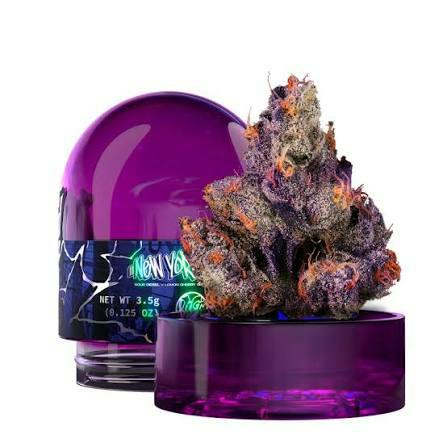
New Yorker presents with the structural density associated with its hybrid lineage — buds that are compact and well-formed without being aggressively tight, sitting between the airy looseness of some sativa-dominant cultivars and the almost architectural compression of pure indicas. The calyxes layer in an orderly fashion, suggesting careful cultivation and attentive curing practices. The color palette is restrained and elegant: deep forest greens shot through with occasional sage and olive tones, offset by amber-to-rust pistils that wind through the bud with quiet persistence. Trichome coverage is generous, giving the surface a frosted, almost matte sheen under direct light. When examined closely, the resin glands appear well-developed and intact — a visual indicator of terpene preservation during the drying and curing process. It is a strain that rewards the unhurried observer.
Growing notes
New Yorker is reported to perform well in both indoor and outdoor environments, though indoor cultivation allows growers to more precisely manage the humidity levels that denser hybrid bud structures can be susceptible to during late flowering. Indoor flowering time is generally estimated in the range of eight to nine weeks, placing it within the standard window for hybrid cultivars of this character. Yields are considered moderate to generous when conditions are well managed, with indoor production benefiting from low-stress training techniques that encourage lateral branching and canopy evenness. Outdoor cultivators in temperate climates — including, notably, the Northeastern United States — can expect a harvest window in late September to mid-October, aligning with the region's natural light cycle. For the curious home cultivator, New Yorker is considered a moderately accessible strain — not a beginner's first choice given its sensitivity to moisture and its preference for a consistent environment, but well within reach for a grower with one or two seasons of experience. Its regional identity and terpene development reward patience and attention during the curing phase.
When it's best enjoyed
New Yorker finds its most natural expression during the transitional hours of the day — that interval between late afternoon and early evening when the pace of a New York day begins, however slightly, to relent. It is a strain for the person who has somewhere to be but is no longer in a hurry to get there: a pre-dinner wind-down, a slow walk through a neighborhood not yet encountered, or a focused hour with a creative project that demands presence without pressure. The strain's balanced character makes it a genuinely versatile social companion. It contributes to conversation without monopolizing it and supports solitary creative work without encouraging distraction. For food pairing, the earthy-pine-spice terpene profile makes a compelling case alongside a charcuterie arrangement featuring aged cheeses, smoked meats, and pickled accompaniments — flavors that echo rather than clash with the strain's profile. Musically, New Yorker is at home with late-period jazz — the considered, unhurried kind — or the more atmospheric end of contemporary soul. It rewards context and resists rush.
If you like New Yorker, also explore
Blue Dream
Blue Dream's similarly balanced onset — cerebral lift paired with full-body ease — will feel immediately familiar to New Yorker consumers who appreciate a smooth, approachable hybrid arc.
Jet Fuel (G6)
Fans drawn to New Yorker's energetic yet grounded quality will find Jet Fuel occupies the same hybrid territory, with a comparable emphasis on clarity and physical comfort.
Golden Goat
Golden Goat's earthy-citrus terpene signature and mood-elevating character make it a natural recommendation for consumers who connect with New Yorker's aromatic profile and social ease.
Sour Diesel
Sour Diesel's New York roots and cerebral, long-lasting effect profile share the urban, purposeful energy that defines New Yorker's character, making it a logical point of comparison.
Pineapple Express
The pine-forward, balanced hybrid quality of Pineapple Express offers a similar sensory experience for consumers who enjoy New Yorker's moderately energetic, well-rounded effect profile.
Common questions
Is New Yorker indica or sativa?+
New Yorker is classified as a hybrid, exhibiting traits from both indica and sativa lineages. Its effect profile reflects this balance: early in the experience it leans toward the cerebral uplift associated with sativa-dominant cultivars, while the later phase introduces the physical ease more commonly linked to indica genetics. Neither quality dominates — which is precisely the point of a well-executed hybrid.
What does New Yorker taste like?+
New Yorker delivers an earthy, grounded palate with pronounced pine notes and a mild spice on the exhale — an effect attributable to its likely caryophyllene and pinene terpene content. Some phenotypes offer a faint citrus lift on the nose that carries lightly into the flavor. The overall impression is clean and composed, rewarding slow, attentive consumption over hurried sessions.
What are the typical effects of New Yorker?+
New Yorker typically produces a measured cerebral lift in the first five to ten minutes, followed by a warming body ease that arrives without sedation. The peak experience is balanced and social — clear-headed but physically comfortable. Duration runs roughly ninety minutes to two and a half hours. The comedown is gradual and gentle, making this a strain well suited to evenings that have somewhere left to go.
What strains are similar to New Yorker?+
Consumers drawn to New Yorker's balanced hybrid character and earthy-pine terpene profile will find common ground with Blue Dream, Jet Fuel, Golden Goat, Sour Diesel, and Pineapple Express. Each shares some element of New Yorker's sensibility — whether that is the effect arc, the aromatic signature, or the strain's ability to accommodate both social and solo settings with equal composure.
Is New Yorker good for beginners?+
New Yorker's smooth onset and balanced effect profile make it more approachable than many high-potency cultivars, but its deceptively gentle ramp-up can lead newer consumers to overconsume before the peak is reached. As with any cannabis product, the standard guidance applies: start with a small amount, allow sufficient time before considering a second inhalation, and choose a comfortable, familiar setting for a first experience.
What are the dominant terpenes in New Yorker?+
Based on its documented aromatic and effect profile, New Yorker appears to be myrcene-forward, with significant contributions from alpha-pinene and beta-caryophyllene. Myrcene provides the earthy, herbal base note; pinene introduces the fresh, resinous quality; and caryophyllene adds subtle spice and warmth. Some phenotypes suggest the presence of limonene in smaller concentrations, accounting for the occasional citrus brightness in the nose.
Where did the New Yorker strain originate?+
New Yorker emerged within New York's craft cannabis community in the context of the state's adult-use legalization era. While the precise breeder and full genetic lineage have not been comprehensively documented in major public databases, the strain reflects the regional sensibility of that moment: locally oriented, carefully cultivated, and designed to speak directly to a discerning New York consumer. Its origins are tied to place as much as to genetics.
What is the best time of day to consume New Yorker?+
New Yorker is particularly well suited to the late afternoon and early evening — the transitional hours when the demands of the day have eased but the night has not yet fully arrived. Its balanced hybrid character supports social engagement, creative focus, or unhurried leisure without the sedation associated with heavier indica cultivars. Morning or midday use is possible for experienced consumers but may feel more than the moment requires for most.
Related strains