On sale· 30% OFF
THC 32.5%Sativa
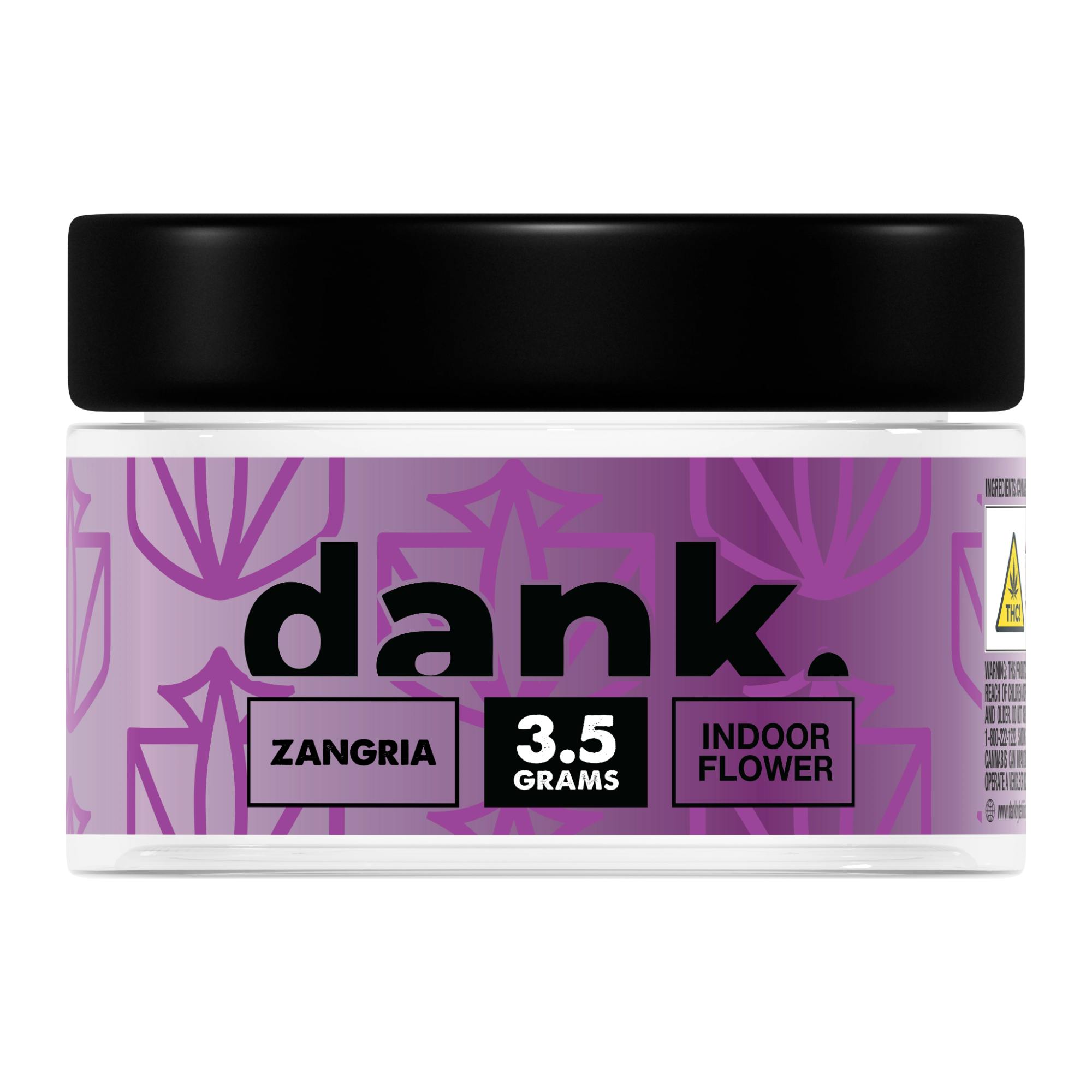
Dank By Definition.Zangria · Premium Flower · · 3.5g
$24.78$35.40
$29after tax

weeddispensarynearme.com
You must be 21 years or older to enter. By entering, you confirm you’re of legal age in your state to purchase cannabis.
For use only by adults 21+ • Keep out of reach of children
1 live products in stock
Quick answer · What is the Zangria cannabis strain?
Zangria arrives like the first warm afternoon of a long-anticipated season — bright, fruit-forward, and quietly electric. A sativa-leaning cultivar that draws comparisons to a well-composed sangria, it layers citrus brightness over a subtly herbaceous base, offering an energized clarity that suits both the focused creative and the social afternoon. For those who prefer their cannabis experience measured and refined, Zangria presents a compelling introduction to the sunlit side of the spectrum.
$29after tax
About Zangria
Zangria's precise lineage has not been fully disclosed by any single, universally recognized breeder, and the name appears across several regional seed banks and small-batch cultivators without a definitive origin story attached to a major house. What is reasonably documented in cannabis community forums and dispensary tasting notes suggests Zangria likely descends from a cross involving Zkittlez genetics — the award-winning, indica-leaning fruity hybrid bred by 3rd Gen Family and Terp Hogz — combined with a sativa-dominant parent, potentially from the Haze or Tangie family, to counterbalance the body-weight of Zkittlez with an elevated, cerebral character. Zkittlez itself rose to prominence after winning multiple Cannabis Cup awards beginning around 2015 and became one of the most influential flavor-forward cultivars of the decade, lending its distinctive grape-and-tropical-fruit terpene architecture to a wide generation of crosses. The Tangie lineage, traceable to DNA Genetics and rooted in Skunk and California Orange genetics, is well-documented as a driver of citrus-sativa expression in hybrids. If Zangria indeed sits at this intersection, it would be a genetic sibling — in spirit if not in DNA — to strains like Zkittlez x Gelato crosses and other fruit-sativa hybrids that defined the late 2010s and early 2020s craft cannabis aesthetic. Prospective consumers should note that without confirmed breeder documentation, some variation between batches and sources should be expected.
The onset of Zangria tends to arrive within the first five to ten minutes after inhalation, manifesting initially as a gentle elevation behind the eyes and a subtle brightening of sensory awareness. This is characteristic of sativa-dominant cultivars where limonene and terpinolene may be at work — both terpenes are associated in preliminary research with uplifted, alert states rather than sedation. At its peak, which generally settles in between fifteen and thirty minutes in, Zangria offers a cerebral clarity that leans creative and conversational. Thoughts move with a degree of ease and association; the mind feels engaged rather than scattered. There is a mild warmth that traces through the shoulders and upper body, softening tension without inducing the heaviness associated with indica-dominant cultivars. This balance makes the peak phase feel approachable, though those with lower tolerance should follow the well-established principle of starting low and progressing slowly. The comedown over the following hour or two is gentle, gradually returning the user to a baseline with residual warmth and a mild, pleasant fatigue. Because the experience leans cerebral throughout, Zangria is unlikely to anchor the consumer to a couch — a quality that makes it well-suited to daytime or early-evening use. Duration typically runs ninety minutes to two and a half hours depending on individual metabolism and consumption method.
Zangria's aromatic profile is one of its most immediately distinguishing characteristics. On first encounter, the nose receives a burst of ripe citrus — most prominently mandarin orange and blood orange — undercut by a secondary layer of mixed red fruit, reminiscent of grape must and pomegranate. These notes are consistent with the presence of limonene, the monoterpene most closely associated with citrus aroma and brightness, and myrcene, which contributes a softer, almost musky fruit depth beneath the sharper top notes. Moving deeper into the bouquet, a thread of fresh pine and light earth emerges, suggesting the presence of alpha-pinene, which lends a herbal sharpness that keeps the profile from becoming cloying. Terpinolene, often found in fruit-forward sativa hybrids, may contribute the faintly floral and slightly woody middle register that bridges citrus and earth. A trace of beta-caryophyllene rounds the base with a mild, barely-perceptible spice — warm rather than sharp. On the palate, the smoke or vapor opens with that same citrus brightness, transitioning through a mid-palate of stone fruit and grape before finishing with a clean, slightly herbal exhale. The overall experience on the tongue is refreshing rather than heavy, with a relatively clean finish that does not linger oppressively. This is a terpene architecture built for approachability and pleasure — a profile that rewards slow, attentive inhalation.
Zangria presents visually in a way that reflects its sativa-dominant heritage. The buds tend toward a moderately elongated, slightly airy structure rather than the tight, compressed spheres associated with indica-dominant cultivars — calyx formation is open enough to allow trichome development to be clearly visible without the need for magnification. The color palette leans into vivid spring greens, occasionally accented by deep sage or olive tones at the interior of the bud. Pistils — the small hair-like structures that weave through the flower — present in warm amber and burnt orange, a visual echo of the citrus notes in the terpene profile. Trichome coverage is generous for a sativa-leaning cultivar, giving the surface a frosted, lightly resinous quality that catches light well. Overall, Zangria is a visually appealing flower that reads as fresh and well-cultivated when properly dried and cured.
Zangria's sativa-dominant genetics suggest it performs well in environments that mimic warm, Mediterranean-style climates — consistent light, moderate humidity, and good airflow are key considerations. Indoors, cultivators working with this strain typically report a flowering window in the range of nine to ten weeks, which is on the longer end for hybrid cultivars and reflects the sativa influence in its lineage. Indoor yields are generally described as moderate to generous when trained properly — techniques such as low-stress training or Screen of Green are thought to be particularly compatible with Zangria's tendency toward vertical stretch. Outdoors, the plant benefits from a long, warm growing season and is typically ready for harvest in mid-to-late October in temperate climates. Difficulty is considered moderate — this is not an ideal first-grow cultivar for the inexperienced, largely due to the longer flowering time and the need for canopy management. Those with a few seasons of cultivation experience, however, are likely to find it a rewarding project, particularly for its aromatic reward at harvest.
Zangria is a strain that finds its most natural home in the unhurried hours of a sun-lit afternoon — the kind of time that invites a sketchbook, a long playlist, or a slow walk through a neighborhood with something interesting to look at. Its cerebral, fruit-lit character suits creative solitude particularly well, offering an engagement with the present moment that does not tip into anxiety or distraction. That said, Zangria is equally well-suited to the social aperitif hour. Its name invites the obvious pairing: a light, fruit-forward white sangria or a citrus-driven sparkling beverage makes for a complementary companion, as the strain's limonene-forward profile mirrors the acidity and brightness of citrus cocktails. For food, consider stone fruit — peaches, apricots, or a composed fruit salad with a light herb dressing — as pairings that will echo and amplify the aromatic experience rather than compete with it. For music, the strain pairs naturally with melodic, mid-tempo compositions — Khruangbin's warm guitar-and-groove aesthetic, or a well-curated jazz fusion record, both align with the bright-but-grounded character Zangria tends to produce. This is a strain for savoring, not rushing.
Zkittlez
Sharing probable lineage roots and a signature fruit-forward terpene profile, Zkittlez fans drawn to tropical and grape notes will recognize Zangria's candy-bright aromatic character immediately.
Tangie
Tangie's iconic citrus-sativa expression — bright mandarin, energized cerebral onset — maps closely to Zangria's daytime, fruit-lifted disposition, making it a natural reference point for those exploring this profile.
Clementine
Bred from Tangie and Lemon Skunk, Clementine shares Zangria's citrus-dominant nose and clear-headed sativa character, making it an ideal companion strain for those who favor the orange-peel end of the spectrum.
Mimosa
Mimosa's cross of Clementine and Purple Punch produces a similarly fruit-forward, socially uplifting experience that will resonate with Zangria consumers who appreciate brightness balanced against mild body ease.
Tropicana Cookies
Sharing the citrus-meets-sweet-fruit terpene architecture and a sativa-leaning, creative-cerebral effect profile, Tropicana Cookies is a logical next exploration for the Zangria enthusiast.
Zangria is classified as a sativa-dominant cultivar, reflecting both its effect profile and its probable lineage. Consumers can expect the characteristic traits of sativa expression — an elevated, cerebral onset, a tendency toward clarity and sociability, and a less pronounced body effect than indica-leaning counterparts. That said, individual phenotypes and growing conditions can produce some variation, so the experience may carry mild hybrid qualities depending on the specific batch.
Zangria tastes as evocative as its name suggests — citrus-forward on the first draw, with mandarin and blood orange leading the palate, followed by a softer mid-note of red grape and stone fruit. The exhale is relatively clean, finishing with a faint herbal and pine character. The overall flavor profile is refreshing and fruit-driven, with enough complexity to reward a slow, attentive session. It is not a particularly heavy or resinous smoke, making it well-suited to daytime consumption.
Zangria typically produces an onset of elevated mood and brightened sensory awareness within five to ten minutes of inhalation. The peak experience leans cerebral and energized, with a quality that many describe as creative and conversational. A mild body warmth accompanies the mental lift, softening tension without inducing sedation. The experience is generally considered approachable and functional, making it a daytime-friendly option for those who prefer an active rather than recumbent cannabis experience.
Consumers who enjoy Zangria tend to gravitate toward other fruit-forward, sativa-leaning cultivars with citrus or tropical terpene profiles. Notable comparisons include Tangie, Clementine, Mimosa, Tropicana Cookies, and Zkittlez — each sharing elements of Zangria's aromatic brightness and uplifted character. Among these, Tangie and Clementine are the closest matches in terms of daytime, citrus-sativa energy, while Zkittlez shares the grape-and-tropical-fruit foundation that likely anchors Zangria's lineage.
Zangria can be a welcoming entry point for those new to sativa-dominant cultivars, given its fruit-forward profile and relatively approachable effect arc. However, because the experience is cerebral and potentially activating, beginners are encouraged to follow the standard guidance: start with a minimal amount, allow sufficient time to assess the onset before consuming further, and choose a comfortable, familiar setting. Those sensitive to the mentally stimulating effects of sativa cultivars should proceed with particular care.
Based on its documented aroma and effect profile, Zangria is thought to be led by limonene — responsible for the prominent citrus brightness — alongside myrcene, which contributes depth and soft fruit character. Terpinolene, common in sativa-leaning fruit hybrids, likely adds the faintly floral and woody register. Alpha-pinene contributes herbal sharpness, and beta-caryophyllene rounds the base with mild spice. As with lineage details, terpene profiles can vary between phenotypes and cultivation environments.
Zangria is best suited to daytime and early-evening windows, reflecting its sativa-dominant, cerebral-leaning character. The strain's energized onset and mild body effect make it ill-suited to late-night use for those seeking sedation or sleep support. Afternoon settings — creative work sessions, social gatherings, or outdoor activities in calm conditions — tend to align most naturally with what this cultivar offers. Those sensitive to activating effects may prefer to explore it earlier in the day with a lighter approach.
Zangria occupies a specific niche within the fruit-forward category: it prioritizes citrus brightness and sativa uplift over the heavier, candy-sweet body effect of strains like Zkittlez or the creamier fruit profile of Gelato. It is more aerially expressive than most dessert hybrids, sitting closer to Tangie or Mimosa on the spectrum. For consumers who want fruit-derived pleasure without sacrificing mental clarity or daytime functionality, Zangria represents a considered and refined option.
Related strains
Pick your store
We'll show pricing, deals, and delivery zones for the store you pick. You can switch any time from the header.