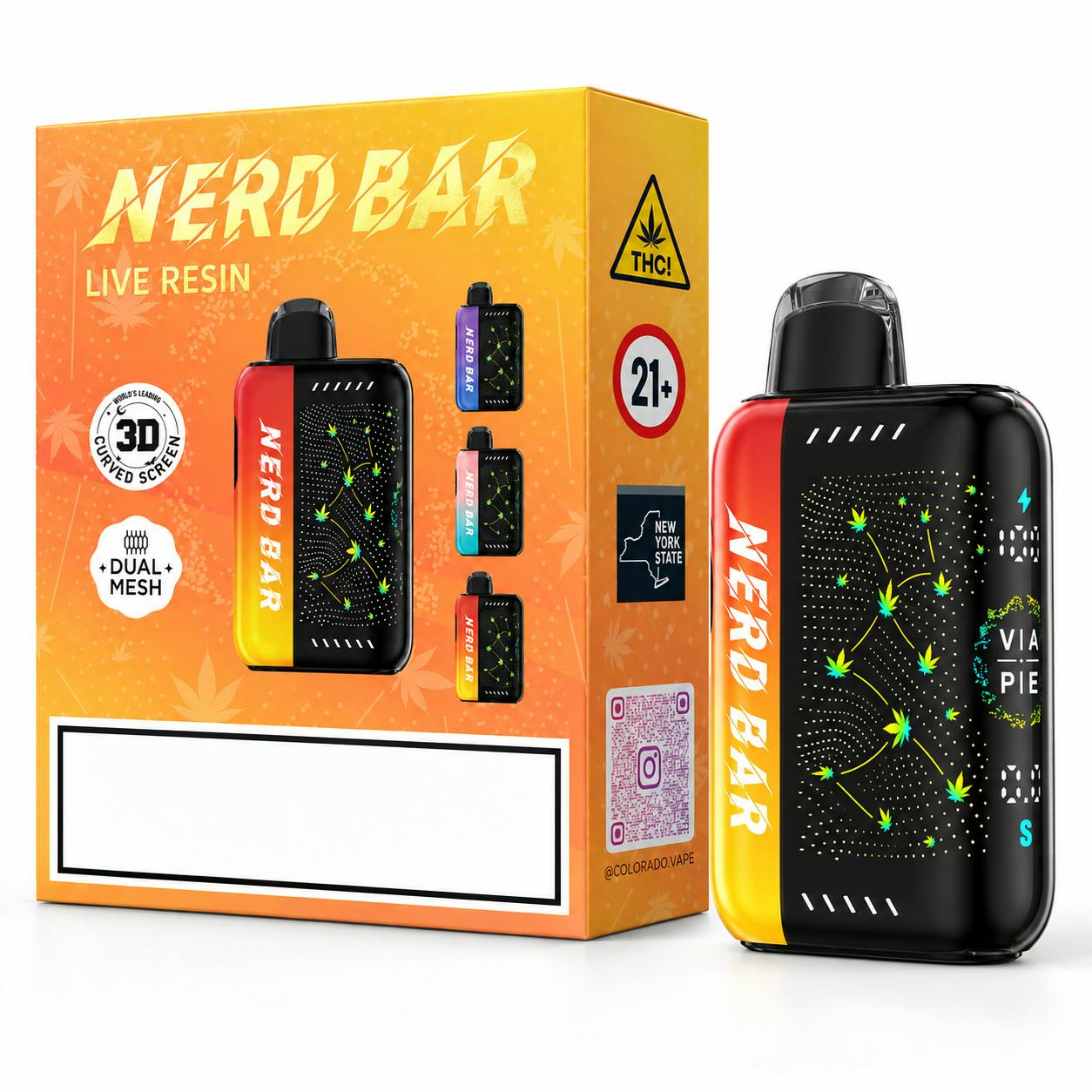
THC 87.55%·CBD 1.63%Sativa
NERD BARNerd Bar AIO Live Resin Vape - Tropicana Cherry · 4g
$100.00
$113after tax

weeddispensarynearme.com
You must be 21 years or older to enter. By entering, you confirm you’re of legal age in your state to purchase cannabis.
For use only by adults 21+ • Keep out of reach of children
2 live products in stock
Quick answer · What is the Tropicana Cherry cannabis strain?
Tropicana Cherry arrives like a ripe citrus grove meeting a late-summer cherry orchard — vivid, sun-warmed, and unmistakably alive. A sativa-forward cultivar prized for its luminous terpene profile and a cerebral lift that encourages both conversation and contemplation, it occupies the rare space where sensory pleasure and mental clarity intersect. For those who approach cannabis as they do a well-composed cocktail or a thoughtfully sourced single-origin espresso, Tropicana Cherry is a strain worth lingering over.
$113after tax
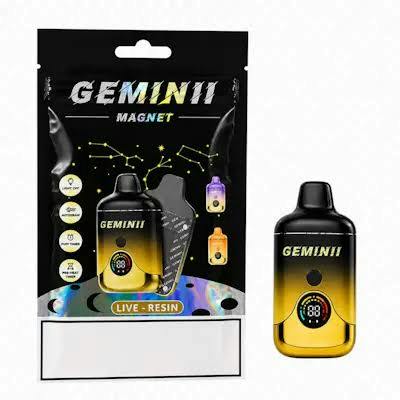
$41after tax
About Tropicana Cherry
Tropicana Cherry is the product of crossing Tropicana Cookies — itself a cross of Girl Scout Cookies and Tangie — with an undisclosed Cherry phenotype, most commonly attributed to Cherry Cookies or a related Cherry-forward cultivar. The breeding credit is generally associated with Oni Seed Co., the Oregon-based seed house responsible for several terpene-forward, visually expressive cultivars that gained significant traction in connoisseur markets throughout the late 2010s and into the 2020s. Oni Seed Co. built its reputation on hunting phenotypes with pronounced color expression and complex aromatic profiles, and Tropicana Cherry is considered one of the more refined results of that philosophy. The Tropicana Cookies parent brought with it a lineage anchored in two of the cannabis world's most influential modern genetics. Tangie contributed the signature citrus-forward terpene cascade — a trait inherited from the classic Tangerine Dream lineage — while Girl Scout Cookies added structural density, resin production, and a layered sweetness that tempers the sharper citrus notes. The Cherry parentage then introduced a ripe, almost jammy fruit quality that distinguishes Tropicana Cherry from its Tropicana Cookies sibling. Genetic siblings and close phenotypic relatives within the Oni catalog include Tropicana Poison, which leans more aggressively citrus-forward, and various Tropicana Cookies phenotypes that circulate under slightly different names across legal markets.
The onset of Tropicana Cherry tends to arrive within five to ten minutes when smoked or vaped, initially presenting as a subtle brightening behind the eyes — the kind of shift in mental register that signals an upswing in mood and attentional focus without any accompanying agitation. This early stage is decidedly cerebral, with many consumers describing an enhanced sense of presence and a loosening of the mental friction that accumulates across a busy day. The sativa lineage expresses itself clearly here, and the experience rarely tilts toward sedation in moderate consumption. At its peak, the experience is characterized by what might be called relaxed engagement — the mind remains active and associative, making Tropicana Cherry a companion for creative tasks, social exchanges, or simply the more attentive enjoyment of music or food. The limonene content is thought to contribute to the mood-elevating, stress-attenuating dimension of the effects, while myrcene — present as a secondary terpene — lends a mild physical ease that prevents the experience from reading as purely stimulating or edgy. The duration is moderate, typically running two to three hours for most consumers before a gradual, unhurried comedown. The descent is gentle rather than abrupt, and the return to baseline carries little of the cognitive heaviness sometimes associated with more indica-dominant cultivars. As with all cannabis, starting with a modest amount and gauging individual response is the appropriate approach, particularly for those newer to sativa-leaning strains.
The terpene architecture of Tropicana Cherry is led by limonene, which accounts for the strain's most immediately recognizable quality — a bright, almost effervescent citrus lift that reads closer to freshly peeled tangerine and blood orange than to the more generic 'lemon' note common in lesser cultivars. This is citrus rendered with precision, carrying both the sweet inner flesh and a hint of the aromatic zest. Limonene is well-documented for its contribution to mood elevation and the perception of mental clarity, lending the aroma a quality that feels as much energizing as it is simply pleasant. Myrcene serves as the grounding bass note beneath the citrus brightness, adding an herbal, slightly musky warmth that prevents the profile from feeling one-dimensional or sharp. Caryophyllene, present in meaningful quantities in many phenotypes, introduces a faint spice — a whisper of black pepper or clove that emerges on the exhale and adds complexity to what might otherwise read as purely fruit-forward. Some cuts also express notable ocimene, which contributes a green, almost floral-herbal nuance reminiscent of fresh basil or tropical foliage. On the palate, Tropicana Cherry delivers with admirable fidelity to its aromatic promise. The inhale carries sweet citrus and ripe cherry — stone fruit, specifically, with a jam-like density on the mid-palate — while the exhale trails off into a subtly spiced, lingering sweetness. Vapor production tends to be smooth and approachable; smoke, while naturally denser, retains the fruit character well through careful, lower-temperature combustion.
Tropicana Cherry is a visually compelling cultivar, and Oni Seed Co.'s emphasis on phenotype expression is evident in its appearance. The buds are typically medium to moderately dense, with a structure that leans toward the elongated, spade-shaped calyxes characteristic of its Cookies and Tangie lineage — not quite the compact, rounded forms of classic indicas, but structured and well-formed rather than wispy or airy. The color palette is one of the strain's most distinctive qualities. Mature buds frequently display a striking interplay of deep forest green, purple-indigo undertones, and — in phenotypes that have been exposed to cooler temperatures during the final weeks of flowering — patches of near-burgundy or violet. Pistils are vivid and tend toward deep orange or amber, weaving through the canopy in dense, curling clusters. Trichome coverage is generous and consistent, lending the buds a frosted, almost luminous quality under direct light that speaks clearly to the resin-forward genetics inherited from the Girl Scout Cookies side of the family.
Tropicana Cherry is considered an intermediate-level cultivar, rewarding growers who have some familiarity with managing sativa-dominant structure and terpene-sensitive environmental conditions. Indoors, it typically completes its flowering cycle in approximately nine to ten weeks, a timeline consistent with its Cookies and Tangie parentage. Indoor yields are moderate to moderately generous, and the strain responds well to training techniques such as low-stress training or light defoliation to improve canopy airflow and light penetration. The strain's color expression — one of its most celebrated attributes — is encouraged by deliberate temperature differentials in the final two to three weeks of flowering, with cooler nighttime temperatures drawing out the purple and burgundy hues in susceptible phenotypes. Outdoors, Tropicana Cherry performs well in temperate to warm climates with consistent sun exposure, typically ready for harvest in the Northern Hemisphere by mid-to-late October. Humidity management is important throughout, as the density of the buds can make them susceptible to moisture-related issues if airflow is not maintained. For the cultivator-curious shopper, it is worth noting that seeds or clones from verified Oni Seed Co. sources will offer the most authentic expression of the strain's documented characteristics.
Tropicana Cherry is oriented toward the daylight hours and the early evening — it is a strain that suits activity and engagement rather than the deliberate winding-down that marks late-night sessions. Its clearest expression comes during stretches of unstructured creative time: a long afternoon in a well-lit studio, an unhurried browse through a bookshop, or the preparation of a thoughtfully composed meal where the process itself is the pleasure. The citrus-forward terpene profile makes it a natural companion for foods with brightness and acidity — a ceviche with fresh citrus, a blood orange and fennel salad, or the clean mineral quality of a good oyster. Musically, the strain pairs well with recordings that share its sense of forward momentum and warmth: Brazilian jazz, early Stereolab, or the more textured end of Afrobeat, where rhythm and melody maintain a conversation rather than one overwhelming the other. For social settings, it functions as an effective companion to small dinner gatherings or creative collaborations where conversation is valued — engaged enough to hold attention, relaxed enough to keep the atmosphere unhurried.
Tropicana Cookies
As Tropicana Cherry's direct parent, Tropicana Cookies shares the citrus-forward limonene profile and uplifting cerebral character, making it the most natural transition for anyone who appreciates the Cherry variant's core aromatic identity.
Tangie
Tangie delivers the same vivid tangerine-citrus terpene cascade that defines Tropicana Cherry's aroma, with a similarly clear-headed, sativa-dominant effect arc that appeals to the same daytime-use sensibility.
Mimosa
Mimosa shares the ripe citrus and stone-fruit aromatic character, the sativa-leaning mood elevation, and the kind of polished terpene expression that resonates with consumers drawn to Tropicana Cherry's fruit-forward profile.
Zkittlez
For those drawn specifically to Tropicana Cherry's jammy, ripe-fruit sweetness on the palate, Zkittlez offers a similarly candy-like fruit depth, though with a somewhat more relaxed, indica-influenced body character.
Sunset Sherbet
Sunset Sherbet shares the Cookies genetic heritage and a comparable layered sweetness, appealing to Tropicana Cherry fans who appreciate nuanced fruit complexity alongside moderate, mood-lifting euphoria.
Tropicana Cherry is classified as a sativa-dominant hybrid. Its lineage — rooted in Tropicana Cookies (a cross of Girl Scout Cookies and Tangie) and a Cherry-forward cultivar — skews toward the cerebral, mood-lifting character typically associated with sativa genetics. Effects are primarily felt in the mind rather than as pronounced physical sedation, making it better suited to daytime or early-evening use than to late-night unwinding.
The flavor profile is led by ripe citrus — tangerine, blood orange, and a hint of zest — followed by a distinct cherry and stone-fruit sweetness on the mid-palate that gives the strain its name. The exhale introduces a subtle spice, attributed to caryophyllene, that adds depth and prevents the profile from reading as purely sweet. The overall impression is of a fresh, fruit-forward cultivar with genuine complexity rather than a one-note sweetness.
Tropicana Cherry typically produces a cerebral, mood-elevating onset that arrives relatively quickly and settles into a state of relaxed mental engagement. Users commonly describe enhanced focus, sociability, and a general brightening of mood without significant sedation or physical heaviness. The experience is generally described as clear-headed and energetic, with a gradual, manageable comedown after two to three hours. Individual responses vary, and starting with a modest amount is always advisable.
Consumers who enjoy Tropicana Cherry frequently gravitate toward Tropicana Cookies, which is its direct parent and shares the core citrus terpene profile. Tangie is another close parallel in terms of aroma and uplifting effect character. Mimosa appeals to those drawn to the stone-fruit sweetness alongside sativa clarity, while Zkittlez and Sunset Sherbet offer similar fruit depth with a slightly different cannabinoid balance. All share some overlap in either lineage or terpene architecture.
Tropicana Cherry can be approachable for newer consumers who are comfortable with sativa-leaning effects, but its potency and cerebral intensity warrant a measured approach. Those sensitive to the more stimulating aspects of sativa genetics — such as heightened mental activity or a racing quality in the early onset — may find a smaller starting amount more comfortable. The general principle of starting low and going slow is particularly relevant here, as with any high-terpene, sativa-forward cultivar.
Limonene is the primary terpene, responsible for the strain's signature citrus brightness and its mood-elevating aromatic character. Myrcene is present as a secondary terpene, contributing herbal warmth and a measure of physical ease. Caryophyllene adds a subtle spice on the exhale, and some phenotypes also express meaningful ocimene, which lends a green, tropical-herbal nuance to the overall profile. Together, these terpenes produce an aromatic experience that is both vivid and layered.
Tropicana Cherry is generally attributed to Oni Seed Co., an Oregon-based breeding operation that gained recognition in connoisseur cannabis circles during the late 2010s for its terpene-expressive, visually distinctive cultivars. Oni built the strain from a cross of Tropicana Cookies and a Cherry-forward parent, with the goal of amplifying the fruit complexity already present in the Tropicana Cookies lineage. The exact year of public release is not consistently documented across sources, but the strain became more widely available in the early 2020s.
Given its sativa-dominant character and cerebral onset, Tropicana Cherry is most naturally suited to daytime or early-evening consumption. It tends to support engagement, creativity, and social ease rather than the physical relaxation associated with pre-sleep use. Most consumers who reach for it do so in the afternoon or during the early hours of an evening social gathering — contexts where mental clarity and a lifted mood are assets rather than complications. Late-night use is generally less well-suited to its energetic terpene profile.
Related strains
Pick your store
We'll show pricing, deals, and delivery zones for the store you pick. You can switch any time from the header.