
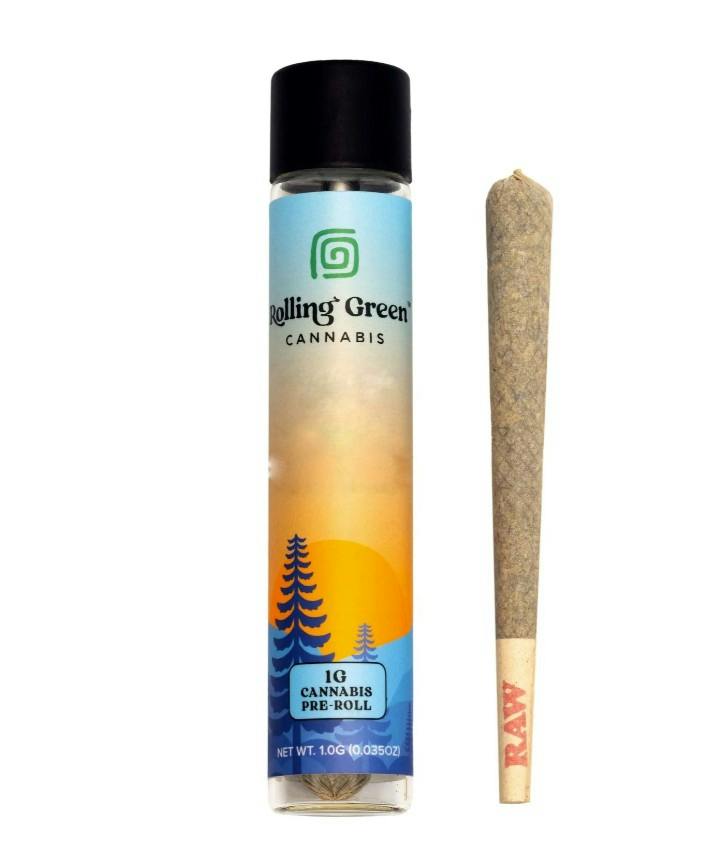
Sativa
All strains Tangerine Dream
3 live products in stock
Quick answer · What is the Tangerine Dream cannabis strain?
Tangerine Dream arrives like the first warm hour of a California afternoon — citrus-forward, luminous, and unhurried. A prize-winning hybrid with roots in Amsterdam's most celebrated seed houses, it balances a bright, clarifying lift with an approachable ease that makes it equally at home in a creative afternoon or a leisurely weekend morning. Its terpene signature is unmistakable: sun-ripened tangerine peel over soft earth, inviting without being overwhelming.
Shop Tangerine Dream · 3 of 3 live products

THC 44.01%Sativa
Ruby FarmsRuby Farms | Tangerine Dream | Hash Infused Doobies | 10pk · 0.5g/10pk
$58.41
$66after tax
THC 39.96%Hybrid
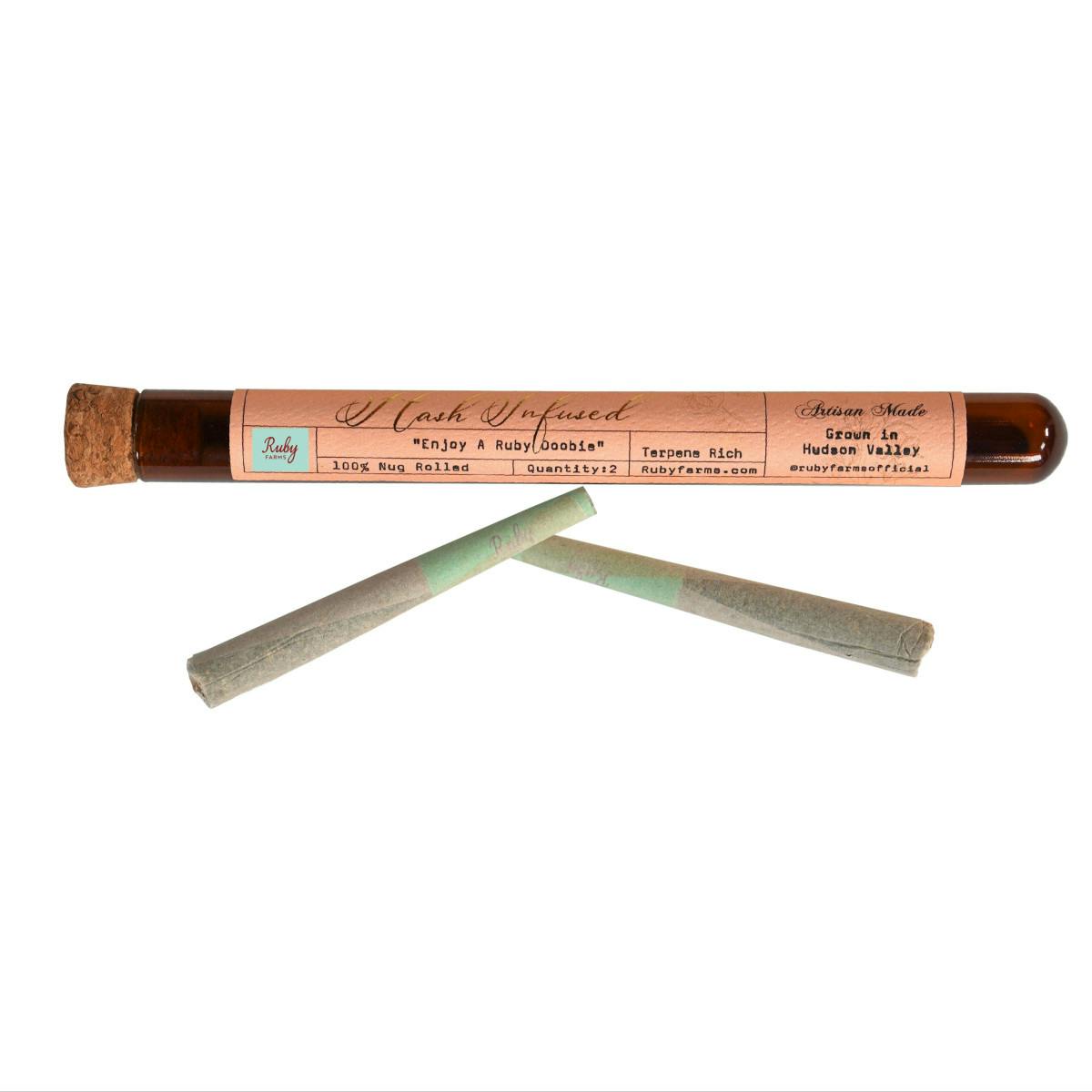
Ruby FarmsRuby Farms | Tangerine Dream | Hash Infused Doobies | 2pk · 1g
$21.24
$24after tax
About Tangerine Dream
Everything to know about Tangerine Dream.
Lineage & origin
Tangerine Dream was developed by Barney's Farm, the Amsterdam-based seed company that has accumulated a notable collection of Cannabis Cup awards since the 1990s. The strain earned first place at the High Times Cannabis Cup in 2010, which marked a turning point in the wider appreciation of terpene-forward, citrus-dominant hybrids. Barney's Farm has cited G13, Afghan, and Neville's A5 Haze as the primary contributors to Tangerine Dream's genetic foundation, though the precise proportions and phenotype selection process have not been fully disclosed publicly. G13 brings a resinous, indica-leaning density, while Afghan contributes body and structural resilience. Neville's A5 Haze — itself a celebrated sativa cultivar tracing back to the work of Neville Schoenmaker at the original Seed Bank of Holland — is largely responsible for the cerebral luminosity and the pronounced citrus aromatic profile that defines the finished strain. The result sits in a well-balanced hybrid range, leaning slightly sativa in expression. Several phenotypes have circulated in the American market following legalization, and some exhibit a more pronounced body character, suggesting that individual phenotype selection at the cultivator level can shift the experience meaningfully. No widely distributed genetic siblings have been formally documented under the Barney's Farm catalogue, though the strain has inspired a category of citrus hybrids that bears its influence.
Effects
Onset typically arrives within five to ten minutes of inhalation, beginning as a gentle brightening behind the eyes — a clarifying quality that many consumers describe as a softening of mental static rather than an acute, caffeinated rush. This early cerebral phase is where Tangerine Dream distinguishes itself: the influence of Neville's A5 Haze contributes a sativa-leaning openness that encourages conversation, creative association, and a pleasant elevation of mood without inducing the rapid heartbeat or heightened anxiety sometimes associated with pure sativa genetics. As the session progresses into the twenty-to-forty-minute window, the G13 and Afghan lineage begins to assert itself, introducing a perceptible warmth through the shoulders and a gentle physical ease that grounds the experience without tipping into sedation. This balanced interplay — alert mind, relaxed body — is the hallmark of a well-expressed hybrid and is part of what earned Tangerine Dream its enduring reputation. Duration tends to run moderate, approximately one and a half to two hours for most consumers at measured doses, with a comedown that is generally gradual and soft rather than abrupt. Myrcene's mild sedative properties may contribute to the ease of descent. Consumers new to cannabis or those with lower tolerance are well advised to begin with a single, measured inhalation and allow a full fifteen minutes before assessing. The strain's potency, while not extreme by contemporary standards, is consistent and cumulative.
Aroma, flavor & terpenes
The aromatic profile of Tangerine Dream is anchored by a generous expression of limonene, the terpene most directly responsible for its signature citrus character. On the nose, the dominant impression is ripe tangerine and mandarin peel — brighter and more complex than generic orange, with a subtle bitter-pith edge that prevents the sweetness from becoming one-dimensional. Beneath the citrus layer, myrcene introduces a soft, herbal muskiness — reminiscent of ripe fruit skin and damp earth — that adds depth and keeps the overall profile feeling natural rather than artificial. Secondary terpenes including caryophyllene contribute a faint, almost imperceptible spice note on the exhale, providing structure and a mild warmth that lingers pleasantly on the back of the palate. Terpinolene, which has been identified in some phenotype analyses, adds a floral-herbaceous nuance that recalls fresh flowers or a light hop bitterness. When consumed via a well-calibrated vaporizer at lower temperatures, the citrus top notes are most pronounced and the vapor is notably smooth and clean. In traditional flower form, the smoke carries a mild sweetness on the inhale that transitions to a warmer, earthier character on the exhale. The finish is soft, with the tangerine impression returning faintly on the breath — a quality that experienced consumers often find appealing for social or daytime settings.
Appearance
Tangerine Dream buds present with the kind of careful, compact architecture that reflects its indica lineage through G13 and Afghan genetics — dense, well-formed calyxes that hold their shape without being excessively tight or difficult to break down. The colour palette skews toward a rich, medium green with occasional passages of softer sage, particularly toward the interior of the bud. Pistils tend toward a deep amber-orange, which, combined with the strain's name, creates a cohesion between visual presentation and aromatic character that is aesthetically satisfying. Trichome coverage is generous and even, imparting a frosted, slightly luminous quality to the surface without obscuring the underlying colour. Under magnification, trichomes appear predominantly cloudy to amber at peak harvest, consistent with Barney's Farm's cultivation guidelines. The overall impression is of a polished, mature flower — neither artificially colourful nor underwhelming.
Growing notes
Tangerine Dream is considered a moderately accessible cultivar for home growers with some prior experience, though its cup-winning genetics reward attention to environmental detail. Barney's Farm lists an indoor flowering time of approximately 65 to 70 days, placing it in the medium-length range for a hybrid with sativa heritage. Indoor yields are reported as generous, with well-maintained plants producing dense, resinous flower under optimised lighting and canopy management. Outdoor cultivation is viable in temperate to warm climates, with harvest typically falling in early to mid-October in Northern Hemisphere latitudes. The strain demonstrates reasonable resilience against humidity fluctuations, though like most trichome-rich hybrids, it benefits from careful airflow management during the final weeks of flowering to reduce the risk of moisture-related issues. Novice cultivators will find that a sea-of-green or light-defoliation approach helps manage the plant's moderate height and promotes even canopy development. For the cultivator-curious shopper, Tangerine Dream represents a strain where the quality of cultivation — cure time in particular — is meaningfully reflected in the aromatic intensity of the finished flower.
When it's best enjoyed
Tangerine Dream occupies a particular sweet spot in the hybrid canon: it is social without being overwhelming, creative without demanding it, and physical without inducing the kind of heaviness that forecloses an active afternoon. It is well suited to the unhurried hours of a late weekend morning — a slow pour of a good pour-over coffee, an open notebook, a window with reasonable light. The limonene-forward terpene profile has a natural affinity with foods that share its citrus and herbal vocabulary: a light brunch of fresh fruit, soft cheese, and grain bread, or an early evening aperitivo spread of olives, citrus-marinated fish, and crusty bread would complement rather than compete with the strain's aromatic character. Musically, the balance of cerebral lift and physical ease pairs naturally with mid-tempo jazz — something in the register of Chet Baker or early Norah Jones — or an unhurried ambient playlist that supports focus without demanding it. For the solo consumer, it is a reliable companion for tasks that benefit from a slight opening of perspective: writing, drawing, or the kind of deliberate, present-tense walking that city dwellers sometimes need to recalibrate. It is equally suited to small, trusted social gatherings where conversation is the main event.
If you like Tangerine Dream, also explore
Clementine
Clementine shares Tangerine Dream's citrus-dominant terpene profile and sativa-leaning cerebral clarity, making it a natural follow-on for consumers drawn to the bright, limonene-forward character of Tangerine Dream.
Agent Orange
Agent Orange offers a comparable orange-citrus aromatic signature layered over a balanced hybrid body, appealing to those who appreciate Tangerine Dream's interplay of uplift and physical ease.
Tangie
Tangie, itself a celebrated citrus hybrid, is the closest stylistic relative to Tangerine Dream in terms of terpene expression and daytime suitability, often recommended to consumers who favour one when the other is unavailable.
Blue Dream
Blue Dream's reputation for gentle, broadly accessible hybrid effects and a smooth, fruity palate appeals to the same consumer who values Tangerine Dream's balance of mental engagement and physical comfort.
Super Lemon Haze
Super Lemon Haze, another Barney's Farm cultivar with Haze lineage, shares Tangerine Dream's genetic roots and offers a similarly energetic, terpene-forward experience for consumers who enjoy pronounced citrus expression.
Common questions
Is Tangerine Dream indica or sativa?+
Tangerine Dream is a hybrid, developed by Barney's Farm from a genetic cross that includes G13, Afghan, and Neville's A5 Haze. In practice, it leans slightly sativa in its early effect profile — offering a bright, clarifying cerebral quality — while the Afghan and G13 lineage contributes a grounding physical ease that characterises its mid-to-late experience. Most consumers and retailers classify it as a balanced hybrid with a mild sativa lean.
What does Tangerine Dream taste like?+
The flavour profile is citrus-forward, with ripe tangerine and mandarin peel as the dominant impression. A secondary layer of soft earthiness and mild herbal character — contributed by myrcene and trace terpinolene — prevents the sweetness from feeling one-dimensional. On exhale, a faint spice note from caryophyllene adds a gentle warmth. The overall palate is clean, smooth, and notably pleasant, particularly when consumed via vaporizer at moderate temperatures.
What are the typical effects of Tangerine Dream?+
Most consumers report an initial brightening of mood and a gentle clarifying of mental focus, followed by a progressive physical relaxation that settles into the shoulders and body without inducing heaviness or sedation. The experience is generally described as balanced — engaged but at ease. Duration runs approximately one and a half to two hours at measured doses, with a gradual, soft comedown. As always, individual experience varies, and starting low is advisable.
What strains are similar to Tangerine Dream?+
Consumers who enjoy Tangerine Dream often gravitate toward Tangie, Clementine, and Agent Orange for their shared citrus-dominant terpene profiles and daytime-friendly hybrid balance. Super Lemon Haze, a fellow Barney's Farm cultivar with Haze lineage, is another close stylistic relative. Blue Dream appeals to those drawn to Tangerine Dream's accessible, broadly balanced hybrid character rather than specifically its citrus expression.
Is Tangerine Dream good for beginners?+
Tangerine Dream is generally considered one of the more approachable hybrids in terms of experience arc — its onset is gradual, its effects are balanced, and the comedown is soft. That said, no cannabis strain is without consideration for new consumers. A start-low, go-slow approach is always advisable: a single measured inhalation followed by a fifteen-minute window to assess is a prudent way to introduce oneself to any flower, including this one.
What are the dominant terpenes in Tangerine Dream?+
Limonene is the most prominent terpene in Tangerine Dream, responsible for its defining citrus character and associated with a brightening, mood-elevating quality. Myrcene follows as a key secondary terpene, adding herbal earthiness and contributing to the physical ease of the later experience. Caryophyllene, present in smaller quantities, lends a faint spice note on the exhale. Some phenotype analyses have also noted the presence of terpinolene, which adds a light floral-herbaceous nuance.
When did Tangerine Dream win the Cannabis Cup?+
Tangerine Dream, bred by Barney's Farm of Amsterdam, took first place at the High Times Cannabis Cup in 2010. This recognition was significant in elevating the profile of terpene-forward, citrus-dominant hybrids within the broader cannabis market and helped establish Tangerine Dream as a benchmark cultivar for the category. The strain has maintained a consistent presence in dispensary menus in legal markets since legal frameworks expanded across the United States.
How should I store Tangerine Dream flower to preserve its aroma?+
To preserve the limonene-dominant aromatic profile that defines Tangerine Dream, flower is best stored in an airtight glass container kept away from direct light, heat, and humidity. A consistent temperature between 60 and 70 degrees Fahrenheit and a relative humidity level of approximately 58 to 62 percent will support terpene preservation over time. Avoid plastic storage, which can affect aroma through off-gassing, and keep containers sealed until ready for use.
Related strains