
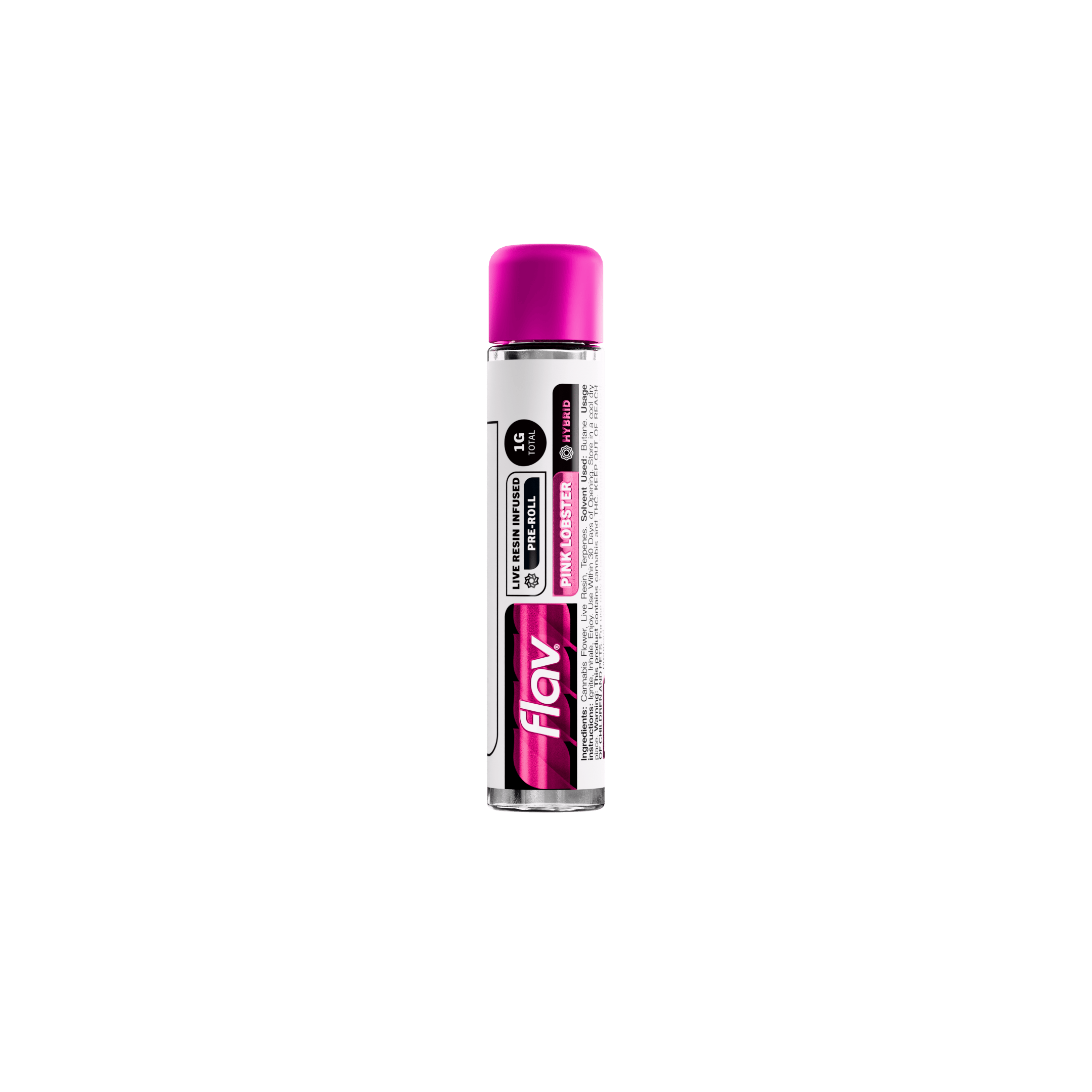
Indica
All strains Pink Lobster
1 live products in stock
Quick answer · What is the Pink Lobster cannabis strain?
Pink Lobster arrives with the quiet confidence of a strain that knows exactly what it is: a deeply relaxing indica with a terpene profile that skews sweet, floral, and faintly earthy. The buds carry a blush-tinged complexity that rewards a slower pace, inviting the kind of unhurried evening that feels genuinely restorative. For those drawn to the more contemplative side of cannabis, Pink Lobster offers a measured, full-bodied experience worth savoring.
Shop Pink Lobster · 1 of 1 live products
About Pink Lobster
Everything to know about Pink Lobster.
Lineage & origin
Pink Lobster's precise genetic lineage is not widely documented in mainstream cannabis databases, and the breeder has not made a comprehensive public disclosure of its parent strains. What is generally reported within cultivator and collector communities is that Pink Lobster carries genetics associated with the broader family of pink- and purple-expressing indica hybrids, likely descended from strains that trace back to OG Kush and Granddaddy Purple ancestry — two pillars of modern American indica breeding. Granddaddy Purple itself, developed by Ken Estes in Northern California around 2003, brought together Big Bud and Purple Urkle to produce the dense, anthocyanin-rich structure that strains like Pink Lobster appear to echo. The OG Kush lineage, originating in Florida in the early 1990s and refined extensively on the West Coast, contributes the resinous backbone and grounding character that distinguishes this cultivar from lighter, more cerebral hybrids. Some phenotype reports suggest the possibility of Sunset Sherbet influence in certain cuts, which would account for the creamy, confectionery notes occasionally described by consumers. Because definitive breeder documentation is limited, prospective purchasers should treat specific lineage claims as community-sourced rather than verified, and appreciate Pink Lobster on the merits of its sensory and experiential character.
Effects
Pink Lobster's onset is notably measured — rather than arriving with a sharp, immediate rush, it builds gradually over the first ten to twenty minutes, introducing a gentle warmth that settles first behind the eyes and across the shoulders. This unhurried quality makes the initial phase feel welcoming rather than disorienting, particularly for those who find more potent sativas overstimulating. The dominant terpene profile, which leans toward myrcene and linalool, is consistent with the sedating, muscle-softening character that indica-forward consumers tend to seek. Myrcene, one of the most prevalent terpenes in cannabis, is associated with a couch-lock quality and is believed to facilitate the movement of cannabinoids across the blood-brain barrier, potentially amplifying the overall effect. As the experience deepens into its peak — typically between thirty and ninety minutes in — a body-centered heaviness becomes more pronounced, while the mind settles into a quieted, unhurried state. Cognitive function remains accessible but softened; this is not a strain that invites sharp analytical thinking or rapid task-switching. The comedown is gentle, fading gradually into a drowsy ease that many consumers find conducive to restful sleep. As with all cannabis products available through New York adult-use retail, starting with a modest quantity and waiting an appropriate amount of time before consuming more is always the prudent approach.
Aroma, flavor & terpenes
The aromatic profile of Pink Lobster is layered in a way that rewards attention. On the initial encounter, the nose is met with a sweet, slightly floral top note — consistent with the presence of linalool, a terpene also found in lavender, known for contributing calming, gently herbaceous qualities alongside its fragrant character. Beneath this, myrcene introduces an earthier, almost musky warmth that gives the strain its grounding depth and keeps it from reading as purely sweet or confectionery. Secondary terpenes appear to include caryophyllene, a spicy, peppery compound that is unique among cannabis terpenes for its ability to interact with CB2 receptors; its presence adds a subtle sharpness to the mid-palate that prevents the aroma from becoming cloying. Some phenotypes present a faint berry or grape undertone, likely an expression of the anthocyanin-producing genetics referenced in the lineage, though this is a visual and olfactory impression rather than a chemically distinct terpene signal. On the palate — whether consumed via flower or vapor — Pink Lobster delivers a smooth, rounded smoke with the sweetness prominent on the inhale and the earthier, slightly spiced caryophyllene character becoming more evident on the exhale. The finish lingers pleasantly, leaving a soft, floral aftertaste that dissipates cleanly without harshness.
Appearance
Pink Lobster presents buds that are dense and compact in structure, consistent with its indica lineage — tightly packed calyxes that hold their form well and suggest careful cultivation and proper curing. The color palette is one of this strain's most immediately distinctive qualities: deep forest greens provide the base, often punctuated by hues of lavender, dusty rose, and soft purple, the result of anthocyanin expression triggered by cooler temperatures during the late flowering phase. Pistils range from pale peach to a warm burnt orange, threading through the flower in a way that reinforces the blush-toned aesthetic the name evokes. Trichome coverage is generous, lending the surface a frosted, almost crystalline quality that speaks to the resinous genetic heritage shared with its OG and Granddaddy Purple forebears. When properly cured, these buds feel slightly sticky to the touch and break apart with a satisfying, cohesive density.
Growing notes
Pink Lobster is best understood as an intermediate-level cultivar — accessible enough for growers with a season or two of experience, but rewarding enough in its visual and aromatic output to justify the attention it requires. It performs well in both indoor and outdoor environments, though indoor cultivation under controlled conditions tends to bring out the most vivid expression of its purple and pink coloration, particularly when nighttime temperatures are allowed to drop into the lower range during the final weeks of flowering. Indoor flowering time is reported to fall in the eight-to-nine-week range, which is typical for indica-dominant varieties. Yields are moderate to generous indoors, and outdoor plants can develop considerable structure in warm, Mediterranean-style climates. The dense bud structure that makes Pink Lobster so visually appealing also warrants careful attention to airflow and humidity management during flowering to reduce the risk of moisture-related issues. For the cultivator-curious consumer, understanding this strain's sensitivity to environmental finishing conditions helps explain why the best cuts of Pink Lobster can vary noticeably in color expression from harvest to harvest.
When it's best enjoyed
Pink Lobster is a strain oriented firmly toward evening and late-evening use. Its body-centered, gradually deepening character makes it well-suited to the hours after a demanding day, when the goal shifts from productivity toward recovery and ease. Solo use lends itself naturally to quiet, unhurried activities: reading something without urgency, listening to a carefully assembled playlist, or simply allowing the mind to decompress without agenda. Given the linalool and myrcene profile, it pairs with sensory experiences that share a similar register of warmth and softness. On the culinary side, foods with earthy, slightly sweet character — aged cheeses, roasted root vegetables, or a dark chocolate with floral notes — complement the strain's terpene signature without competing with it. Musically, something in the space between ambient and soul tends to suit the tempo Pink Lobster establishes: artists whose work occupies a slow, textured middle ground feel appropriate. It can also function well in a small, trusted social setting where conversation has naturally quieted and comfort is the shared goal, though its more sedating tendencies mean it is less suited to animated dinner-party energy than to the winding-down hours that follow.
If you like Pink Lobster, also explore
Granddaddy Purple
Fans of Granddaddy Purple will recognize Pink Lobster's shared purple coloration, berry-adjacent sweetness, and deeply body-centered indica effect arc.
Grape Ape
Grape Ape's dense structure, anthocyanin-driven aesthetics, and sedating, fruity-earthy profile make it a natural companion for Pink Lobster enthusiasts.
Forbidden Fruit
The floral-meets-tropical sweetness and pronounced body relaxation of Forbidden Fruit echo the same evening-oriented sensory register that Pink Lobster occupies.
Purple Punch
Purple Punch shares Pink Lobster's dessert-leaning aroma, lush trichome coverage, and the kind of full-body calm that transitions naturally toward restful sleep.
Sunset Sherbet
If Pink Lobster carries Sherbet genetics as some community sources suggest, fans of Sunset Sherbet's creamy sweetness and balanced body weight will find familiar ground here.
Common questions
Is Pink Lobster indica or sativa?+
Pink Lobster is classified as an indica-dominant strain. Its effect profile reflects that classification clearly: the experience leans toward physical relaxation, a quieted mental state, and a gradual settling of body tension rather than the energized, cerebral character more commonly associated with sativa-forward varieties. It is best suited to evening or nighttime use for most consumers.
What does Pink Lobster taste like?+
Pink Lobster offers a palate that is primarily sweet and floral on the inhale, with an earthy, faintly spiced quality emerging on the exhale. Linalool contributes the lavender-adjacent floral note, while myrcene grounds it with a musky warmth. Caryophyllene adds a subtle peppery edge that provides balance. Some phenotypes express a soft berry or grape undertone that lingers gently on the finish.
What are the typical effects of Pink Lobster?+
Pink Lobster produces a gradual, body-centered relaxation that builds over ten to twenty minutes and deepens into a pronounced physical ease at peak. The mind settles into a quieted, unhurried state without sharp cognitive stimulation. The experience is generally described as calming and gently sedating, making it well-suited to unwinding in the evening. The comedown is smooth, and many consumers find it conducive to restful sleep.
What strains are similar to Pink Lobster?+
Consumers who enjoy Pink Lobster tend to also appreciate Granddaddy Purple, Grape Ape, Purple Punch, Forbidden Fruit, and Sunset Sherbet. These strains share one or more of Pink Lobster's defining qualities: dense, resinous indica structure, anthocyanin-driven color expression, sweet-to-earthy terpene profiles, and a body-forward relaxation arc oriented toward evening use.
Is Pink Lobster good for beginners?+
Pink Lobster can be approachable for adult-use consumers who are newer to cannabis, provided the standard guidance of starting with a small amount and waiting a sufficient amount of time before consuming more is observed. Its onset is gradual rather than abrupt, which some beginners find more comfortable. That said, its indica potency means overconsumption can lead to pronounced sedation or disorientation. Measured, patient use is always advisable.
What are the dominant terpenes in Pink Lobster?+
Pink Lobster's terpene profile is led by myrcene, which contributes its earthy, musky warmth and is associated with the sedating quality common to indica strains. Linalool adds a floral, lavender-like aromatic layer and is thought to support a calming character. Caryophyllene provides a spicy, peppery counterbalance. Together, these three terpenes define both the aromatic identity and the effect character of the strain.
When is the best time of day to consume Pink Lobster?+
Given its indica-dominant, sedating profile, Pink Lobster is most appropriately enjoyed during the evening or nighttime hours. Its body-centered relaxation and gradual deepening effect make it poorly suited to daytime use when alertness, focus, or physical coordination is needed. It is well-matched to post-dinner unwinding, quiet solo evenings, or as a transition toward sleep for those who enjoy cannabis as part of a nighttime routine.
What is the lineage of Pink Lobster?+
Pink Lobster's precise lineage has not been fully documented by a named breeder in public sources. Community reports suggest ancestry connected to indica pillars such as Granddaddy Purple and OG Kush, with some phenotypes displaying characteristics that may indicate Sunset Sherbet influence. Because comprehensive breeder documentation is not available, specific parentage claims should be understood as community-sourced rather than verified. The strain is best appreciated on its own sensory terms.
Related strains