
Indica
All strains Forbidden Fruit
6 live products in stock
Quick answer · What is the Forbidden Fruit cannabis strain?
Forbidden Fruit is a visually arresting indica whose reputation arrives well before the first inhale. A cross of Cherry Pie and Tangie, it delivers a deep, tropical stone wrapped in layers of stone fruit, citrus, and pine. The buds themselves read as almost ornamental — dense, jewel-toned, and heavily frosted. For those who appreciate cannabis as much for the ritual of the experience as for its effects, Forbidden Fruit offers a composed, unhurried descent into physical ease.
Shop Forbidden Fruit · 6 of 6 live products
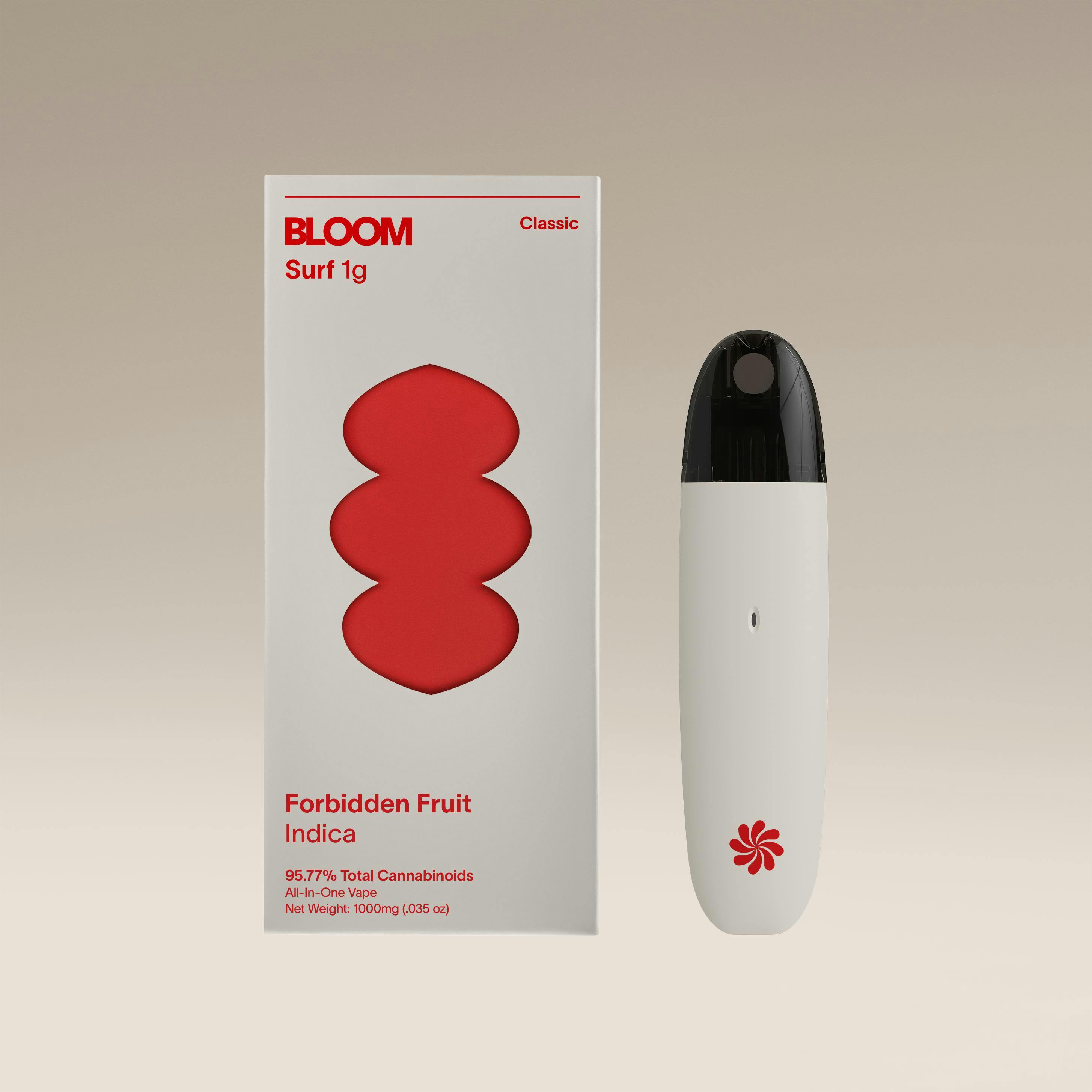
About Forbidden Fruit
Everything to know about Forbidden Fruit.
Lineage & origin
Forbidden Fruit was bred by Chameleon Extracts, a California-based collective that gained recognition for its fruit-forward phenotypes in the mid-2010s. The cross pairs Cherry Pie — itself a union of Granddaddy Purple and Durban Poison — with Tangie, the beloved sativa-leaning cultivar descended from California Orange and a Skunk hybrid. The result inherits both the grape-and-berry depth of the GDP lineage and the bright, tangerine-peel brightness that made Tangie a cult favourite in West Coast dispensaries around 2014 and 2015. The pairing was deliberately conceived to push aromatic complexity: Cherry Pie contributes a dense, resinous structure and its characteristic sweet-cherry earthiness, while Tangie lifts the terpene ceiling with terpinolene and myrcene, opening the profile toward tropical and citrus territory. The indica dominance — often cited at roughly 70 percent — comes primarily through the Granddaddy Purple ancestry, which traces back to Ken Estes's influential 2003 release. Several phenotypes of Forbidden Fruit circulate in the market, and the depth of the purple colouration and the prominence of the citrus note can vary noticeably between them. A closely related expression sometimes labelled Forbidden Fruit #3 is particularly prized among collectors for its near-uniform indigo canopy. The strain does not have widely documented genetic siblings under different names, though Chameleon Extracts has released additional fruit-forward crosses drawing on the same parentage.
Effects
The onset of Forbidden Fruit tends to arrive within five to ten minutes of inhalation — first as a mild pressure behind the eyes and a subtle lift across the temples that most consumers describe as a quiet unlocking rather than a sharp cerebral surge. This early phase carries a gentle euphoria, enough to soften the edges of the day without displacing focus entirely. The experience is more warmth than electricity, and that distinction matters for how the session unfolds. As the peak settles in — typically between fifteen and forty minutes — the body component asserts itself with greater authority. Myrcene, the dominant terpene, is well-documented in the literature as contributing to the sedating, muscle-softening quality that characterises indica-leaning cultivars, and its presence here is generous. Caryophyllene adds a minor anti-inflammatory dimension to the physical sensation, producing a full-body ease that begins in the shoulders and moves outward. The cerebral note does not disappear; it simply quiets, becoming more contemplative than active. Duration runs between two and three hours for most seasoned consumers, with the comedown gradual and undemanding — a slow tapering toward rest rather than an abrupt shift. Novice consumers are well-advised to start low and go slow, as the indica depth can accelerate unexpectedly on subsequent draws. Dry eyes and cottonmouth are the most commonly reported side effects, both easily managed with hydration.
Aroma, flavor & terpenes
The terpene architecture of Forbidden Fruit is one of its most discussed attributes, and rightly so. Myrcene anchors the profile with its characteristic musky, tropical-fruit warmth — think ripe mango skin and a faint herbal earthiness underneath. Terpinolene, inherited largely from the Tangie lineage, rises above that base with a bright, almost floral citrus character that some consumers describe as mandarin peel or fresh-squeezed tangerine. Together, these two terpenes produce an aroma that reads simultaneously lush and clean, tropical yet grounded. Caryophyllene introduces a mild spice and a faint woody depth that prevents the profile from tipping entirely into sweetness. Pinene threads through as a secondary note — a whisper of forest air that adds structural contrast to the fruit-forward foreground. Linalool appears in some tested batches in modest quantities, softening the overall impression with a barely-perceptible floral edge reminiscent of dried lavender. On the palate, Forbidden Fruit is among the more expressive cultivars in its class. The smoke is smooth and full-bodied, with a pronounced sweet-berry entry that transitions into a long tropical exhale. Vapourised at lower temperatures, the citrus and floral notes resolve with greater clarity, while the earthy myrcene base becomes more prominent at higher settings. The finish is clean, leaving a faint stone-fruit sweetness that lingers without becoming cloying.
Appearance
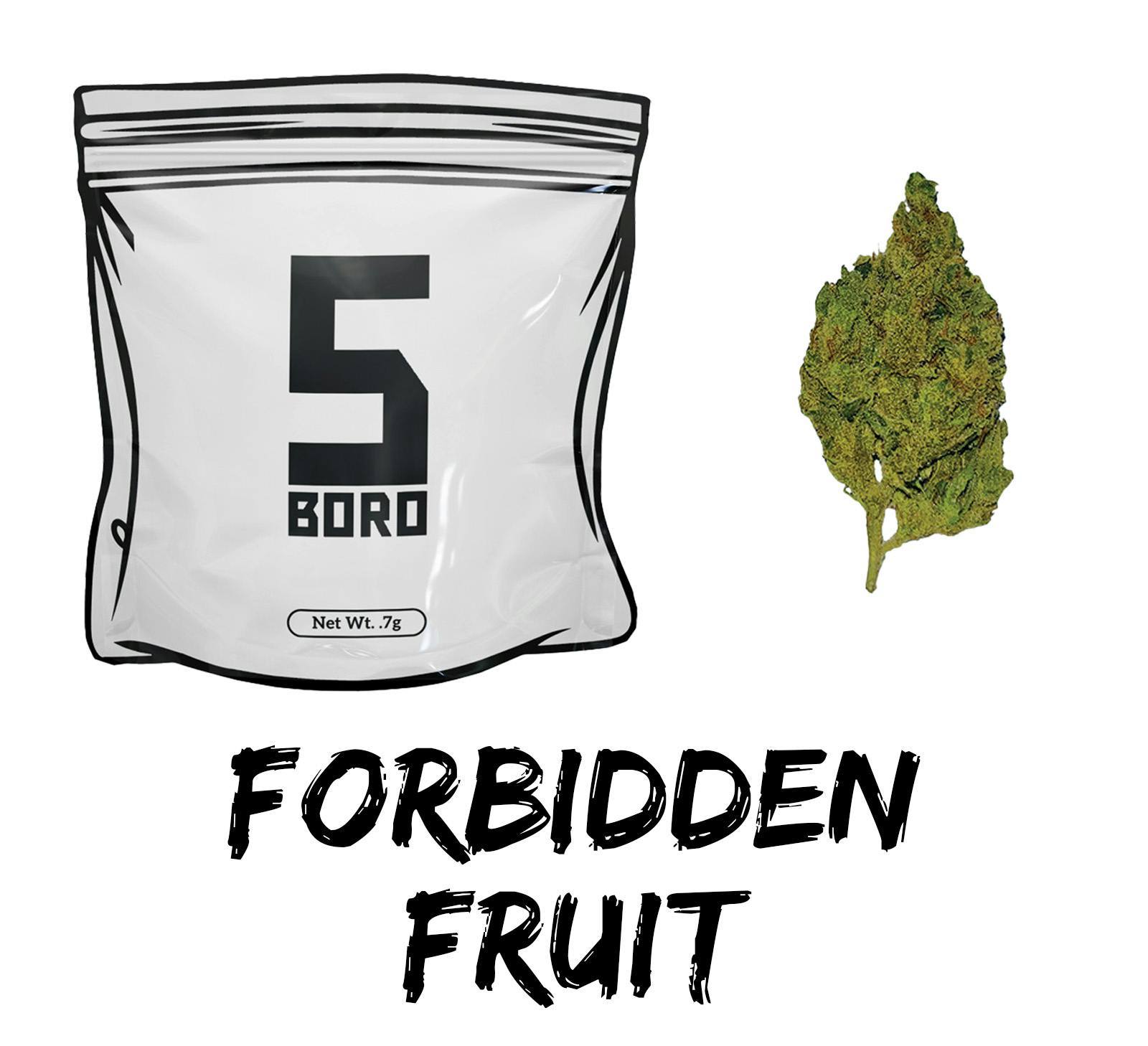
Forbidden Fruit produces some of the most visually distinctive buds in contemporary indica cultivation. The structure is dense and compact — classic indica architecture — with tightly wound calyxes that hold their form well after cure. The colour palette ranges from deep forest green to near-indigo purple depending on the phenotype and the degree of cold exposure during the final weeks of flower; the most prized expressions shade almost entirely toward violet and plum. Trichome coverage is generous and evenly distributed, lending the surface a frosted, silver-white sheen that contrasts sharply with the dark underlying canopy. Pistils run a warm burnt-orange to amber, winding through the bud in a manner that adds visual warmth to an otherwise cool-toned flower. The overall impression is of a well-composed, jewel-like structure — the kind of bud that rewards a moment of observation before consumption.
Growing notes
Forbidden Fruit is considered a moderately challenging cultivar, better suited to growers with at least one or two previous harvests under their belts than to first-time home cultivators. It responds well to controlled indoor environments, where temperature can be dropped in the final two weeks of flower to coax out the deep purple pigmentation that defines its most celebrated phenotypes. Flowering time indoors typically falls between eight and nine weeks. Indoor yields are moderate rather than prolific — the strain prioritises resin density and aromatic complexity over bulk production, a trade-off most cultivators in this space consider worthwhile. Outdoor cultivation is viable in dry, Mediterranean-style climates where late-season humidity is well-managed; the dense bud structure carries an elevated risk of mould if moisture lingers. Plants tend toward compact, bushy growth consistent with their indica lineage, responding favourably to low-stress training techniques that open the canopy to light without stressing the plant. Outdoor harvest typically falls in early to mid-October in Northern Hemisphere climates.
When it's best enjoyed
Forbidden Fruit is most at home in the late evening, when the obligations of the day have been discharged and the only remaining item on the agenda is a considered transition toward rest. Its effects are grounding without being immobilising at moderate doses, making it well-suited to solitary decompression — a long bath, a slow read, or an unhurried conversation in low light. The body ease it produces pairs naturally with stillness rather than activity. For food pairings, the strain's tropical-fruit and stone-fruit terpene profile finds a logical companion in a composed cheese plate with honeycomb and dried apricot, or in a dark-chocolate dessert where the bitterness draws out the sweeter citrus notes in the exhale. Musically, the experience aligns with something unhurried and textured — late-period Bill Evans, ambient works by Brian Eno, or the more contemplative corners of neo-soul. This is not a strain for a crowded social setting or a moment that demands sustained analytical focus; it is, rather, an invitation to be present with a very small number of things.
If you like Forbidden Fruit, also explore
Cherry Pie
As a direct parent of Forbidden Fruit, Cherry Pie shares the sweet stone-fruit earthiness and dense indica structure, making it a natural step for anyone who wants to trace the lineage.
Tangie
Forbidden Fruit's other parent, Tangie delivers the same bright citrus terpene profile in a more sativa-oriented frame, appealing to those who appreciate the aromatic complexity but prefer a lighter body effect.
Granddaddy Purple
Sharing the grape-and-berry depth and deep purple pigmentation that flow through Forbidden Fruit's lineage, GDP offers a comparable indica depth for consumers drawn to the colour and sedative quality.
Gelato
Gelato occupies a similar flavour territory — sweet, creamy, fruit-forward — with a balanced hybrid effect profile that appeals to many Forbidden Fruit enthusiasts seeking a slightly more cerebral experience.
Wedding Cake
A similarly dense, trichome-heavy indica-leaning cultivar with a rich, complex terpene profile, Wedding Cake suits consumers who value the same premium aesthetic and full-body ease as Forbidden Fruit.
Common questions
Is Forbidden Fruit indica or sativa?+
Forbidden Fruit is an indica-dominant hybrid, typically characterised as approximately 70 percent indica. Its lineage — Cherry Pie crossed with Tangie — means it carries some sativa influence in the early, slightly euphoric onset, but the overall experience arc is firmly indica-leaning, moving steadily toward physical ease and a quiet, restful finish rather than sustained cerebral energy.
What does Forbidden Fruit taste like?+
Forbidden Fruit delivers a layered palate of tropical fruit, sweet cherry, and tangerine peel on the inhale, transitioning to a subtler earthy and lightly spiced finish on the exhale. The smoke is smooth and full-bodied. Vapourised at lower temperatures, the citrus and floral notes become more distinct. The aftertaste carries a gentle stone-fruit sweetness that is expressive without becoming heavy.
What are the typical effects of Forbidden Fruit?+
Most consumers describe an onset of mild, warmly euphoric head pressure followed by a pronounced body relaxation that deepens over the first thirty to forty minutes. The experience is contemplative rather than energising — physical ease, softened muscle tension, and a quiet mental calm are the hallmarks. Duration typically runs two to three hours, with a gradual, unhurried comedown. Those new to indica-dominant cultivars are advised to start low and go slow.
What are the dominant terpenes in Forbidden Fruit?+
Myrcene is the primary terpene, contributing the tropical-fruit warmth and the characteristic indica sedation associated with this compound. Terpinolene follows, lending the bright citrus and floral notes inherited from the Tangie parentage. Caryophyllene adds a light spice and mild woody depth, while pinene provides a subtle forest-air contrast. Linalool appears in some phenotypes, adding a faint floral softness to the overall profile.
What strains are similar to Forbidden Fruit?+
Consumers who enjoy Forbidden Fruit often gravitate toward its parent strains — Cherry Pie for the stone-fruit earthiness, or Tangie for the citrus brightness in a lighter-bodied format. Granddaddy Purple shares the deep purple pigmentation and grape-berry depth. Gelato and Wedding Cake occupy similar territory in terms of terpene richness, dense bud structure, and indica-leaning effect profiles.
Is Forbidden Fruit good for beginners?+
Forbidden Fruit can be approachable for adult beginners who respect its indica potency and apply a start-low, go-slow approach. The onset is gradual and the effects are generally smooth in character, but the depth of the body effect can intensify quickly with additional consumption. New consumers are best served taking a single, modest draw and allowing a full fifteen minutes to assess before continuing. Hydration before and during the session is recommended.
Who bred Forbidden Fruit and where does it come from?+
Forbidden Fruit was developed by Chameleon Extracts, a California-based breeding operation that gained recognition in the mid-2010s for fruit-forward crosses with strong aromatic profiles. The strain emerged from the fertile West Coast cannabis scene of that era, where Tangie — one of its parent strains — was already a widely celebrated cultivar. It has since become broadly available across legal markets, including New York's adult-use dispensaries.
What time of day is best for Forbidden Fruit?+
Given its indica dominance and the progressive body relaxation that characterises the peak experience, Forbidden Fruit is best positioned as an evening cultivar. It suits the hours after dinner, when the day's demands have eased and the goal is a composed, unhurried wind-down. It is less well-suited to morning or midday use for most consumers, as the sedative quality of its dominant terpenes can interfere with sustained focus or physical activity.
Related strains