
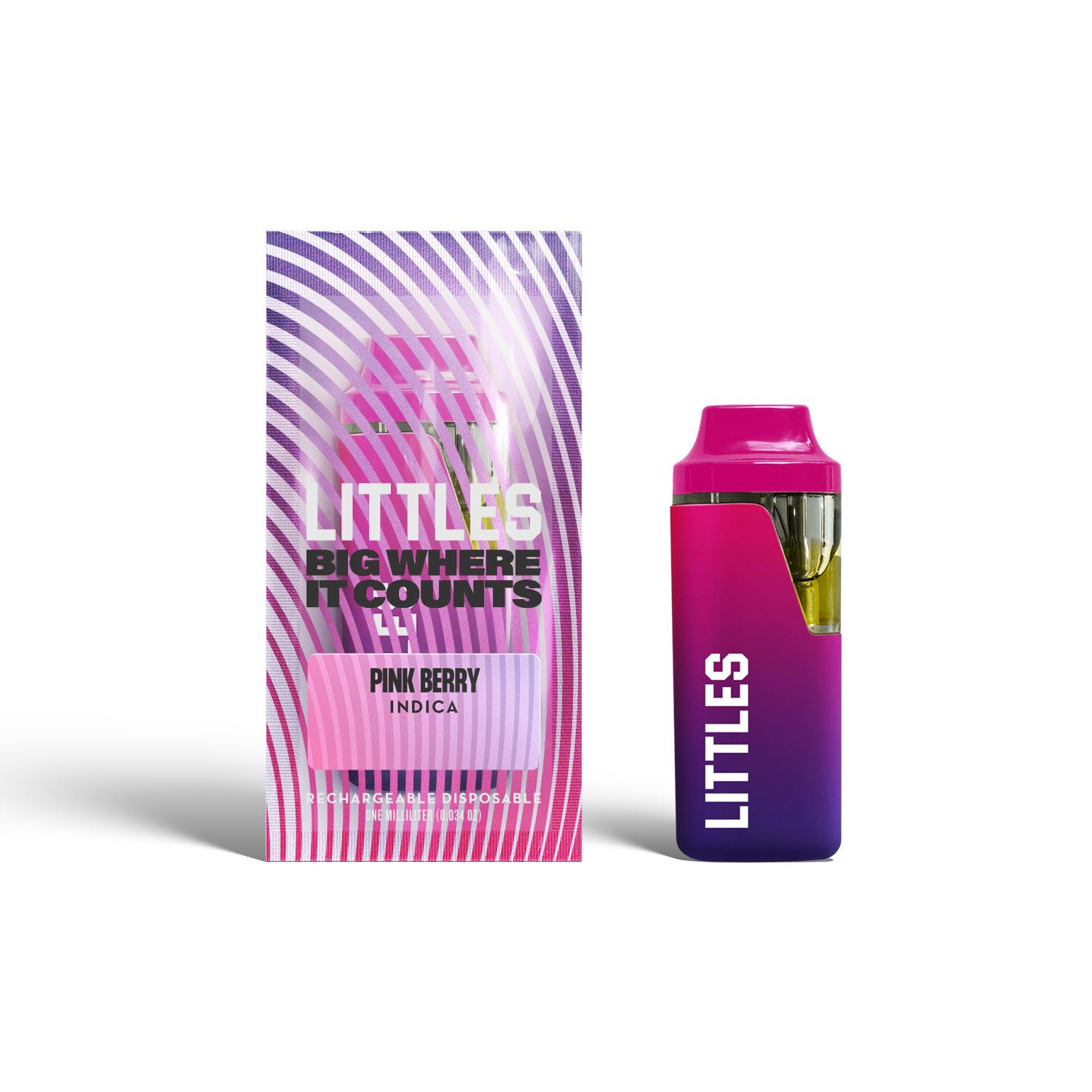
Indica
All strains Pink Berry
1 live products in stock
Quick answer · What is the Pink Berry cannabis strain?
Pink Berry arrives like the first cool evening of late summer — a deeply relaxing indica whose rose-tinged buds carry whispers of wild berry, fresh earth, and soft floral sweetness. Rooted in storied West Coast genetics, this strain rewards the patient consumer with a gradual, enveloping calm that settles into the body without announcing itself too loudly. It is the kind of cultivar that earns a permanent place in a discerning rotation.
Shop Pink Berry · 1 of 1 live products
About Pink Berry
Everything to know about Pink Berry.
Lineage & origin
Pink Berry is generally understood to be a cross of Granddaddy Purple and Blackberry, two pillars of West Coast indica breeding, though some phenotype variations circulating under the same name have introduced additional or alternate parentage. Granddaddy Purple — itself a union of Purple Urkle and Big Bud, popularized in Northern California by Ken Estes around 2003 — contributed the dense, resinous structure, deep pigmentation, and signature grape-berry aroma that became iconic across the American cannabis landscape. Blackberry, a cultivar whose own lineage traces loosely through Ortega, Black Domina, and raspberry-forward genetics, donated the jammy, slightly tart fruit notes and a robust indica body effect that rounds out the finished plant. The precise breeder of Pink Berry as a named, stabilized variety is not consistently documented in public records, and multiple seed companies have released offerings under this name, which complicates traceability. What the market has converged on is a phenotype leaning heavily purple and berry-forward, most often presenting as a full indica or indica-dominant hybrid. Genetic siblings in spirit — strains sharing one or both parents — include Purple Punch, Granddaddy Purple itself, and Black Cherry Punch, all of which occupy a similar flavor and effect space within the contemporary premium indica category.
Effects
Pink Berry is an indica in the truest sense of the experiential arc: its onset is measured rather than abrupt, typically arriving within five to fifteen minutes of inhalation as a gentle pressure behind the eyes and a softening of muscular tension across the shoulders and upper back. This early phase carries a mild uplift — not the energetic spur of a sativa, but a quiet clearing of ambient mental noise that allows the consumer to settle into the moment without restlessness. As the experience deepens into its peak, roughly twenty to forty-five minutes in, the body component becomes more pronounced. A warm, weighted sensation spreads downward from the chest through the limbs, characteristic of the myrcene-heavy terpene profile that Pink Berry typically expresses. Cognitive function remains present but slows to a comfortable pace — thoughts arrive fully formed and unhurried, making this an appealing strain for reflective, low-demand evening activities rather than anything requiring sharp attention or rapid decision-making. The comedown is gentle and gradual, with most consumers reporting a drift toward drowsiness rather than an abrupt drop. Duration tends to run two to three hours for moderate consumption, with residual relaxation extending somewhat beyond that. The overall character is more sedating than psychedelic, and those with lower tolerance are well advised to begin with a conservative amount and allow the full onset window to pass before reassessing.
Aroma, flavor & terpenes
The terpene architecture of Pink Berry sits at the intersection of the fruity and the floral, anchored by myrcene as the likely dominant compound. Myrcene's contribution is unmistakable in the nose — a soft, overripe berry earthiness with a faintly musky base note that grounds the sweeter elements above it. In the context of Pink Berry, this translates to an opening aroma reminiscent of blackberry preserves left to warm in afternoon sunlight, rich and slightly fermented at the edges. Caryophyllene typically appears as a secondary terpene, adding a subtle spice — a whisper of cracked black pepper — that prevents the profile from reading as purely confectionary. Linalool, where present, introduces the floral dimension: a delicate lavender-and-rose quality that surfaces most clearly when the flower is gently broken apart. Pinene may appear in smaller quantities, lending a faint green freshness that lifts the middle of the aroma and keeps it from feeling heavy. On the palate, Pink Berry tends to smoke or vaporize smoothly, delivering a sweet berry inhale that carries through with reasonable fidelity to what the nose promised. The exhale broadens into an earthier, slightly herbal finish, with the spice of caryophyllene more apparent on the back of the throat. Well-cured flower produces a clean, full-bodied vapor with no harshness; the flavor lingers briefly and pleasantly after the session concludes.
Appearance
Pink Berry produces buds that are immediately distinctive on visual inspection. The structure is dense and compact, as one would expect from an indica-dominant cultivar — calyxes stack tightly with minimal airy spacing, resulting in a heavy, nugget-like presentation that holds together firmly under gentle pressure. The color palette is one of the more dramatic in the indica category: deep forest greens sit beneath broad washes of violet and plum, pigmentation that develops most fully when the plant experiences cooler temperatures during the final weeks of flowering. Trichome coverage is substantial, coating the sugar leaves and calyx surfaces in a fine layer of milky-to-amber resin that gives the buds a frosted, almost luminous quality under direct light. Pistils — the hair-like structures winding between the calyxes — present in warm amber and occasionally rust-orange, providing a warm contrast to the cool purple tones beneath. The overall appearance is one of considered, natural beauty: ornate without being ostentatious, and immediately communicative of its indica heritage.
Growing notes
Pink Berry performs reliably in both indoor and outdoor environments, though indoor cultivation allows growers greater control over the temperature drops that encourage the strain's signature purple coloration. Flowering time typically falls in the range of eight to nine weeks under a standard twelve-hour light cycle, which places it in the middle of the pack for indica-dominant cultivars. Indoor yields are described as moderate to above-average, with well-trained plants in optimized environments producing dense, resinous canopies. Outdoor harvests in temperate climates generally occur in early to mid-October in the Northern Hemisphere. The plant is considered moderately approachable for cultivators with some prior experience, though it is not classified among the most forgiving beginner varieties. It benefits from attentive humidity management during late flowering to protect the dense bud structure from moisture-related issues. A light hand with nutrients — particularly nitrogen in the flowering phase — tends to preserve the terpene expression that makes the finished flower so appealing. For the cultivator-curious consumer, Pink Berry represents an aesthetically rewarding grow whose visual payoff at harvest is considerable.
When it's best enjoyed
Pink Berry occupies an unhurried, evening-oriented niche in the consumption calendar. It is best suited to the hours after the day's obligations have resolved — a Thursday night with no early Friday alarm, or a slow Sunday that has already shed its to-do list. The strain's sedating, body-forward character makes it a natural companion to activities that require presence rather than productivity: a long, unhurried dinner prepared at home, a reread of a familiar novel, or a deliberate vinyl listening session. For food pairings, the berry and floral terpene profile finds natural resonance with dishes that carry complementary fruit or earthy notes — a charcuterie arrangement with fresh figs and aged gouda, or a simple dark-chocolate dessert, both of which echo the strain's own jammy, slightly spiced finish. Musically, Pink Berry suits something measured and textured — a late-period Bill Evans record, or the kind of ambient composition that fills a room without demanding attention. It is, above all, a strain for those evenings when the goal is simply to be somewhere fully, without urgency.
If you like Pink Berry, also explore
Granddaddy Purple
As one of Pink Berry's parent strains, GDP shares the grape-berry aroma, deep purple pigmentation, and full-body indica relaxation that define the Pink Berry experience.
Purple Punch
Purple Punch delivers a nearly identical flavor arc — sweet berry on the inhale, dessert-like finish — with a similarly sedating, couch-oriented effect profile that appeals to the same evening-wind-down consumer.
Black Cherry Punch
Sharing overlapping parentage and a tart, dark-fruit flavor profile, Black Cherry Punch offers a slightly more complex aromatic experience for consumers who enjoy Pink Berry's berry-forward character.
Blackberry Kush
Blackberry Kush leans into the same earthy, berry-and-spice terpene territory with a comparable indica-dominant sedation, making it a natural alternative for Pink Berry enthusiasts.
Zkittlez
Consumers drawn to Pink Berry's pronounced fruit clarity and smooth smoke will find Zkittlez covers similar aromatic ground, though with a somewhat lighter, more functional body effect.
Common questions
Is Pink Berry indica or sativa?+
Pink Berry is classified as an indica, or in some phenotypes an indica-dominant hybrid. Its parentage — most commonly cited as Granddaddy Purple crossed with Blackberry — firmly positions it within the indica tradition. Consumers typically experience the hallmarks of that classification: a body-centered relaxation, a measured and calming mental state, and a natural progression toward rest as the session matures. It is not a strain associated with energetic or cerebral-forward effects.
What does Pink Berry taste like?+
Pink Berry tastes primarily of ripe, dark berries — blackberry and grape are the most commonly cited comparisons — with a soft floral quality that surfaces mid-palate, likely attributable to linalool. Caryophyllene contributes a faint, pleasant spice on the exhale, preventing the profile from reading as purely sweet. The finish is earthy and clean, with a lingering berry note. Well-cured flower tends to produce a smooth, full-bodied smoke or vapor that remains faithful to the aroma.
What are the typical effects of Pink Berry?+
Pink Berry typically produces a gradual, body-oriented relaxation that builds steadily from onset through a warm, weighted peak. Early effects may include a quiet mental settling and mild mood lift, but the experience is primarily physical — a release of tension that makes the strain well suited to restful evening use. Sedation is a common outcome at moderate consumption levels. New consumers and those with lower tolerance should start conservatively and allow adequate time before reassessing.
What strains are similar to Pink Berry?+
Consumers who enjoy Pink Berry tend to respond well to Granddaddy Purple, Purple Punch, and Blackberry Kush — all of which share the dark-berry flavor profile and indica-dominant sedation that characterize Pink Berry. Black Cherry Punch offers a slightly more complex aromatic experience within the same flavor family, while Zkittlez provides comparable fruit clarity with a somewhat lighter effect profile for those who prefer less sedation.
Is Pink Berry good for beginners?+
Pink Berry can be an approachable choice for beginners who are specifically seeking a calming, body-oriented indica experience, but its full sedating potential warrants some caution. New consumers should follow a start-low, go-slow approach, waiting through the complete onset window — up to fifteen minutes for inhalation — before considering more. The smooth flavor and gradual onset are forgiving qualities, but the depth of body relaxation may be more pronounced than a first-time consumer anticipates.
What are the dominant terpenes in Pink Berry?+
Myrcene is widely understood to be the dominant terpene in Pink Berry, responsible for the earthy, overripe-berry base of the aroma and contributing to the strain's characteristic body-heaviness. Caryophyllene typically appears as a secondary terpene, adding a subtle spice and a grounding counterpoint to the sweetness. Linalool is often present as well, introducing the soft floral — lavender and rose — dimension that distinguishes Pink Berry from more purely fruit-forward cultivars.
When is the best time of day to consume Pink Berry?+
Pink Berry is oriented firmly toward evening and nighttime use. Its sedating, body-heavy character makes it poorly suited to mornings or any portion of the day requiring focus, physical coordination, or sustained mental output. The ideal window is the two to three hours before intended rest, or during a slow, obligation-free evening. Consumers seeking a daytime cultivar with similar flavor notes but lighter sedation would be better served by an indica-hybrid or sativa-leaning alternative.
How does Pink Berry's aroma differ from other purple strains?+
While Pink Berry shares the dark-berry and grape aromatic signature common to many purple indica cultivars, it is distinguished by a notably floral quality — attributed to linalool — that lifts the profile above purely fruit-and-earth. Where Granddaddy Purple reads as deep and grape-heavy, and Purple Punch as dessert-like and candy-sweet, Pink Berry occupies a subtler middle register: jammy and dark-fruited, but with a rose-and-lavender note that gives it a more refined, less confectionary character.
Related strains