THC 88.61%·CBD 0.16%Indica
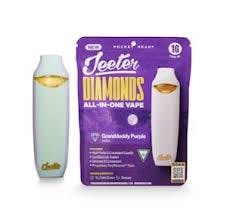
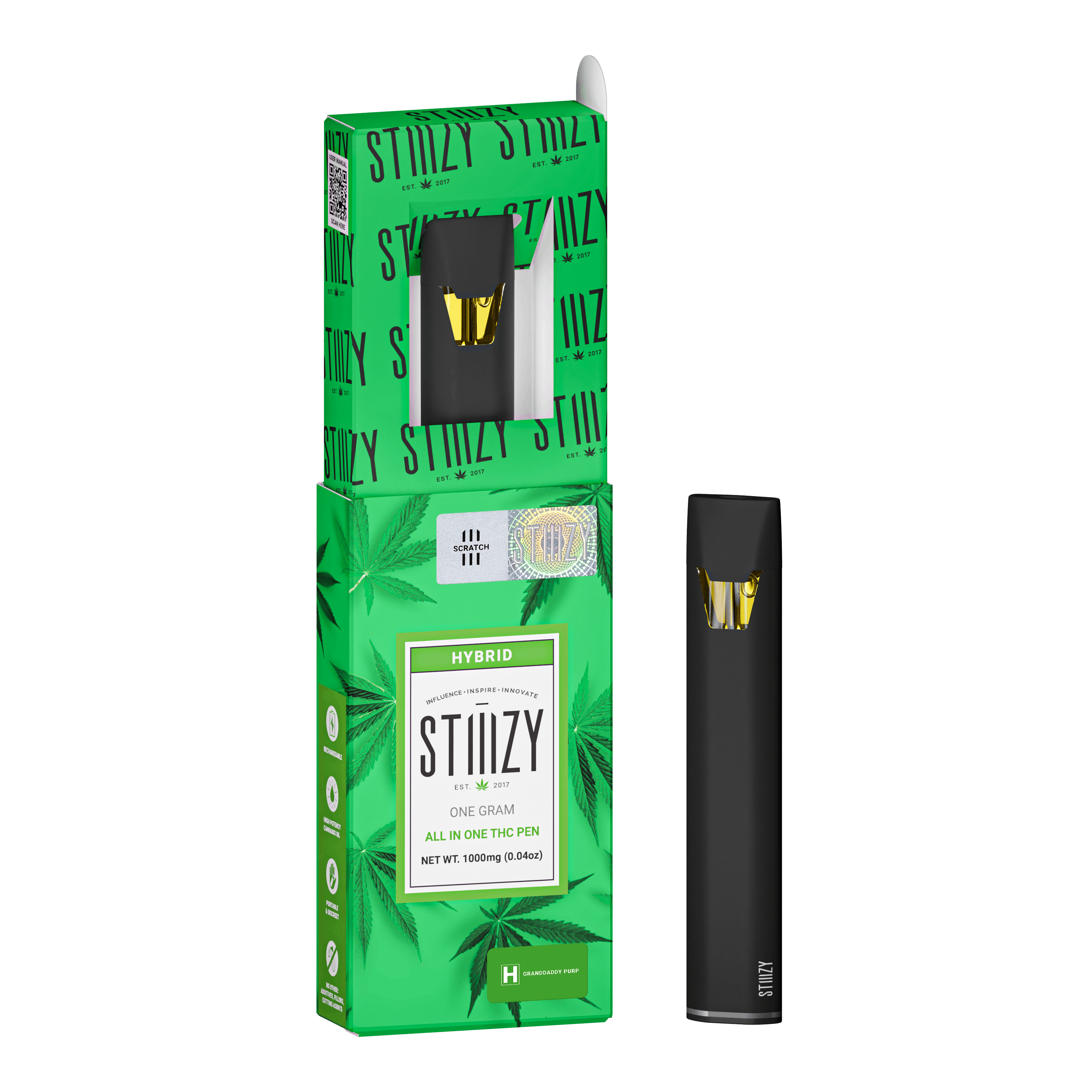
JeeterJeeter Granddaddy Purp All In One Liquid Diamonds Vape · 1g
$47.79
$54after tax

weeddispensarynearme.com
You must be 21 years or older to enter. By entering, you confirm you’re of legal age in your state to purchase cannabis.
For use only by adults 21+ • Keep out of reach of children
9 live products in stock
Quick answer · What is the Granddaddy Purp cannabis strain?
Granddaddy Purple arrives like a late-autumn evening — deep, unhurried, and richly colored. A California classic bred from two of the West Coast's most storied lineages, it carries an unmistakable grape-and-berry perfume and a body-forward experience that has made it a touchstone of the American indica canon. For those who appreciate craft and provenance in equal measure, few strains speak as eloquently as this one.
$54after tax

$49after tax
$31after tax
$68after tax
$71after tax
$66after tax
About Granddaddy Purp
Granddaddy Purple — commonly abbreviated GDP — was introduced in 2003 by Ken Estes, a Bay Area cultivator and advocate based in San Francisco. Estes crossed Purple Urkle with Big Bud, two strains that were already well-established on the California scene. Purple Urkle contributed the deeply pigmented coloration, the pronounced grape and berry aromatics, and the sedative body character that define GDP's identity. Big Bud, an Amsterdam-developed Afghani-dominant variety popularized through Sensi Seeds, lent structural size, dense calyx formation, and heavier overall yields — qualities that made the resulting hybrid attractive to cultivators as much as to consumers. GDP's release coincided with California's expanding medical cannabis culture, and it quickly became a staple at dispensaries throughout the state. Its vivid purple hues and distinctive sweetness made it immediately recognizable at a time when such visual markers carried significant commercial weight. The strain helped elevate consumer awareness around terpene-driven profiles and visually expressive genetics. Over two decades, GDP has spawned numerous phenotypic selections and has appeared as a parent in subsequent breeding projects. Granddaddy Purple crosses such as GDP x OG Kush and various Zkittlez-adjacent projects have circulated widely, though Estes' original cut remains the reference point against which all descendants are measured. The strain's genetic siblings in the Purple family — including Mendocino Purps and Grape Ape — share overlapping ancestry but present distinct enough profiles to stand independently.
The onset of Granddaddy Purple typically arrives within five to ten minutes when smoked or vaped, beginning as a gentle pressure behind the eyes and a quiet softening of mental chatter. The early phase has a mild cerebral quality — not energizing, but a pleasant clearing of the day's accumulated friction. This initial window is brief, and most consumers note that the experience shifts decisively toward the body within the first fifteen to twenty minutes. At peak, GDP is defined by a deep physical heaviness: muscles release tension in a gradual, unhurried manner, and a pervasive sense of stillness settles across the limbs. The dominant terpenes — myrcene and caryophyllene — are understood to work in tandem with the strain's cannabinoid profile to reinforce this grounded, body-centered character. Myrcene, one of the most prevalent terpenes in cannabis, is associated with sedative and muscle-relaxing qualities; beta-caryophyllene, a dietary cannabinoid in its own right, binds to CB2 receptors and may contribute to the calm, tension-easing sensation many consumers report. Duration typically runs two to three hours for experienced consumers, with the comedown gradual and gentle rather than abrupt. Heavy-handedness at the outset can deepen the sedative arc considerably, making the standard counsel — start low, go slow — particularly relevant here. Evening is the natural home for this strain; few consumers find it compatible with daytime demands.
The aromatic identity of Granddaddy Purple is anchored by myrcene, which supplies the foundational earthiness and the subtly musky undertone that underlies its more glamorous top notes. Above that base, a vivid sweetness emerges — distinctly grape-like and redolent of ripe berry — largely attributable to the terpenes inherited from the Purple Urkle parentage. While cannabis researchers note that the perceived 'grape' quality in purple-pigmented strains is not caused by anthocyanins (which produce the color) but rather by the specific terpene and ester composition, the association between GDP's appearance and its flavor is unusually coherent. Beta-caryophyllene adds a faint spice and depth to the aromatic profile, functioning as a counterweight to the sweetness and preventing the nose from reading as one-dimensional. Trace expressions of linalool contribute a barely perceptible floral softness — more detected in the exhale than in the initial sniff. Some phenotypes express a note of pine, suggesting minor pinene content, though this varies by cultivation conditions and specific cut. On the palate, GDP's smoke is smooth and medium-bodied, with the sweet berry notes most prominent on the inhale. The exhale carries the earthier, slightly spiced caryophyllene character, with a clean finish that does not linger harshly. In vapor, the grape and floral elements are more pronounced and the earthy undertow is softened, making the vaporizer a recommended format for those seeking the most expressive read of the terpene profile.
Granddaddy Purple produces buds that are immediately distinctive — dense, tightly wound calyxes that sit in compact, somewhat elongated clusters. The trichome coverage is substantial, giving the surface a silver-white frost that contrasts sharply with the underlying coloration. Pigmentation runs from deep violet and plum to softer lavender, with the intensity of purple hue varying by phenotype, growing temperature during the final weeks of flower, and how far anthocyanin expression is encouraged through cool nights. Orange and amber pistils weave through the structure in generous numbers, providing a warm contrast against the cooler purple tones and adding visual complexity. The calyxes themselves are rounded and plump, a trait traceable to the Big Bud ancestry. Well-grown specimens carry a resinous quality that is apparent to the touch, with trichomes dense enough that even a casual visual inspection communicates potency. The overall aesthetic — deep jewel tones, heavy trichome frost, vivid pistils — has made GDP one of the most visually recognized strains in contemporary American cannabis.
Granddaddy Purple performs well both indoors and in light-deprivation or outdoor environments, though the indoor setting offers cultivators the greatest control over the temperature swings that encourage its characteristic purple expression. Flowering time runs approximately eight to eleven weeks, with most phenotypes finishing around the nine-week mark under standard indoor conditions. Yields are considered moderate to above average indoors, with outdoor plants capable of producing substantial harvests when given adequate space and a long, warm growing season. The strain is considered moderately accessible for cultivators with some experience, though not forgiving of significant errors in humidity management — its dense bud structure creates microenvironments where moisture can accumulate. Adequate airflow and attentive defoliation during the mid-flower period are important considerations. Cool nighttime temperatures in the final two to three weeks of flowering reliably intensify the anthocyanin-driven pigmentation that makes the strain visually distinctive. GDP responds well to low-stress training techniques and is generally considered a stable, predictable genetic platform — a quality that contributed to its widespread adoption by commercial cultivators in the years following its introduction.
Granddaddy Purple is quintessentially an evening strain — one that rewards the deliberate winding-down of the day rather than the management of it. It suits the solo ritual as naturally as it does quiet shared company: the kind of unhurried evening spent on a well-chosen meal, an absorbing film, or a long conversation that has nowhere urgent to go. Its sedative character discourages multitasking and gently insists on presence, making it a reliable companion for anyone seeking to genuinely decompress rather than merely pause. For food pairing, the strain's grape and berry terpene profile finds a complementary counterpart in dishes built around stone fruit or warm spice — a slow-braised short rib, a ripe cheese board, or dark chocolate with high cacao content. Musically, the unhurried, body-forward arc of GDP aligns well with low-tempo soul, late-period jazz, or ambient electronic work where texture takes precedence over rhythm. The common thread is depth over speed — experiences that ask for attention and patience rather than momentum, which is precisely what this strain, at its best, is designed to provide.
Purple Urkle
As a direct parent of GDP, Purple Urkle shares the grape-forward aromatics and deep body sedation, making it the natural first step for anyone seeking the source material behind the classic.
Grape Ape
Bred from Mendocino Purps, Skunk, and Afghani genetics, Grape Ape offers a similarly vivid purple appearance, sweet berry nose, and indica-dominant body effect that GDP enthusiasts will find immediately familiar.
Northern Lights
A foundational Afghani-dominant indica, Northern Lights shares GDP's capacity for deep physical relaxation and a smooth, resinous smoke, though with a more piney and earthy aromatic character.
Blueberry (DJ Short)
DJ Short's Blueberry carries a fruit-forward terpene profile and a calming, body-centered effect arc that resonates with the same evening-oriented experience GDP delivers.
9 Pound Hammer
With Gooberry and Jack the Ripper among its parents, 9 Pound Hammer delivers a similarly forceful sedative body effect and sweet, fruity nose that will feel like familiar territory to longtime GDP consumers.
Granddaddy Purple is a firmly indica-dominant strain, bred from Purple Urkle and Big Bud — both indica-leaning varieties with Afghani roots. Its effects reflect that lineage clearly: the experience is body-centered, grounding, and increasingly sedative as the session progresses. It is not a strain suited to active or cognitively demanding pursuits, and most consumers reserve it for evening or late-night use.
GDP has one of the most recognizable flavor profiles in the indica category: a prominent sweet grape and mixed-berry character on the inhale, followed by an earthier, lightly spiced exhale contributed by beta-caryophyllene. Some phenotypes express a faint floral note on the finish. In vapor, the fruit-forward qualities are more defined; in smoke, the earthy and musky undertones from myrcene become more present.
The experience begins with a brief, gentle mental ease before shifting into a pronounced body heaviness that is the strain's defining character. Muscle tension releases gradually, and a pervasive physical calm settles across the session. Effects typically last two to three hours. The sedative arc is significant, particularly at higher consumption levels, which is why a measured, patient approach to dosing is always worth observing — especially for newer consumers.
Consumers who appreciate GDP's profile tend to gravitate toward Purple Urkle (its parent strain), Grape Ape, Blueberry by DJ Short, Northern Lights, and 9 Pound Hammer. Each shares some combination of indica body weight, fruit or berry aromatics, and a preference for evening use. Purple Urkle is the closest comparison given the direct genetic relationship, while Northern Lights appeals to those who prefer a drier, more piney aromatic expression.
GDP can be appropriate for adult-use beginners who approach it with care and restraint. Its sedative potency means that overconsumption is easy and the resulting heaviness can be disorienting for those without prior experience. The standard guidance — start with a small amount, wait a full fifteen to twenty minutes to assess the effect before consuming more — is especially relevant here. The evening setting, with no obligations ahead, is the sensible context for a first encounter.
Myrcene is generally cited as GDP's most abundant terpene, contributing the musky earthiness, grape-adjacent sweetness, and sedative body quality the strain is known for. Beta-caryophyllene follows, adding spice and depth to the nose and contributing to the physical ease of the experience through its interaction with CB2 receptors. Linalool appears in trace amounts in many phenotypes, lending a soft floral note, particularly on the exhale.
The purple coloration in GDP — and in cannabis generally — is produced by anthocyanins, a class of water-soluble pigments also responsible for the colors of blueberries, red cabbage, and autumn leaves. Anthocyanin expression in cannabis is triggered by cooler temperatures during the late flowering period; as chlorophyll breaks down, these pigments become visible. The intensity of the purple varies by phenotype, cultivation conditions, and how pronounced the temperature differential is between day and night.
Granddaddy Purple was introduced in 2003 by Ken Estes, a San Francisco Bay Area cultivator and cannabis advocate. Estes crossed Purple Urkle with Big Bud to create the strain, which quickly became a defining fixture of California's medical cannabis dispensary culture. Its combination of visual distinction, recognizable aromatics, and reliable indica effects made it one of the most commercially significant strains of its era and a lasting reference point in American cannabis.
Related strains
Pick your store
We'll show pricing, deals, and delivery zones for the store you pick. You can switch any time from the header.