
Indica
All strains Pina Colada
5 live products in stock
Quick answer · What is the Pina Colada cannabis strain?
Piña Colada arrives with the unhurried ease of a late afternoon somewhere warm — a dense, resinous indica whose tropical fruit character is anything but accidental. Notes of ripe pineapple, coconut, and citrus rind layer over a quiet earthy base, while the body settles into a deliberate, weighted calm. For the New York shopper seeking relief from the pace of the city without sacrificing sensory pleasure, this is a strain that rewards slow, attentive consumption.
Shop Pina Colada · 5 of 5 live products
On sale· 25% OFF
THC 35.87%Indica
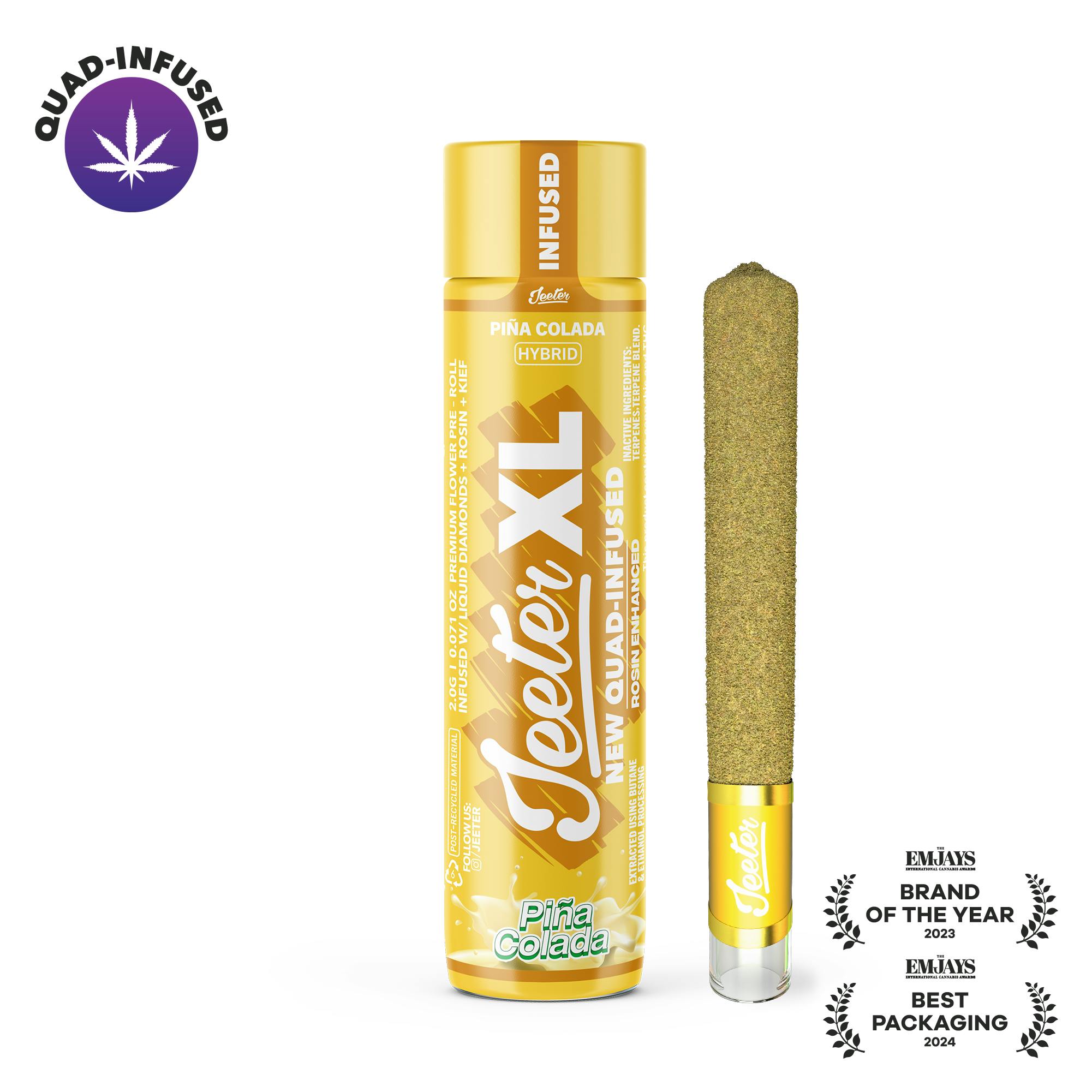
JeeterPiña Colada Quad-Infused XL Jeeter Joint | 2g · 2g
$29.86$39.82
$35after tax

THC 34.69%Indica
JeeterPiña Colada Quad-Infused Baby Jeeter 5-pack | 2.5g · 0.5g/5pk
$43.36
$49after tax
About Pina Colada
Everything to know about Pina Colada.
Lineage & origin
Piña Colada's precise lineage is not uniformly documented across public sources, and the breeder has not publicly confirmed a single canonical version of the strain. The most widely cited account attributes the variety to Humboldt Seed Organization, the Northern California collective known for terroir-driven genetics and richly aromatic cultivars. Under that account, Piña Colada is understood to descend from Trainwreck and an undisclosed fruity hybrid — likely carrying influence from landrace equatorial genetics that express the pronounced tropical terpene profile for which the strain is recognized. A separate phenotype marketed under the same name has appeared from various East Coast and craft breeders, particularly during the post-legalization proliferation of novelty-named hybrids, making it important to verify sourcing when selecting this cultivar. The Humboldt-attributed version gained traction in the mid-2010s alongside a broader consumer appetite for strains that deliver aromatic complexity alongside relaxing indica effects. Trainwreck itself — a long-established Northern California hybrid of Mexican, Thai, and Afghani landrace genetics — contributes a spicy, piney backbone that grounds Piña Colada's sweeter top notes. The genetic siblings most closely associated with this family include other Humboldt Seed Organization offerings such as Bubba Kush crosses, though Piña Colada occupies its own distinct aromatic lane within that catalogue.
Effects
Onset with Piña Colada tends to arrive within five to fifteen minutes of inhalation, beginning as a gentle pressure behind the eyes and a subtle brightening of the senses that belies its indica classification. The initial window carries a mild euphoric lift — not sharp or cerebral in the way a sativa-dominant hybrid might present, but a soft elevation of mood that makes the transition into deeper body effects feel graceful rather than abrupt. As the session progresses into the peak phase, typically between twenty and forty-five minutes in, the body-side character asserts itself more fully. Myrcene-driven sedation settles into the limbs and shoulders, encouraging a comfortable heaviness that is well-suited to still environments — a couch, a dim room, an evening without demands. The mind remains largely clear at moderate consumption levels, though extended use can encourage a pleasant mental quietude that makes sustained focus on complex tasks less appealing. The comedown is generally described as smooth and unhurried, fading gradually over two to three hours toward drowsiness rather than ending in any abrupt shift. Caryophyllene's reported interaction with the endocannabinoid system may contribute to the physically grounded character of the later phase. New consumers or those with lower tolerance are well advised to start low and go slow, as the initial mildness can be misleading before the full indica body effect develops.
Aroma, flavor & terpenes
The aromatic identity of Piña Colada is built primarily around myrcene and terpinolene, a pairing that produces the tropical-sweet signature immediately apparent when the jar is opened. Myrcene — the most prevalent terpene in many cannabis varieties — contributes the ripe, slightly fermented fruit quality reminiscent of fresh pineapple and mango, while terpinolene adds a florally sweet, almost confectionery dimension that evokes coconut and fresh citrus peel. Ocimene appears as a notable secondary terpene in several tested samples, amplifying the bright, herbal-tropical character and lending a faint green, slightly waxy note that keeps the profile from reading as purely confectionery. Caryophyllene rounds out the base with a quiet spice — not dominant, but present enough to provide grounding depth and prevent the sweetness from becoming cloying. Traces of limonene may surface in some phenotypes, adding a sharper citrus edge that accentuates the pineapple impression. On the palate, Piña Colada delivers its aromatic promise with reasonable fidelity in vapor, where the tropical and floral notes emerge cleanest at lower temperatures. Combustion brings the earthy, slightly piney undercurrent from its Trainwreck heritage into greater prominence, and the exhale carries a smooth, subtly sweet finish with a faint herbal warmth. The smoke is generally described as soft-textured and not harsh, making it accessible for less frequent consumers when consumed thoughtfully.
Appearance
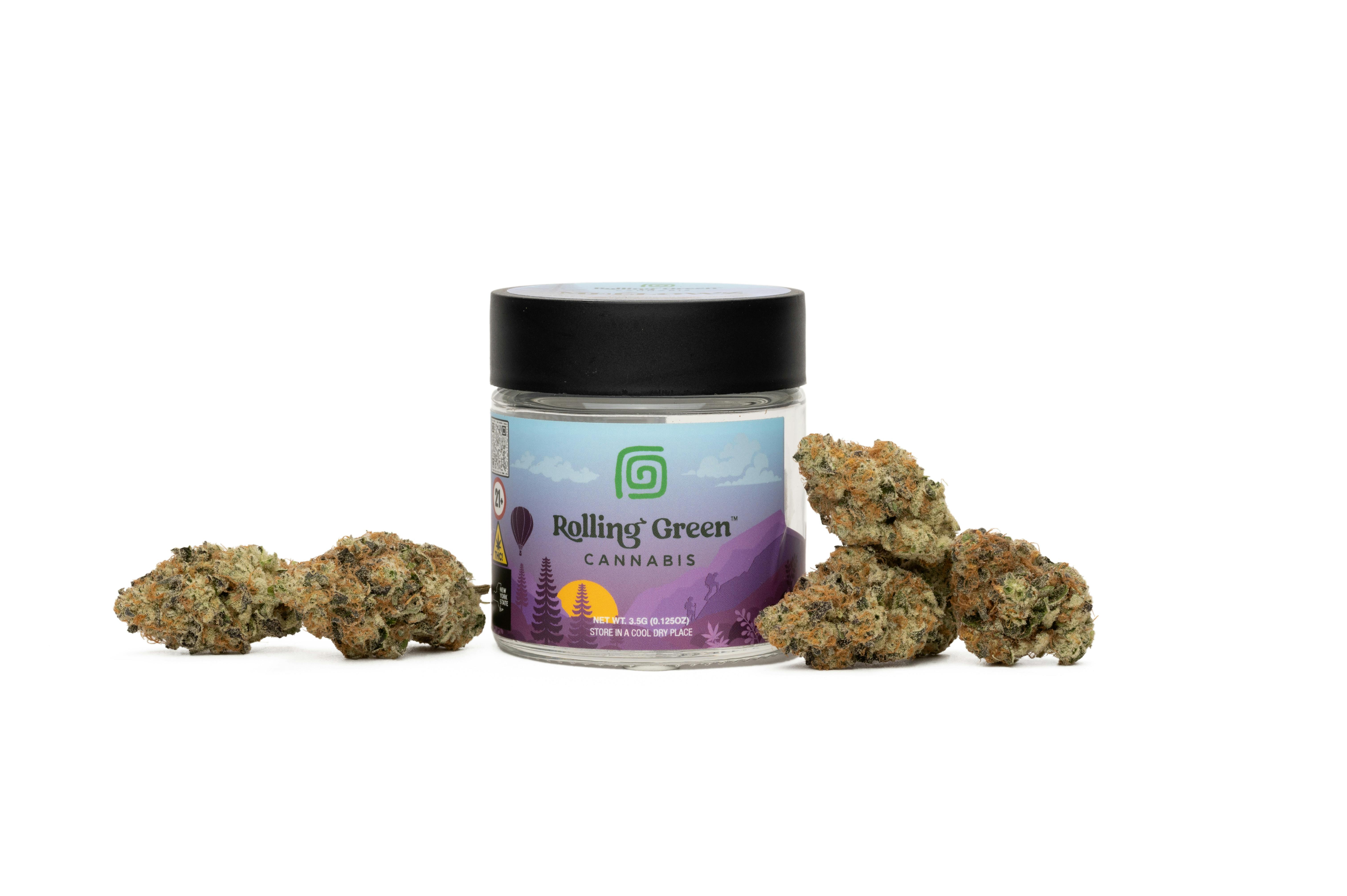
Piña Colada produces buds that reflect its indica heritage in their compact, densely packed structure. The calyxes form tight clusters that suggest deliberate cultivation, with a rounded, chunky silhouette rather than the elongated, airy architecture more typical of sativa-leaning varieties. Well-cured examples present a deep forest green base color shot through with occasional hints of pale olive or gold, depending on phenotype and harvest timing. Trichome coverage is a defining visual characteristic — a generous, milky-to-amber resin layer coats both the sugar leaves and the calyxes, giving properly matured flower a frosted, almost luminous quality under direct light. Pistils are predominantly amber-orange to burnt sienna at full maturity, contrasting warmly against the green of the bud body. The overall impression is of a dense, resinous, well-finished flower that signals both potency and careful post-harvest handling.
Growing notes
Piña Colada is generally considered an intermediate-difficulty cultivar, accessible to growers with a season or two of experience but not typically recommended as a first-time project due to its attention to humidity management during flowering. The variety performs well both indoors under controlled conditions and outdoors in warm, Mediterranean-style climates — the latter environment, echoing its Northern California origins, tends to encourage particularly expressive terpene development. Indoor flowering time is typically cited in the range of eight to nine weeks, with yields that fall in the moderate-to-generous range for an indica variety. Outdoor cultivation in temperate regions is best timed for a late-September to mid-October harvest in the Northern Hemisphere. The plant develops a moderately bushy profile and benefits from low-stress training techniques to improve light penetration through the denser canopy. Humidity control during the final weeks of flowering is important given the tight bud structure, which can be susceptible to moisture-related issues if airflow is insufficient. For the cultivation-curious shopper, this is a strain whose quality scales meaningfully with grower attentiveness.
When it's best enjoyed
Piña Colada finds its most natural expression in the unhurried evening hours — after the last obligation of the day has passed and before sleep becomes the primary intention. It suits the solo wind-down ritual as readily as a relaxed gathering of two or three people with no particular agenda: a shared playlist, a long meal, a film that does not demand close analytical attention. The tropical terpene profile makes it a natural companion to food and drink that echo its aromatic character. A simple ceviche, a coconut-based curry, or a plate of fresh fruit and aged cheese each find a pleasant resonance with the pineapple and citrus notes present in the strain. For music, the blend of sweetness, warmth, and subtle spice pairs intuitively with unhurried soul, ambient jazz, or the kind of slow-tempo electronic composition designed for late-evening listening. It is particularly well-suited to a night when the intention is to be present and sensory without being stimulated — a distinction that separates it from more cerebral hybrid choices and makes it a considered option for the end of a long New York week.
If you like Pina Colada, also explore
Pineapple Express
Fans drawn to Piña Colada's tropical pineapple-forward aroma and smooth, relaxing arc will find a familiar terpene signature in Pineapple Express, though with a slightly more balanced, energetic hybrid character.
Mango Kush
Mango Kush shares the sweet, tropical-fruit aromatic profile and indica-weighted body effect that define Piña Colada, making it a natural next choice for those who appreciate this aromatic family.
Mimosa
While leaning more toward the sativa side, Mimosa's citrus-and-tropical terpene expression and smooth, elevated character appeal to the same consumer palate that gravitates toward Piña Colada's fruity complexity.
Tropicana Cookies
For consumers who love Piña Colada's fruit-forward terpene presence and want a more pronounced citrus dimension alongside comparable resin density, Tropicana Cookies offers a related sensory experience.
Do-Si-Dos
Consumers who most appreciate the dense, resinous structure and deep indica body effect of Piña Colada will find Do-Si-Dos familiar in its weighted physical character, even as the aroma shifts toward earthy floral notes.
Common questions
Is Piña Colada indica or sativa?+
Piña Colada is classified as an indica-dominant variety. Its effects follow a pattern typical of indica genetics — a mild mood elevation on onset that gives way to a progressively heavier, physically grounded experience as the session deepens. The body effect is the defining characteristic, settling into the limbs and encouraging a calm, still quality that makes it best suited to low-activity evening use.
What does Piña Colada taste like?+
Piña Colada carries a distinctly tropical flavor profile anchored by notes of ripe pineapple, light coconut, and citrus peel. In vapor, the sweet and floral notes are most prominent; combustion brings a softer, earthier undercurrent into the foreground. The exhale is smooth and gently sweet, with a faint herbal warmth that reflects its Trainwreck heritage. The flavor is generally considered accessible and pleasant, even for consumers who do not typically favor sweeter varieties.
What are the typical effects of Piña Colada?+
The experience typically begins with a gentle mood elevation and mild sensory brightening, arriving within five to fifteen minutes of inhalation. This transitions gradually into a more prominent body effect — a weighted, relaxed heaviness concentrated in the limbs and shoulders. The mind remains reasonably clear at moderate consumption levels. The overall arc is smooth and unhurried, lasting two to three hours before fading gently toward drowsiness.
What strains are similar to Piña Colada?+
Consumers who enjoy Piña Colada's tropical aroma and indica body effect often appreciate Pineapple Express for its comparable fruit-forward terpene profile, Mango Kush for its similarly sweet, indica-dominant character, and Tropicana Cookies for a related citrus complexity with higher resin expression. Do-Si-Dos is a suitable recommendation for those who most value the dense, physically grounding aspect of the experience.
Is Piña Colada good for beginners?+
Piña Colada can be approachable for newer consumers when treated with appropriate caution. Its onset is relatively gentle, which can create a misleading impression of mildness before the fuller indica body effect develops. New consumers are encouraged to start with a small amount, allow ample time to assess the experience, and avoid redosing too quickly. The 'start low, go slow' approach is particularly relevant here, as the body effect can deepen considerably with increased consumption.
What are the dominant terpenes in Piña Colada?+
Piña Colada's terpene profile is led by myrcene, which contributes the ripe, tropical-fruit sweetness central to its aromatic identity, and terpinolene, which adds a floral, slightly confectionery dimension. Ocimene appears as a notable secondary terpene, lending a bright, herbal-tropical quality. Caryophyllene provides subtle spice and grounding depth, while traces of limonene may surface in some phenotypes, sharpening the citrus impression.
When is the best time to consume Piña Colada?+
Given its indica-dominant character and the progressive body effect that unfolds over the session, Piña Colada is best suited to evening or late-afternoon use, after the demands of the day have concluded. It is not well-matched to moments requiring sustained focus, physical coordination, or sharp analytical engagement. It performs at its most enjoyable during relaxed social settings, solo wind-down rituals, or as accompaniment to a leisurely meal.
Who bred Piña Colada, and where does it come from?+
The most widely recognized version of Piña Colada is attributed to Humboldt Seed Organization, a Northern California breeding collective known for producing aromatic, terroir-influenced cultivars. However, public documentation of the precise parent strains is limited, and the breeder has not publicly confirmed a full lineage breakdown. Multiple other phenotypes share the name, making source verification worthwhile when selecting this cultivar at a dispensary.
Related strains