
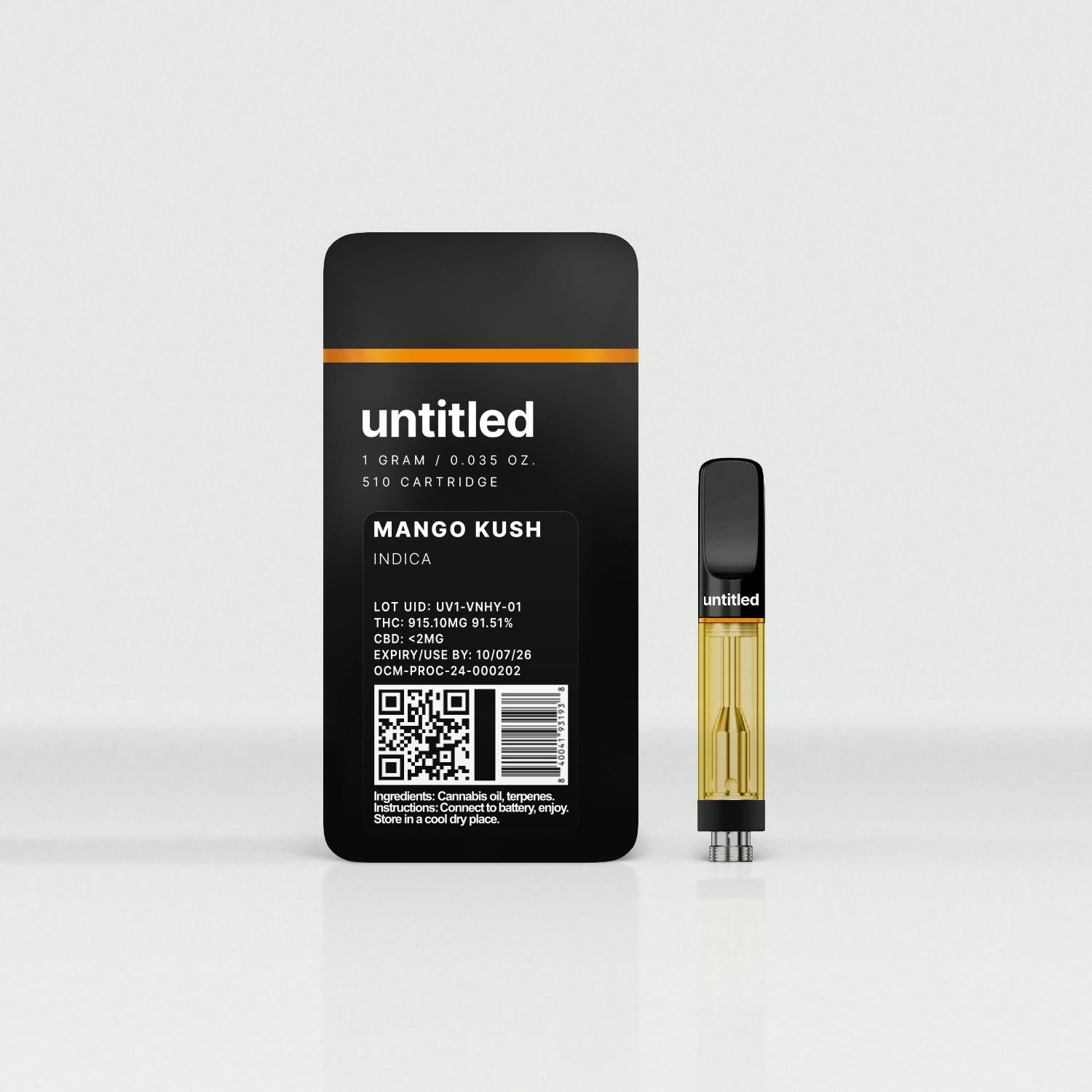
Indica
All strains Mango Kush
2 live products in stock
Quick answer · What is the Mango Kush cannabis strain?
Mango Kush arrives with the unhurried confidence of a well-ripened stone fruit — its aroma alone a quiet declaration of tropical intention. A predominantly indica variety tracing roots to the Hindu Kush mountain range and the sun-drenched orchards of its mango heritage, this strain rewards patience with a deeply physical, gently euphoric experience that softens the edges of the evening without fully dissolving the mind.
Shop Mango Kush · 2 of 2 live products
About Mango Kush
Everything to know about Mango Kush.
Lineage & origin
Mango Kush is generally understood to descend from two foundational lineages: Mango, a classic indica-dominant strain said to carry genetics from KC 33 and an Afghani indica, and Hindu Kush, the ancient landrace originating from the mountain range spanning Afghanistan and Pakistan. The combination grounds the strain's tropical aromatics in a dense, resinous physical structure typical of Kush-family genetics. The precise breeder and year of formal release are not publicly documented with full clarity, though the strain gained broad recognition through the early 2000s California medical cannabis scene, eventually finding a stable home in dispensaries across North America. The Hindu Kush parentage situates Mango Kush within one of cannabis's most storied genetic traditions — a lineage that has contributed foundational architecture to OG Kush, Bubba Kush, and countless other influential modern varieties. The Mango parent, itself sometimes attributed to breeder Airport Man and later refined through Dutch seed banks, contributes the unmistakable fruit-forward terpene signature that defines Mango Kush's identity in a crowded market. No widely recognized phenotype variations or formal genetic siblings have been formally documented by a named breeder, and seed-bank offerings labeled Mango Kush can vary meaningfully in expression. Shoppers and cultivators should understand that the name describes a broad genetic type rather than a single locked phenotype, and individual batches may lean more tropical or more earthy depending on cultivation and curing practices.
Effects
The onset of Mango Kush tends to be measured and deliberate — most consumers report the first signals arriving within five to ten minutes of inhalation, beginning as a gentle warmth behind the eyes and a softening of muscular tension across the shoulders and upper back. This is not a strain that announces itself with sharp cerebral urgency; instead it builds gradually toward a comfortable, settled euphoria that occupies the middle ground between mental clarity and physical ease. At its peak, Mango Kush leans decidedly toward the body. The indica character expresses itself in a pronounced physical heaviness that encourages stillness — the couch, the hammock, the quiet corner of the room. A mild uplift in mood accompanies this physical quality, creating a pleasant sense of well-being without the racing ideation or sensory amplification associated with more sativa-forward varieties. Myrcene, the dominant terpene in most Mango Kush phenotypes, is widely cited in cannabis literature as contributing to this sedating, muscle-relaxing body quality. The duration of the experience typically extends one and a half to three hours depending on individual tolerance and consumption method. The comedown is generally gentle — a gradual return to baseline accompanied by appetite stimulation, a characteristic many attribute to the strain's Kush lineage and myrcene content. Those with lower tolerances should approach with patience; the body-heavy quality can intensify considerably with larger amounts.
Aroma, flavor & terpenes
The aromatic profile of Mango Kush is among the most recognizable in the indica category — immediately approachable, fruit-forward, and layered with enough earthen depth to signal its Kush heritage. The dominant terpene in most tested phenotypes is myrcene, which delivers the ripe mango and tropical fruit quality that defines the strain's first impression. Myrcene is also associated with herbal, slightly musky undertones that add weight beneath the fruit character, preventing the aroma from reading as purely sweet. Caryophyllene, commonly the secondary terpene in Mango Kush, contributes a subtle spice — a faint black pepper or clove note that adds complexity on the exhale and rounds out what might otherwise be a one-dimensional sweetness. Some phenotypes also express detectable amounts of pinene, lending a faint piney or herbal brightness that lifts the mid-profile and connects the strain's tropical character back to its mountain-range roots. Linalool appears in select cuts, adding a barely perceptible floral softness. On the palate, Mango Kush smokes with notable smoothness, particularly when properly cured. The inhale delivers a sweet, almost candy-like mango impression that transitions on the exhale to a warmer, more earthy Kush foundation — the two elements sitting in easy balance. Vapor at lower temperatures tends to emphasize the fruit and floral top notes, while combustion brings forward the earthier, spiced base. The finish lingers pleasantly, with a mild tropical sweetness that dissipates slowly.
Appearance
Mango Kush produces buds that reflect its indica heritage in both density and proportion — typically compact, chunky, and moderately to heavily resinous. The calyx structure is full and rounded, with a tight internodal spacing characteristic of Kush-family plants. Trichome coverage is generous, lending cured flower a frosty, slightly luminous quality when viewed under direct light. The color palette tends toward medium to deeper greens, often punctuated by flashes of amber and orange from the pistils, which curl and concentrate densely at the bud's surface. Some phenotypes exhibit faint purple or lavender hues in the inner leaf tissue, particularly when plants are exposed to cooler overnight temperatures during the final weeks of flowering. The overall visual impression is of a well-structured, resin-rich flower — quietly appealing rather than ostentatiously colorful.
Growing notes
Mango Kush performs reliably in both indoor and outdoor cultivation environments, though its Kush genetics mean it responds particularly well to the controlled temperature and humidity conditions achievable indoors. Flowering time is generally cited between eight and nine weeks, placing it in the mid-range for indica varieties. Indoor yields are typically moderate to generous when trained with low-stress techniques such as topping or the Screen of Green method, which suits the plant's naturally bushy, compact canopy. Outdoor cultivation is viable in temperate to warm climates — Mediterranean-style conditions with long, warm summers and low humidity in the final weeks before harvest tend to produce the best terpene expression and reduce the risk of mold, to which the dense bud structure can be susceptible in wetter environments. The plant is considered moderately approachable for home cultivators with some experience, though beginners may find the humidity management requirements during flowering a meaningful challenge. Harvest typically falls in early to mid-October for outdoor grows in the Northern Hemisphere. As with any cannabis cultivation in New York, consumers should be aware of applicable state regulations before considering home growing.
When it's best enjoyed
Mango Kush is most naturally at home in the slower, more reflective hours of the day — the late afternoon transition into evening, or the quiet stretch after dinner when the obligations of the day have receded. Its body-forward indica character makes it less suited to high-activity or socially demanding situations and more aligned with unhurried, sensory-focused experiences: reading, listening to music at meaningful volume, or a leisurely meal shared with a small group of familiar company. For a food pairing, the strain's tropical terpene profile finds an elegant counterpart in dishes built around stone fruit, coconut, or lightly spiced Southeast Asian flavors — a Thai green curry or a plate of fresh mango with chamoy-style accompaniment allows the strain's myrcene signature to resonate rather than compete. Musically, the warm, slightly heavy character of Mango Kush pairs naturally with deep soul, classic reggae, or the slower tempos of ambient electronic music — genres that reward attentive listening without demanding active participation. Solo evenings or intimate gatherings of two or three are the settings in which this strain tends to feel most appropriate.
If you like Mango Kush, also explore
Mango Haze
Fans of Mango Kush's tropical fruit aromatics who prefer a lighter, more cerebral experience often find Mango Haze — a sativa-leaning sibling in spirit — to be a compelling daytime counterpart.
Bubba Kush
Sharing deep Kush-family roots and a similarly pronounced body effect, Bubba Kush appeals to those who appreciate Mango Kush's physical sedation but prefer a darker, more chocolatey and coffee-forward aromatic profile.
Hindu Kush
As a direct parent landrace, Hindu Kush offers a purer expression of the earthy, resinous mountain-range character that underpins Mango Kush's body effects, with less tropical sweetness and more raw, hash-like depth.
Banana Kush
Banana Kush shares the fruit-meets-Kush aromatic architecture that defines Mango Kush, substituting ripe banana and vanilla notes for the tropical mango character while delivering a comparable indica body experience.
Blue Dream
Consumers who enjoy Mango Kush's approachable fruit-forward sweetness but occasionally want a more balanced, gently energizing effect often gravitate toward Blue Dream as a complementary option for earlier in the day.
Common questions
Is Mango Kush indica or sativa?+
Mango Kush is a predominantly indica variety, drawing its physical, relaxing character from its Hindu Kush landrace lineage and its Mango parent. Most phenotypes express the classic indica profile — compact structure, dense buds, and a body-centered effect that tends toward sedation at higher amounts. It is generally considered an evening or late-afternoon variety rather than one suited to active or demanding parts of the day.
What does Mango Kush taste like?+
Mango Kush tastes primarily of ripe tropical fruit — the mango character is prominent and immediate on the inhale, with a sweetness that is genuine rather than artificial. The exhale introduces earthier Kush undertones alongside a faint spice note from caryophyllene. The overall palate is smooth and fruit-forward, finishing with a mild tropical sweetness that lingers. Properly cured flower tends to express the most nuanced version of this flavor profile.
What are the typical effects of Mango Kush?+
Mango Kush typically delivers a gradual, body-centered experience characterized by physical relaxation, a gentle uplift in mood, and increasing physical heaviness as the session progresses. Onset is unhurried — most consumers notice effects within five to ten minutes of inhalation. Appetite stimulation and a desire for stillness are common at peak intensity. The experience generally lasts one and a half to three hours, with a soft, gradual return to baseline.
What strains are similar to Mango Kush?+
Consumers drawn to Mango Kush often find appeal in Banana Kush for its comparable fruit-and-Kush aromatic architecture, Bubba Kush for its similarly pronounced body sedation, and Hindu Kush for a purer expression of the earthy mountain-range character that anchors Mango Kush's effects. Mango Haze offers a lighter, more cerebral take on the tropical fruit terpene profile for those who prefer less body weight.
Is Mango Kush good for beginners?+
Mango Kush can be suitable for newer consumers who approach it with care and patience. Its fruit-forward aroma and smooth smoke make it approachable, but its indica potency means the body-heavy effects can intensify significantly with larger amounts. The standard guidance — start with a modest amount, wait to assess the full effect before consuming more — is particularly relevant here. Evening use, in a comfortable and familiar setting, is the most forgiving introduction to this variety.
What are the dominant terpenes in Mango Kush?+
Myrcene is the dominant terpene in most Mango Kush phenotypes, responsible for the strain's characteristic tropical fruit aroma and its contribution to the sedating, physically relaxing effect profile. Caryophyllene is commonly the secondary terpene, adding a faint spice and pepper note on the exhale. Some cuts also express pinene, which introduces a subtle herbal or piney brightness, and trace amounts of linalool, which adds a soft floral dimension to the overall aromatic composition.
When is the best time of day to consume Mango Kush?+
Mango Kush is best suited to the later portions of the day — late afternoon, evening, or the hours before sleep — when its physically sedating indica character is an asset rather than a limitation. Its tendency to encourage stillness, appetite, and a quieting of mental activity makes it a poor match for mornings or periods requiring sustained focus or physical coordination. It is most rewarding in unhurried, low-demand contexts where its gentle euphoria can be appreciated fully.
Does Mango Kush have a strong smell?+
Yes — Mango Kush is among the more aromatically expressive indica varieties, and its scent is distinctive enough to be recognizable even before the jar is opened. The ripe mango and tropical fruit quality is prominent, underpinned by earthy, slightly musky notes from its Kush lineage. Properly cured flower can be notably fragrant, and consumers who prefer discretion should plan accordingly. The aroma softens but does not disappear entirely with vapor rather than combustion.
Related strains