
Sativa
All strains Mango Haze
1 live products in stock
Quick answer · What is the Mango Haze cannabis strain?
Mango Haze arrives like the first warm afternoon of summer — bright, tropical, and unhurried. A sativa-leaning descendant of the legendary Haze family, this strain carries the sun-ripened sweetness of ripe mango against an earthy, spiced undercurrent. Its cerebral lift is measured and clear, making it a natural companion for long creative afternoons or thoughtful conversation. For those who appreciate nuance in the glass as much as in the garden, Mango Haze rewards the attentive palate.
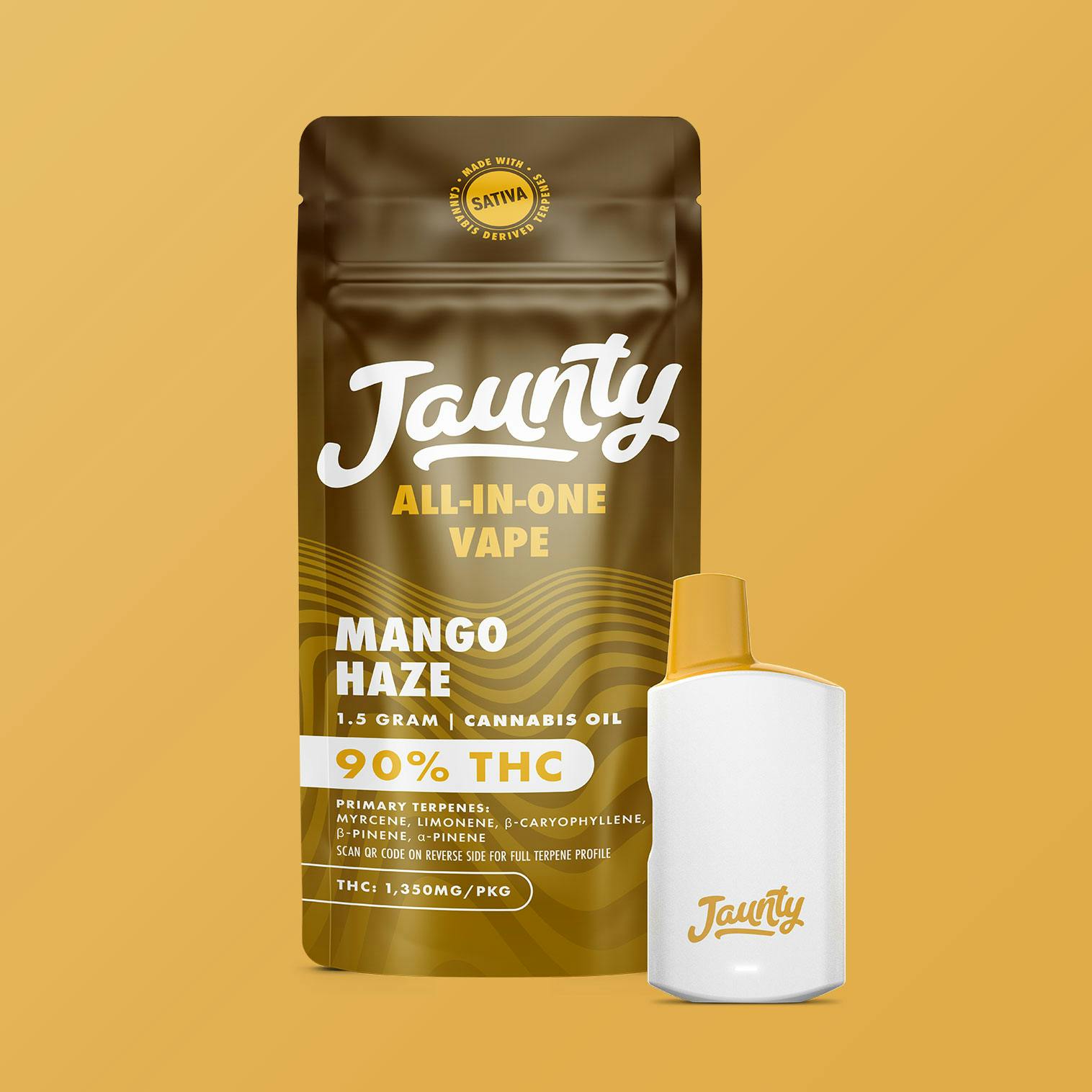
Shop Mango Haze · 1 of 1 live products
About Mango Haze
Everything to know about Mango Haze.
Lineage & origin
Mango Haze traces its origins to Mr. Nice Seed Bank, the Geneva-based breeding house founded by Shantibaba, Howard Marks, and Neville Schoenmakers — three figures who shaped modern cannabis genetics in the 1990s. The strain is a three-way cross of Northern Lights #5, Skunk #1, and Haze, a parentage it shares with several of Mr. Nice's celebrated cultivars, including the closely related Super Silver Haze and Mango Haze's spiritual sibling, Arjan's Haze. The Northern Lights #5 contribution adds resin production and a degree of structural stability to what might otherwise be an unwieldy Haze phenotype, while Skunk #1 tempers the famously long Haze flowering cycle and imparts its own pungency to the terpene profile. The Haze lineage itself — a complex cross of Colombian, Mexican, Thai, and South Indian landraces assembled in Santa Cruz, California during the 1970s — is responsible for Mango Haze's characteristic sativa architecture and soaring, long-duration effects. Mr. Nice released Mango Haze in seed form during the late 1990s and early 2000s, a period when the Amsterdam coffeehouse scene was the primary proving ground for new genetics. The strain earned a devoted following among Haze purists who wanted the classic cerebral intensity softened by tropical sweetness. Its influence is felt in the broader wave of fruit-forward sativa hybrids that followed throughout the 2000s and 2010s.
Effects
The onset of Mango Haze is characteristically sativa — gradual but deliberate, arriving within five to fifteen minutes of inhalation as a gentle brightening behind the eyes and a subtle quickening of thought. There is little of the abrupt, anxious rush that less refined sativa hybrids can produce; instead, the lift is smooth, almost architectural, building toward a peak that feels simultaneously energizing and grounded. This balance is partly attributable to the myrcene inherited from its Skunk and Northern Lights lineage, which softens the otherwise purely cerebral Haze character. At its peak, Mango Haze is distinctly head-oriented — conversation flows easily, creative associations feel more elastic, and visual or auditory details tend to sharpen pleasantly. The body remains functional rather than sedated, making it one of the more socially versatile sativa expressions in the Haze family. Duration tends toward the longer end of the spectrum, consistent with its Haze heritage; users routinely report two to three hours of sustained, manageable elevation before a gentle, unhurried comedown. The descent is one of Mango Haze's more distinguished qualities. Rather than a hard cliff into fatigue, the comedown resembles a slow tide — awareness returning to baseline without the residual heaviness that heavier indica crosses sometimes leave behind. Those new to sativa-dominant varieties would do well to observe a start-low, go-slow approach, as the cerebral intensity at peak can feel pronounced.
Aroma, flavor & terpenes
The terpene profile of Mango Haze is led by myrcene, which contributes the strain's signature tropical-fruit quality and a soft, almost fermented sweetness reminiscent of overripe mango or ripe papaya. Myrcene is known to interact synergistically with other terpenes and cannabinoids, lending a gentle physical ease that rounds the sharper edges of the Haze cerebral character. Alongside myrcene, terpinolene plays a notable secondary role — a terpene common across the Haze family that brings a floral, herbaceous brightness and faint piney lift to the aroma. This combination produces an opening bouquet that reads as distinctly fruit-forward without becoming cloying. Caryophyllene adds a subtle spice — more black pepper than clove — that deepens the mid-note of the aroma and gives the strain its quiet complexity. A trace of ocimene, found in several tropical-fruited sativas, may contribute to the almost sweet-herbal quality that lingers in a freshly opened jar. Pinene, if present, adds a clean, green accent that keeps the overall profile from reading as one-dimensional. On the palate, Mango Haze is most expressive at lower temperatures in a dry herb vaporizer, where the tropical sweetness and floral terpinolene notes are most distinct. Combustion brings out the spice and earthiness more prominently, with a smooth, warm smoke and a finish that carries a faint citrus zest on the exhale. The aftertaste is clean and relatively brief, inviting another draw without demanding it.
Appearance
Mango Haze expresses the classic morphology of its Haze lineage — elongated, somewhat airy buds that stack loosely along long internodes rather than forming the compact, rounded nuggets associated with indica-dominant varieties. The calyxes are notably large relative to the overall bud mass, a structural trait inherited from the equatorial landrace genetics deep in the Haze family tree. Sugar leaves are sparse, keeping the flower open and well-ventilated. The colour palette tends toward bright, spring-green with occasional lime or yellow-green hues developing toward the end of a full flowering cycle. Pistils are typically a vivid burnt orange or rust, weaving prominently through the bud in keeping with the strain's long maturation. Trichome coverage, while not as saturated as on some Northern Lights-forward phenotypes, is generous and evenly distributed, giving cured buds a fine, frosted quality that catches light attractively without obscuring the underlying structure. The visual presentation is elegant rather than imposing — more artisan than ornate.
Growing notes
Mango Haze is considered an intermediate-to-advanced cultivation project, largely due to its Haze heritage. Indoors, flowering time runs long — typically ten to twelve weeks — a commitment that requires patience and careful environmental management. In exchange, the plant rewards disciplined growers with buds of notable aromatic complexity. Indoor yields are moderate rather than prolific, and the plant's tendency toward vertical stretch makes low-stress training or topping advisable for growers working within height-constrained spaces. Outdoors, Mango Haze thrives in warm, Mediterranean-style climates with long summers and low humidity through the late flowering period. In cooler or wetter climates, the open bud structure that makes this strain so visually appealing can also make it susceptible to mold if airflow is inadequate. Harvest outdoors typically falls in mid to late October in the Northern Hemisphere. Those cultivating in New York under the state's home cultivation regulations — which permit adults 21 and over to grow a limited number of plants — should note that this strain's long season may require a greenhouse or supplemental lighting to reach full maturity before the first frost.
When it's best enjoyed
Mango Haze is, at its core, a daylight strain — best encountered when the hours ahead hold possibility rather than obligation. A Sunday morning with a sketchbook, a long walk through a neighborhood still figuring itself out, or a slow afternoon in a sun-filled room with good speakers all suit its particular register of alertness and ease. The terpene profile — tropical, lightly spiced, faintly floral — pairs with remarkable naturalness alongside fresh fruit, particularly stone fruit and citrus. A plate of sliced mango, peach, or a well-made mango lassi mirrors the strain's aromatic character in a way that feels deliberate rather than coincidental. Musically, Mango Haze finds its footing in recordings that reward close listening without demanding it — Brazilian tropicália, early Lee Scratch Perry productions, or the more percussive corners of West African jazz all complement the strain's buoyant, cerebral warmth. For social settings, it works well in small, unhurried gatherings where conversation is the point — the kind of afternoon that begins at two and ends, unexpectedly, at seven.
If you like Mango Haze, also explore
Super Silver Haze
A genetic sibling sharing the same Northern Lights #5, Skunk #1, and Haze parentage, Super Silver Haze delivers a comparably clear, energetic cerebral lift for those who want Mango Haze's altitude with a sharper, more resinous character.
Strawberry Cough
Fans of Mango Haze's fruit-forward sweetness and functional, uplifting sativa quality will find Strawberry Cough a natural companion, offering a similarly smooth cerebral experience with a berry-dominant terpene profile.
Amnesia Haze
Another Haze-family descendant with landrace depth, Amnesia Haze offers a comparable duration and intensity of cerebral effect, with an earthier, lemon-dominant aroma for those who appreciate the lineage but want a citrus pivot.
Pineapple Express
Those drawn to Mango Haze's tropical aroma and approachable sativa effects will recognize a kindred spirit in Pineapple Express, which brings a similarly fruity, energetic profile with a slightly heavier body component.
Maui Wowie
A classic Hawaiian landrace-influenced sativa, Maui Wowie shares Mango Haze's bright tropical sweetness and clear-headed elevation, making it an obvious recommendation for anyone seeking a comparable, unhurried daytime experience.
Common questions
Is Mango Haze indica or sativa?+
Mango Haze is a sativa-dominant hybrid, bred by Mr. Nice Seed Bank from Northern Lights #5, Skunk #1, and Haze. The Haze genetics are the dominant force in its character — driving the long-duration, cerebral, uplifting effects the strain is known for — while the indica-leaning Northern Lights #5 and Skunk #1 parents contribute a degree of physical ease and a more manageable flowering time than a pure Haze would require.
What does Mango Haze taste like?+
Mango Haze carries a tropical-fruit sweetness on the palate — most prominently ripe mango and a faint papaya note — underpinned by a light spice and herbal warmth. At lower vaporizer temperatures the fruit character is most expressive; combustion brings the earthy and peppery elements of the terpene profile forward. The exhale finishes with a mild citrus zest and leaves a clean, relatively brief aftertaste.
What are the typical effects of Mango Haze?+
The experience is primarily cerebral — a clear, building lift that enhances focus, sociability, and creative association without significant sedation. Onset arrives within five to fifteen minutes; peak duration tends to run long, consistent with Haze genetics, often two to three hours. The comedown is gradual and gentle. Those new to sativa-dominant varieties should approach with a start-low, go-slow mindset, as the cerebral intensity at peak can be pronounced.
What strains are similar to Mango Haze?+
Strains worth exploring include Super Silver Haze (a direct genetic sibling), Amnesia Haze (a fellow Haze-family descendant with a citrus pivot), Strawberry Cough (similarly fruity and uplifting), Pineapple Express (tropical aroma with a slightly fuller body), and Maui Wowie (a classic sativa with comparable tropical sweetness and clear-headed elevation).
Is Mango Haze good for beginners?+
Mango Haze can be approachable for beginners who have some familiarity with sativa-dominant cannabis, but its Haze lineage means the cerebral effects can feel intense for those with little prior experience. The smooth onset and gentle comedown are forgiving qualities, but a start-low, go-slow approach is strongly advisable. New consumers should allow ample time between sessions to gauge their individual response before increasing quantity.
What are the dominant terpenes in Mango Haze?+
Mango Haze is typically led by myrcene, which produces its characteristic tropical-fruit sweetness and contributes a soft physical ease. Terpinolene — a signature terpene across the Haze family — adds a floral, herbaceous brightness. Caryophyllene brings a subtle black-pepper spice to the mid-note. Ocimene and pinene may also be present in smaller quantities, contributing a sweet-herbal quality and clean green accent respectively.
When is the best time of day to enjoy Mango Haze?+
Mango Haze is best suited to daytime and early evening use. Its sativa-dominant, cerebral character makes it well-matched to morning creative sessions, active afternoons, or sociable gatherings where alertness and ease are both welcome. It is generally less suited to late-night use for those who find stimulating sativa effects interfere with winding down, though individual responses vary and the gentle comedown is one of its more forgiving attributes.
Who bred Mango Haze and when was it released?+
Mango Haze was bred by Mr. Nice Seed Bank, the collaborative project founded by Shantibaba, Howard Marks, and Neville Schoenmakers. The strain was made available in seed form during the late 1990s and early 2000s, a period of significant genetic innovation centered on the Amsterdam cannabis scene. Mr. Nice is also responsible for related cultivars including Super Silver Haze, and the label remains one of the most respected names in classic Haze-family genetics.
Related strains