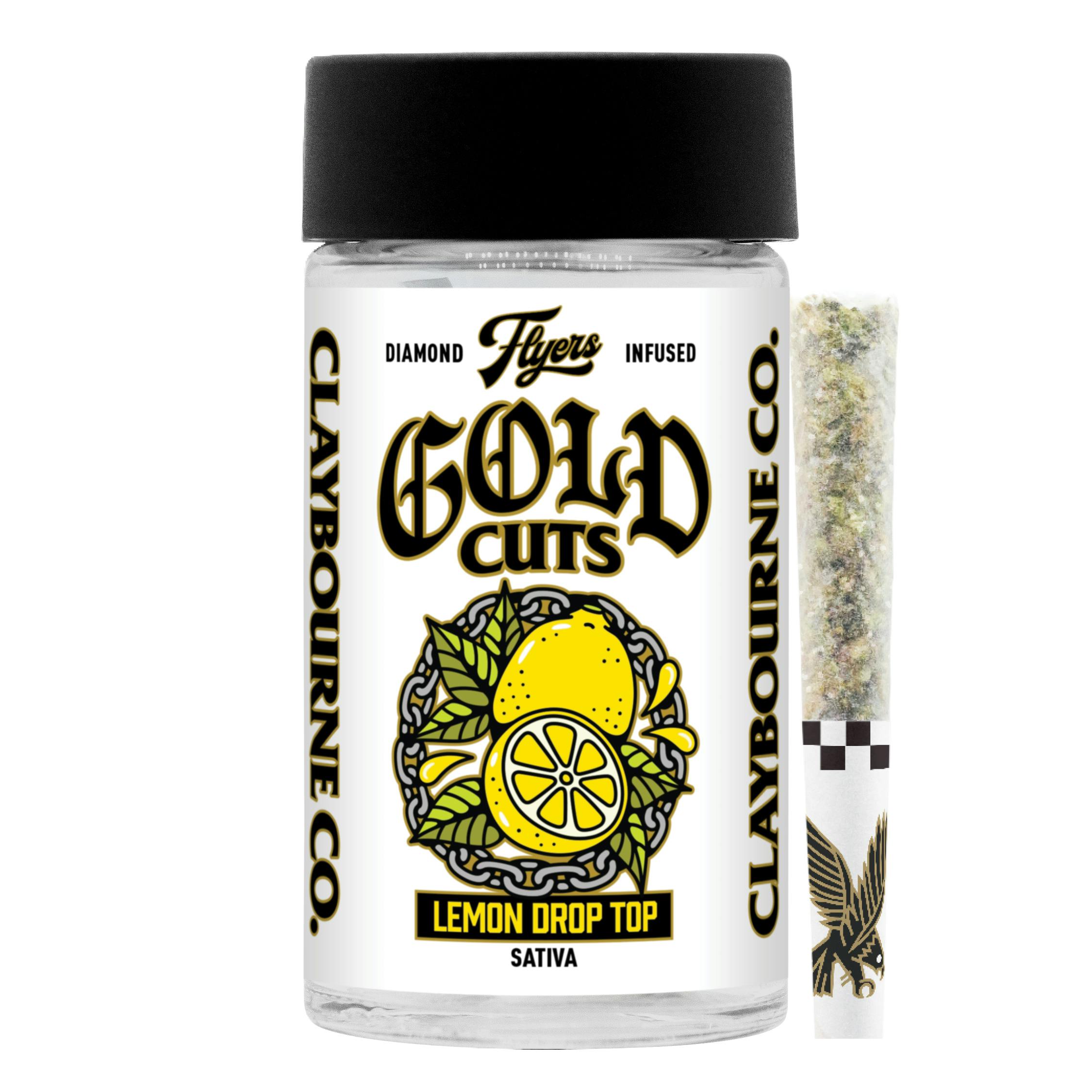
THC 54.86%Sativa
Claybourne Co.Claybourne Co. Flyers Diamond - Infused Pre-roll - - 5ct - Indoor Lemon Drop Top · 0.5g/5pk
$50.44
$57after tax

weeddispensarynearme.com
You must be 21 years or older to enter. By entering, you confirm you’re of legal age in your state to purchase cannabis.
For use only by adults 21+ • Keep out of reach of children
2 live products in stock
Quick answer · What is the Lemon Drop cannabis strain?
Lemon Drop arrives like a squeeze of fresh citrus on a warm afternoon — bright, clarifying, and unhurried. This sativa-leaning hybrid carries a terpene profile that leans decisively into limonene-forward brightness, delivering an uplifting mental clarity that feels less like a jolt and more like the gentle lift of a well-made espresso. For those drawn to daytime cannabis that complements rather than interrupts, Lemon Drop occupies a considered place in the rotation.
$57after tax
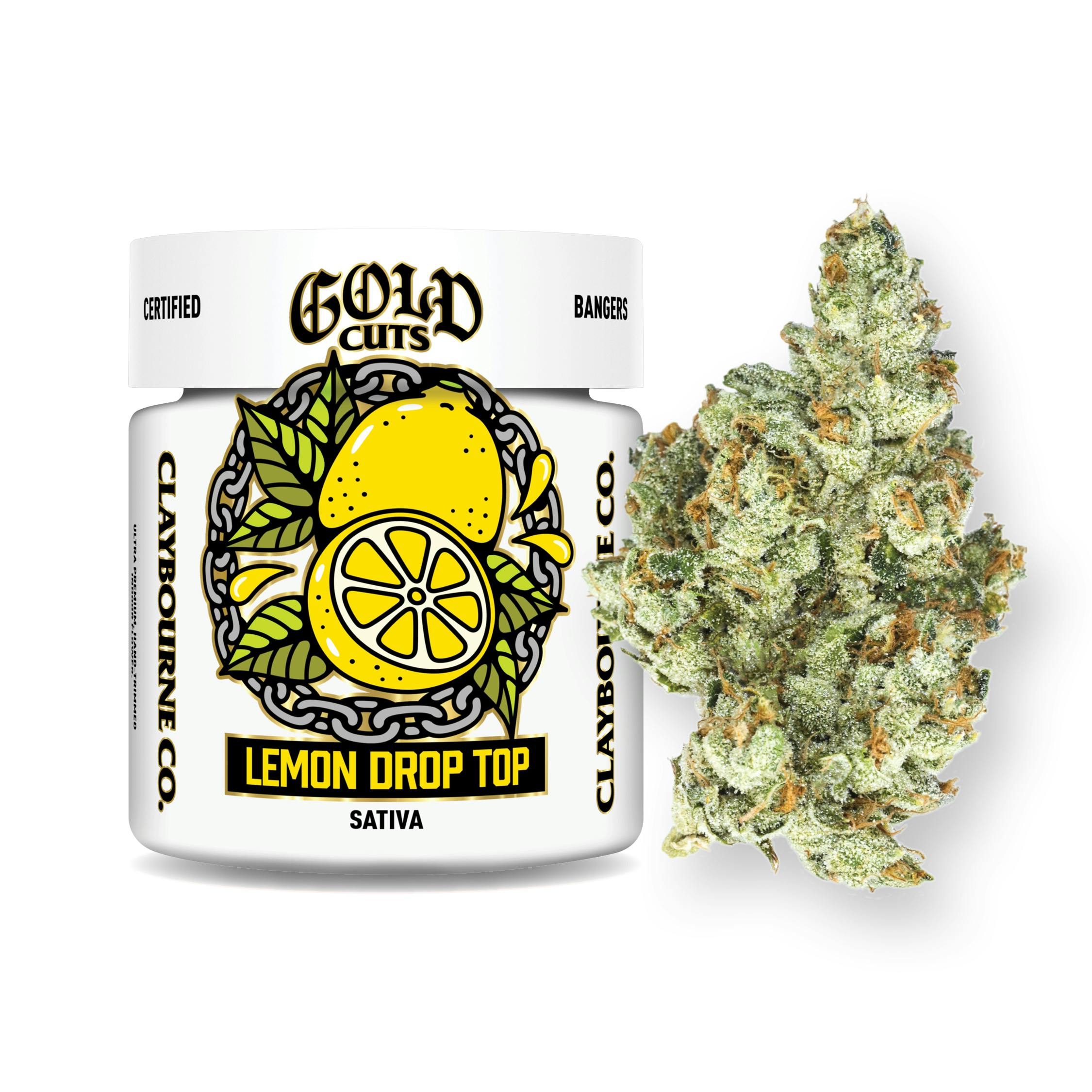
$68after tax
About Lemon Drop
Lemon Drop's precise genetic lineage is not fully settled in public cannabis databases, and the breeder of record has not been universally agreed upon across major sources such as Leafly or Wikileaf. What is broadly documented is that the strain belongs to the larger family of lemon-phenotype cultivars that proliferated in the early-to-mid 2000s as breeders chased high-limonene expression in hybrid offspring. The most commonly cited parentage points to a cross involving Lemon Skunk — itself a well-documented phenotype selected from Skunk No. 1 genetics — and another citrus-forward or haze-adjacent parent, though some sources leave the second parent unnamed or contested. Lemon Skunk, popularized in part by Dutch Passion and later by DNA Genetics, brought an assertive citrus character and a sativa-influenced growth structure that translated well into its offspring. Lemon Drop shares shelf space, so to speak, with genetic relatives such as Lemon Haze, Super Lemon Haze, and Lemon G, all of which pursued similar olfactory territory through different crossing strategies. Within that lineage family, Lemon Drop is considered a more approachable, moderate expression — retaining the brightness of its citrus heritage without the sometimes-overwhelming cerebral intensity associated with pure haze descendants. Its relative accessibility made it quietly influential in the Pacific Northwest cannabis scene before spreading to East Coast markets.
The onset of Lemon Drop tends to arrive within ten to fifteen minutes of inhalation, manifesting first as a mild pressure behind the eyes and a gentle brightening of focus — the kind of shift that makes a scattered afternoon feel suddenly navigable. The cerebral quality is the dominant note: thoughts move with a degree of ease and association that many consumers find conducive to creative work, conversation, or simply sustained attention on a task that had previously felt unwieldy. As the session matures into its peak phase, typically between thirty and sixty minutes in, a subtle body warmth enters the experience without tipping into heaviness. This is where the hybrid character asserts itself — the sativa influence keeps the mind engaged while the indica underpinning prevents the kind of anxious edge that can accompany strongly haze-forward cultivars. The dominant terpene, limonene, is associated in the literature with mood elevation and stress modulation, and consumers often describe a sense of lightness that feels proportionate and clean rather than overwhelming. The comedown is generally gradual and gentle, with most consumers reporting a return to baseline within two to three hours. There is little of the sudden sedative drop that can accompany higher-myrcene cultivars. Those newer to cannabis are encouraged to approach any sativa-leaning hybrid with the standard start-low, go-slow mindset, as cerebral cultivars can occasionally amplify introspective or anxious tendencies at higher consumption levels.
The aromatic profile of Lemon Drop is anchored almost entirely in limonene, the monoterpene responsible for the bright, almost tart lemon-rind quality that defines the strain's identity. On the nose, the initial impression is clean and zesty — closer to fresh lemon peel than to lemon candy, which gives it a naturalistic, almost culinary honesty that distinguishes it from more synthetic-smelling citrus cultivars. Behind that leading note, many cultivated phenotypes carry a secondary thread of terpinolene, which contributes a faintly floral, slightly herbal dimension that keeps the aroma from reading as one-dimensional. Caryophyllene, when present in the terpene profile, adds a subtle spice — a dry, almost peppery undertone that grounds the brightness and lends the strain a quiet complexity on the exhale. Some phenotypes also show traces of pinene, introducing a piney, forest-floor quality that integrates with the citrus in the way a lemon tree in an orchard smells different from a lemon sitting on a kitchen counter: rooted, contextual, and more complex than any single note alone. On the palate, whether consumed via flower or vaporizer, Lemon Drop delivers a smooth initial intake with the citrus character arriving prominently on the front of the tongue. The exhale tends to be cleaner than many sativa-adjacent cultivars, with less of the hashy or earthy residue that can linger after heavier hybrids. The overall impression is one of brightness and refinement — a strain that rewards a slower, more deliberate session.
Lemon Drop buds present with a structure that reflects its sativa-leaning genetics — moderately dense rather than tightly packed, with elongated calyxes and a slight looseness that allows the trichome coating to catch light from multiple angles. The colour palette skews toward medium to bright green, sometimes with subtle yellow-green undertones that seem almost thematically consistent with its citrus identity. Phenotypes grown under cooler finishing temperatures can express faint lime-green highlights along the outer leaves. Pistils run from amber to a warm orange-gold, weaving through the bud structure in a manner that adds visual warmth to an otherwise cool-toned palette. The trichome coverage is generous but not extravagant — a fine, even frost that signals moderate-to-high resin production without the saturated, almost translucent coating seen in some hash-forward varieties. Well-cultivated specimens carry a slightly sticky texture on handling, consistent with a respectable terpene and resin expression.
Lemon Drop performs capably both indoors and in greenhouse environments, and its sativa-leaning growth structure means cultivators should anticipate moderate vertical stretch during the flowering transition — typically requiring some form of low-stress training or topping to manage canopy height and encourage lateral branching. Flowering time is generally estimated between eight and nine weeks for indoor cultivation, placing it within a manageable range for intermediate growers. Yields are considered moderate, rewarding cultivators who invest in environmental consistency — stable humidity, good airflow to protect the somewhat open bud structure from moisture retention, and attentive feeding during the mid-flower stretch. The strain is not considered beginner-level in terms of cultivation, largely due to its sensitivity to humidity fluctuations that can compromise the aromatic profile if not managed. Outdoor cultivation in temperate climates with warm, dry late-summer conditions is well-suited to the strain, with harvest typically falling in early-to-mid October in the Northern Hemisphere. The terpene expression is generally considered to peak under controlled indoor lighting or in climates that mirror a Mediterranean growing season.
Lemon Drop occupies a specific and appealing niche in the daytime cannabis calendar — it is best understood as a companion to the hours between morning obligation and evening ease, where mental clarity is still welcome but the pressure of the day has begun to soften. Solo creative sessions — writing, visual art, music composition — are frequently cited as contexts where the strain's cerebral lift and mood elevation find their most natural expression. The limonene-forward profile seems to correlate with a state of relaxed attention that is useful for generative work without tipping into distraction. For pairing, the citrus brightness of Lemon Drop aligns naturally with food that shares its tonal register: fresh ceviche, a well-made lemon tart, or a light charcuterie spread with pickled accompaniments. Musically, the strain has an affinity with jazz that sits at the intersection of structure and improvisation — think mid-period Miles Davis or the more textural work of Nils Frahm — where engagement is invited but never demanded. It is equally at home accompanying a thoughtful walk through a botanical garden or an afternoon of unhurried reading.
Super Lemon Haze
Shares the same limonene-dominant, citrus-forward profile and sativa-leaning energy, making it a natural next step for those who enjoy Lemon Drop's bright, clarifying character and want a more haze-influenced depth.
Lemon Skunk
As one of Lemon Drop's likely genetic ancestors, Lemon Skunk delivers a comparable citrus aroma with a slightly earthier, skunk-tinged base that appeals to consumers who appreciate the same brightness with additional complexity.
Lemon G
A cult-favorite in the Midwest and East Coast markets, Lemon G offers a similarly clean lemon profile with a gentle, approachable effect arc that Lemon Drop enthusiasts typically find immediately familiar.
Durban Poison
For consumers drawn to Lemon Drop's focus-forward, daytime-appropriate effects, Durban Poison offers a comparable uplifting and energetic experience with a sweeter, anise-tinged aromatic profile as a counterpoint.
Strawberry Cough
Those who value Lemon Drop's smooth, clean smoke character and mood-lifting sativa qualities will find a kindred spirit in Strawberry Cough, which swaps the citrus axis for berry while maintaining a similar gentle, functional effect profile.
Lemon Drop is classified as a sativa-leaning hybrid. While it carries some indica heritage — which contributes a mild body warmth and helps moderate any edge in the cerebral experience — the dominant character of the strain is uplifting and mentally oriented. It behaves more like a daytime cultivar than a sedating evening one, though it lacks the intensity of a pure sativa or haze-dominant variety.
Lemon Drop tastes predominantly of fresh lemon peel — bright, tart, and naturalistic rather than candy-sweet. Secondary flavor notes include a subtle herbal or floral quality attributed to terpinolene, and some phenotypes carry a faint dry spice on the exhale from caryophyllene. The overall palate impression is clean and refreshing, with little of the earthy or hashy residue common to heavier hybrid cultivars.
Consumers most commonly report an uplifted, focused mental state with a moderate body warmth that does not tip into sedation. The experience tends to feel clarifying and mood-brightening, with an onset of roughly ten to fifteen minutes and a gradual, gentle comedown after two to three hours. The overall character is functional and relatively approachable, though those sensitive to cerebral cultivars should proceed with the standard start-low, go-slow approach.
Consumers who enjoy Lemon Drop often gravitate toward Super Lemon Haze, Lemon Skunk, and Lemon G for their shared citrus-forward terpene profiles. Those drawn more to the effect character than the aroma — specifically the focused, daytime-appropriate uplift — may also appreciate Durban Poison or Strawberry Cough, both of which occupy a similar functional, sativa-leaning space in the broader market.
Lemon Drop is relatively approachable by sativa-hybrid standards, but its cerebral quality means it warrants some caution for first-time or infrequent consumers. Sativa-leaning cultivars can occasionally amplify introspection or restlessness at higher doses. The standard guidance applies: begin with a small amount, allow adequate time to assess the effects before consuming more, and choose a comfortable, familiar setting for the first experience.
Limonene is the defining terpene of Lemon Drop, responsible for its signature lemon-rind aroma and its association with mood elevation. Secondary terpenes typically include terpinolene, which contributes a floral and slightly herbal nuance, and caryophyllene, which adds a dry, peppery complexity to the exhale. Some phenotypes also show traces of pinene, lending a subtle forest-green note beneath the dominant citrus character.
Lemon Drop is best suited to daytime or early-evening consumption. Its sativa-leaning effect profile — uplifting, focus-oriented, and relatively free of sedative weight — makes it a natural fit for the hours when mental engagement is still welcome. Most consumers find it less suited to late-night use, as the cerebral quality can interfere with the wind-down process that heavier, myrcene-dominant cultivars tend to support.
Yes, Lemon Drop carries a notably expressive aroma, particularly in well-cultivated specimens. The limonene content produces a bright, assertive lemon-rind scent that is detectable even before the flower is broken apart. Once ground, the aromatic intensity increases, releasing the secondary terpene notes of terpinolene and caryophyllene. Consumers who prefer more subdued or earthy aromas may find it more forward than expected.
Related strains
Pick your store
We'll show pricing, deals, and delivery zones for the store you pick. You can switch any time from the header.