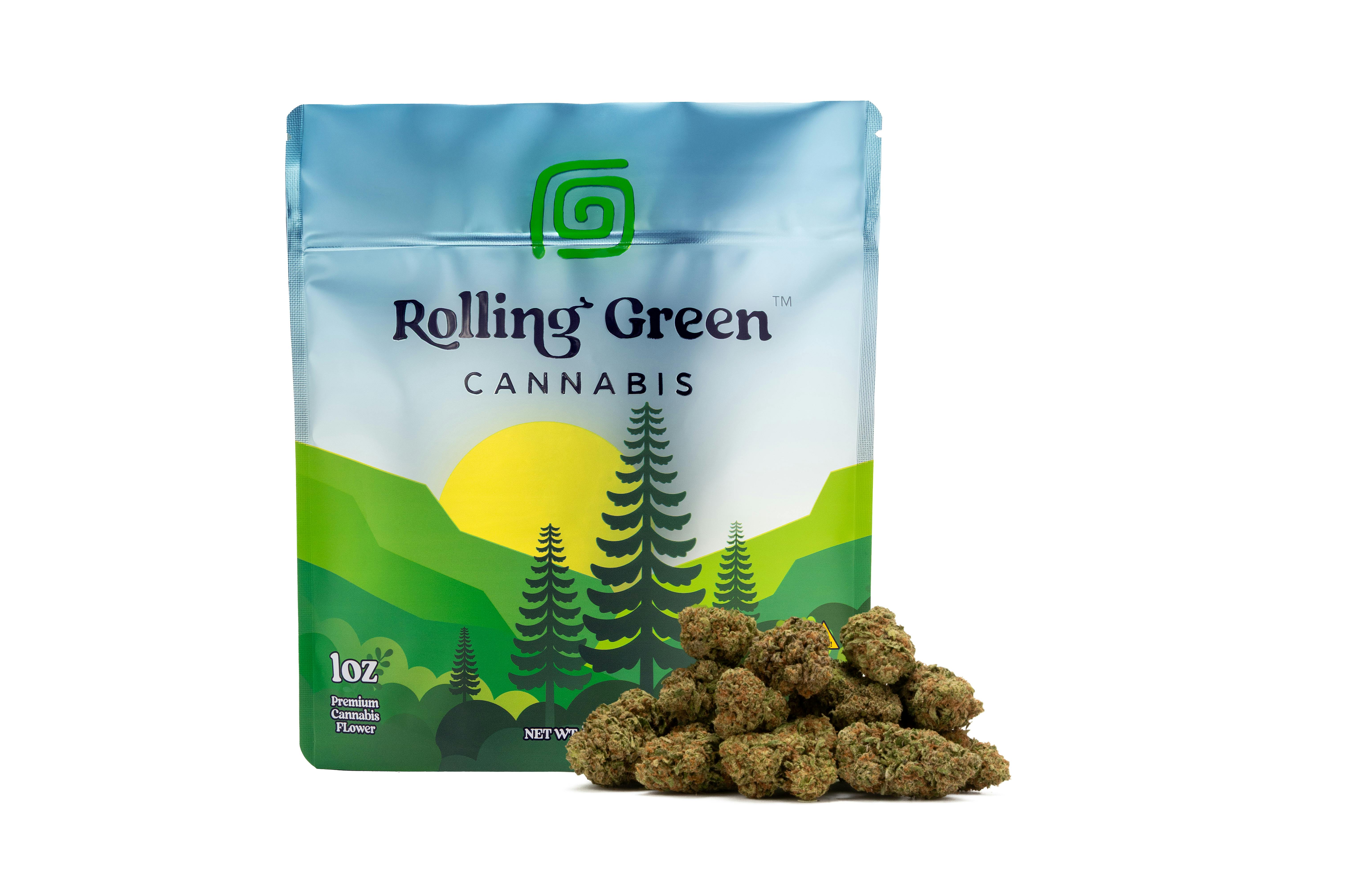
THC 29.68%Indica-Hybrid
Rolling Green CannabisRolling Green | Jelly Cake | Flower · 28g
$159.29
$180after tax

weeddispensarynearme.com
You must be 21 years or older to enter. By entering, you confirm you’re of legal age in your state to purchase cannabis.
For use only by adults 21+ • Keep out of reach of children
2 live products in stock
Quick answer · What is the Jelly Cake cannabis strain?
Jelly Cake arrives like a well-composed dessert course — layered, unhurried, and quietly satisfying. This indica-leaning hybrid carries the dense, resinous architecture of its parentage alongside a fruit-forward aroma that lingers long after the jar is opened. Equal parts visual spectacle and sensory experience, it rewards those who prefer their evenings measured and deliberate, settling into the body with a warmth that feels earned rather than imposed.
$180after tax
$167after tax
About Jelly Cake
Jelly Cake is widely attributed to a cross of Wedding Cake and Jealousy, two strains that have each established significant footprints in contemporary American cannabis breeding. Wedding Cake — itself a phenotype of Triangle Mints (Triangle Kush crossed with Animal Mints) popularized by Seed Junky Genetics — brought its signature doughy sweetness, dense trichome production, and potent indica body to the pairing. Jealousy, a more recently prominent cultivar bred by Seed Junky Genetics as well, derives from Sherbert BX1 crossed with Gelato 41, contributing a creamy, candy-like complexity and a notably introspective, balanced high. The union of these two Seed Junky-adjacent genetics produced a strain that inherits the best structural qualities of both parents: the resin-laden, compact bud architecture of Wedding Cake and the nuanced flavor palette of Jealousy. While precise release timelines are not uniformly documented across public sources, Jelly Cake began attracting consistent attention in the early-to-mid 2020s as the dessert-strain category expanded. Some phenotypes circulating under the Jelly Cake name may reflect slight genetic variation, so the lineage, while generally agreed upon, should be understood as community-consensus rather than formally certified by a single breeder.
Jelly Cake tends to announce itself with a mild cerebral lift in the first five to fifteen minutes — a gentle brightening of mood that does not arrive with the sharp edge of a sativa-dominant cultivar. This initial phase is sociable enough for light conversation or creative contemplation, carrying a quality that users commonly describe as mentally at ease without the restlessness that can accompany more stimulating strains. The dominant terpene myrcene is thought to contribute to the early sedative undertow that begins pulling the experience toward the body during this window. As the peak develops — typically between twenty and forty-five minutes after consumption — the indica character becomes more pronounced. A spreading physical warmth moves through the shoulders and lower back, and the mind settles into a comfortable, unhurried state. Caryophyllene, which has well-documented interaction with CB2 receptors, is believed to support the physical ease of this phase, while limonene may contribute to the sustained baseline of mood elevation that keeps the experience from feeling heavy or leaden. The comedown is gradual and gentle, rarely abrupt. Total duration for most people falls in the two-to-three-hour range, though sensitivity to potency and individual tolerance will influence this. Because of the pronounced body component, Jelly Cake is best suited to situations where relaxation is the goal; those newer to cannabis should observe the standard guidance of starting low and going slow.
The aromatic profile of Jelly Cake reads like a considered dessert: the first impression from a freshly broken bud is one of sweet berry candy layered over a creamy, almost vanilla-tinged base. This opening character is shaped largely by myrcene — the most commonly dominant terpene in indica-leaning cultivars — which contributes a ripe, slightly earthy muskiness that prevents the sweetness from reading as one-dimensional. Secondary notes of fresh citrus peel and a faint floral warmth add brightness without sharpness, likely attributable to limonene and a supporting presence of linalool. Caryophyllene lends a subtle spiced depth to the mid-profile — a hint of black pepper or clove that grounds the sweetness and gives the aroma its structure. Some phenotypes also carry a mild gassy or fuel-like undertone in the background, a characteristic inherited from the Kush elements in Wedding Cake's lineage. Humulene, when present, may contribute a dry, woody note that emerges more clearly in the aftertaste. On the palate, Jelly Cake smokes or vaporizes with a notably smooth, creamy texture. The inhale delivers the candy-fruit impression faithfully, while the exhale transitions into a richer, doughier finish with faint spice. The smoke lingers pleasantly without harshness, and the flavor retention through a full session is above average — a reflection of the dense trichome coverage that protects aromatic compounds well into the cure.
Jelly Cake presents as a visually striking cultivar, built along the compact, almost architectural lines typical of Wedding Cake descendants. The buds are dense and tightly structured, with a chunky, rounded calyx formation that speaks to the indica-dominant genetics at work. Trichome coverage is generous and evenly distributed, giving mature, well-cured specimens a frosted, almost luminescent quality under direct light — a characteristic that reflects the Jealousy lineage's Gelato heritage. The color palette ranges from deep forest green to muted olive, often punctuated by subtle patches of cool purple or lavender where anthocyanin expression has been encouraged by lower temperatures during the final weeks of flower. Pistils — the fine, hair-like structures woven through the bud — are typically a warm amber to burnt orange at full maturity, providing a warm contrast against the cooler green and purple tones of the surrounding material. The overall visual impression is one of density and restraint, a bud that communicates quality through structure rather than showmanship.
Jelly Cake is considered an intermediate-difficulty cultivar, appropriate for growers with at least one successful run behind them rather than absolute beginners. Its dense bud structure — an aesthetic asset in the jar — demands attentive airflow management during the flowering period, as compact calyxes can be susceptible to moisture retention and the mold pressure that follows. Indoor cultivation with controlled humidity, ideally maintained below fifty percent relative humidity during late flower, produces the most consistent results. Flowering time runs approximately eight to nine weeks under a standard twelve-hour light cycle. Indoor yields are respectable, generally in the moderate-to-high range for a cultivar of this density, though the precise number will depend heavily on training methodology and environmental dialing. Outdoor cultivation is viable in temperate climates with long, dry autumns — conditions that also tend to encourage the purple anthocyanin expression that makes this strain particularly photogenic at harvest. The strain responds well to low-stress training techniques, which help open the canopy and ensure light penetration to lower bud sites. Those considering cultivation in New York should be aware of the applicable adult-use home cultivation regulations.
Jelly Cake is a strain that earns its place in the later hours of the day — not the sharp edge of an afternoon, but the settled middle distance of an evening with nothing urgent on the agenda. Its combination of a gently elevated mood and spreading physical warmth makes it well-suited to solo unwinding: a long bath, a slow meal prepared without urgency, or an hour given over entirely to music listened to with full attention. The creamy, fruit-forward terpene profile pairs naturally with food experiences that share its register — aged cheeses, dark chocolate with fruit inclusions, or a dessert wine served at room temperature. In a social context, Jelly Cake functions best in small, unhurried gatherings where the aim is genuine conversation rather than high stimulation. The indica character means it does not reliably carry a crowd through an active evening, but for a dinner party winding down or a quiet night with close company, it provides an ease that feels natural rather than imposed. Musically, the strain's tempo aligns well with slower, texture-rich listening — ambient, soul, or late-period jazz — genres that reward the unhurried attention this cultivar tends to encourage.
Wedding Cake
As a direct parent of Jelly Cake, Wedding Cake shares the dense structure, creamy doughiness, and potent indica body that define the experience, making it the most natural point of reference for any Jelly Cake admirer.
Jealousy
The other parent cultivar, Jealousy contributes the candy-fruit complexity and introspective quality that distinguish Jelly Cake from simpler dessert strains, so fans of one will find familiar pleasure in the other.
Gelato 41
A grandparent strain by way of Jealousy's lineage, Gelato 41 shares the creamy sweetness, trichome density, and balanced physical warmth that Jelly Cake enthusiasts typically seek.
Ice Cream Cake
A close aesthetic and aromatic cousin in the dessert-strain family, Ice Cream Cake offers a similarly creamy vanilla profile with comparable indica body, appealing to the same palate and pace of evening.
Runtz
Fans drawn to Jelly Cake's candy-fruit aroma and smooth smoking character will find Runtz hits a similar register, though with a slightly more balanced hybrid effect arc.
Jelly Cake is an indica-leaning hybrid, meaning it carries qualities of both cannabis types but tilts noticeably toward the body-centered, relaxing character associated with indica genetics. Expect a mild cerebral lift at onset that gives way to a sustained physical warmth as the experience develops. It is not a cultivar designed for high-output afternoons, and most people find it best suited to evening or wind-down use.
Jelly Cake delivers a layered dessert profile — sweet berry candy on the inhale, transitioning to a creamy, doughy finish on the exhale with subtle notes of spice and citrus peel. The smoke is notably smooth, and the flavor holds well across a full session. Those familiar with Wedding Cake or Gelato will recognize the family resemblance immediately, though Jelly Cake leans slightly more toward fruit than pure vanilla.
The experience typically opens with a gentle mood lift and mental ease before deepening into a warm, spreading body relaxation. The cerebral component is present but understated — this is not a strain that tends toward racing thoughts or creative urgency. Most people find the peak settling and sociable at measured quantities, with a gradual, comfortable comedown. Total duration generally falls in the two-to-three-hour range depending on individual factors.
Shoppers who enjoy Jelly Cake most often have an affinity for its parent strains, Wedding Cake and Jealousy, as well as close relatives like Gelato 41, Ice Cream Cake, and Runtz. All share elements of the creamy, fruit-forward dessert profile and indica-leaning body character that define Jelly Cake. Ice Cream Cake is perhaps the closest equivalent in terms of evening-use profile and terpene register.
Jelly Cake can be approachable for adults new to cannabis who are curious about indica-leaning cultivars, provided they follow standard guidance and start with a small amount. The potency level typical of this strain's genetics means it is not without intensity, and the pronounced body effect can feel unfamiliar or disorienting in larger quantities. Those newer to cannabis are encouraged to start low, go slow, and allow adequate time between sessions to gauge their response.
Jelly Cake is typically led by myrcene, which contributes its ripe, musky sweetness and underlies much of the indica body character. Caryophyllene follows with a spiced, slightly peppery depth that provides structure, and limonene adds a citrus brightness to the mid-profile. Supporting terpenes may include linalool for subtle floral warmth and humulene for a dry, woody finish. Exact terpene profiles will vary by batch and cultivation conditions.
Given its indica-leaning character and the physical ease it tends to encourage, Jelly Cake is best positioned as an evening cultivar. Late afternoons transitioning into night, quiet dinners, or deliberate wind-down rituals suit its tempo well. It is not particularly well-matched to mornings, active outdoor pursuits, or situations requiring sharp focus or sustained cognitive output — contexts better served by sativa-forward or balanced hybrid options.
Jelly Cake and Wedding Cake share a family resemblance — both carry dense structure, generous trichome coverage, and a creamy dessert aroma. Where they diverge is in complexity and fruit expression: Jelly Cake's Jealousy parentage introduces a more pronounced candy-fruit character and a slightly more introspective, layered effect profile. Wedding Cake tends to be more straightforwardly doughy and physically grounding, while Jelly Cake adds nuance to that foundation.
Related strains
Pick your store
We'll show pricing, deals, and delivery zones for the store you pick. You can switch any time from the header.