
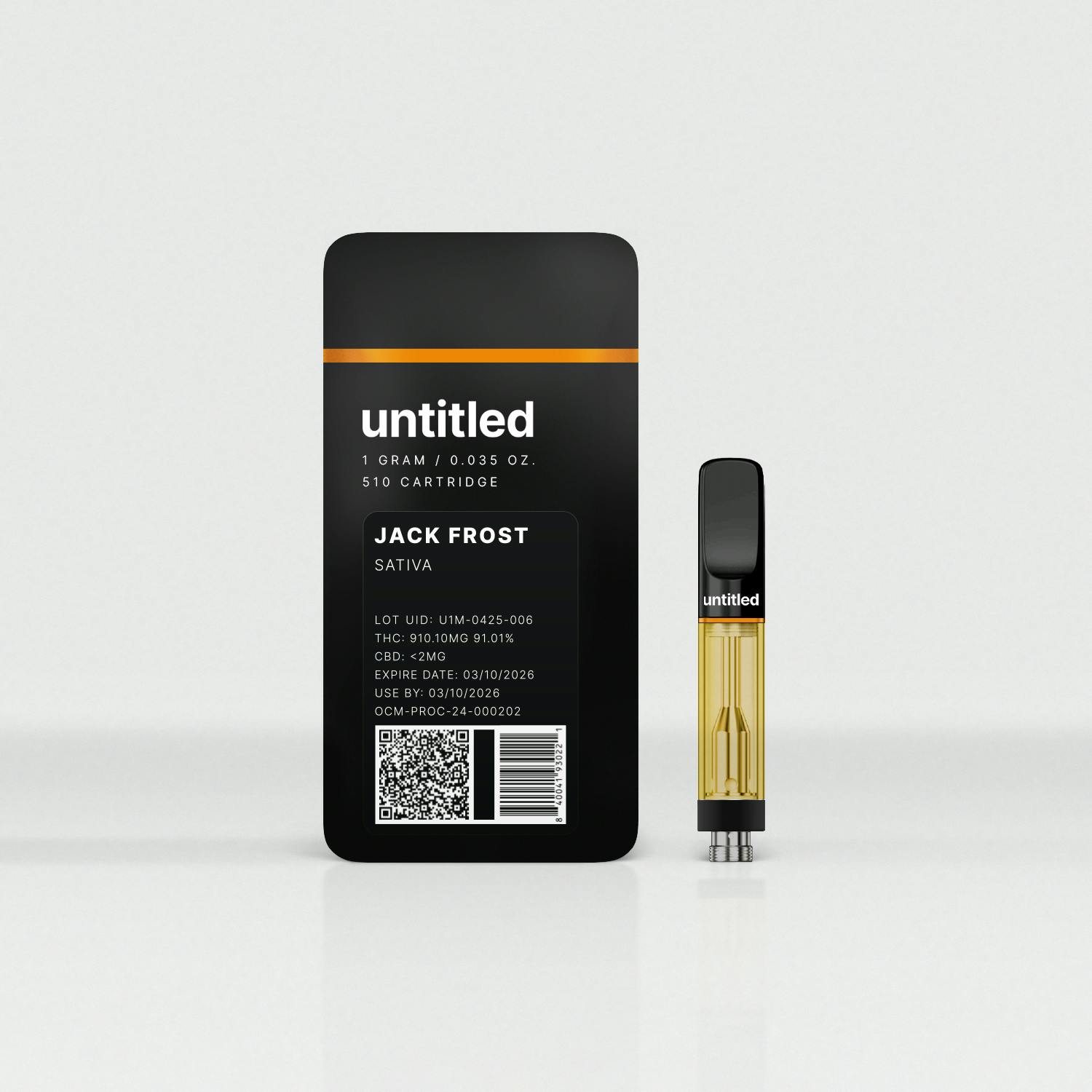
Sativa
All strains Jack Frost
1 live products in stock
Quick answer · What is the Jack Frost cannabis strain?
Jack Frost arrives like the first clear morning of November — crisp, luminous, and quietly invigorating. A sativa-dominant hybrid with a lineage rooted in some of the Pacific Northwest's most celebrated genetics, it offers a bright cerebral lift tempered by a citrus-and-pine fragrance that feels almost elemental. For those who favour an energised yet composed headspace, Jack Frost occupies a rare register: assertive enough to spark curiosity, refined enough to remain approachable.
Shop Jack Frost · 1 of 1 live products
About Jack Frost
Everything to know about Jack Frost.
Lineage & origin
Jack Frost is a sativa-dominant hybrid developed by Goldenseed, a breeder associated with the Pacific Northwest cannabis scene of the late 1990s and early 2000s. Its parentage is generally cited as White Widow crossed with Northern Lights #5 and Jack Herer, though some sources include a Rainbow Kashmiri phenotype as a fourth contributing line — a detail that remains debated in cultivation forums and has not been definitively confirmed by the breeder in widely available documentation. The White Widow contribution lends resinous density and a certain sharp, fuel-forward edge, while Northern Lights #5 introduces a calming body undercurrent and structural robustness to the plant. Jack Herer, itself a Sensi Seeds landmark created in the Netherlands and named for the legendary cannabis activist, is perhaps the most influential parent here — it is widely credited for imparting Jack Frost's signature cerebral sativa character and its complex terpene profile. Jack Frost gained early recognition on the American cannabis circuit, earning a first-place award at the High Times Cannabis Cup in 1997 according to accounts circulated among breeders at the time. As a genetic sibling in spirit — if not in direct lineage — to strains like Jack the Ripper and J1, it belongs to an extended family of 'Jack' descendants whose intellectual, clear-headed effects became a touchstone for sativa enthusiasts throughout the 2000s.
Effects
The onset of Jack Frost tends to arrive within minutes of inhalation, presenting first as a gentle brightening behind the eyes and a subtle expansion in the chest — a sensation that seasoned sativa consumers often describe as the mental equivalent of a window being opened. The initial phase is characteristically cerebral: thoughts quicken and gain a certain associative quality, making the experience well-suited to creative tasks, conversational engagement, or simply a heightened appreciation of one's surroundings. At its peak, Jack Frost maintains a relatively clear-headed quality attributed in part to its terpene complement — limonene and pinene, both present in notable concentrations, are associated in the literature with uplifted and focused states. The body remains largely functional, with only a mild warmth spreading through the limbs that grounds the experience without inducing heaviness. This balance is consistent with the strain's Northern Lights lineage, which softens what might otherwise be an exclusively cerebral effect. Duration typically falls in the two-to-three-hour range for most adult consumers at moderate intake. The comedown is generally gentle — energy tapers rather than drops, and many users report transitioning naturally toward appetite or a desire for light physical activity. As with any high-THC sativa, those new to cannabis or sensitive to stimulating effects are encouraged to start low and go slow, as the initial cerebral rush can feel pronounced.
Aroma, flavor & terpenes
The aromatic profile of Jack Frost opens with a clean, almost mentholated pine note — attributable largely to alpha-pinene, a terpene present across much of its Jack Herer lineage that carries documented associations with alertness and olfactory clarity. Beneath that initial cool green impression lies a secondary wave of bright citrus, most likely driven by limonene, which contributes the lemon-zest and orange-rind quality that many consumers notice mid-inhale. Myrcene, while present, appears in a supporting rather than dominant role here, adding a faint herbal muskiness that prevents the profile from reading as purely sharp or astringent. Trace amounts of caryophyllene introduce a subtle spice — closer to white pepper than to diesel — that becomes more apparent on the exhale and lends the overall aroma a mild complexity. Some phenotypes also carry a faintly floral undertone, which certain terpene analyses have linked to ocimene or small terpinolene fractions, though this varies by batch and cultivation environment. On the palate — whether consumed via combustion or vaporisation — Jack Frost delivers a cool, piney smoke on the inhale that transitions to a light citrus sweetness midway through. The finish is clean and relatively dry, with that mild spice from caryophyllene lingering briefly on the back of the throat. Vapour tends to render the citrus notes more faithfully, while combustion deepens the earthier pine register.
Appearance
Jack Frost is visually among the more striking sativa-dominant cultivars — its name is not merely poetic. The buds develop a pronounced frosted appearance at maturity, with an extraordinarily dense coat of silver-white trichomes that can render the surface of each calyx almost luminescent under direct light. This resin expression is a clear inheritance from the White Widow parent, one of the most trichome-rich strains in the modern hybrid canon. The bud structure leans toward the moderate-to-dense end of the spectrum for a sativa — not the loose, airy formation typical of pure equatorial varieties, but a somewhat elongated calyx arrangement that holds its shape without becoming brick-like. Colouration is predominantly pale to medium green, with occasional lime-green highlights where light exposure has been intense during the later stages of flowering. Pistils tend toward a warm amber-orange at peak maturity, providing a vivid contrast against the white trichome field. Overall, the visual impression is of considered natural architecture — intricate, deliberate, and quietly refined.
Growing notes
Jack Frost is considered a moderately demanding cultivar, better suited to growers with at least one or two previous cycles of experience. Indoors, the plant responds well to low-stress training techniques — including screen-of-green (SCROG) setups — which help manage its tendency toward moderate vertical stretch, a trait consistent with its sativa-dominant structure. Flowering time is typically cited between 50 and 60 days, placing it on the shorter end for a sativa-leaning hybrid. Indoor yields are generally described as above average when environmental conditions are dialled in: stable humidity in the 45-55 percent range during flowering, moderate temperatures, and attentive canopy management are key variables. Outdoors, Jack Frost performs best in temperate climates with long, warm autumns — Northern California, the Pacific Northwest under favorable years, and comparable Mediterranean-latitude environments. Harvest outdoors typically falls in mid-to-late October. The generous trichome production that defines the finished flower also means that growers accustomed to producing live resin or dry-sift extracts often regard Jack Frost as a worthwhile candidate for those purposes.
When it's best enjoyed
Jack Frost is, perhaps above all else, a daylight strain — one that finds its most natural place in the hours between mid-morning and late afternoon, when the mind is receptive to stimulation but the day retains enough structure to give that energy somewhere to go. It suits solitary creative work particularly well: writing, sketching, browsing an exhibition, or working through a complex problem that benefits from a slightly more lateral perspective. That said, it carries itself gracefully in social settings — a small gathering where conversation is the centrepiece, or a leisurely outdoor walk with a companion who appreciates quiet observation as much as dialogue. In terms of sensory pairings, the strain's citrus-and-pine terpene architecture resonates naturally with foods that share those registers: a plate of fresh herb-forward crudités with a preserved-lemon yoghurt dip, or a cold sparkling water with a slice of yuzu or grapefruit. For a musical backdrop, the clean, propulsive quality of the effect pairs well with minimal jazz — think late-period Miles Davis or contemporary artists in that lineage — where the space between notes rewards attentiveness.
If you like Jack Frost, also explore
Jack Herer
As the primary sativa parent of Jack Frost, Jack Herer shares the same clear-headed cerebral lift and complex pine-and-citrus terpene profile, making it the most direct genetic and experiential parallel.
White Widow
Fans drawn to Jack Frost's exceptional trichome density and that undercurrent of mild body warmth will recognise both qualities in White Widow, which contributes precisely those characteristics to the lineage.
Super Silver Haze
A fellow sativa-dominant classic with a spicy, citrus-forward nose and an energised, creative headspace that closely mirrors the peak experience of Jack Frost.
Green Crack
Those who appreciate Jack Frost's focused, invigorating daytime character will find a similarly sharp and motivating effect in Green Crack, though the latter leans harder into mango-sweet fruit rather than pine.
Durban Poison
A pure sativa landrace with the same clean, alert onset and anise-tinged terpene complexity that appeals to consumers who value Jack Frost's uncluttered, functional headspace.
Common questions
Is Jack Frost indica or sativa?+
Jack Frost is classified as a sativa-dominant hybrid. Its parentage — Jack Herer, White Widow, and Northern Lights #5, with a possible Rainbow Kashmiri contribution — skews strongly toward sativa in terms of both plant structure and effect profile. Consumers can expect the energised, cerebral qualities associated with sativa-leaning genetics, balanced by a mild body warmth inherited from its indica-influenced parents.
What does Jack Frost taste like?+
Jack Frost delivers a clean, piney inhale with a distinct citrus brightness — lemon zest and a hint of orange rind — that becomes more pronounced mid-session. The exhale carries a subtle white-pepper spice, likely from caryophyllene, and a dry, refreshing finish. Vaporisation tends to highlight the citrus notes more clearly, while combustion deepens the earthier pine qualities. The overall palate impression is crisp and composed rather than sweet or heavy.
What are the typical effects of Jack Frost?+
Jack Frost typically produces a bright, clear-headed cerebral onset that arrives quickly and encourages heightened focus, creative association, and an uplifted mood. A mild body warmth accompanies the mental stimulation without inducing heaviness or sedation. The experience generally lasts two to three hours, with a gradual, comfortable comedown. It is considered a functional daytime strain by most experienced consumers.
What strains are similar to Jack Frost?+
Consumers who enjoy Jack Frost often appreciate Jack Herer for its shared lineage and cerebral clarity, White Widow for comparable resin production and mild body balance, and Super Silver Haze for its energised, citrus-forward sativa character. Green Crack offers a similar daytime focus with a fruitier terpene profile, while Durban Poison provides a clean, alert headspace for those who prefer a less complex nose.
Is Jack Frost good for beginners?+
Jack Frost can be approachable for adults new to cannabis, but some caution is warranted. Its sativa-dominant character means the initial cerebral onset can feel pronounced — potentially leading to heightened heart rate or mild anxiety in those unaccustomed to stimulating effects. If you are new to cannabis, following a start-low, go-slow approach is strongly recommended. Beginning with a single small inhalation and allowing adequate time to assess the effect before continuing is a sensible first step.
What are the dominant terpenes in Jack Frost?+
The dominant terpenes in Jack Frost are generally understood to be alpha-pinene, limonene, and myrcene, with secondary contributions from caryophyllene and, in some phenotypes, terpinolene or ocimene. Pinene is responsible for the signature cool, mentholated pine note; limonene provides the citrus brightness; myrcene adds a mild herbal muskiness; and caryophyllene contributes the faint white-pepper spice on the finish.
When is the best time of day to enjoy Jack Frost?+
Jack Frost is best suited to daytime consumption, ideally in the mid-morning to late-afternoon window when its energising, focus-oriented effects align naturally with creative tasks, social engagement, or outdoor activity. Its sativa-dominant profile makes it a less natural fit for evening or pre-sleep use, as the cerebral stimulation can interfere with the mental quiet that restful sleep requires. Experienced consumers occasionally use it in early evenings as a social supplement.
Who bred Jack Frost, and where does it come from?+
Jack Frost is attributed to Goldenseed, a breeder associated with the Pacific Northwest cannabis scene in the late 1990s. The strain is most commonly cited as a cross of White Widow, Northern Lights #5, and Jack Herer, with some accounts adding a Rainbow Kashmiri line as a fourth parent — though this detail has not been formally confirmed in widely available breeder documentation. It reportedly took first place at the High Times Cannabis Cup in 1997.
Related strains