

Hybrid
All strains White Widow
10 live products in stock
Quick answer · What is the White Widow cannabis strain?
White Widow endures as one of cannabis culture's most recognizable names — a Dutch-bred hybrid that arrived in the early 1990s and has scarcely left the conversation since. Its resin-laden buds, balanced cerebral lift, and that signature sharp, earthy perfume have made it a fixture on menus from Amsterdam coffeeshops to New York dispensary shelves. For those who appreciate a strain with genuine historical weight behind it, White Widow offers both provenance and presence.
Shop White Widow · 10 of 10 live products


THC 81.56%·CBD 1.35%Hybrid
STIIIZYWhite Widow Live Resin Liquid Diamonds All-In-One | 1g · 1g
$47.79
$54after tax
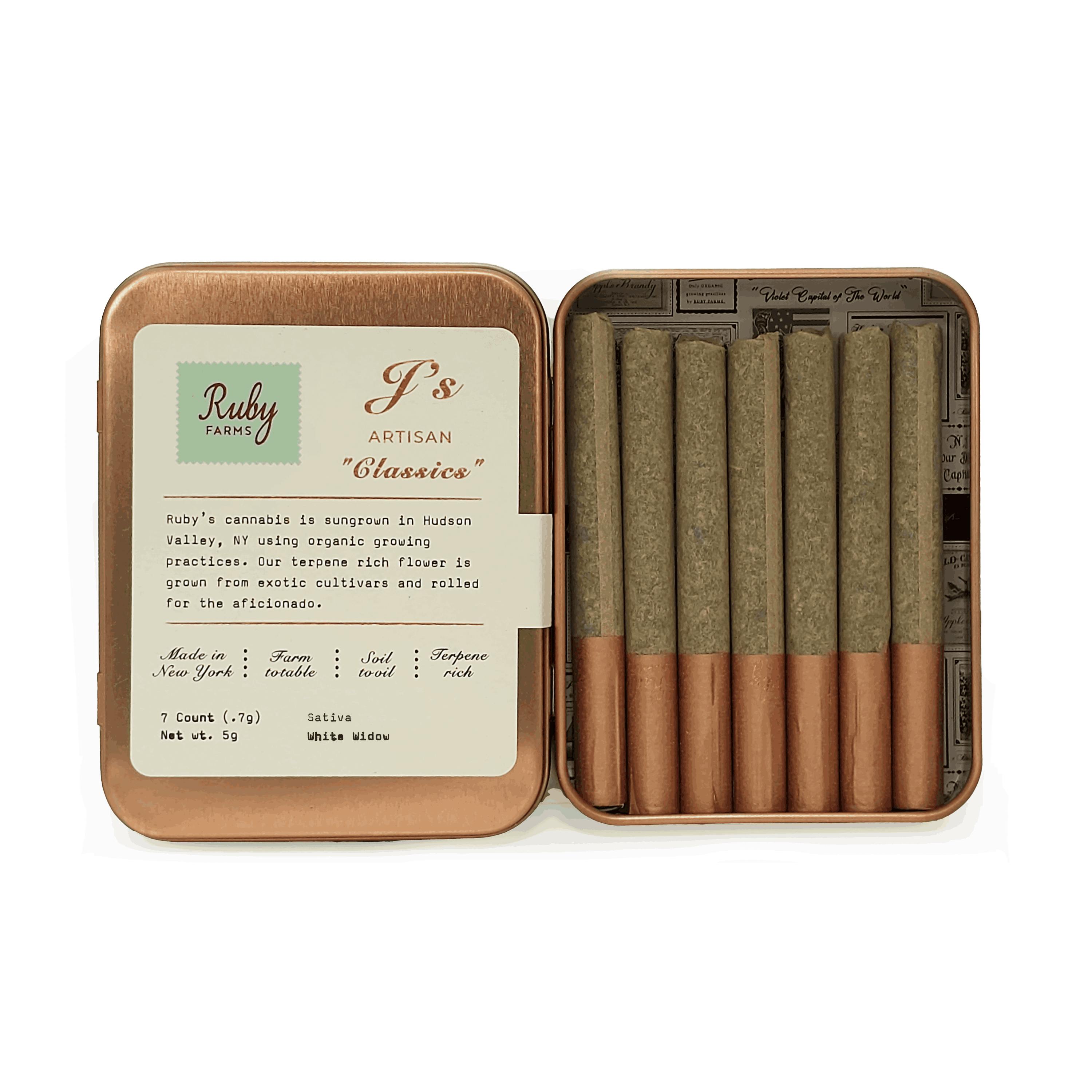


On sale· 25% OFF
THC 81.64%·CBD 0.39%Hybrid
FernwayFernway White Widow Cartridge - Hybrid · 1g
$35.84$47.79
$42after tax

On sale· 25% OFF
THC 79.44%·CBD 0.81%Hybrid
FernwayWhite Widow | Strain Collection | All-In-One Traveler PRO | 2.0g · 2g
$62.39$83.19
$73after tax

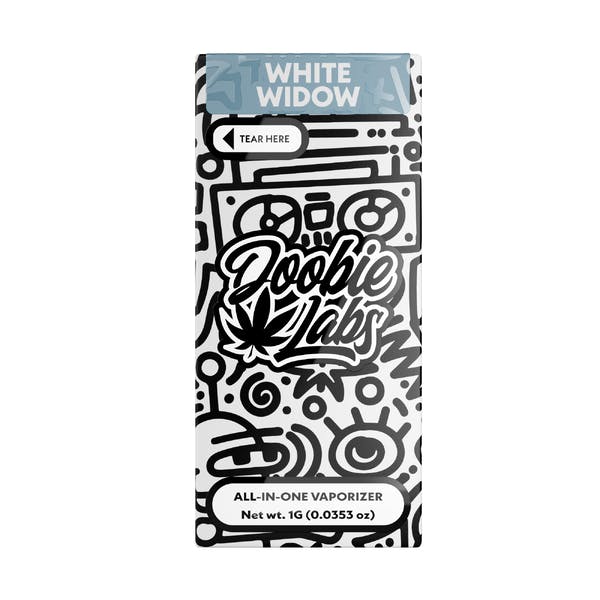
About White Widow
Everything to know about White Widow.
Lineage & origin
White Widow is generally attributed to the Dutch seed company Green House Seeds, with Scott Blakey — known in the industry as Shantibaba — widely credited as the breeder behind its development in the early 1990s. The strain is understood to be a cross between a South American sativa landrace, most often cited as Brazilian, and a South Indian indica resin plant, sometimes identified as a specimen originating from Kerala. This pairing of old-world genetics produced an F1 hybrid with unusually vigorous resin production and a balanced effect profile that felt genuinely novel at the time. White Widow made its public debut at the High Times Cannabis Cup in 1995, where it claimed first place in the coffeeshop category — a win that established its reputation almost overnight. The strain became a staple of Amsterdam coffeeshops throughout the late 1990s and served as a foundational parent in subsequent breeding projects. Among its most influential descendants are White Russian (a cross with AK-47), Blue Widow (a cross with Blueberry), and The White, a phenotype so heavily coated in trichomes that it appears almost colorless. It should be noted that lineage details around White Widow are somewhat contested in the broader community. After Shantibaba departed Green House Seeds and co-founded Mr. Nice Seedbank, questions arose about which entity held the "original" version of the genetics. Both companies have marketed distinct lines under related names, so phenotype variation between seed sources is well-documented.
Effects
White Widow's onset typically arrives within minutes when inhaled — a brisk, clarifying cerebral energy that registers first behind the eyes and across the temples. This initial phase is characteristically sativa-influenced: thoughts become more associative, attention sharpens without anxiety for most experienced consumers, and a mild euphoric warmth threads through the experience. The balanced hybrid nature means the body never feels ignored; a low-level physical ease settles into the shoulders and chest in the early middle of the experience. At peak, White Widow tends to occupy a social, lightly introspective register. It rarely tips into the sedative heaviness of a pure indica, nor does it push into the racing, edge-of-anxious quality that can characterize high-terpinolene sativas. The dominant terpene profile — rich in myrcene, caryophyllene, and limonene — contributes to this equilibrium, with caryophyllene's known interaction with CB2 receptors offering a subtle grounding quality alongside the more stimulating elements. Duration for most consumers runs in the range of two to three hours, with a gradual comedown that is gentle rather than abrupt. As the session winds down, the body relaxation becomes proportionally more pronounced and a calm, pleasantly tired quality can emerge. Because the onset is prompt and the peak can be notably potent, new or occasional consumers are well-advised to start with modest amounts and allow ample time before reassessing.
Aroma, flavor & terpenes
The aromatic signature of White Widow is immediately distinctive: a sharp, mineral-edged earthiness layered over damp wood and a faint chemical brightness that many describe as ammonia-adjacent or reminiscent of a freshly opened bag of potting soil. This profile is anchored by myrcene, the most abundant terpene across most tested phenotypes, which delivers the herbal, musky base note and contributes to the strain's notably resinous character. Caryophyllene adds a spicy, slightly peppery counterpoint that lifts the earthiness and prevents it from turning flat. Limonene, present in measurable quantities in many phenotypes, introduces a subtle citrus brightness — more akin to lemon zest rubbed on wood than fresh-squeezed juice — and is associated in the literature with mood-elevating effects. Some phenotypes also carry detectable amounts of pinene, which contributes a clean, resinous pine quality that reinforces the forest-floor earthiness of the overall profile. On the palate, White Widow smokes with a certain density and immediacy. The first draw delivers the earthy, spiced core with a slight sweetness that emerges mid-palate and fades into a dry, woody exhale. In vapor at moderate temperatures, the citrus and pine notes become more legible, and the full terpene bouquet reads with greater nuance. The smoke can be assertive on the throat — a quality that longtime enthusiasts often treat as part of the strain's character rather than a flaw.
Appearance
White Widow's most visually arresting quality is its trichome coverage. Mature, well-cured flowers appear frosted to the point of seeming dusted in white — an effect produced by the extraordinary density of capitate-stalked trichomes that coat not just the calyxes but the sugar leaves and even parts of the fan leaves. Under even modest magnification, the resin glands are visible in remarkable abundance, a trait that speaks directly to the South Indian indica genetics in its background. The bud structure itself is moderately dense — not the hard, compressed architecture of a pure indica, but compact enough to feel substantial in the hand. Calyxes are rounded and well-swollen. Pistils run orange to rust-red and contrast vividly against the pale, trichome-whitened green of the underlying plant material. The base coloration of the leaves is typically a medium sage green, and some phenotypes develop faint lavender hues in the cooler stages of flowering. Overall, the flower presents as restrained and textural rather than visually theatrical — its quality communicates through density and resin rather than color spectacle.
Growing notes
White Widow is frequently recommended to intermediate cultivators as a forgiving and relatively straightforward strain to grow, with characteristics that make it well-suited to both indoor and outdoor environments across a range of moderate climates. Indoors, plants tend to flower in approximately eight to nine weeks, with yields that are described across most cultivation sources as moderate to moderately high — rewarding attentive growers without demanding extraordinary expertise. Outdoors, White Widow performs reliably in temperate Northern Hemisphere conditions, typically ready for harvest in the second half of October. The strain shows good resistance to mold and mildew relative to many high-resin varieties — a practical advantage given the Dutch climate in which it was developed. Plants maintain a compact to medium height and respond well to training techniques such as low-stress training or screen-of-green setups indoors, which can improve canopy light distribution and overall yield. For the cultivator-curious consumer, White Widow represents a logical entry point into understanding how a well-stabilized F1 hybrid expresses itself across different growing conditions — its consistency phenotype-to-phenotype is part of what gave it commercial longevity.
When it's best enjoyed
White Widow inhabits that relatively rare space in the cannabis spectrum where the experience is alert enough for engagement but grounded enough for comfort — which makes it a natural companion for the early-evening hours when the day's obligations have cleared but the night hasn't fully settled in. It suits creative work that benefits from an associative, open frame of mind: writing, sketching, or working through a problem that has resisted linear thinking. The cerebral lift pairs particularly well with instrumental music that rewards close attention — jazz with harmonic complexity, or electronic work with layered texture. At the table, White Widow's earthy, spiced terpene profile aligns naturally with food that carries similar qualities: aged hard cheeses, charcuterie, or dishes built around mushrooms and roasted root vegetables. The caryophyllene-forward spice note also makes it a thoughtful pairing with black-pepper-seasoned preparations or a glass of an earthy, medium-bodied red wine for those who appreciate parallel sensory registers. For social settings, it tends to encourage conversation without overwhelming the room — a reliable choice when the group is varied in experience level and a balanced, approachable session is the priority.
If you like White Widow, also explore
Blue Widow
A direct cross of White Widow and Blueberry, Blue Widow preserves the resin density and balanced hybrid arc while adding a distinct berry sweetness that appeals to fans who enjoy the structure of White Widow but want a more fruit-forward aromatic character.
White Russian
Bred by crossing White Widow with AK-47, White Russian shares the resin production and cerebral onset of its parent while introducing a slightly more pungent, fuel-edged note that will feel familiar to any White Widow enthusiast.
The White
Often described as a White Widow phenotype taken to its trichome-producing extreme, The White offers the same earthy, near-flavorless resin character in a form that prioritizes texture and potency over aromatic complexity.
OG Kush
For consumers drawn to White Widow's earthy, fuel-tinged terpene profile and balanced body-mind effect, OG Kush delivers a comparably grounded experience with a similarly iconic cultural pedigree.
Amnesia Haze
Consumers who appreciate White Widow's sativa-influenced cerebral onset but want a more pronounced citrus and earthy-spice terpene profile will find Amnesia Haze a logical lateral move, though its effect arc skews more energetic.
Common questions
Is White Widow indica or sativa?+
White Widow is a hybrid, bred from a cross between a Brazilian sativa landrace and a South Indian indica. In practice, this balance expresses as an experience that opens with a clear, cerebral sativa-like onset and settles into a grounded body ease more typical of indica genetics. Neither side dominates completely, which is precisely why White Widow has maintained broad appeal across decades and varied consumer preferences.
What does White Widow taste like?+
White Widow delivers an earthy, woody base with a spiced, mildly peppery edge contributed by caryophyllene, and a faint citrus brightness from limonene. Some phenotypes carry a clean pine note. The smoke is dense and direct, finishing dry on the exhale. In vapor, the terpene profile opens up and the citrus and pine notes become more pronounced, though the earthy, mineral quality remains the dominant impression throughout.
What are the typical effects of White Widow?+
Consumers typically report a prompt, clarifying cerebral onset that sharpens focus and elevates mood without inducing significant anxiety. A parallel physical ease develops in the body as the session progresses, preventing the experience from feeling purely stimulating. The peak is characterized by a social, balanced quality, and the comedown is gradual, often ending in calm relaxation. Duration is generally two to three hours for most consumers.
What strains are similar to White Widow?+
Strains with close genetic or experiential ties include Blue Widow, White Russian, and The White — all of which share lineage or phenotypic overlap. OG Kush offers a comparably earthy, balanced effect profile with a different but related terpene character. Amnesia Haze appeals to consumers who enjoy White Widow's cerebral opening but prefer a more citrus-dominant aromatic direction. Each represents a logical lateral move for fans of White Widow's overall character.
Is White Widow good for beginners?+
White Widow can be appropriate for adults new to cannabis who approach it with care, but its onset is prompt and the peak can be notably potent relative to many contemporary hybrid options. The general principle of starting with a modest amount and allowing sufficient time before reassessing is particularly relevant here. Consumers sensitive to cerebral intensity or prone to anxiety with cannabis may prefer a strain with a gentler, more sedative onset.
What are the dominant terpenes in White Widow?+
Myrcene is widely cited as the dominant terpene in White Widow, contributing the earthy, musky, herbal base of its aroma profile. Caryophyllene is consistently present and introduces a spiced, peppery quality while also interacting with the body's CB2 receptors. Limonene appears in measurable quantities in many phenotypes, adding a citrus brightness. Pinene is a secondary contributor in some expressions, reinforcing the clean, resinous quality of the overall profile.
Who bred White Widow and when was it released?+
White Widow is most commonly attributed to Scott Blakey, known as Shantibaba, developed under Green House Seeds in the Netherlands in the early 1990s. It gained wide public recognition after winning first place at the High Times Cannabis Cup in 1995. Following Shantibaba's departure from Green House Seeds to co-found Mr. Nice Seedbank, some lineage and ownership questions arose, and both companies have since marketed related genetics under different names.
How does White Widow compare to other White-family strains?+
The White-family strains share a common emphasis on exceptional resin production and restrained, earthy terpene profiles. White Widow is considered the originating variety and offers the most balanced sativa-indica effect arc. The White pushes trichome density further at the expense of flavor complexity. Blue Widow and White Russian each introduce distinct aromatic layers — berry and fuel, respectively — while preserving the structural qualities that define the broader family.
Related strains