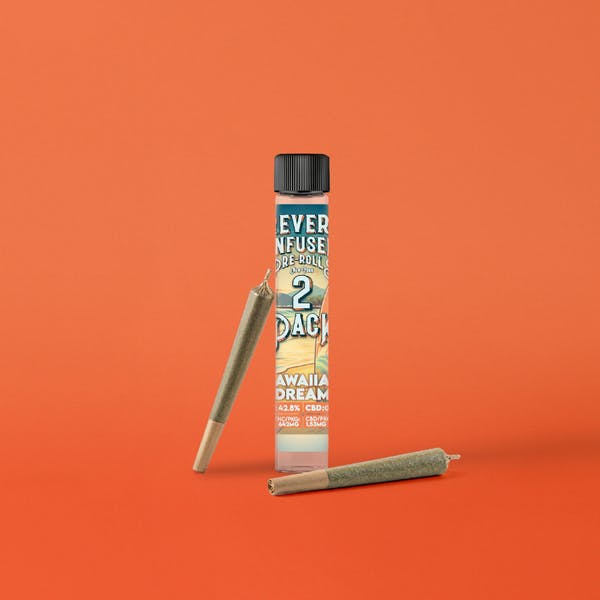
THC 42.8%Hybrid
Revert CannabisRevert Infused Pre Roll Hawaiian Dream 2 Pack · 0.75g/2pk
$20.35
$23after tax

weeddispensarynearme.com
You must be 21 years or older to enter. By entering, you confirm you’re of legal age in your state to purchase cannabis.
For use only by adults 21+ • Keep out of reach of children
2 live products in stock
Quick answer · What is the Hawaiian Dream cannabis strain?
Hawaiian Dream arrives like a postcard from a coastline you've always meant to visit — bright, citrus-laced, and unhurried in the best possible way. A sativa-leaning hybrid that carries genuine tropical DNA, it delivers a clear-headed lift without the jitteriness that plagues lesser equatorial descendants. For the New York consumer who wants elevation without attrition, this is a daytime companion of considerable refinement.
$23after tax
About Hawaiian Dream
Hawaiian Dream is generally understood to be a cross of Blue Dream and Hawaiian, two strains with substantial legacies of their own. Blue Dream — the now-iconic California hybrid born from Blueberry and Haze — contributed its famously balanced, approachable character and a structural foundation that tempers Hawaiian's more exuberant sativa tendencies. Hawaiian, often referred to as Hawaiian sativa or Maui Wowie-adjacent landraces, brings genuine equatorial genetics that trace back to the volcanic islands' long tradition of sun-grown cannabis cultivation. The specific breeder who stabilized this cross has not been publicly named with consistency across major cannabis databases, and some sources attribute early work to breeders operating in Northern California during the mid-to-late 2000s, though that origin remains unconfirmed in the public record. The strain gained quiet traction in West Coast dispensary culture before migrating eastward, prized for its reliably uplifting character and its distinctly tropical terpene expression, which set it apart from the blueberry-forward phenotypes of its Blue Dream parent. Some phenotypic variation exists in the market — certain expressions lean more heavily into Hawaiian's citrus and pineapple notes, while others retain more of Blue Dream's soft, herbal sweetness. No documented F2 or sibling crosses have achieved wide commercial prominence, though the strain's parentage makes it a logical relative of other Haze-influenced tropical hybrids such as Pineapple Haze and Mango Haze.
The onset of Hawaiian Dream is typically characterized by a gentle but perceptible cerebral brightening that arrives within five to fifteen minutes of inhalation — quicker than many hybrids of comparable weight. The initial impression is one of mental openness: thoughts arrive with a certain ease, and the ambient noise of daily preoccupation tends to quiet without being silenced entirely. This is not a strain that arrests attention; it clarifies it. The experience leans decisively toward the sativa side of its hybrid heritage during the peak phase, with a mood elevation that feels sociable rather than isolating and a creative undercurrent that rewards purposeful activity. The body component, inherited in part from Blue Dream's Blueberry lineage, manifests as a mild physical ease — a slight softening of muscular tension that supports rather than undermines the mental clarity overhead. This interplay between head and body is what distinguishes Hawaiian Dream from pure sativa expressions, which can sometimes feel unmoored. Duration for most consumers tends to fall in the two-to-three-hour range, with a gradual and non-abrupt comedown that rarely produces the sudden fatigue associated with heavier indica-dominant hybrids. Terpenes such as terpinolene and limonene are understood to contribute to the energized, uplifted quality, while any myrcene presence helps soften the edges without introducing sedation. As always, individual response varies, and those newer to cannabis are well served by the start-low, go-slow approach.
The aromatic profile of Hawaiian Dream is one of its most immediately persuasive qualities. Upon opening the jar, the nose encounters a bright, sun-drenched citrus note — most commonly described as a blend of ripe pineapple and tangerine — underpinned by a faintly floral sweetness that keeps the overall impression from becoming sharp or one-dimensional. This top-note character is largely attributable to terpinolene, a terpene found prominently in tropical and Haze-derived cultivars that contributes fresh, almost orchard-like aromatic complexity. Limonene adds a zesty, lemon-citrus brightness that sharpens the profile without introducing sourness. Secondary terpenes round the experience into something more layered. Ocimene, when present, brings a honeyed, herbaceous quality that softens the citrus intensity and lends a faint floral dimension reminiscent of tropical blooms. Myrcene, if detectable, contributes an earthy, mango-adjacent warmth at the base of the profile. Caryophyllene may appear in trace amounts, lending a subtle spiced finish on the exhale. On the palate — whether smoked or vaporized — Hawaiian Dream tends to deliver a smooth, sweet initial draw with strong tropical fruit character. Vaporization at moderate temperatures tends to accentuate the terpinolene and limonene layers most faithfully, producing a clean, fruit-forward vapor. The finish is gentle and mildly herbal, without the resinous heaviness associated with OG-lineage cultivars. The overall flavor profile is cohesive, expressive, and decidedly easy to return to.
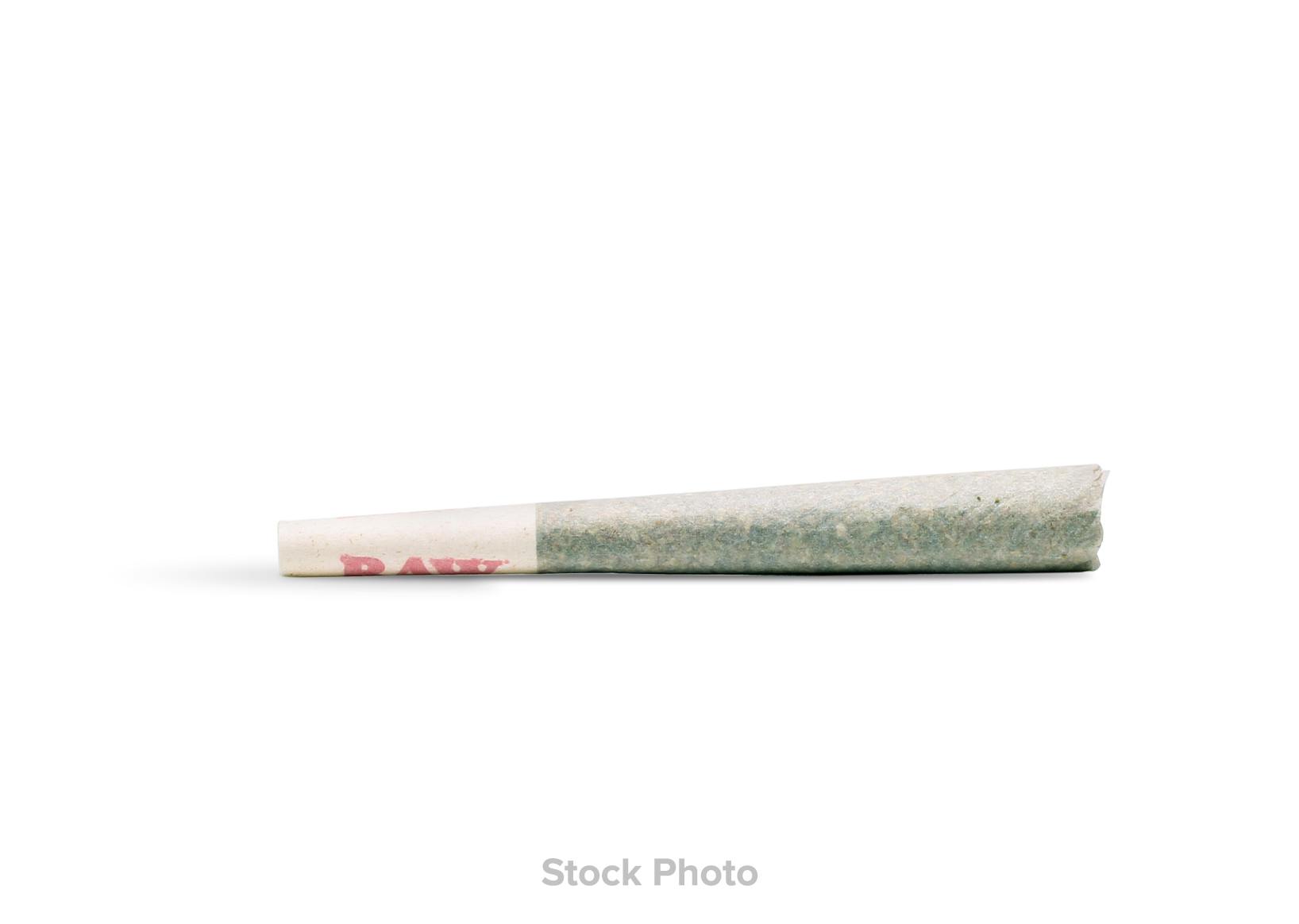
Hawaiian Dream typically presents buds that are moderately dense — not the tight, compressed spheres of classic indica morphology, but structured enough to suggest solid cultivation practice. The calyxes tend to be elongated and slightly loosely stacked, a structural trait consistent with its sativa influence and tropical parentage. The color palette skews toward medium to bright green, often with lighter, almost chartreuse highlights across the upper surfaces of the buds, a visual quality that reinforces the strain's association with sun and warmth. Pistils are generally a warm orange to amber, distributed generously across the bud surface and contributing a visual warmth that contrasts pleasingly with the green of the underlying flower. Trichome coverage is present and respectable — a fine, even layer of resin glands that catch light with a quiet luminosity rather than the dramatic frosting of heavier resin producers. Well-grown examples have a clean, lively appearance that telegraphs the strain's character before the jar is even opened.
Hawaiian Dream is considered a moderately approachable cultivar for those with some experience in cannabis cultivation, though its sativa-leaning structure means it requires more vertical management than compact indica-dominant varieties. Indoors, the plant benefits from topping or low-stress training techniques to manage canopy height and encourage lateral branching. Flowering time is generally cited in the range of nine to ten weeks under standard indoor lighting conditions, which is slightly longer than many popular hybrids but consistent with its Haze and Hawaiian heritage. Indoor yields are reported as moderate to above average when plants are properly managed for airflow and light penetration. Outdoors, Hawaiian Dream performs best in warm, Mediterranean-style climates with consistent sunshine — conditions that approximate, however loosely, its ancestral origins. In a New York context, outdoor cultivation is possible in a sheltered, south-facing environment during the warmer months, though the abbreviated growing season may require careful timing. Humidity management during the final weeks of flowering is advisable, as the slightly open bud structure, while beautiful, can be susceptible to moisture-related issues without proper attention.
Hawaiian Dream is most at home in the generous, unhurried hours of a late weekend morning or a warm afternoon with no fixed agenda. Its clear-headed lift and tropical brightness make it a natural companion for creative pursuits — sketching, writing, or the kind of playlist-building that requires genuine engagement with mood and sequence. The strain's sociable energy also makes it well suited to a small, convivial gathering where conversation is the primary entertainment, particularly in an outdoor setting where its solar character feels contextually coherent. For food pairings, the terpene profile suggests an affinity with dishes that echo its tropical and citrus notes — a ceviche bright with lime and cilantro, or a fruit-forward salad with mango and tajín. On the music side, the strain's equatorial DNA and uplifting arc align naturally with the unhurried rhythms of Hawaiian slack-key guitar or the warmth of early-period bossa nova. Both genres share Hawaiian Dream's quality of elevation without urgency — a mood that is present, bright, and entirely without aggression.
Blue Dream
As Hawaiian Dream's direct parent, Blue Dream shares its balanced hybrid ease and approachable onset, making it an intuitive next step for those who enjoy the gentle cerebral lift but want a softer, more herbal flavor expression.
Maui Wowie
A classic Hawaiian sativa with overlapping tropical terpene character and a comparably uplifting, clear-headed effect profile that will feel immediately familiar to Hawaiian Dream enthusiasts.
Pineapple Express
Sharing the sweet, fruit-forward tropical aroma and a hybrid balance of energy and ease, Pineapple Express appeals to the same palate and mood that Hawaiian Dream serves so reliably.
Tangie
Tangie's dominant citrus and terpinolene-rich profile closely mirrors the bright, orange-peel aromatics of Hawaiian Dream, and both strains deliver a similarly focused, upbeat cerebral experience.
Mango Haze
Another Haze-descended tropical hybrid, Mango Haze shares Hawaiian Dream's sativa-leaning energy, sweet fruit nose, and the particular kind of creative clarity that makes both strains suited to purposeful daytime use.
Hawaiian Dream is a sativa-leaning hybrid. Its parentage — Blue Dream crossed with Hawaiian — gives it a predominantly uplifting, cerebral character that skews sativa in terms of effect, though the Blue Dream side contributes a mild body ease that keeps the experience grounded. Most consumers and retail databases classify it as a hybrid with a noticeable sativa influence rather than a pure sativa expression.
Hawaiian Dream delivers a tropical, citrus-forward flavor profile dominated by notes of pineapple, tangerine, and a faint floral sweetness. On the exhale, there is a mild herbal quality and occasionally a subtle spiced finish, likely from trace caryophyllene. The overall palate impression is smooth, fruit-expressive, and clean — without the heavy resinous aftertaste common in OG or Kush-lineage cultivars.
Hawaiian Dream typically produces a clear-headed, uplifting cerebral experience with a mild accompanying body ease. Onset is relatively prompt, and the peak phase is characterized by elevated mood, mental openness, and a sociable, creative energy. The comedown is generally gradual and non-abrupt. The strain's sativa lean makes it more appropriate for daytime or early-evening use than for late-night, sedation-seeking sessions.
Consumers who enjoy Hawaiian Dream often find similar satisfaction in Blue Dream, its direct parent, which shares the balanced hybrid ease. Maui Wowie and Pineapple Express echo the tropical terpene character, while Tangie appeals to those drawn specifically to the citrus brightness. Mango Haze offers a comparable Haze-lineage, sativa-leaning creative lift for those who want to explore further in this flavor and effect family.
Hawaiian Dream's sativa-leaning character and typically clear-headed onset make it relatively accessible, but newer consumers should still approach with care. The uplifting, energetic quality can occasionally feel intense for those with low tolerance, particularly in larger quantities. A start-low, go-slow approach — beginning with a small amount and allowing adequate time before reassessing — is the sensible way to explore this strain for the first time.
Terpinolene and limonene are generally considered the dominant terpenes in Hawaiian Dream, accounting for its characteristic tropical, citrus, and orchard-fresh aromatic profile. Ocimene is often cited as a secondary contributor, adding a honeyed, floral dimension, while myrcene may appear at the base of the profile. Caryophyllene can also be present in smaller amounts, lending a subtle spiced quality to the exhale.
Hawaiian Dream is best suited to daytime or early-afternoon use. Its uplifting, clear-headed character and energizing terpene profile make it a natural fit for morning or midday consumption — creative projects, social outings, or outdoor activity. It is not a strain typically associated with sleep preparation or deep evening relaxation, and most consumers will find it better appreciated when the day still has something to offer.
Hawaiian Dream has a pronounced and distinctive aroma that many find immediately appealing. The tropical, citrus-forward nose — driven primarily by terpinolene and limonene — is expressive from the moment the container is opened. It is a bright, sweet-smelling cultivar rather than a pungent or diesel-forward one, though its aromatic intensity is still notable and worth considering in environments where discretion is preferred.
Related strains
Pick your store
We'll show pricing, deals, and delivery zones for the store you pick. You can switch any time from the header.