
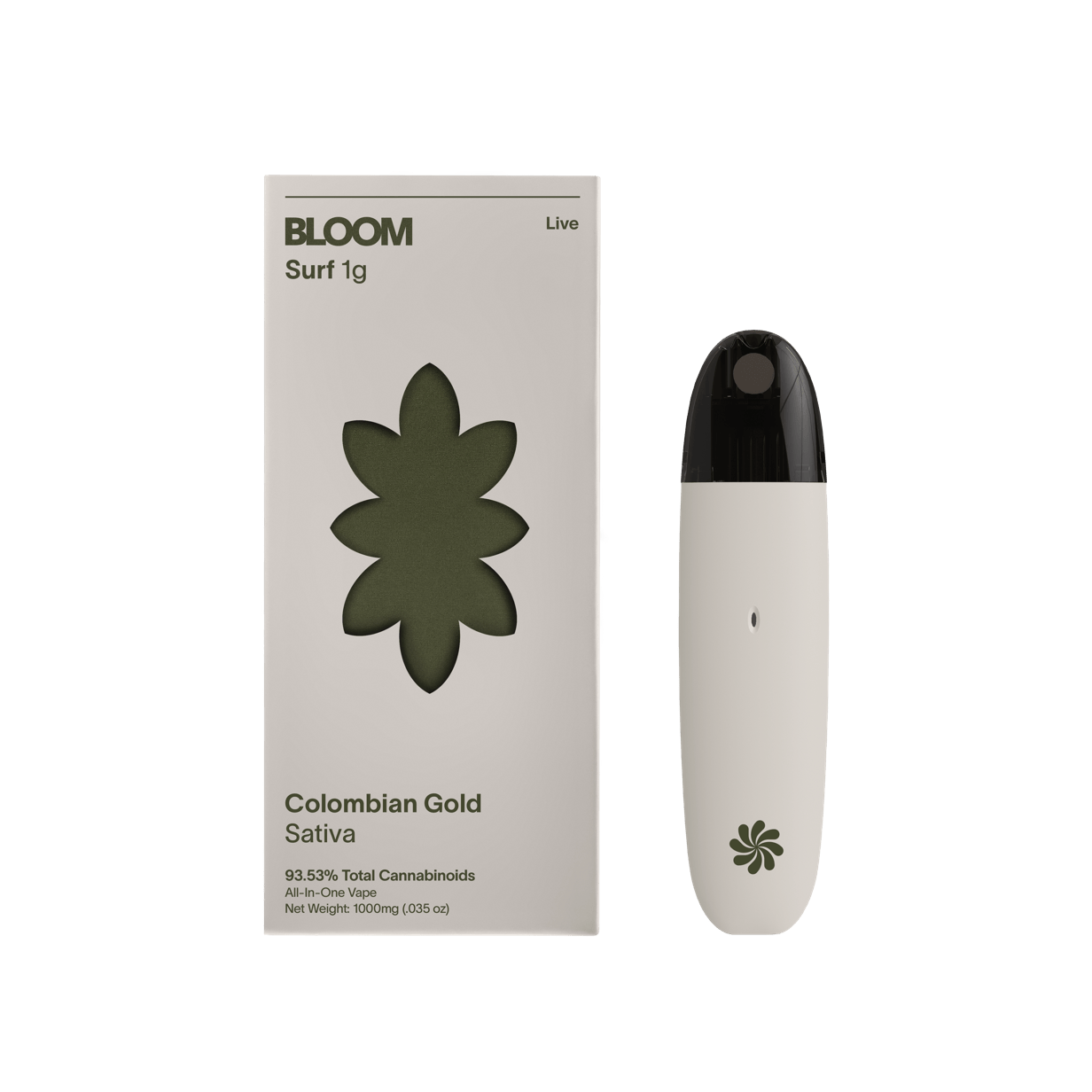
Sativa
All strains Colombian Gold
1 live products in stock
Quick answer · What is the Colombian Gold cannabis strain?
Colombian Gold is a landrace sativa of considerable historical weight, originating in the Sierra Nevada de Santa Marta mountains of Colombia. Long before cultivated hybrids dominated the market, this strain traveled through 1970s import culture and shaped the genetic foundation of modern cannabis. Its warm, golden-hued buds, bright citrus and sandalwood aroma, and clear-headed, gently euphoric character remain a compelling study in what pure sativa genetics can offer the thoughtful, unhurried consumer.
Shop Colombian Gold · 1 of 1 live products
About Colombian Gold
Everything to know about Colombian Gold.
Lineage & origin
Colombian Gold is a landrace strain, meaning it developed over many generations without deliberate human hybridization, adapting naturally to the high-altitude equatorial climate of the Sierra Nevada de Santa Marta region in northern Colombia. It is not the product of any single breeder or seed company; rather, it arrived in the United States during the late 1960s and through the 1970s as part of the broader movement of imported South American and Central American cannabis that defined that era's counterculture. Alongside Thai sticks, Acapulco Gold, and Jamaican sativas, Colombian Gold became one of the most sought-after imports of its generation. Its genetic influence is difficult to overstate. Colombian Gold is recognized as one of the parent strains of Skunk No. 1, the foundational hybrid developed by Sacred Seeds — the pioneering California collective led by Sam the Skunkman — in the late 1970s. Skunk No. 1 itself went on to parent dozens of landmark varieties, making Colombian Gold a cornerstone of the modern hybrid gene pool. The strain is also referenced in the lineage of Haze and several early Dutch seed-bank releases, though some of those parentage claims are contested among breeders and archivists. No single stabilized phenotype is universally agreed upon today; what circulates under the Colombian Gold name varies by seed bank, though Santa Marta Colombian Gold remains the most cited and documented expression.
Effects
The onset of Colombian Gold tends to arrive gradually, as is characteristic of high-sativa landrace genetics. Within the first ten to fifteen minutes, most consumers report a gentle brightening of mood and a sharpening of mental focus — not the rapid, almost jarring lift of some modern hybrids, but a steady, warm ascent. The cerebral quality is clear and functional rather than disorienting, lending itself to sustained attention rather than scattered ideation. At its peak, the experience is dominated by an uplifted, sociable energy with minimal body sedation. The effect profile aligns with a cannabinoid and terpene composition that skews toward cerebral stimulation: terpinolene and ocimene, both commonly present in landrace sativas, are associated with uplifting, mildly euphoric qualities, while low myrcene levels mean the body remains relatively unburdened. Duration tends to run longer than many hybrid options — experienced consumers often describe two to three hours of sustained effect before a gentle, undemanding comedown. The comedown itself is notably soft: energy gradually returns to baseline without the abrupt drop or lethargy that heavier indica-leaning strains can produce. Because of its potency relative to what many consumers expect from a landrace, the general principle of starting with a modest quantity and allowing adequate time before reassessing applies here, particularly for those new to sativa-dominant experiences.
Aroma, flavor & terpenes
Colombian Gold's aromatic profile is among its most distinctive qualities, reflecting the biodiversity of its equatorial mountain origin. The dominant impression on the nose is a warm, woody citrus — lemon and dried orange peel layered over an earthy, almost sandalwood-like base. This character is largely attributed to terpinolene, a terpene prevalent in landrace sativas that contributes floral, piney, and faintly citrus-herbaceous notes. Terpinolene-forward strains tend toward a certain aromatic complexity that rewards slow inhalation. Secondary terpenes add dimension to the overall profile. Ocimene, another terpene associated with equatorial landraces, contributes a sweet, almost tropical herbaceous quality — faintly reminiscent of fresh basil or tarragon — that lifts the mid-register of the aroma. Trace amounts of myrcene ground the profile with a subtle earthiness, while hints of caryophyllene introduce a mild, barely perceptible spice that emerges more clearly on exhale. On the palate — whether smoked or vaporized — Colombian Gold delivers a smooth, relatively mild draw compared to many contemporary hybrids. The smoke is neither particularly pungent nor sharp; it opens with that warm citrus-wood character and finishes with a clean, slightly sweet herbal note. Vaporizing at moderate temperatures tends to accentuate the floral and citrus qualities while softening any residual earthiness, making it a preferred method for those seeking to explore the strain's more nuanced aromatic registers.
Appearance
Colombian Gold presents with an appearance that speaks clearly to its landrace heritage. The buds are notably longer and airier than the densely packed, resin-saturated colas of modern indica-hybrid cultivars — a structure well-suited to the high humidity and sustained growing seasons of its native mountain environment. The calyxes are loosely stacked, creating an open, elongated bud architecture that allows airflow throughout the flower. The color palette skews toward warm, golden green — a visual characteristic that inspired the strain's name. Fading pistils often deepen to amber or burnt orange at full maturity, threading through the light lime and chartreuse of the underlying bract tissue. Trichome density is moderate, with a soft, slightly frosted sheen rather than the thick, crystalline blanket seen on heavily bred resin producers. Despite a more restrained trichome coverage, the resin quality is considered notable given the strain's landrace status, reflecting generations of natural selection in a demanding climate.
Growing notes
Colombian Gold is an equatorial landrace, and its cultivation preferences reflect a heritage shaped by long growing seasons, high altitude, and consistent warmth. Outdoors, it thrives in climates that mirror its Colombian origins — warm temperatures, ample sunlight, and moderate humidity. In outdoor environments with a long enough season, flowering can extend to fourteen or even sixteen weeks, a timeline that presents a practical challenge for cultivators in temperate latitudes where early frost is a concern. Indoors, Colombian Gold can be cultivated successfully but demands patience and vertical space. Its natural sativa structure produces vigorous, branching plants that benefit from training techniques such as low-stress training or screen-of-green methods to manage canopy height. Indoor flowering runs approximately twelve to fourteen weeks — longer than most contemporary hybrids. Yields are typically moderate, reflecting the trade-offs inherent in landrace genetics that have not been selected for commercial productivity. Difficulty is considered moderate to high; the strain rewards cultivators who are attentive to humidity management during flowering and comfortable managing extended timelines. For the cultivator-curious consumer, Colombian Gold represents an exercise in patience and in understanding the origins of the genetics that underpin much of the modern cannabis landscape.
When it's best enjoyed
Colombian Gold is, at its core, a daytime companion — one suited to hours that call for open attention and a certain unhurried curiosity. Solo creative work benefits particularly from its clear, sociable cerebral quality: writers, visual artists, and musicians have long associated landrace sativas of this character with a state of engaged observation rather than dreamy detachment. The absence of significant body weight makes it practical for extended activity without the risk of settling too deeply into stillness. For a food pairing, Colombian Gold's warm citrus and sandalwood terpene profile finds a natural counterpart in dishes built around bright, acid-forward flavors — a Peruvian ceviche, a yuzu-dressed salad, or a well-made mango sorbet would each echo and amplify the strain's aromatic register. On the musical side, the clean, sustained quality of its effect lends itself to jazz — modal or post-bop recordings where attention to individual notes and extended improvisation reward a focused but relaxed mind. It is also a capable companion for unhurried outdoor walks, where its sensory-brightening character adds dimension to natural environments without overwhelming them.
If you like Colombian Gold, also explore
Acapulco Gold
A fellow celebrated landrace sativa of the same era, Acapulco Gold shares Colombian Gold's warm, earthy-citrus terpene profile and clear-headed, functional euphoria, making it a natural companion for landrace enthusiasts.
Durban Poison
This South African landrace sativa offers a similarly uplifting, cerebral experience with a terpinolene-forward profile, and appeals to consumers who appreciate unencumbered mental clarity without body sedation.
Haze
Sharing partial Colombian Gold lineage, classic Haze delivers a comparably expansive, long-lasting sativa experience with overlapping citrus and earthy-spice notes for consumers ready to explore the strain's genetic descendants.
Skunk No. 1
As one of Colombian Gold's most documented hybrid offspring, Skunk No. 1 carries forward some of its parent's sativa energy and earthy warmth while adding approachable, grounded balance.
Panama Red
Another iconic 1970s-era import sativa, Panama Red shares Colombian Gold's airy bud structure, long flowering heritage, and the kind of smooth, sociable uplift that defines classic equatorial landrace genetics.
Common questions
Is Colombian Gold indica or sativa?+
Colombian Gold is a pure sativa landrace. It developed naturally in the Sierra Nevada de Santa Marta mountains of Colombia without hybridization, and its effect profile — clear-headed, uplifting, and relatively free of body sedation — reflects that fully sativa genetic heritage. It is one of the more historically significant examples of unadulterated sativa genetics still available in the market today.
What does Colombian Gold taste like?+
Colombian Gold tastes of warm citrus, dried lemon peel, and sandalwood, with a mild herbal sweetness on the finish. The smoke or vapor is smooth and relatively light compared to many modern hybrids. Secondary notes of tropical herb and a barely perceptible spice emerge on exhale. The overall palate impression is clean and aromatic rather than pungent or sharp.
What are the typical effects of Colombian Gold?+
The typical experience is one of gradual, warm mental uplift with clear focus and sociable energy. Onset takes ten to fifteen minutes, peak effects are cerebral and functional rather than disorienting, and duration tends to run two to three hours. The comedown is gentle, returning the consumer to baseline without significant lethargy. Body sensation remains minimal throughout.
What strains are similar to Colombian Gold?+
Consumers drawn to Colombian Gold typically enjoy other landrace or landrace-adjacent sativas: Acapulco Gold and Panama Red share its era and aromatic warmth; Durban Poison offers comparable clear-headed uplift; classic Haze draws directly on Colombian Gold's lineage; and Skunk No. 1 provides a more grounded hybrid introduction to its genetic character.
Is Colombian Gold good for beginners?+
Colombian Gold can be approachable for beginners drawn to sativa experiences, but its potency relative to older landrace expectations and its long-duration effect arc warrant a thoughtful approach. Starting with a modest quantity and allowing sufficient time before reassessing is sound practice. Its clear-headed, functional character is less disorienting than some modern hybrids, which works in its favor for newer consumers.
What are the dominant terpenes in Colombian Gold?+
Terpinolene is generally considered the dominant terpene in Colombian Gold, contributing its characteristic citrus, floral, and piney-herbaceous aroma. Ocimene is a notable secondary terpene, adding a sweet, tropical herb quality. Trace myrcene provides earthiness, and caryophyllene contributes a mild spice on the exhale. This terpinolene-and-ocimene-forward profile is typical of equatorial landrace sativas.
What is the history and significance of Colombian Gold?+
Colombian Gold is a landrace sativa that arrived in the United States during the late 1960s and 1970s as part of a wave of South American cannabis imports. It became one of the most prized offerings of that era and went on to contribute its genetics to Skunk No. 1 — a foundational hybrid that shaped the entire modern cannabis landscape. Its historical influence on contemporary genetics is well-documented and substantial.
When is the best time of day to consume Colombian Gold?+
Colombian Gold is well-suited to daytime and early-evening consumption. Its clear, uplifting, and non-sedating character makes it compatible with creative work, outdoor activity, and social engagement during daylight hours. Because its effect duration can extend two to three hours, most consumers prefer to enjoy it when the day still holds space for attentive, engaged activity rather than in the hours immediately preceding sleep.
Related strains