
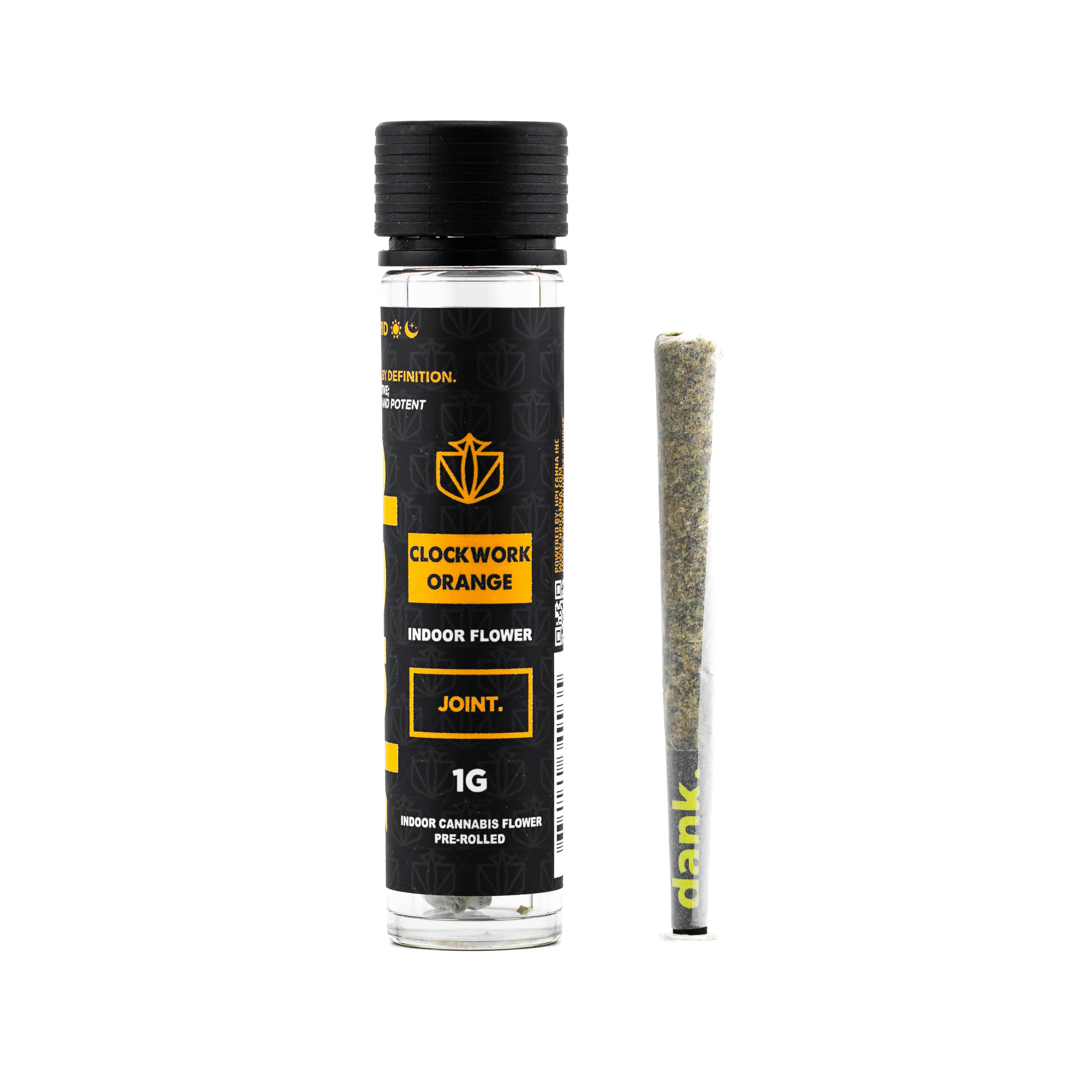
Hybrid
All strains Clockwork Orange
1 live products in stock
Quick answer · What is the Clockwork Orange cannabis strain?
Clockwork Orange is a balanced hybrid that commands attention through its vivid citrus aroma and a layered psychoactive arc that moves from bright mental clarity into a measured, full-body ease. Named with a nod to Kubrick's provocative aesthetic, this strain carries an air of structured intensity — precise, engaging, and far more nuanced than its theatrical name might first suggest. It rewards the attentive consumer with a complex terpene profile and a finish that lingers with uncommon warmth.
Shop Clockwork Orange · 1 of 1 live products
About Clockwork Orange
Everything to know about Clockwork Orange.
Lineage & origin
Clockwork Orange's precise parentage is not universally agreed upon, and different breeders have released cultivars under this name — a common occurrence in the modern cannabis market where trademarking strain names remains largely informal. The most widely referenced version traces its genetics to a cross involving Orange strains from the Skunk and Haze family tree, with some accounts pointing to Orange Velvet and an undisclosed Haze-dominant parent as the foundational pairing. Orange Velvet itself is a Pacific Northwest landrace-influenced variety known for its soft citrus expression and relaxed physical character. A second school of lineage points toward Citral — a resin-forward, lemon-orange hybrid of Afghani descent — crossed with a more stimulating sativa to produce Clockwork Orange's dual-natured profile. This version aligns more cleanly with the strain's cerebral onset paired with a heavier physical resolution. The breeder of the definitive commercial cut has not made a comprehensive public statement about genetic sourcing, which is worth acknowledging plainly. Regardless of exact parentage, Clockwork Orange sits within a well-established tradition of orange-forward hybrids that includes genetic cousins such as Agent Orange — a collaboration between MzJill Genetics and TGA Subcool Seeds — and Mimosa. What distinguishes Clockwork Orange is its reportedly more grounded, contemplative character relative to the effervescent energy of those siblings.
Effects
Clockwork Orange tends to announce itself within five to fifteen minutes of consumption, opening with a gentle brightening of mental focus that many consumers describe as a sharpening rather than a jolt. The cerebral onset is clean and curious — thoughts become more associative, conversations feel more fluid, and creative tasks take on a certain pleasurable momentum. This initial phase reflects the influence of limonene and terpinolene, two terpenes associated with uplifting, alert states in the broader terpene literature. As the experience deepens — typically between thirty and sixty minutes in — the body begins to absorb the session's momentum. A mild muscular ease settles through the limbs without pulling the mind into sedation. This transition, characteristic of a well-balanced hybrid, is where Clockwork Orange earns its reputation for versatility. The peak is rarely overwhelming, which makes it a thoughtful choice for those who prefer engagement over incapacitation. Caryophyllene, a terpene that interacts with the body's CB2 receptors, is likely a contributing factor to this grounded physical quality. The comedown is gradual and gentle. Sessions typically resolve over two to three hours, with residual relaxation persisting beyond the peak without significant cognitive fog. As with any cannabis experience, individual response varies considerably based on tolerance, consumption method, and setting. Starting with a conservative amount remains the sensible approach for those exploring Clockwork Orange for the first time.
Aroma, flavor & terpenes
The nose on Clockwork Orange opens with a pronounced burst of sweet citrus — Valencia orange peel and tangerine rind are the most commonly cited descriptors, though there is an underlying tartness closer to blood orange or yuzu that keeps the profile from reading as simple or candied. This dominant citrus character is driven primarily by limonene, a monoterpene found extensively in citrus fruit oils and among the most recognized aroma compounds in the cannabis plant. Beneath the citrus canopy, a secondary layer of herbal pine emerges — likely the contribution of alpha-pinene, which adds a resinous green counterpoint that lifts the overall scent profile and prevents it from collapsing into sweetness. Myrcene, present in most hybrid cultivars at measurable levels, provides an earthen musk base that gives the aroma its weight and longevity. Some phenotypes also express a faint floral note reminiscent of orange blossom, which may indicate the presence of ocimene or trace linalool. On the palate, Clockwork Orange delivers with a degree of fidelity to its aroma that seasoned consumers tend to appreciate. The smoke or vapor entry is smooth and citrus-forward, with a mid-palate that opens into the spiced, slightly woody finish characteristic of caryophyllene. Exhaled vapor carries a clean, herbal sweetness. Compared to strains that advertise citrus and deliver primarily diesel or funk, Clockwork Orange holds its fruit character through to the end of the session.
Appearance
Well-cultivated cuts of Clockwork Orange present buds that are medium to large in structure — neither as tightly compressed as a classic Afghani indica nor as loosely stacked as a Haze phenotype, but somewhere in the balanced middle that reflects its hybrid architecture. The calyxes are rounded and plump, stacking with enough density to suggest generous resin production without sacrificing the slight airiness that allows terpenes to remain volatile and fragrant. The color palette ranges from a medium sage green to deeper forest tones depending on harvest timing and curing conditions, with occasional flashes of pale gold in well-cured material. Pistils are characteristically vivid — burnt orange to amber, curling outward from the calyx clusters in a way that reinforces the strain's citrus identity in an almost visual shorthand. Trichome coverage is substantial across the surface of mature flowers, lending the buds a frosted, resinous sheen that speaks to a respectable cannabinoid and terpene load. The overall presentation is attractive without requiring theatrical commentary.
Growing notes
Clockwork Orange is considered a moderately approachable cultivar for those with foundational growing experience, though its hybrid vigor can result in vigorous vertical growth that benefits from low-stress training or topping early in the vegetative phase. Indoor environments give cultivators the most control over its final expression — particularly with regard to terpene development, which responds well to dialed temperature differentials during the final weeks of flowering. Flowering time typically falls in the eight-to-nine-week range indoors, with outdoor harvests usually completing in early to mid-October in temperate Northern Hemisphere climates. Indoor yields are reported as moderate to generous when plants are given adequate canopy management; outdoor plants grown in warm, Mediterranean-style conditions can reach considerable size and reward patient cultivators accordingly. The strain shows reasonable resistance to mold and humidity stress when airflow is maintained, though — as with most resinous hybrids — late-flowering environmental control remains important. For the cultivator-curious dispensary shopper, Clockwork Orange represents a strain that rewards attention to detail in the grow room and translates that investment directly into aromatic complexity in the finished flower.
When it's best enjoyed
Clockwork Orange occupies a particular niche in the day's arc: it performs with quiet distinction in the late afternoon, after the day's obligations have been met but before the evening has fully settled into rest. The mental clarity of its onset makes it a natural companion for creative work — writing, drawing, playing an instrument — where a degree of focus is welcome without the tight, sometimes anxious edge that very high-THC sativas can introduce. Solo sessions in this vein tend to be particularly productive and enjoyable. Socially, Clockwork Orange adapts well to intimate gatherings where conversation is the primary entertainment. Its balanced character invites engagement without inducing the talkativeness that can overwhelm quieter moments. On the food pairing front, the strain's citrus-forward terpene profile finds a natural complement in dishes that echo its brightness — ceviche, yuzu-dressed salads, or a well-made Aperol spritz alongside lighter fare. Musically, the experience aligns with albums that share its structural complexity without aggression: think Miles Davis's "Kind of Blue," early Brian Eno ambient work, or the more measured recordings of Khruangbin. These pairings are not prescriptive, but they reflect the strain's fundamental character: composed, curious, and layered.
If you like Clockwork Orange, also explore
Agent Orange
Agent Orange shares the same citrus-dominant terpene architecture and balanced hybrid lineage, making it an intuitive next step for anyone drawn to Clockwork Orange's orange-forward aroma and mood-lifting onset.
Mimosa
Mimosa's Clementine-influenced citrus brightness and similarly smooth hybrid arc appeal to the same palate, though it trends slightly more energetic in its peak character.
Tangie
Tangie is a touchstone for orange-citrus terpene expression in modern cannabis and will resonate immediately with consumers who appreciate the fresh, clean citrus opening of Clockwork Orange.
Orange Creamsicle
Orange Creamsicle shares the sweet citrus foundation but introduces a creamier, more confected mid-palate — a satisfying adjacent experience for those who favor Clockwork Orange's fruit character.
Citral Glue
For consumers drawn to the more resinous, physically grounding dimension of Clockwork Orange, Citral Glue offers a similarly citrus-inflected profile with a heavier, longer-lasting body component.
Common questions
Is Clockwork Orange indica or sativa?+
Clockwork Orange is classified as a balanced hybrid. It exhibits characteristics of both ends of the spectrum — a mentally engaging onset more commonly associated with sativa-leaning cultivars, followed by a measured physical relaxation that reflects indica influence. Neither quality dominates to the point of tipping the experience decisively in one direction, which contributes to its appeal across a range of settings and times of day.
What does Clockwork Orange taste like?+
The flavor profile is led by sweet, fresh citrus — primarily orange peel and tangerine — with a resinous herbal quality on the mid-palate and a spiced, lightly woody finish on the exhale. The smoke or vapor is generally smooth, and the citrus character holds with reasonable fidelity from aroma through to the end of the session, which distinguishes it from strains that promise fruit and deliver primarily earth or fuel.
What are the typical effects of Clockwork Orange?+
Consumers typically report an initial onset of mental clarity and gentle focus, followed by a progressive physical ease that arrives without significant sedation. The peak is characterized by a comfortable balance between mental engagement and bodily relaxation. Duration runs approximately two to three hours for most individuals, with a gradual and unhurried comedown. As always, individual experience varies based on tolerance, method of consumption, and personal biochemistry.
What strains are similar to Clockwork Orange?+
Strains with closely related terpene profiles and experiential arcs include Agent Orange, Tangie, Mimosa, Orange Creamsicle, and Citral Glue. Each shares the citrus-forward aromatic identity that defines Clockwork Orange, though they differ in the ratio of cerebral to physical effect and in the specific secondary terpenes that round out their individual characters. Exploring this family of cultivars provides useful context for understanding what makes Clockwork Orange distinctive.
Is Clockwork Orange good for beginners?+
Clockwork Orange's balanced nature makes it less likely to overwhelm than very high-potency sativas or heavily sedating indicas, but that is not an endorsement for inexperienced consumers to approach it casually. The standard guidance applies: start with a small amount, allow adequate time to assess the onset before consuming further, and choose a comfortable, familiar setting. New consumers should consult the ZenZest team for personalized guidance on finding an appropriate starting point.
What are the dominant terpenes in Clockwork Orange?+
The most prominent terpenes reported in Clockwork Orange are limonene, which anchors the citrus aroma and contributes to its uplifting onset character; caryophyllene, which adds a spiced, woody depth and provides the grounding physical quality; and myrcene, which supplies the earthy base note and contributes to the strain's smooth transitional arc. Secondary terpenes may include pinene and terpinolene depending on the specific phenotype and cultivation conditions.
When is the best time of day to enjoy Clockwork Orange?+
Clockwork Orange is particularly well-suited to the late afternoon or early evening — a window that takes advantage of its mentally engaging onset without the risk of interfering with sleep. Its balanced character also makes it functional enough for mid-afternoon creative sessions. It is less naturally aligned with morning use, where its physical component may feel unnecessary, or with very late-night consumption, where a more sedating cultivar might serve better.
What is the lineage of Clockwork Orange?+
Clockwork Orange's lineage is not definitively settled in public records. The most commonly cited accounts suggest a cross involving orange-forward Skunk or Haze ancestry — potentially Orange Velvet crossed with a Haze-dominant variety — though a second credible account references Citral genetics as a parent. Multiple breeders have released cultivars under this name, which adds further ambiguity. Consumers seeking the most accurate sourcing information for a specific cut should ask their ZenZest associate directly.
Related strains