On sale· 20% OFF
THC 40.88%Indica
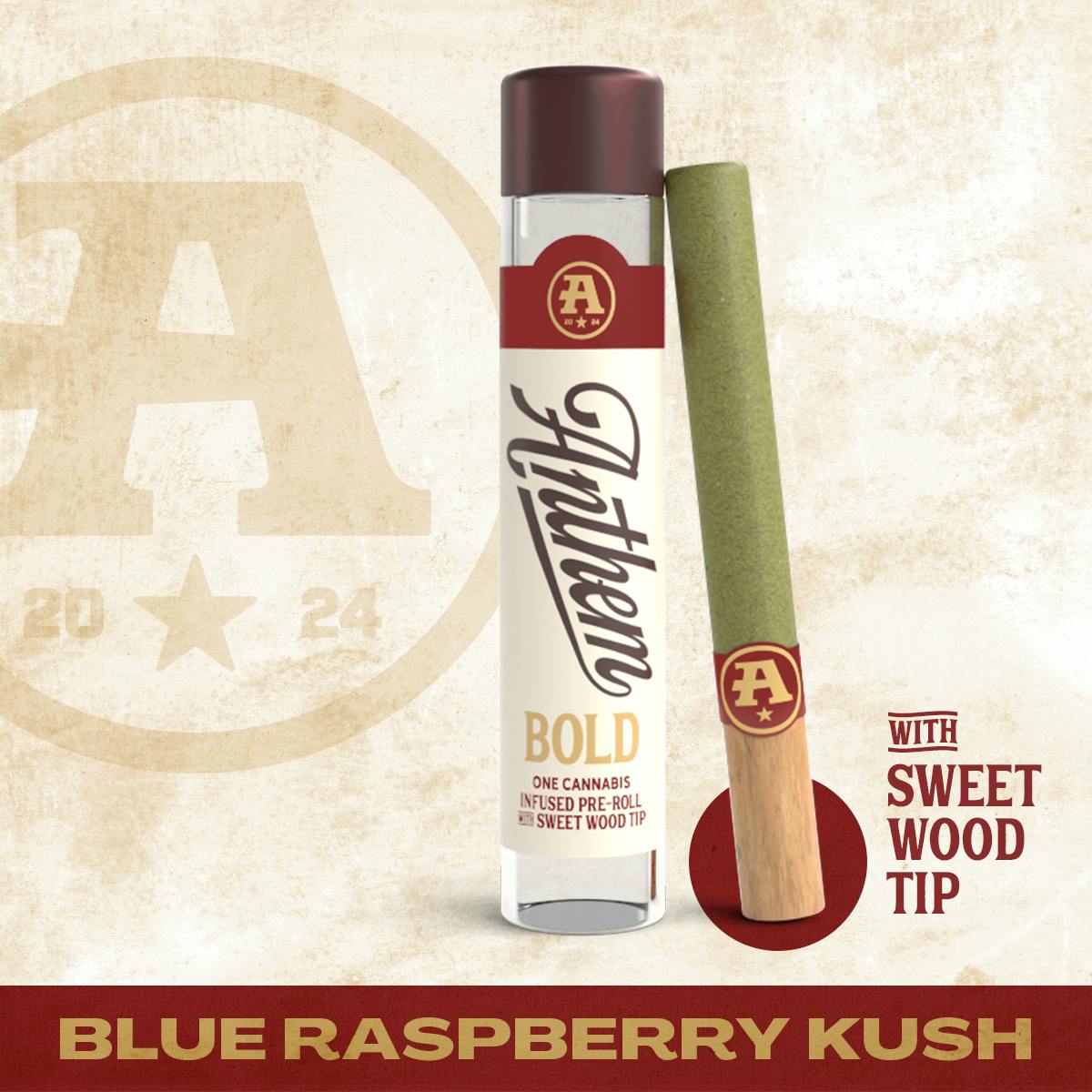
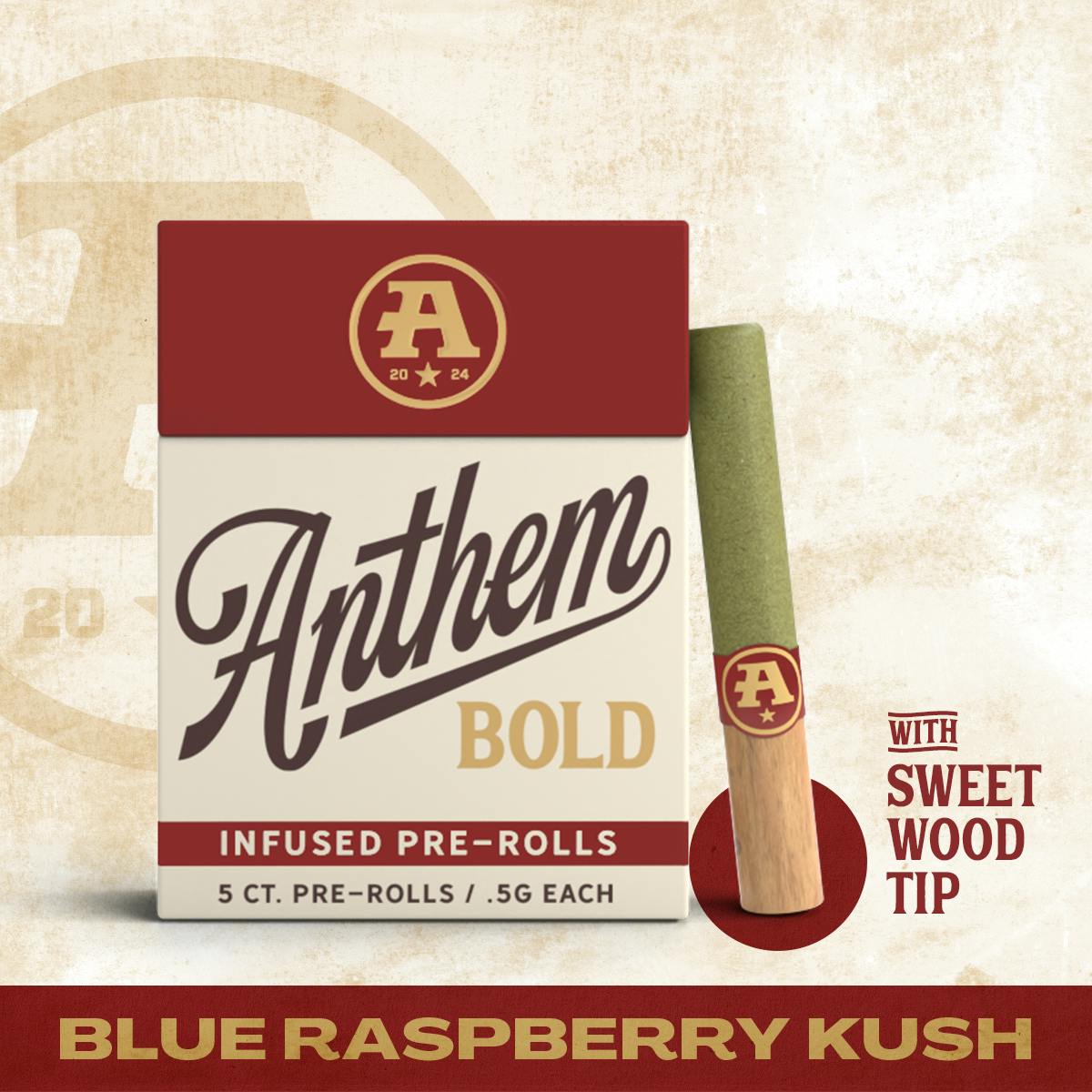
AnthemAnthem Bold Wood Tip Preroll 1g - Indica : Blue Raspberry Kush · 1g
$16.35$20.35
$19after tax

weeddispensarynearme.com
You must be 21 years or older to enter. By entering, you confirm you’re of legal age in your state to purchase cannabis.
For use only by adults 21+ • Keep out of reach of children
2 live products in stock
Quick answer · What is the Blue Raspberry Kush cannabis strain?
Blue Raspberry Kush is an indica-leaning cultivar that delivers the kind of deep, unhurried relaxation one associates with a long evening at rest. Its name gestures toward a distinctly candy-bright aromatic profile — tart berry sweetness layered over the grounding earthiness of classic Kush heritage — making it a particularly approachable entry point for those who favor fruit-forward flower without sacrificing the sedative depth that Kush genetics reliably provide.
$19after tax
$37after tax
About Blue Raspberry Kush
Blue Raspberry Kush is generally understood to be a cross of Blueberry and a Kush-family indica — most commonly cited as either OG Kush or an Afghan Kush derivative — though the specific breeder and precise release year have not been formally documented in widely available public records. The Blueberry parent traces its own celebrated lineage to DJ Short, who developed it across the 1970s and 1980s using Thai, Purple Thai, and Afghan landraces, ultimately releasing Blueberry as a stable and award-winning cultivar that won the High Times Cannabis Cup in 2000. That foundational genetics brought pronounced berry aromatics, vibrant purple-blue pigmentation potential, and a characteristically smooth, full-bodied indica experience. The Kush parent — whichever specific phenotype was used — contributes the dense bud architecture, resinous trichome production, and the earthy, hash-like depth that anchors the strain's overall character. Afghan Kush genetics, themselves originating from the Hindu Kush mountain range, are among the most stable and widely used building blocks in Western cannabis breeding, prized for reliably heavy yields and potent physical effects. No singular breeder has claimed public credit for Blue Raspberry Kush in the manner that DJ Short did for Blueberry, and its profile across seed banks and dispensaries suggests it may have emerged from multiple independent breeding projects arriving at similar genetic conclusions. Closely related expressions in the marketplace include Blue Kush and Blueberry Kush, which share overlapping parentage and produce a comparable sensory and effect profile.
The onset of Blue Raspberry Kush tends to arrive within five to fifteen minutes when smoked or vaporized, beginning as a gentle warmth that settles first behind the eyes and across the temples before spreading with measured deliberateness through the shoulders and limbs. This initial phase carries a mild euphoric lift — not the sharp cerebral energy of a sativa-dominant hybrid, but a softening of mental tension that makes the transition into deeper relaxation feel natural rather than abrupt. The myrcene content prominent in Kush lineages is widely associated with sedative and muscle-relaxing properties, which characterizes the arc of this experience well. The peak of the experience is predominantly physical. The body settles into a state of unhurried ease — joints loosen, breath deepens, and the particular variety of mental restlessness that accumulates across a long day tends to quiet considerably. Limonene, present as a secondary terpene in many Blueberry-derived cultivars, contributes a note of mood elevation that keeps the peak from feeling purely sedating, lending it a gentle warmth rather than heaviness. Duration typically runs two to three hours for most adults, with the comedown gradual and soft rather than sudden. Evening use or late-afternoon wind-down sessions align well with the trajectory of the experience. As with all high-myrcene indica cultivars, first-time or lower-tolerance guests are best served starting with a modest amount and allowing ample time before redosing.
The aromatic profile of Blue Raspberry Kush is one of its most immediately identifiable qualities. On the nose, the dominant impression is a ripe, tangy berry sweetness — reminiscent of blueberry preserves with a slightly tart, almost candy-like edge that references the raspberry quality its name implies. This character derives primarily from the terpene inheritance of its Blueberry parent, where myrcene lays a musky, fruity base and terpinolene contributes a fresh, slightly floral lift that sharpens the fruit impression into something more vivid and complex. Beneath the berry surface, the Kush genetics introduce a layer of warm earth and subtle hash-like spice. Caryophyllene, a sesquiterpene present in most Kush-descended cultivars, brings a mild peppery note and is notable as the only terpene known to interact directly with the body's CB2 receptors, potentially contributing to the strain's physically relaxing character. Humulene adds a faint woodsy, herbal dryness that keeps the sweetness from becoming cloying. In the vapor or smoke, Blue Raspberry Kush tends to be smooth and full on the palate. The inhale opens with that characteristic berry sweetness, while the exhale reveals the deeper earthen warmth of the Kush foundation. Linalool, present in some phenotypes, can introduce a faintly floral finish reminiscent of lavender — a subtle complexity that elevates the overall sensory experience from straightforwardly sweet toward something more layered and refined.
Blue Raspberry Kush produces compact, densely packed buds characteristic of its Kush heritage, with a structure that leans toward the broad, chunky calyxes associated with Afghan-derived genetics. The coloring is one of its more visually arresting qualities: a deep forest green base is frequently interrupted by streaks and patches of indigo and muted purple, a phenotypic expression driven by elevated anthocyanin pigments inherited from the Blueberry lineage, which become particularly pronounced when plants are exposed to cooler temperatures during the final weeks of flowering. Orange-to-rust-colored pistils weave across the surface of the buds in modest but visible density, providing warm contrast to the cool-toned foliage. Trichome coverage is generous and fine-grained, lending a frosted, almost powdery appearance to well-cured flower. Under adequate light, the resin glands catch and diffuse light with a quiet luminosity that signals the strain's relatively high resin production — a trait valued both for effect and for its suitability as a hash or concentrate source.
Blue Raspberry Kush is considered a moderately approachable cultivar for home growers, with its Kush genetics contributing a degree of structural resilience and predictability that less experienced cultivators tend to find reassuring. Flowering time typically falls in the range of eight to nine weeks indoors, consistent with the broader Kush family. Indoor cultivation under controlled conditions allows growers to coax out the strain's signature purple coloring by introducing a modest temperature drop — typically ten degrees Fahrenheit or so — during the final two weeks of the flowering cycle. The plant tends toward a compact, bushy stature with lateral branching that benefits from low-stress training or selective defoliation to ensure adequate light penetration. Yields are described across cultivation communities as moderate to above average indoors, with outdoor grows in temperate climates capable of reaching harvest by early to mid October. The strain favors a warm, dry climate with good airflow; its dense bud structure can make it susceptible to mold or mildew in humid conditions, which is worth considering for outdoor cultivators in the Northeast. For the cultivator-curious shopper, it represents a strain whose visual rewards are closely linked to attentive environmental management.
Blue Raspberry Kush occupies the space between early evening and true night — a strain best suited to those hours when the day's obligations have receded and a deliberate transition into rest feels not only welcome but earned. Its combination of gentle mood elevation and progressive physical relaxation makes it particularly well suited to solo unwinding: reading without urgency, moving through a slow playlist, or simply allowing the mind to decompress without any particular agenda. For food pairings, the strain's tart berry and earthy aromatic profile finds a natural complement in aged soft cheeses — a ripe brie or a mild gorgonzola — alongside dark fruit accompaniments such as fig jam or fresh blueberries, which echo the cultivar's own flavor register without competing with it. Musically, the warm but unhurried character of Blue Raspberry Kush aligns well with late-period soul and contemporary R&B, or with atmospheric ambient work where melody moves slowly and space is given room to breathe. It is less suited to high-focus creative work or social occasions requiring sustained verbal energy, and more at home in contexts where ease, rather than engagement, is the intended destination.
Blueberry Kush
Sharing near-identical parentage — Blueberry crossed with OG Kush — Blueberry Kush offers the same berry-over-earth aromatic foundation and deeply relaxing indica body effect, making it the most direct genetic parallel.
Granddaddy Purple
For guests drawn to Blue Raspberry Kush's grape-and-berry visual and aromatic character, Granddaddy Purple delivers a similarly sedative indica experience with comparable purple pigmentation and sweet fruit notes.
Blue Dream
Those who appreciate the Blueberry lineage but prefer a slightly more cerebral, balanced experience will find Blue Dream's sativa-leaning Blueberry cross a natural next step while preserving familiar berry aromatics.
OG Kush
Guests who find themselves most drawn to the earthy, resinous Kush depth beneath Blue Raspberry Kush's fruit profile will recognize and appreciate OG Kush's classic hash and lemon-pine foundation.
Purple Punch
Purple Punch shares the candy-sweet grape and berry aromatic profile alongside a heavy, full-body indica relaxation arc that closely mirrors the evening-wind-down character of Blue Raspberry Kush.
Blue Raspberry Kush is an indica-dominant cultivar. Its lineage — drawing from Blueberry and a Kush-family parent — is rooted in some of cannabis's most established indica genetics. The experience it delivers reflects that heritage: a gradual, full-bodied relaxation that moves from mild mental ease into sustained physical quietude, with no notable stimulating or energizing quality associated with sativa-leaning cultivars.
The flavor profile opens with a ripe, tangy berry sweetness — closer to blueberry preserves with a tart candy edge than to fresh fruit — before the exhale reveals the warm, earthy depth of its Kush foundation. Caryophyllene contributes a faint peppery note, while some phenotypes finish with a mild floral quality attributed to linalool. The smoke or vapor is generally smooth and full-bodied on the palate.
Blue Raspberry Kush tends to produce a gentle onset of mood elevation followed by progressive full-body relaxation. The experience is predominantly physical rather than cerebral — muscles release tension, mental restlessness quiets, and a sense of settled ease tends to prevail through the peak. The arc moves steadily toward calm and, for many, toward drowsiness as the session progresses. It is most commonly associated with evening use.
Guests who enjoy Blue Raspberry Kush frequently also appreciate Blueberry Kush for its near-identical parentage, Granddaddy Purple for its shared berry aesthetics and sedative depth, Purple Punch for its candy-sweet indica relaxation, and OG Kush for those drawn specifically to the earthy, resinous Kush undercurrent. Blue Dream serves as a useful bridge for those who want the Blueberry aromatics with a more balanced, less sedating effect.
Blue Raspberry Kush can be approachable for newer guests, particularly those who are comfortable with indica effects and have some baseline familiarity with cannabis. Its fruit-forward flavor profile and smooth smoke make the sensory experience welcoming. That said, Kush genetics can produce pronounced physical effects, and anyone new to cannabis or returning after a long absence is best served by starting with a modest amount and allowing adequate time before considering more.
The terpene profile of Blue Raspberry Kush is anchored by myrcene, which contributes the musky, fruity base aroma and is associated with sedative, muscle-relaxing properties. Caryophyllene adds a mild peppery note and is notable for its CB2 receptor activity. Terpinolene lends a fresh, slightly floral edge that sharpens the berry profile. Humulene provides earthy, herbal depth, and linalool may be present in some phenotypes, contributing a faint floral finish.
Blue Raspberry Kush is best suited to evening or late-afternoon use. Its indica-dominant profile follows an arc that moves gradually toward physical relaxation and, for many guests, eventual drowsiness — which makes it a poor fit for early-day activities requiring focus, sustained conversation, or physical coordination. It finds its natural home in the transitional hours between the end of the day's obligations and the approach of sleep.
Blue Raspberry Kush can produce a significant degree of physical sedation, particularly at higher consumption levels or in guests with lower tolerances. The onset is gradual enough that the early stages feel more like settled calm than immobility, but the peak and later phases of the experience tend toward heaviness and stillness. Guests who prefer to remain mobile or mentally engaged during a session are generally better served by a hybrid or sativa-leaning cultivar.
Related strains
Pick your store
We'll show pricing, deals, and delivery zones for the store you pick. You can switch any time from the header.