
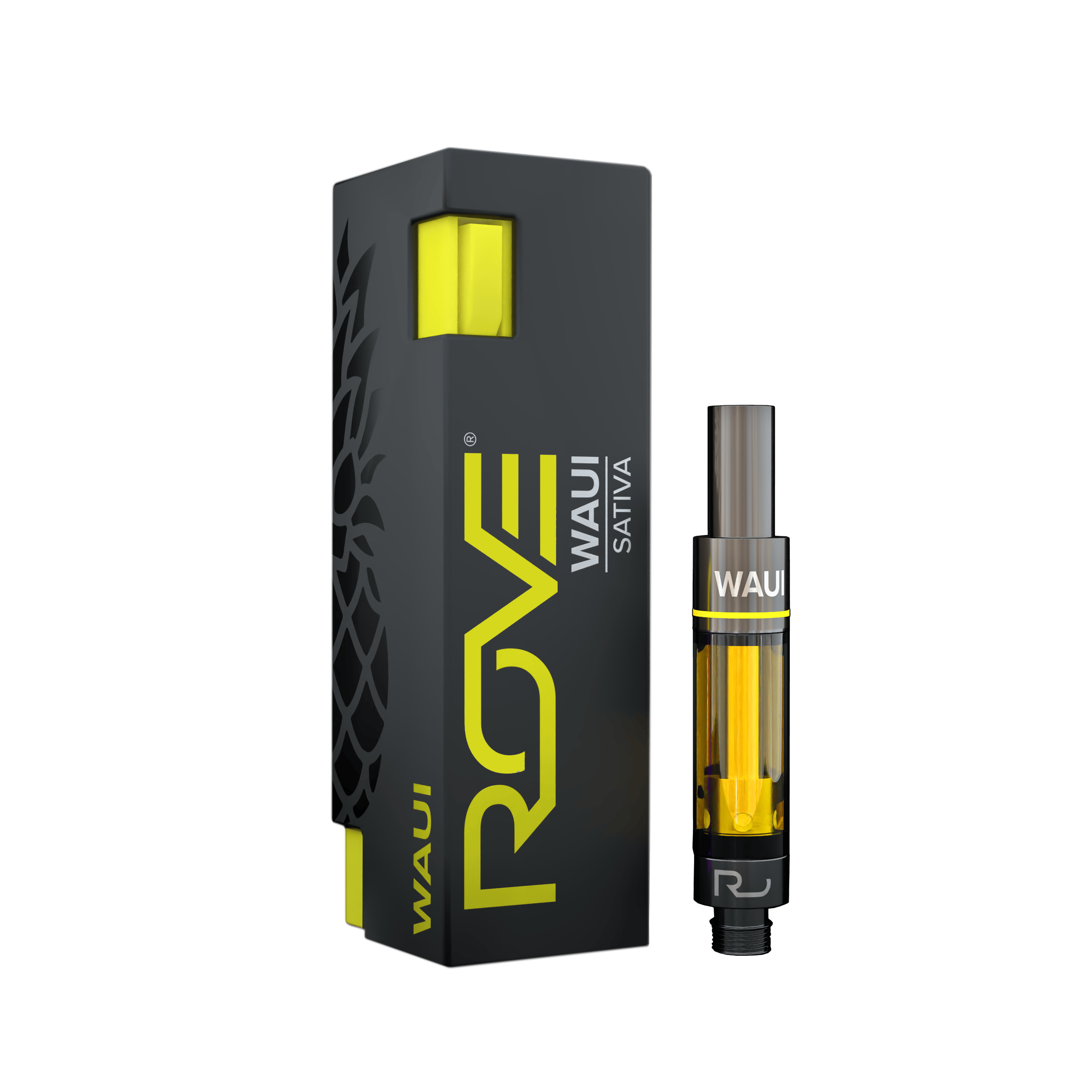
Sativa
All strains Waui
1 live products in stock
Quick answer · What is the Waui cannabis strain?
Waui arrives like a postcard from the Pacific — bright, unhurried, and faintly tropical. A sativa-leaning hybrid rooted in classic Hawaiian landrace genetics, it carries the kind of clean, uplifting energy that feels less like a push and more like a gentle tide rolling in. The aroma is ripe with citrus and mango, the smoke light on the chest, and the experience one that invites movement, conversation, and a certain open-eyed curiosity about the afternoon ahead.
Shop Waui · 1 of 1 live products
About Waui
Everything to know about Waui.
Lineage & origin
Waui (pronounced 'WAH-wee,' a phonetic nod to Maui) draws its foundational genetics from Hawaiian landrace cannabis — specifically the legendary Maui Wowie, which rose to cultural prominence on the Hawaiian Islands during the 1960s and 1970s before spreading across the mainland United States through the counterculture circuit. Maui Wowie itself is considered a near-pure sativa landrace, though some sources note the possibility of minor hybridization during its decades of cultivation on the islands. Exact breeder attribution for the contemporary Waui presentation varies by source; Bodhi Seeds is frequently credited with popularizing the name and stabilizing a refined expression of the genetics, though the breeder has not always provided exhaustive public documentation of the precise cross. As a strain rooted in landrace territory, Waui occupies a somewhat rare position in the modern cannabis market — it retains the elongated, equatorial sativa structure and cerebral character that defined pre-hybridization Hawaiian genetics, rather than the heavily indica-influenced hybrids that dominate today's shelves. Genetic siblings and related expressions include Maui Wowie phenotypes still circulating under their original name, as well as various crosses that use Hawaiian landrace material as a foundation — among them Pineapple Express, which shares a tropical sativa parentage philosophy. Waui is generally positioned as a closer-to-source interpretation of that Hawaiian heritage, with less hybridization drift than many of its contemporaries.
Effects
The onset of Waui is characteristically sativa in its pacing — noticeable within ten to fifteen minutes when smoked or vaped, building gradually rather than arriving with any abruptness. The initial wave tends to be predominantly cerebral: a brightening of mood, a slight quickening of associative thought, and a quality of mental openness that many describe as social ease without sedation. For those familiar with older Hawaiian sativa genetics, this arc will feel familiar — clean, approachable, and without the anxious edge that can accompany higher-myrcene hybrids. At peak, the experience leans into its sativa heritage fully. Cognitive engagement remains elevated, sensory perception — particularly of music and the natural environment — is frequently noted as heightened, and the body carries a light, functional warmth rather than any heaviness. This is not a strain that encourages the couch; it encourages the walk, the conversation, the creative tangent. Duration tends toward the moderate, with peak effects generally settling between ninety minutes and two and a half hours depending on individual tolerance and consumption method. The comedown is among Waui's most appreciated qualities. Rather than a sharp descent, the session typically resolves into a calm, grounded afterglow — terpenes like myrcene contributing a mild physical ease as the more stimulating limonene and terpinolene notes recede. As always, start low and allow ample time to assess before returning for more.
Aroma, flavor & terpenes
Waui's terpene profile reads like a studied interpretation of the tropics. Terpinolene leads the aromatic conversation — a terpene responsible for the fresh, slightly floral, and faintly piney quality that distinguishes many classic sativa expressions from their sweeter hybrid descendants. It imparts a lifted, almost ethereal top note that announces itself clearly when the jar is opened. Myrcene follows closely, grounding the aroma with ripe mango and soft earth — the bridge between the bright and the botanical. Limonene contributes the citrus dimension that Waui is well known for: a clean, zesty lemon-meets-grapefruit note that sits in the midrange of the nose without becoming sharp or astringent. Caryophyllene adds a barely perceptible peppery backbone, providing structural complexity and, as research continues to suggest, a modulating influence on the overall experience. Ocimene may also be present in some phenotypes, lending an additional sweetness and that characteristic tropical herbal quality. On the palate — whether smoked in a glass piece or enjoyed through a quality dry herb vaporizer — Waui is notably smooth. The inhale delivers the citrus and mango upfront, bright and clean. The exhale opens into a slightly piney, floral finish with a gentle sweetness that lingers without cloying. The smoke is light-bodied and the vapor particularly translucent, making it a strain well-suited to those who appreciate an aromatic session without heaviness on the chest.
Appearance
Waui's physical presentation is consistent with its sativa and landrace lineage. The buds tend toward the airy and elongated rather than the dense, compact structure associated with indica-dominant varieties — a direct expression of the equatorial genetics at its core. Calyx-to-leaf ratio is typically favorable, with prominent, well-developed calyxes that catch and hold trichome coverage generously despite the looser bud architecture. The color palette skews toward the brighter end of the cannabis spectrum: vivid medium to light greens, occasionally with a subtle golden warmth in the outer leaves that reflects both the plant's sun-loving heritage and its maturation point. Pistils tend toward a deep amber-orange, threading through the structure with a certain looseness that suits the overall aesthetic. Trichome coverage, while perhaps less visually dramatic than on denser indica varieties, is consistent and gives well-cured Waui a faint, silver-white dusting that catches light pleasantly. The overall impression is of something lively and botanical — more wild garden than manicured greenhouse.
Growing notes
Waui's landrace sativa background makes it a moderately challenging cultivar for those accustomed to shorter, bushier indica-dominant plants. Indoors, growers should anticipate significant vertical stretch during the flowering phase — training techniques such as LST (low-stress training) or screen-of-green (SCROG) setups are commonly employed to manage canopy height and improve light penetration. Flowering time runs on the longer side for sativa expressions, typically between nine and eleven weeks indoors, which requires patience but rewards it with a profile that is difficult to replicate in faster-finishing varieties. Outdoors, Waui performs best in warm, sunny climates with low humidity — conditions that mirror its Hawaiian origins. Mediterranean-style environments or well-managed greenhouse cultivation can produce generous harvests with the full expression of its tropical aromatic character. Yield is moderate to good by sativa standards, though it will not match the output of high-production indica hybrids. Pest and mold resistance is reasonable given attentive environmental management, though the airier bud structure does offer some natural resistance to moisture retention. For the cultivator-curious shopper, Waui represents a beautiful study in landrace-rooted growing — one that rewards attentiveness over shortcuts.
When it's best enjoyed
Waui is, at its essence, a daylight strain — and it performs best when given room to breathe within an unhurried afternoon or early evening. It is the kind of variety one reaches for before a walk through a park, a Sunday visit to a farmers' market, or a long, meandering conversation with a close friend over something good to eat. The tropical brightness of the terpene profile makes it a natural companion to fresh, citrus-forward cuisine — think ceviche, yuzu-dressed salads, or a ripe stone fruit dessert — where the limonene and mango-myrcene notes find genuine resonance on the palate. For music, the cerebral, open quality of a Waui session pairs naturally with anything that rewards close listening without demanding it: ambient jazz, classic Hawaiian slack-key guitar, or the kind of world music that feels more like a landscape than a performance. Creatively, it is well suited to early-stage brainstorming, journaling, or any pursuit where generative thinking is more valuable than precision. It is not ideally suited to late evenings when rest is the goal, nor to situations requiring sharp analytical focus. Think of it as a companion for the curious hours — present, warm, and graciously unhurried.
If you like Waui, also explore
Maui Wowie
As Waui's direct genetic predecessor, Maui Wowie shares the same tropical citrus and mango terpene character and clean sativa uplift, making it the most natural point of comparison for any fan of the two.
Pineapple Express
Sharing Hawaiian sativa roots and a pronounced tropical fruit aroma profile, Pineapple Express offers a similarly uplifting, social experience with an accessible sweetness that Waui admirers tend to appreciate.
Durban Poison
Fellow landrace-adjacent sativa with a terpinolene-forward profile and a focused, energetic cerebral quality — a logical next step for those drawn to Waui's clean, non-sedating character.
Super Silver Haze
Brings the same sustained sativa elevation and citrus-herbaceous terpene complexity, appealing to those who value Waui's long-arc, mood-brightening experience with a slight increase in potency ceiling.
Golden Goat
A tropical-meets-spicy sativa hybrid with overlapping citrus and mango notes and a similarly social, energetic effect profile that resonates with Waui's core sensibility.
Common questions
Is Waui indica or sativa?+
Waui is a sativa-leaning hybrid with deep roots in Hawaiian landrace genetics, specifically Maui Wowie. It presents and performs predominantly as a sativa — delivering cerebral, uplifting effects with minimal body sedation. The physical structure of the plant also reflects this heritage, with airy, elongated buds more typical of equatorial sativa varieties than the dense formations associated with indica-dominant cultivars.
What does Waui taste like?+
Waui offers a clean, tropical flavor profile defined by ripe mango, citrus zest, and a lightly floral, piney finish. On the inhale, citrus and fruit notes are most prominent; the exhale opens into a softer, herbal sweetness. The smoke is notably light and smooth, while vaporization brings additional clarity to the mango and lemon dimensions. It is among the more aromatically expressive tropical sativa expressions currently available.
What are the typical effects of Waui?+
Waui produces a clear, uplifting cerebral effect that builds gradually over ten to fifteen minutes and peaks with elevated mood, heightened sensory awareness, and a light, functional body warmth. It is not heavily sedating — most users report remaining active and social throughout the experience. The comedown is gentle and grounded. It is generally regarded as a daytime or early-evening variety best suited to creative, social, or outdoor activities.
What strains are similar to Waui?+
Those drawn to Waui's tropical sativa character often appreciate Maui Wowie, its landrace predecessor, as well as Pineapple Express, Durban Poison, Super Silver Haze, and Golden Goat. Each shares some combination of the terpinolene-forward aromatic structure, citrus-tropical flavor notes, and the clean, non-sedating cerebral uplift that defines Waui's identity in the sativa category.
Is Waui good for beginners?+
Waui is relatively accessible for newer adult-use consumers due to its clean, gradual onset and the absence of heavy sedation or sharp psychoactive intensity. That said, individual responses to cannabis vary considerably, and no strain is universally suitable. The consistent guidance applies: start with a small amount, allow sufficient time to assess how the experience develops before consuming more, and choose a comfortable, familiar setting for the first session.
What are the dominant terpenes in Waui?+
Terpinolene is generally considered the dominant terpene in Waui, contributing its characteristic fresh, floral, and lightly piney quality. Myrcene follows with ripe mango and earthy notes, while limonene adds a bright citrus dimension. Caryophyllene provides a subtle peppery backbone and structural complexity. Some phenotypes may also express ocimene, which contributes additional tropical sweetness and herbal lift to the overall profile.
When is the best time of day to enjoy Waui?+
Waui is best suited to daytime or early-evening use, given its energizing, cerebral character and lack of notable sedation. It performs well during outdoor activities, creative sessions, or social engagements where mental presence and lightness of mood are welcome. Most users find it less well-suited to late evenings when rest is the priority, as the sativa-forward terpene and effect profile tends to maintain alertness rather than encourage winding down.
Where does the name Waui come from?+
Waui is a phonetic rendering of Maui, referencing Maui Wowie — the legendary Hawaiian landrace sativa that forms the genetic foundation of this variety. The name evokes both the geographic origin of the parent genetics and the easygoing, sun-drenched character of the experience. It is pronounced 'WAH-wee' and is sometimes used interchangeably with or as a tribute to the classic Maui Wowie name in certain cannabis retail and cultivation contexts.
Related strains