

Sativa
All strains Maui Wowie
16 live products in stock
Quick answer · What is the Maui Wowie cannabis strain?
Maui Wowie carries the unhurried spirit of the Hawaiian islands into every session — a sun-drenched sativa that unfolds with tropical sweetness and a clean, energising lift. Born from the volcanic soils of Maui, this landrace-adjacent cultivar has earned its place as one of the most enduring names in cannabis culture, offering a bright, social, and creatively inviting experience that feels as relevant today as it did in the decades that first celebrated it.
Shop Maui Wowie · 16 of 16 live products
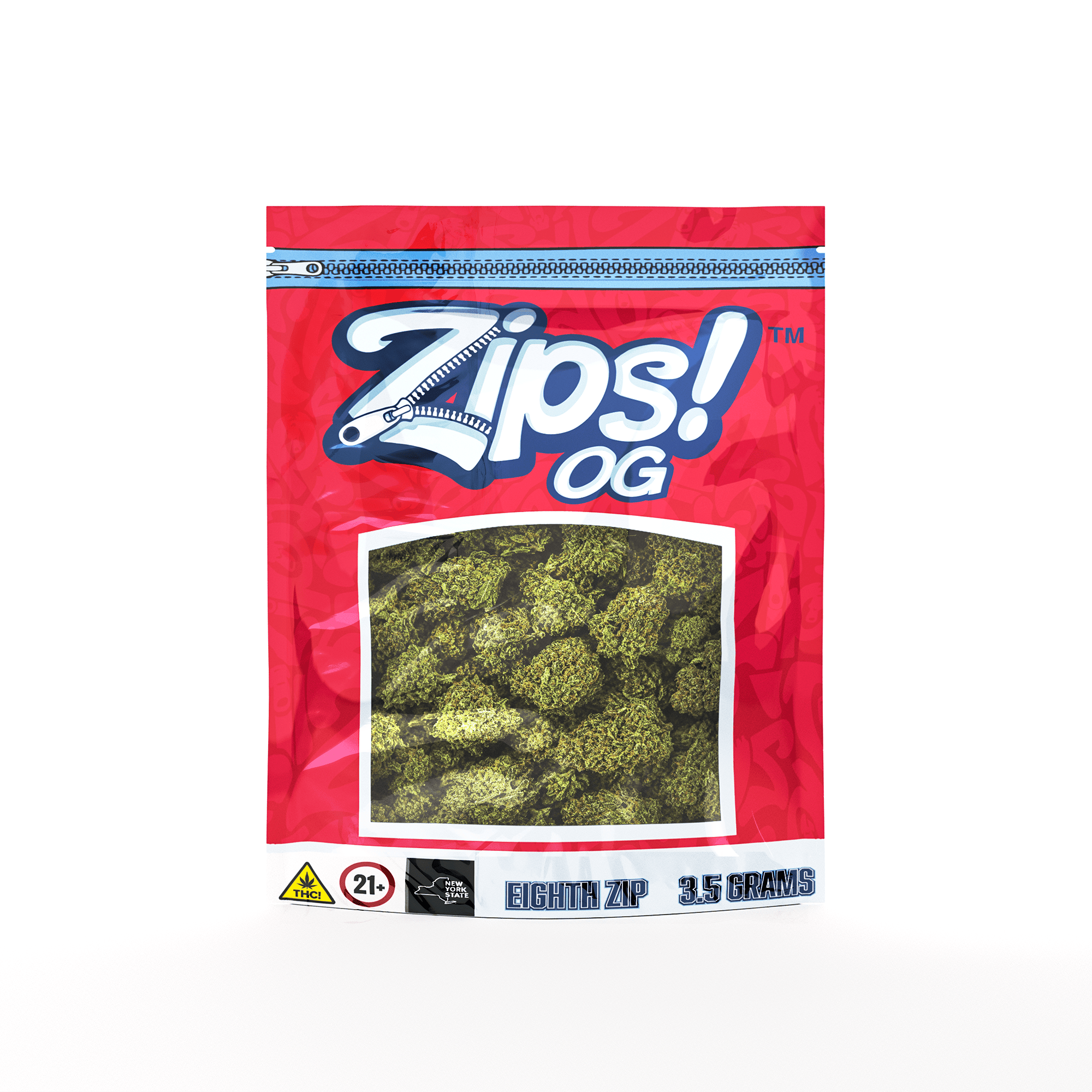
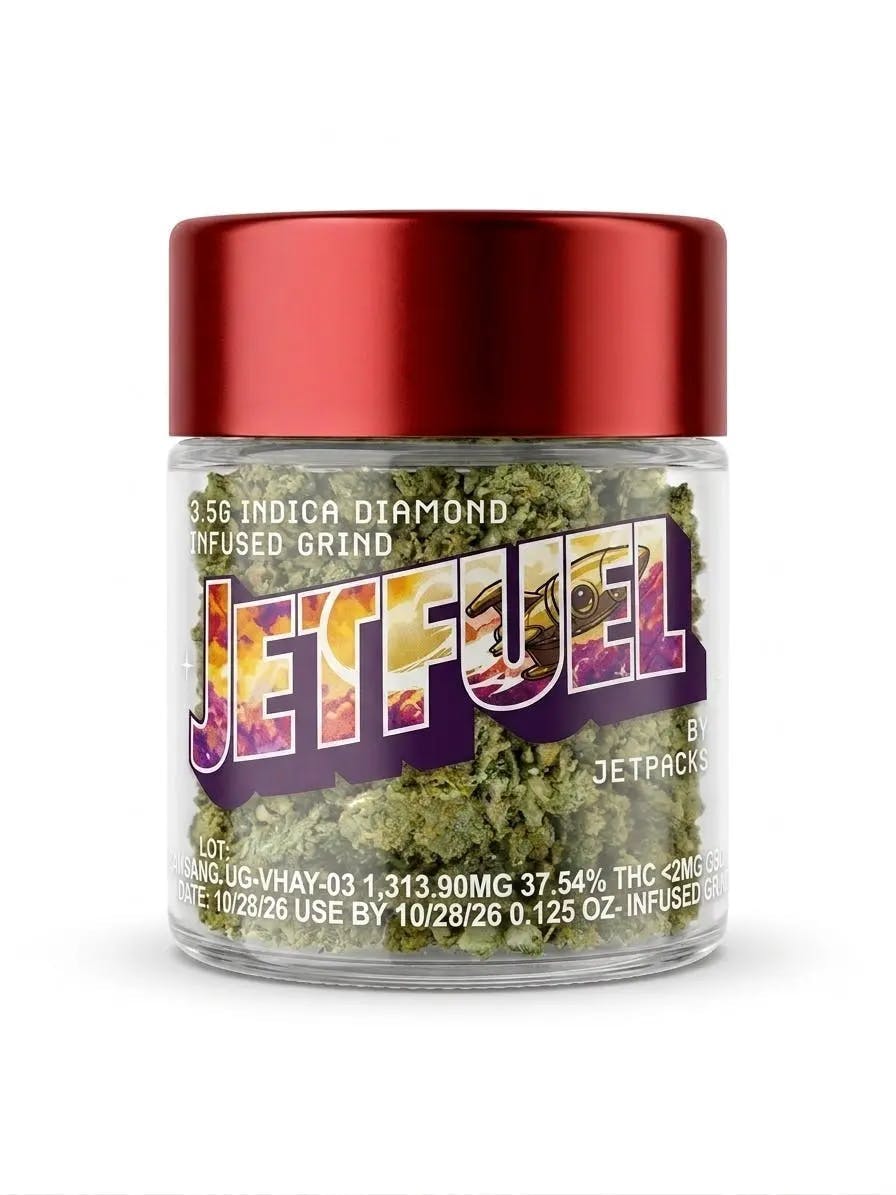
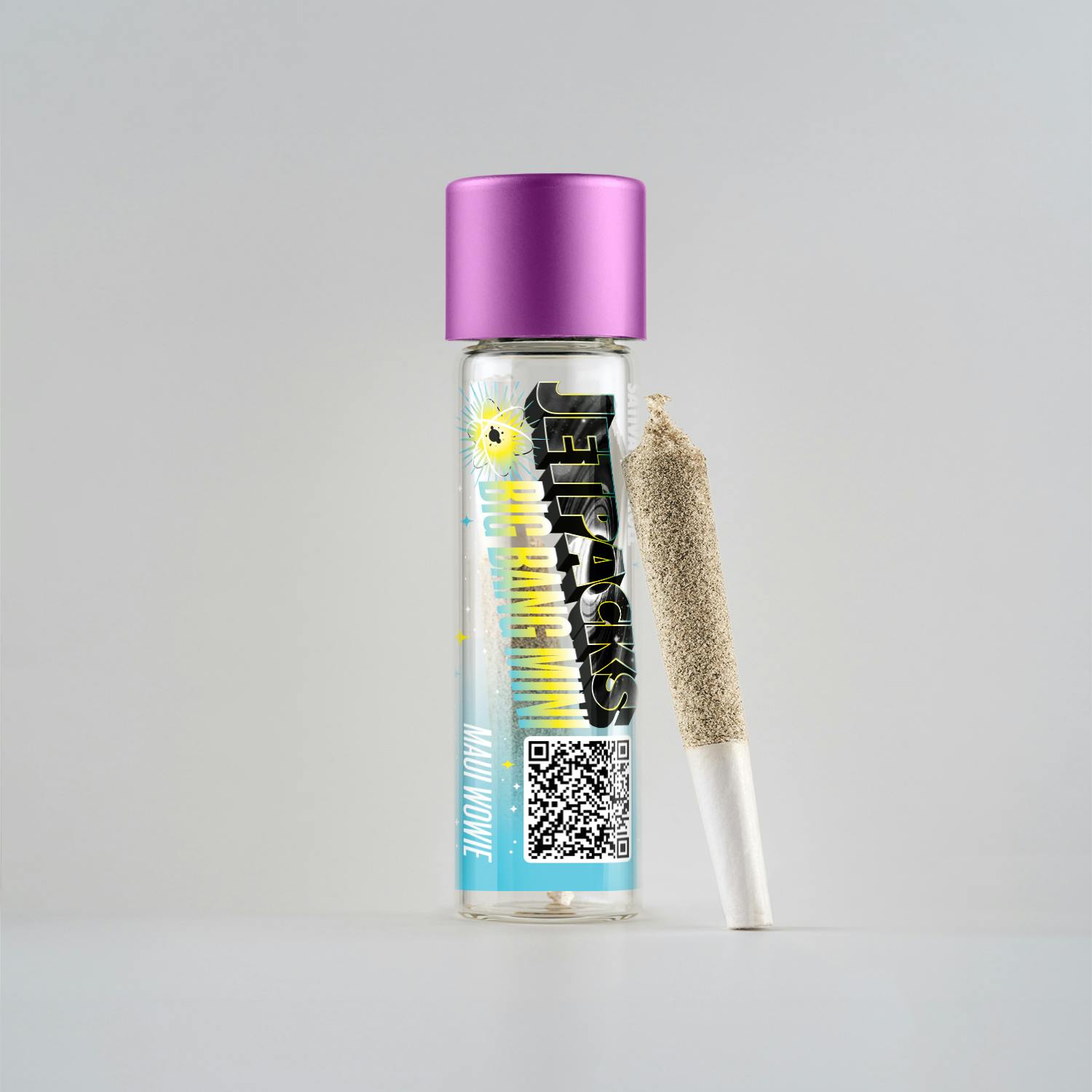
THC 92.68%Sativa
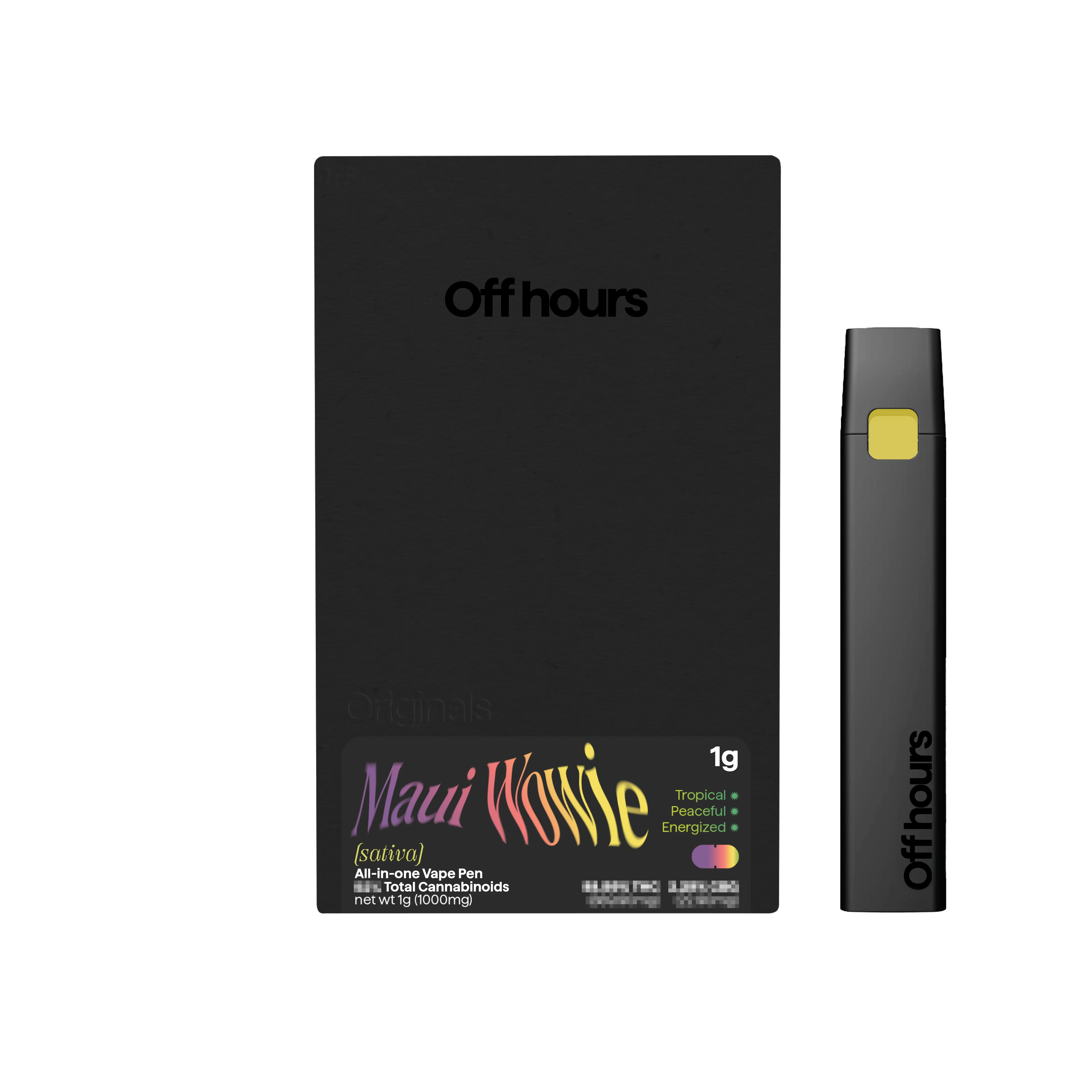
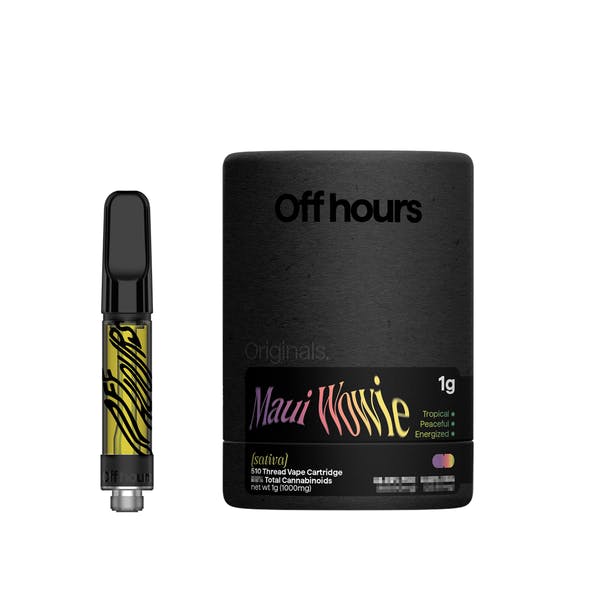
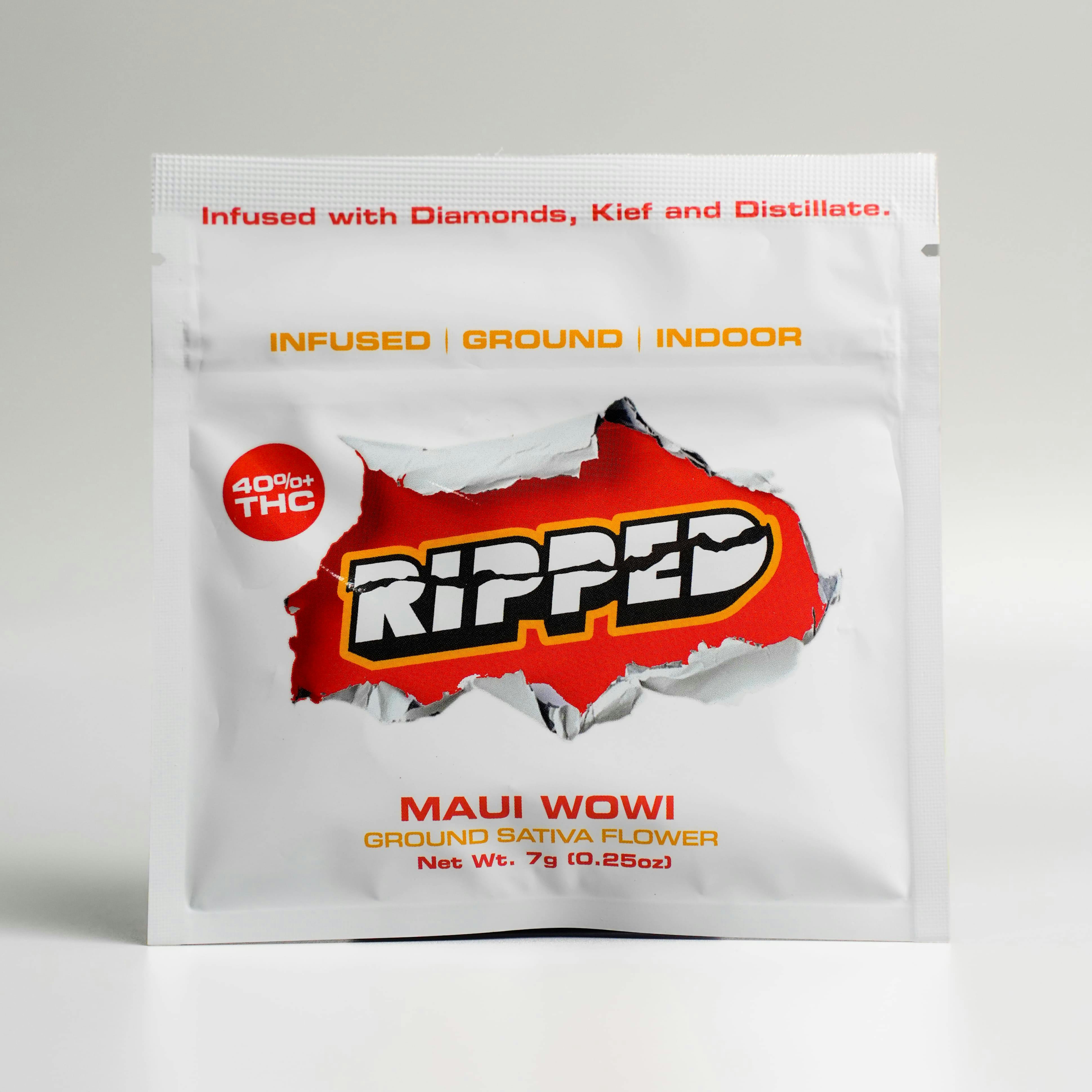
Off HoursOff Hours All-in-one Vape Pen - Off hours (sativa Maui Wowie) · 1g
$30.09
$34after tax
On sale· 20% OFF
THC 42.35%Sativa-Hybrid
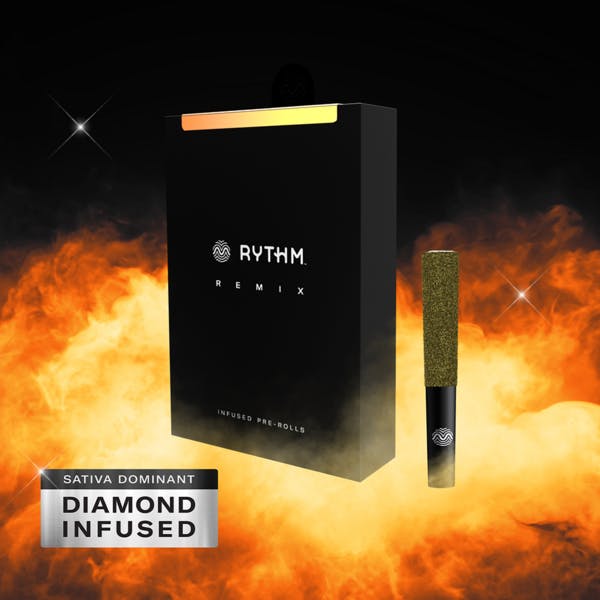
RYTHMMaui Wowie | Pre-Roll | 5 Pack Infused | Sativa | 2.5g · 0.5g/5pk
$28.32$35.40
$33after tax
On sale· 20% OFF
THC 92.63%·CBD 0.52%Sativa
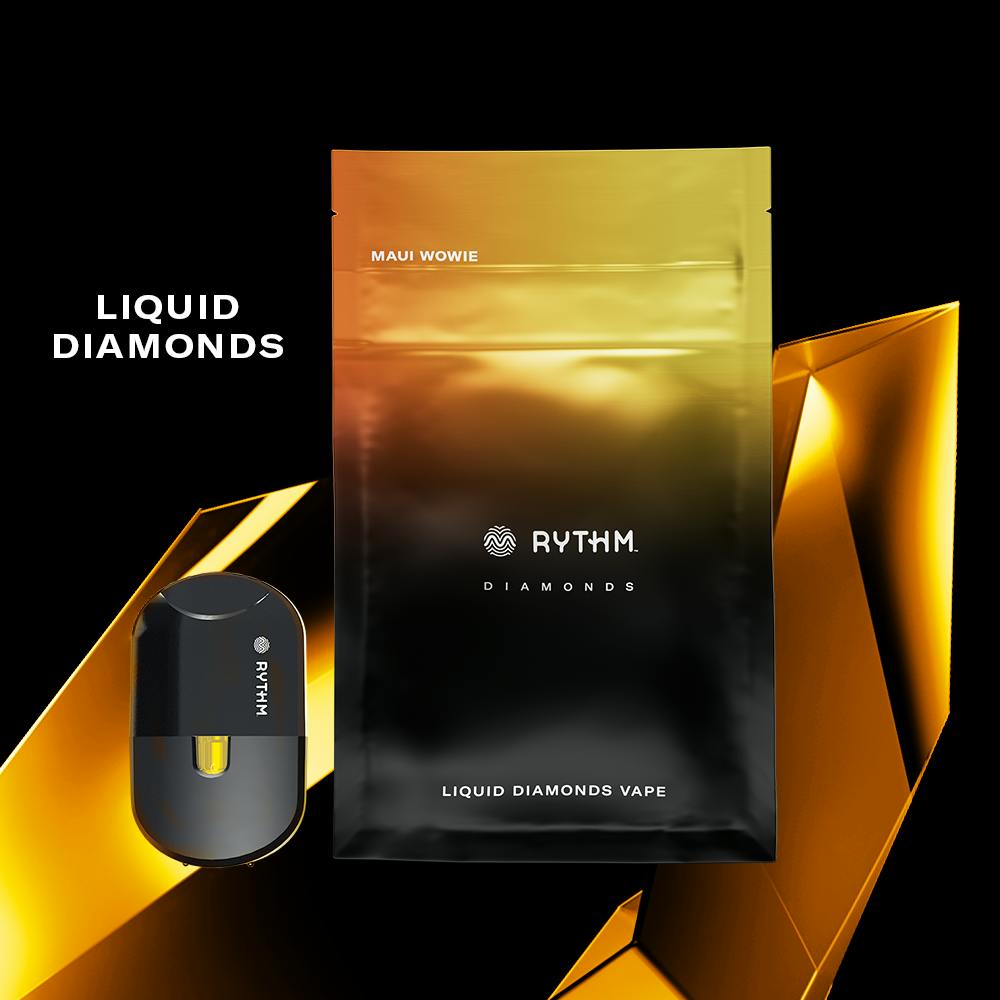
RYTHMMaui Wowie | Liquid Diamonds Vape | Sativa | 1g · 1g
$46.02$57.52
$53after tax
On sale· 20% OFF
THC 44.61%Sativa
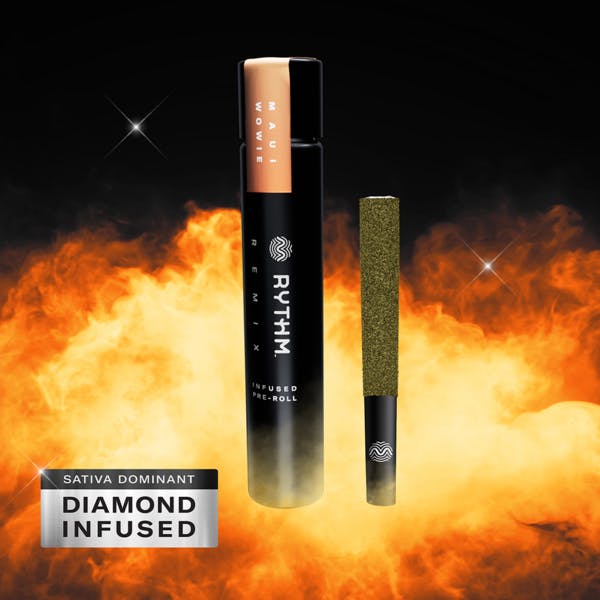
RYTHMMaui Wowie | Pre-Roll | Single Infused | Sativa | 1g · 1g
$16.28$20.35
$19after tax
THC 89.12%·CBD 0.16%Sativa
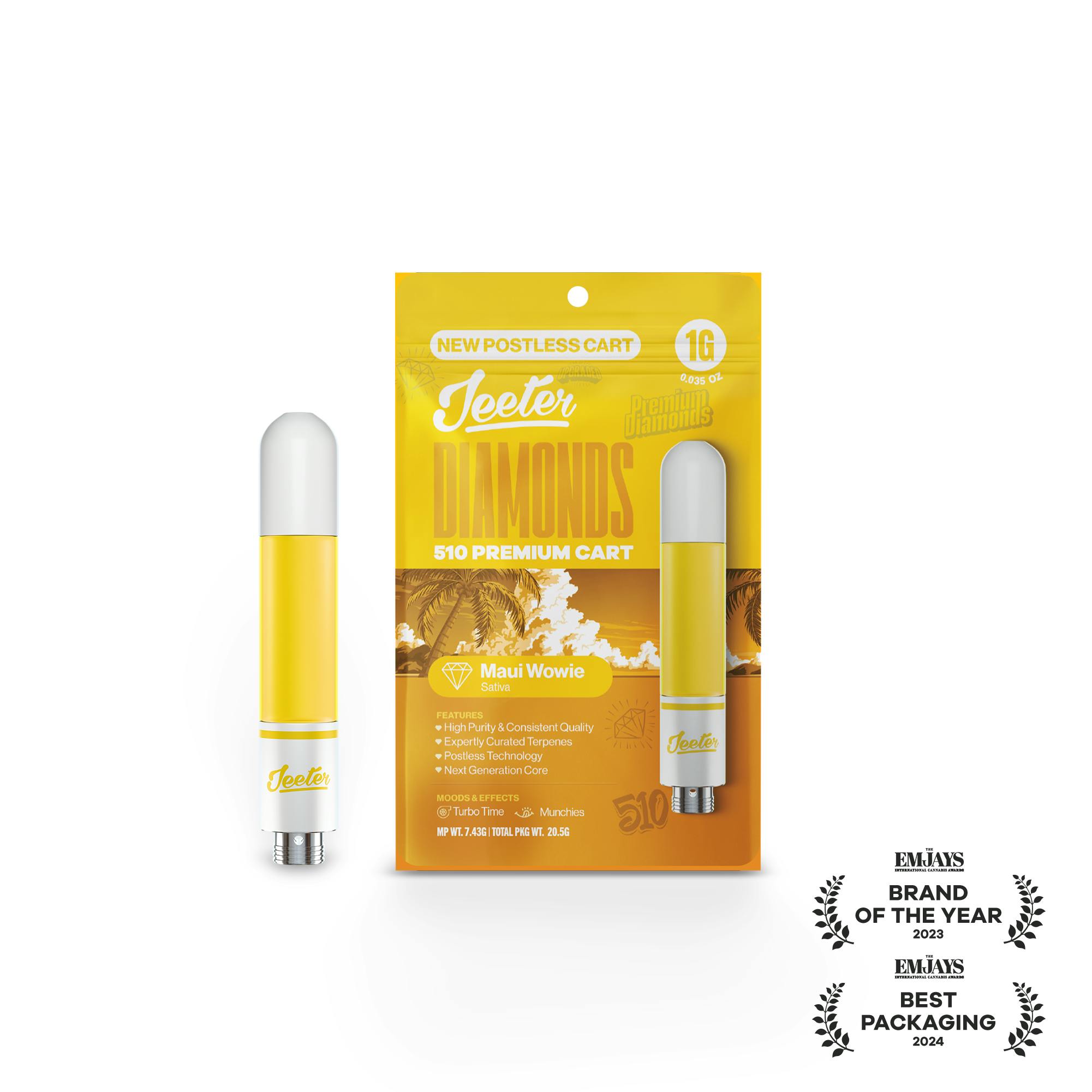
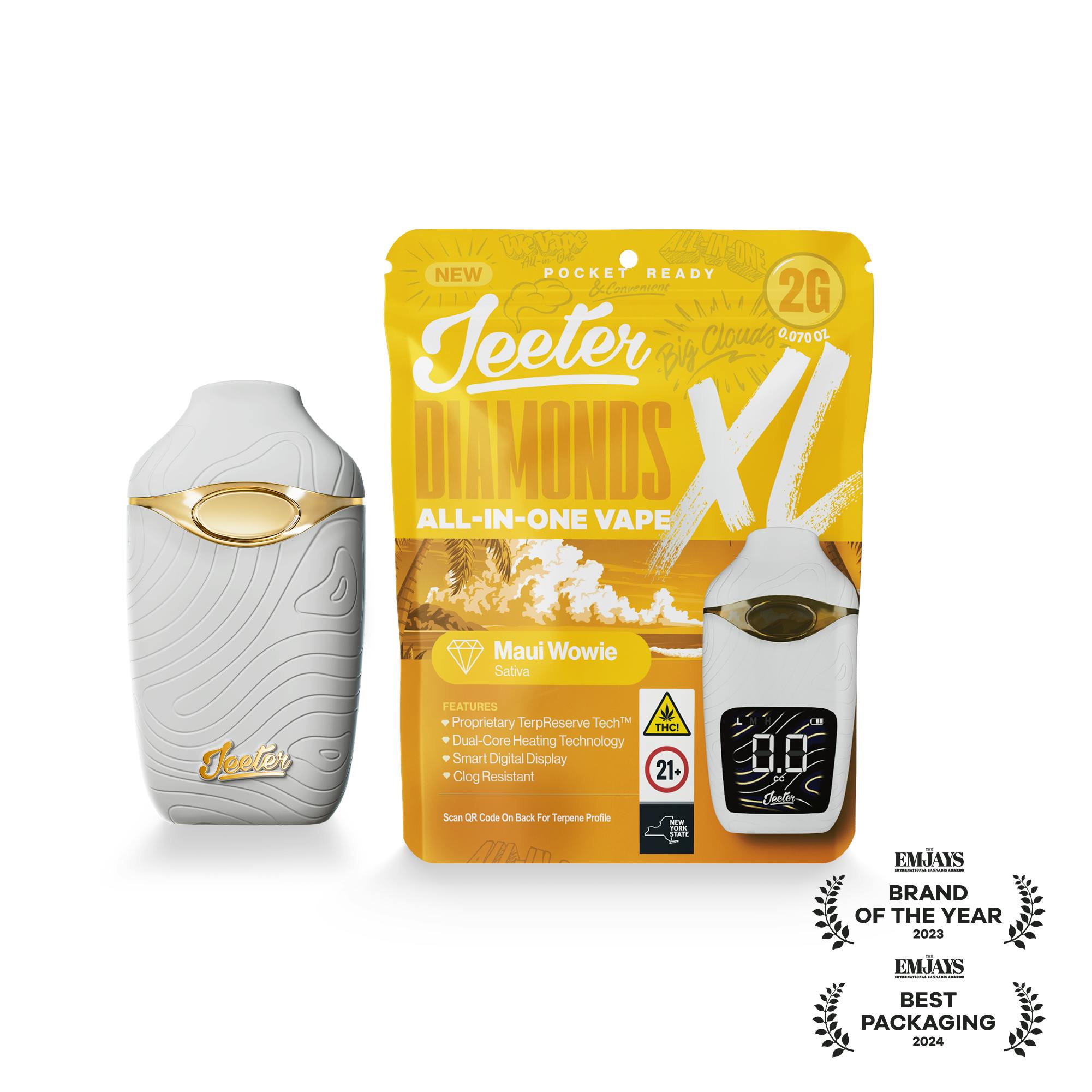
JeeterJeeter | Maui Wowie | 2G Liquid Diamond XL All-In-One Vape · 2g
$84.96
$96after tax

THC 82.52%·CBD 0.18%Sativa
JeeterJeeter Maui Wowie All In One Liquid Diamonds Vape · 1g
$47.79
$54after tax
THC 33.69%Sativa
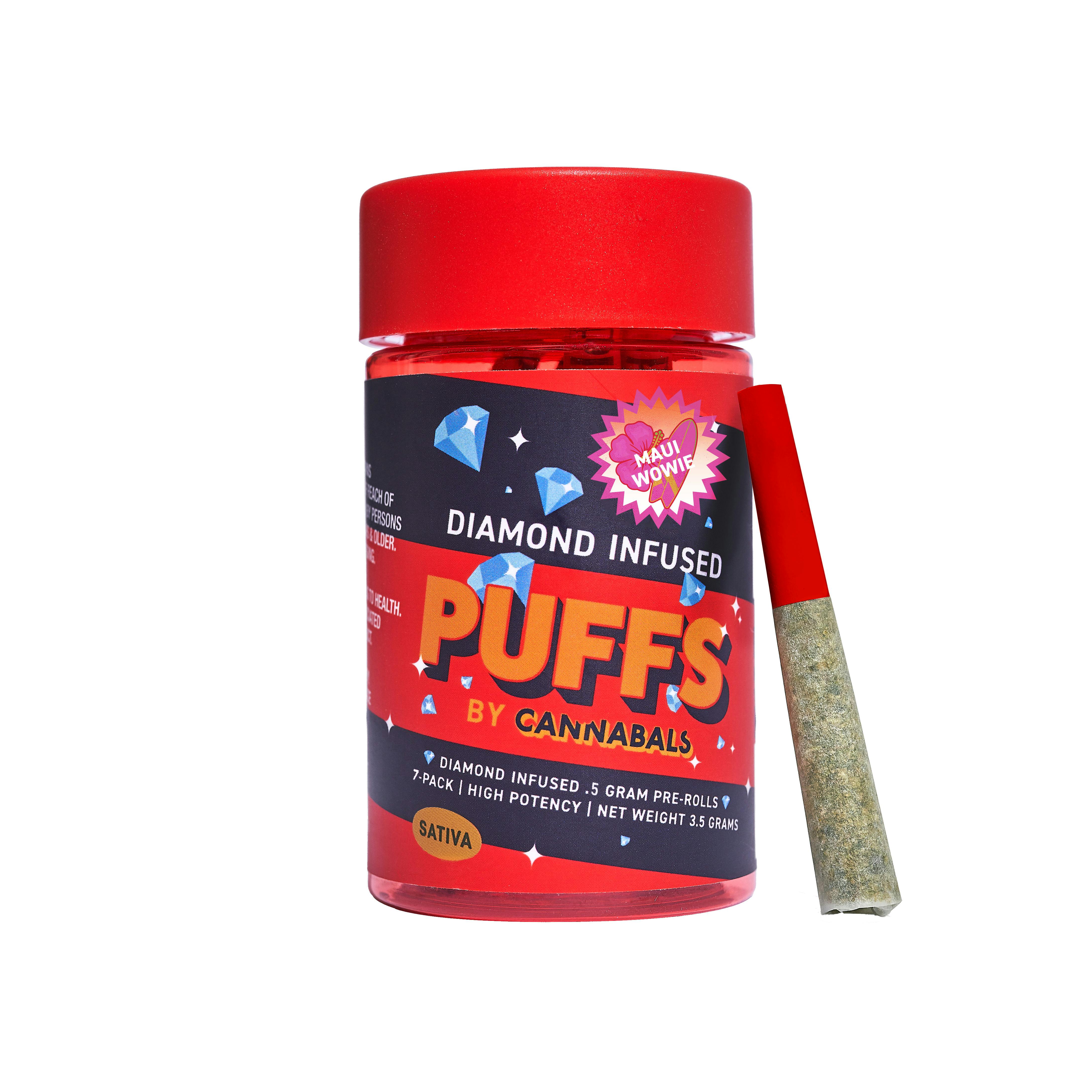
CannabalsCannabals Maui Wowie - Diamond Infused Pre Rolls - - 7pk · 0.5g/7pk
$45.13
$51after tax
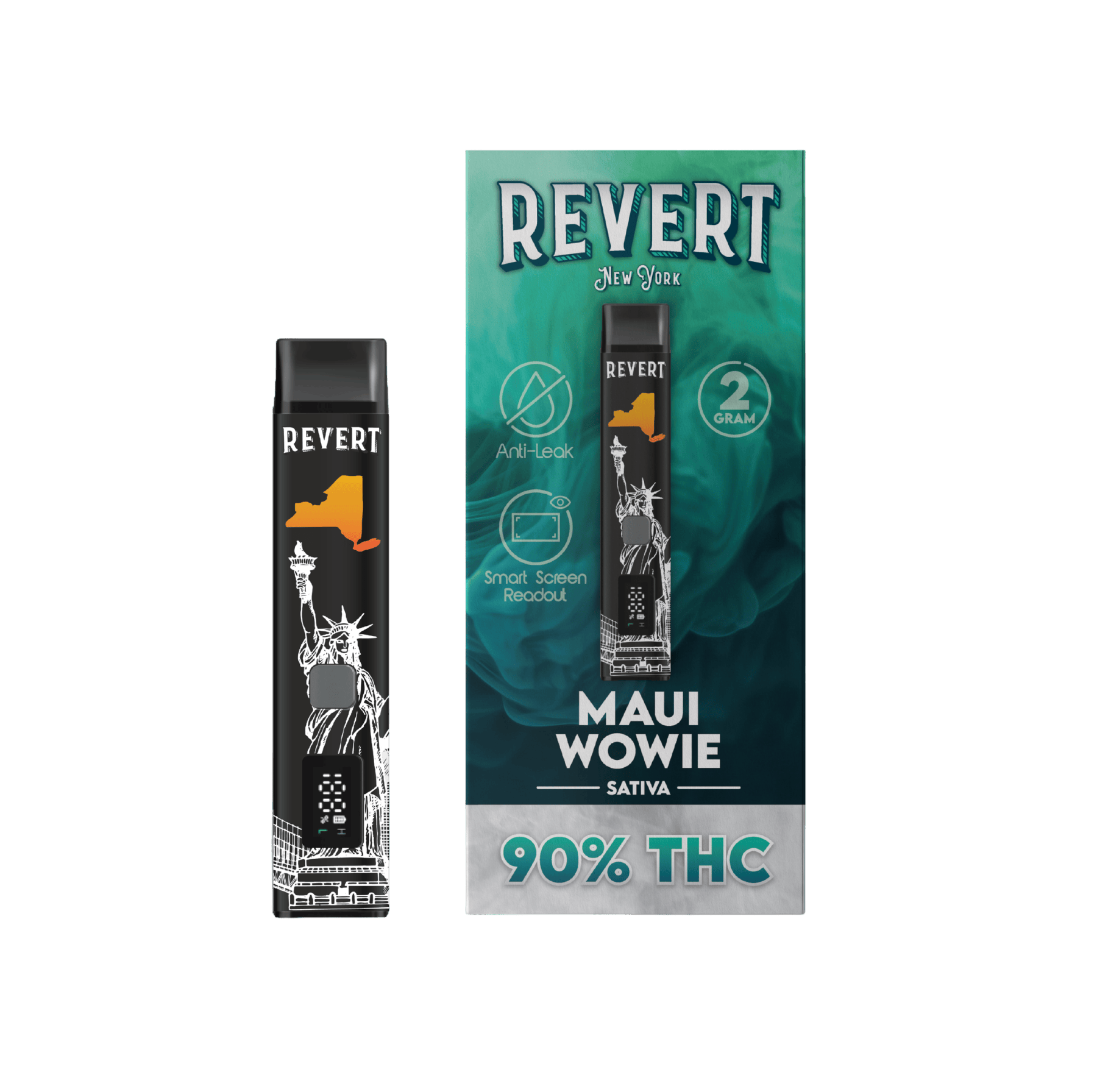
THC 79.81%·CBD 1.15%Sativa
Revert CannabisRevert | Maui Wowie | Disposable Vape · 2g
$64.60
$73after tax
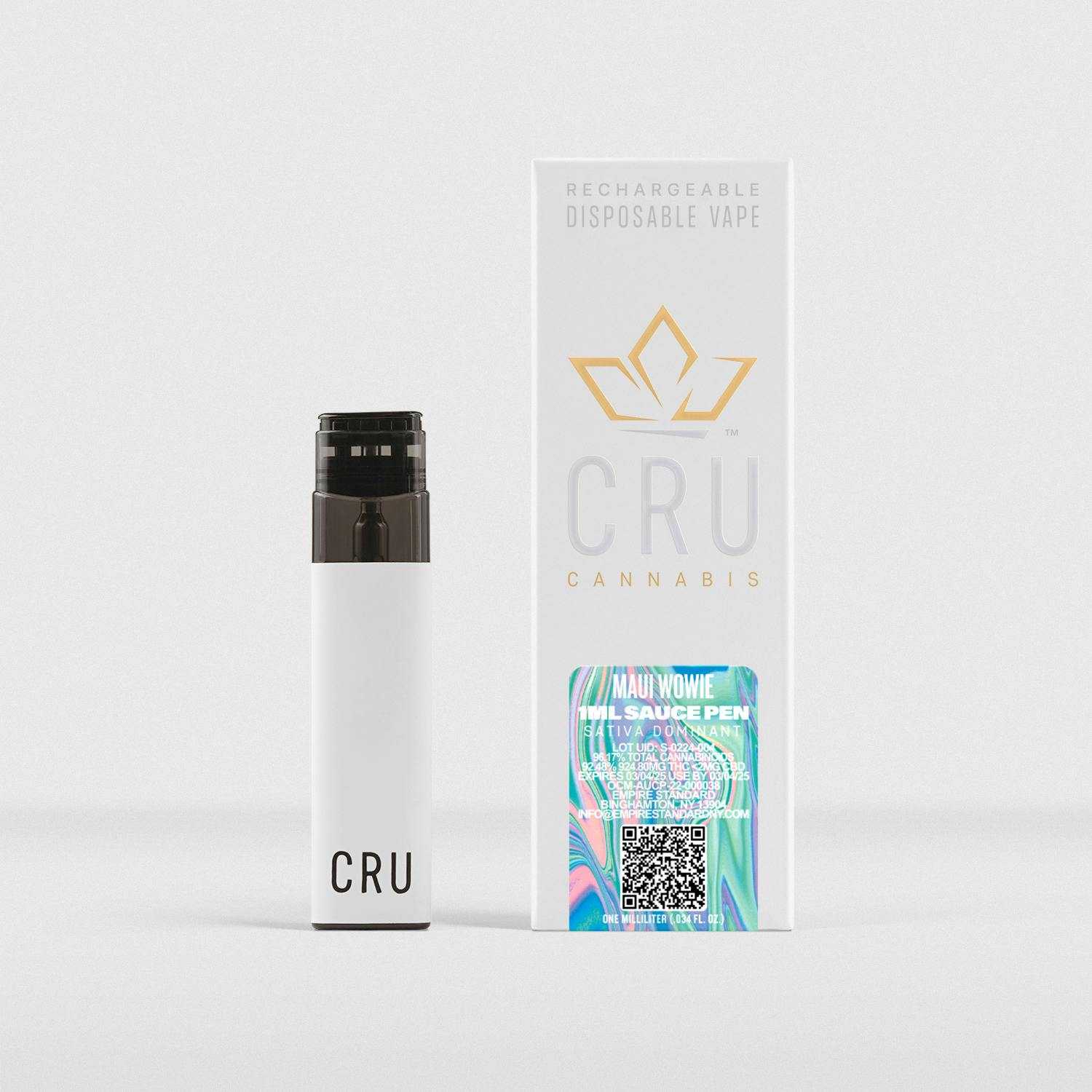
About Maui Wowie
Everything to know about Maui Wowie.
Lineage & origin
Maui Wowie — also rendered as Maui Waui — is widely understood to be a Hawaiian landrace sativa, or at minimum a cultivar developed through selective breeding of indigenous Hawaiian cannabis plants in the 1960s and early 1970s. Hawaii's volcanic, mineral-rich soil and consistently warm, humid climate created ideal conditions for vigorous sativa growth, and local growers on Maui are credited with stabilising the genetics that would eventually travel to the mainland United States during the counterculture era. No single commercial breeder has been publicly named as the originating party, as the strain predates modern seed-company infrastructure and its stewardship passed informally through generations of Hawaiian cultivators. By the mid-1970s, Maui Wowie had developed a considerable reputation on the West Coast, regarded as a benchmark for potency at a time when imported and domestic cannabis varied widely in quality. Its influence on American cannabis culture is significant: it helped establish the market appetite for tropical, terpene-forward sativas that still drives demand today. Several modern breeders have worked Hawaiian genetics — including those attributed to Maui Wowie — into contemporary hybrids. Notable examples include Pineapple Express, which draws on Hawaiian lineage for its tropical aromatic character, and various 'Haze' crosses that incorporate Hawaiian sativa stock. Because the strain originated outside any formal seed-bank system, phenotype variation can be pronounced, and some material sold under the Maui Wowie name today may differ meaningfully from the original island-grown expressions.
Effects
Maui Wowie's onset is characteristically rapid for a sativa-dominant cultivar, with initial effects often perceived within five to ten minutes of inhalation. The experience opens with a distinct cerebral brightness — a lightening of mental atmosphere that many describe as mood-elevating and clarifying rather than racingly stimulating. Thoughts tend to feel more fluid and associative during the peak, making the strain a natural companion for creative or conversational pursuits. The body remains relatively unencumbered, with only a gentle warmth or mild physical ease that does not pull toward sedation. This balance reflects the strain's sativa heritage, where THCV and higher terpene concentrations of limonene and terpinolene are thought to contribute to the alert, uplifted character. The peak phase typically sustains for ninety minutes to two hours in most users, before transitioning into a gradual, clean comedown. Unlike heavier indica-forward cultivars, Maui Wowie does not generally conclude with pronounced drowsiness; the descent is described by many as a mellow return to baseline rather than a heavy landing. That said, individual response varies with tolerance, consumption method, and set and setting. Consumers who are less experienced with sativa-dominant cultivars may find the cerebral onset more intense than anticipated. A measured, start-low approach is always advisable — particularly in a social or active context where clarity and comfort are the intended outcome.
Aroma, flavor & terpenes
The aromatic profile of Maui Wowie is anchored by terpinolene, a terpene that contributes a fresh, floral, and faintly resinous quality reminiscent of tropical blossoms and ripe orchard fruit. Terpinolene is the primary driver of the strain's signature 'Hawaiian' character — a brightness that reads as pineapple, light citrus, and a distant herbal sweetness. Supporting it is myrcene, which introduces a subtle earthiness and a soft, ripe-fruit quality that rounds the more volatile top notes and contributes to the mild body ease that tempers the strain's cerebral energy. Limonene adds a secondary citrus sharpness — closer to lemon zest than fresh-squeezed juice — that gives the nose an uplifting, almost effervescent quality. Traces of ocimene, when present, extend the tropical and herbal sweetness, adding a touch of floral complexity that distinguishes well-grown Maui Wowie from more generic sativa expressions. Caryophyllene appears in smaller concentrations and contributes a faint spice on the exhale that prevents the profile from reading as purely sweet. On the palate, Maui Wowie smoked or vaped at moderate temperatures delivers a light, smooth draw with prominent tropical and floral notes on the inhale and a clean, slightly sweet finish. The smoke is rarely harsh, and the transition from inhale to exhale tends to preserve the pineapple-citrus character well. Vapour production at lower temperatures accentuates the terpinolene-forward brightness, making a dry-herb vaporiser an excellent choice for those who wish to explore the strain's full aromatic range.
Appearance
Maui Wowie's buds reflect its sativa heritage in structure: elongated, somewhat airy, and loosely constructed rather than the dense, compact form associated with indica-dominant cultivars. The calyxes are slender and pointed, stacking in open, slightly spired formations that allow light to pass through the bud. This architecture is typical of equatorial and near-equatorial landrace genetics, which evolved in conditions of high humidity where dense bud structure would invite mould pressure. The colour palette leans toward vivid, medium greens with occasional lime or pale yellow-green hues that recall the island foliage of its origin. Pistils — the hair-like structures threading through the bud — are typically a warm amber-orange at maturity, contrasting pleasantly against the green. Trichome coverage is moderate to moderately high, giving well-grown specimens a delicate frosted appearance without the near-opaque resin density of modern resin-bred cultivars. Under good light, the surface shimmers with a fine, translucent glistening that telegraphs the aromatic richness within.
Growing notes
Maui Wowie is a cultivar best suited to those with some prior experience, as its sativa morphology — tall, stretchy plants with a long flowering period — demands attentive canopy management, particularly in indoor environments with vertical constraints. Flowering time indoors typically ranges from nine to eleven weeks, longer than most commercial hybrids, reflecting the strain's equatorial genetic temperament. Yields indoors are considered moderate, and training techniques such as low-stress training or screen-of-green setups are commonly employed to improve light penetration and bud site exposure. Outdoors, Maui Wowie thrives in warm, sunny climates with temperatures and humidity levels that approximate its Hawaiian origins. In suitable environments — coastal California, parts of the Southeast, or well-managed greenhouse settings — outdoor plants can grow quite large and produce generous harvests, typically ready for collection in mid-to-late October in the Northern Hemisphere. The strain has moderate resistance to pests but can be susceptible to mould if airflow is inadequate, a consideration particularly relevant when growing in humid conditions. For the cultivator-curious shopper, Maui Wowie represents a connection to cannabis history, though its demands reward patience over convenience.
When it's best enjoyed
Maui Wowie is at its most expressive in the daytime or early evening — a window when its energising, mood-brightening character can be fully appreciated rather than working against the body's natural wind-down rhythms. It is well-suited to solo creative work: writing, visual art, or music exploration benefit from the strain's tendency to ease mental flow without inducing the kind of introspective depth that can stall productivity. The alert, sociable quality also makes it a considered choice for low-key gatherings — a Sunday brunch, an afternoon spent at a farmers market, or a relaxed outdoor setting where conversation and movement share the agenda. In terms of food pairing, the tropical terpene profile finds a natural harmony with fresh, fruit-forward dishes: a ceviche with mango and lime, grilled pineapple with chili, or a lightly dressed papaya salad all echo the strain's aromatic notes in a way that feels intentional rather than incidental. For a musical companion, mid-tempo reggae, classic surf guitar, or warm, melodic ambient music aligns with the strain's unhurried optimism. Pairing Maui Wowie with a hike through coastal or wooded terrain — where the sensory environment complements its brightness — is an approach that has remained popular since the strain's earliest admirers found it on the slopes of its namesake island.
If you like Maui Wowie, also explore
Pineapple Express
Sharing Hawaiian genetic heritage and a prominent tropical, pineapple-forward terpene profile, Pineapple Express offers Maui Wowie fans a comparable aromatic experience with a slightly more balanced, hybrid-leaning effect character.
Super Silver Haze
A celebrated sativa-dominant cultivar with a similarly energising, cerebral onset and a complex terpene profile that includes bright citrus and floral notes, appealing to those who appreciate Maui Wowie's uplifted, clear-headed quality.
Durban Poison
Another landrace-rooted sativa with a clean, alert, and socially engaging effect profile, Durban Poison suits Maui Wowie enthusiasts who gravitate toward daytime strains with distinctive terpene character and minimal sedative weight.
Strawberry Cough
For those drawn to Maui Wowie's smooth, sweet smoke and mood-lifting arc, Strawberry Cough delivers a comparably easy, upbeat sativa experience with its own signature berry-forward aromatic identity.
Golden Goat
A sativa-dominant hybrid with tropical and citrus terpene notes and an energising, creative effect profile that resonates naturally with the Maui Wowie sensibility, particularly for consumers seeking a modern cultivar with similar daytime utility.
Common questions
Is Maui Wowie indica or sativa?+
Maui Wowie is a sativa — specifically, a Hawaiian landrace-origin cultivar that has been classified as sativa-dominant since its emergence in the 1960s and 1970s. Its effect profile, plant morphology, and terpene composition all reflect sativa characteristics: an uplifting, cerebral onset, relatively minimal body sedation, and a tall, loosely structured plant with a longer-than-average flowering period.
What does Maui Wowie taste like?+
Maui Wowie has a distinctly tropical and floral flavour profile anchored by terpinolene, which contributes pineapple and light citrus notes, and myrcene, which adds a soft earthiness and ripe-fruit sweetness. On the exhale, a faint spice from caryophyllene and a subtle herbal quality from ocimene round out what is, overall, a smooth, fruit-forward, and pleasant smoke or vapour experience.
What are the typical effects of Maui Wowie?+
The effects of Maui Wowie are characteristically uplifting and cerebral, with a relatively quick onset that brings a brightened mood, enhanced mental fluidity, and a sociable, energised quality. Body effects are mild and non-sedating, making the strain well-regarded for daytime use. The experience typically peaks within the first sixty to ninety minutes and descends gradually, without the heavy comedown associated with many indica-dominant cultivars.
What strains are similar to Maui Wowie?+
Consumers who enjoy Maui Wowie often find similar satisfaction in Pineapple Express for its shared tropical terpene character, Durban Poison for its clean landrace-sativa energy, Super Silver Haze for its cerebral brightness, Strawberry Cough for its smooth and uplifting nature, and Golden Goat for its comparable citrus-tropical aromatic profile and daytime utility. Each of these cultivars shares at least one defining quality with Maui Wowie.
Is Maui Wowie good for beginners?+
Maui Wowie can be approachable for those new to cannabis who are specifically interested in sativa experiences, but its cerebral onset may feel more pronounced than expected for first-time or infrequent consumers. A measured, start-low approach is always recommended — taking a single, modest inhalation and waiting to assess the effect before continuing is a sensible practice regardless of experience level. Selecting a comfortable, familiar environment also helps ensure a positive session.
What are the dominant terpenes in Maui Wowie?+
The dominant terpenes in Maui Wowie are terpinolene, myrcene, and limonene. Terpinolene is the most distinctive, contributing the tropical, floral, and pineapple-forward aromatic quality that defines the strain's identity. Myrcene adds depth and a soft earthiness, while limonene provides a secondary citrus brightness. Ocimene and caryophyllene appear as minor contributors, adding floral sweetness and a faint spice on the finish, respectively.
Where does Maui Wowie originally come from?+
Maui Wowie originates from the Hawaiian island of Maui, where it is understood to have developed from indigenous or early-introduced cannabis landrace genetics cultivated by local growers beginning in the 1960s. Hawaii's volcanic soil, warm temperatures, and high sun exposure contributed to the strain's vigorous growth and distinct terpene character. No single breeder is credited with its origin, as it predates the modern commercial seed industry and was stewarded informally.
Is Maui Wowie better smoked or vaped?+
Both consumption methods suit Maui Wowie well, though a dry-herb vaporiser set to a moderate temperature — typically between 170 and 185 degrees Celsius — is particularly effective at preserving the strain's terpinolene-forward aromatic complexity. Lower-temperature vapour allows the tropical and floral notes to express clearly before the heavier terpenes volatilise. Smoking also delivers a pleasant, smooth experience, with the pineapple-citrus character readable on both the inhale and exhale.
Related strains