
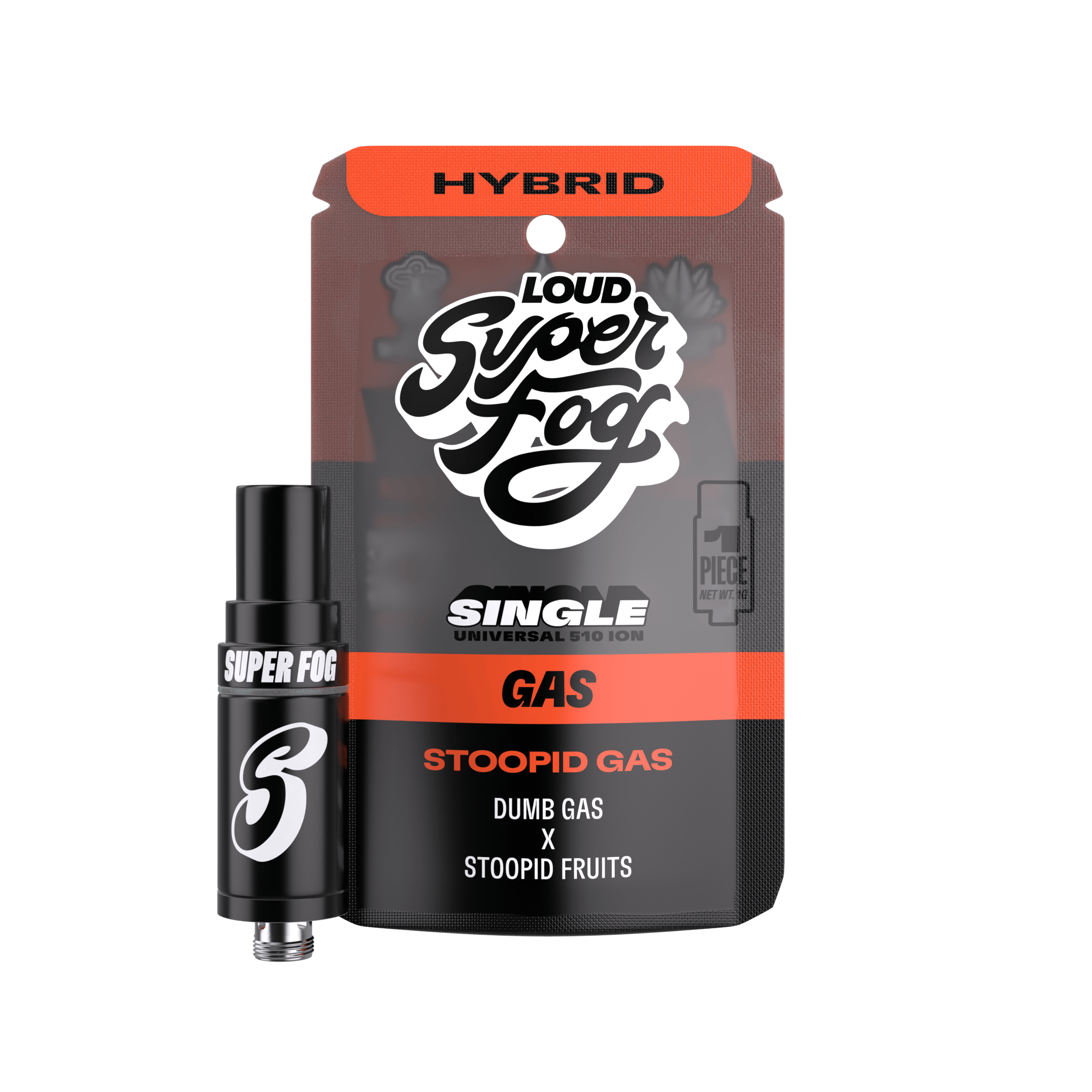
Hybrid
All strains Stoopid Gas
1 live products in stock
Quick answer · What is the Stoopid Gas cannabis strain?
Stoopid Gas arrives with the kind of self-assured confidence its name implies — a pungent, fuel-forward hybrid that balances cerebral lift with a grounding body presence. Bred for those who appreciate bold terpene expression and a well-constructed high, this strain has cultivated a devoted following in the Northeast's discerning cannabis culture. Its diesel-soaked profile and measured, layered effects make it a worthy selection for the experienced consumer seeking depth over novelty.
Shop Stoopid Gas · 1 of 1 live products
About Stoopid Gas
Everything to know about Stoopid Gas.
Lineage & origin
Stoopid Gas is a hybrid strain whose precise lineage has not been fully disclosed by all breeders who have brought versions of it to market, a common circumstance in contemporary cannabis breeding where proprietary genetics are closely guarded. The name and general profile strongly suggest parentage rooted in the broader OG Kush and East Coast Diesel families — specifically, cuts traceable to Chemdawg and its various descendants, which are widely credited as the origin point of the "gas" terpene archetype that defines this strain's character. Chemdawg itself is a legendary American cultivar whose own lineage is the subject of ongoing debate — the most commonly cited account traces it to a bag of cannabis obtained at a Grateful Dead concert in 1991, later developed by a cultivator known as Chemdog. Its offspring include Sour Diesel and OG Kush, two of the most influential strains in modern American cannabis. Stoopid Gas appears to sit within this Chemdawg-adjacent family tree, inheriting the acrid, petroleum-tinged terpene expression and potent hybrid architecture that characterizes that lineage. Some market versions of Stoopid Gas have been attributed to East Coast breeders active in the New York and New Jersey underground and licensed markets during the early 2020s, reflecting the region's long-standing affinity for loud, gas-forward cultivars. Until a definitive breeder steps forward with documented parent strains, the full pedigree remains partially unverified.
Effects
The onset of Stoopid Gas tends to arrive within minutes of inhalation — a quality consistent with its hybrid structure and what appears to be a reasonably robust terpene load that may influence cannabinoid uptake. The initial impression is predominantly cerebral: a clarifying lift that sharpens focus without the edge of anxiety that some purely sativa-forward strains can produce. Thoughts become more fluid, conversation flows with greater ease, and there is a subtle amplification of sensory detail that many consumers find pleasurable without being overwhelming. As the experience matures — typically within fifteen to thirty minutes of onset — a measured body component begins to settle in. This is not the full sedation associated with heavy indica cultivars; rather, it is a comfortable physical ease that grounds the cerebral energy and prevents the experience from tipping into restlessness. The peak tends to hold for one to two hours depending on individual tolerance, consumption method, and quantity, before gradually softening into a relaxed, even-keeled comedown. The terpene profile — rich in caryophyllene, myrcene, and likely limonene — contributes meaningfully to this balanced arc. Caryophyllene's interaction with CB2 receptors may support the body-ease component, while myrcene is understood to contribute to the sedative undertone that keeps the high grounded. Limonene, where present, is associated with elevated mood. As with any potent hybrid, new consumers are well advised to start low and go slow.
Aroma, flavor & terpenes
The aroma of Stoopid Gas is immediate and unambiguous — a sharp, acrid diesel note that fills the room upon breaking the bud, layered beneath with an earthiness that speaks to its Chemdawg-family heritage. This is a strain that announces itself. The dominant terpenes at play are most likely caryophyllene, myrcene, and limonene, with possible contributions from humulene and ocimene depending on the specific phenotype and growing conditions. Caryophyllene brings a peppery, almost spicy depth to the base of the aroma — it is the terpene responsible for that characteristic bite found in strains bred from OG and Chem lineages, and it lends Stoopid Gas a complexity that distinguishes it from more one-dimensional fuel-forward cultivars. Myrcene adds a musky, slightly herbal undertone beneath the diesel sharpness, softening the profile's edges. Limonene introduces a subtle citrus brightness — not sweet, but clean — that provides a counterpoint to the heavier base notes. On the palate, whether consumed via flower or vapor, Stoopid Gas delivers a full-bodied, fuel-dominant draw on the inhale that transitions toward an earthy, slightly spicy exhale. The finish lingers with a pleasant petroleum-and-pepper character that aficionados of classic East Coast diesel strains will recognize and appreciate. The smoke is dense and assertive; lower-temperature vaporization tends to highlight the citrus and herbal secondary notes more clearly.
Appearance
Stoopid Gas typically presents dense, tightly packed buds consistent with its hybrid genetics and what appears to be strong OG-family influence. The calyxes are well-developed and stacked, giving the flower a chunky, almost architectural structure when trimmed properly. The color palette runs from medium to deep green, with occasional olive and sage undertones depending on growing conditions and cure quality. Trichome coverage is notably generous — a thick, frost-like layer of resin glands coats the surface of both the buds and the surrounding sugar leaves, lending the flower a silvery, almost luminous quality under direct light. Pistils tend toward burnt orange and amber, providing warm color contrast against the cool greens of the underlying plant matter. Well-grown and well-cured examples feel dense and slightly sticky to the touch, a tactile indicator of the resin production that underpins the strain's aromatic intensity.
Growing notes
Stoopid Gas, given its apparent Chemdawg-OG lineage, is likely to perform best in controlled indoor environments where temperature, humidity, and light cycles can be carefully managed. Strains from this family tree tend to prefer a Mediterranean-style climate — warm days, cooler nights, and relative humidity kept below fifty percent during the flowering phase to protect the dense bud structure from mold pressure. Indoor flowering times for Chemdawg-adjacent hybrids typically fall in the eight-to-nine-week range, with yields that can be generous under optimized conditions — experienced cultivators working with high-quality cuts often report above-average indoor returns. Outdoor growing is possible in climates that offer a long, warm season with a dry autumn, though the dense calyx structure requires attentive monitoring as harvest approaches. For the home cultivator, this strain is best approached with some prior growing experience; it rewards attention to detail in nutrient management and environmental control but is not considered among the most technically demanding cultivars available.
When it's best enjoyed
Stoopid Gas is a strain that occupies the productive middle ground of the cannabis experience — engaged enough for social settings, grounded enough for quieter pursuits. It is particularly well suited to the early evening, when the day's obligations have concluded but the night still holds possibility. For the solo consumer, it pairs well with creative work that benefits from a heightened sensory state without demanding deep introspection — writing, sketching, or working through a curated playlist with genuine attention. For those enjoying cannabis socially, Stoopid Gas tends to facilitate conversation and shared experience without tipping into the unfocused restlessness of more sativa-dominant options. A gathering centered on good food and music is a natural environment for this strain. Its peppery, diesel-forward terpene profile finds an interesting culinary counterpart in bold, savory dishes — a well-seasoned charcuterie spread or a deeply flavored braised meat plays to the same aromatic register. In terms of music, the strain's dual nature — cerebral and grounded — aligns well with hip-hop and jazz fusion, genres that reward active listening while accommodating a relaxed physical state.
If you like Stoopid Gas, also explore
Chemdawg
As the likely ancestral foundation of Stoopid Gas, Chemdawg offers the same acrid diesel-and-earth terpene architecture and potent hybrid character that defines this strain's identity.
Sour Diesel
Fans of Stoopid Gas who are drawn to its fuel-forward aroma and cerebral onset will find Sour Diesel a natural companion, sharing the Chemdawg lineage and the East Coast gas aesthetic.
OG Kush
OG Kush shares the earthy, petroleum-tinged terpene profile and balanced hybrid body-ease that characterizes Stoopid Gas, making it a reliable alternative for those who appreciate the gas canon.
Jet Fuel (G6)
Built on Aspen OG and High Country Diesel genetics, Jet Fuel delivers a comparable diesel-dominant aroma and energetic-yet-grounded hybrid experience for consumers who appreciate the fuel archetype.
GG4 (Gorilla Glue #4)
GG4's heavy resin production, caryophyllene-forward peppery depth, and balanced hybrid effect profile share meaningful common ground with the Stoopid Gas experience, particularly its tactile and aromatic character.
Common questions
Is Stoopid Gas indica or sativa?+
Stoopid Gas is classified as a hybrid. It leans toward a balanced profile — offering the cerebral engagement associated with sativa-forward cultivars during the onset phase, while settling into a measured body ease as the experience develops. Neither purely sedating nor purely energizing, it occupies the productive middle ground that makes well-constructed hybrids appealing to a wide range of consumers.
What does Stoopid Gas taste like?+
Stoopid Gas is defined by a bold diesel-forward flavor profile anchored in its Chemdawg-adjacent lineage. The inhale delivers a sharp, acrid fuel character, while the exhale transitions toward earthy and peppery notes contributed by caryophyllene and myrcene. Subtle citrus brightness from limonene emerges, particularly at lower vapor temperatures, providing a clean counterpoint to the heavier base flavors. The finish is long and petroleum-tinged.
What are the typical effects of Stoopid Gas?+
Consumers typically report a rapid cerebral onset — a clarifying mental lift that enhances focus and elevates mood without inducing significant anxiety. This is followed by a grounding body component that eases into the experience without overwhelming sedation. The peak experience tends to be social and sensory, while the comedown is gentle and even. As with any potent hybrid, starting with a modest amount and assessing individual response is always the wise approach.
What strains are similar to Stoopid Gas?+
Consumers who enjoy Stoopid Gas often appreciate Chemdawg, Sour Diesel, and OG Kush for their shared diesel terpene expression and hybrid balance. Jet Fuel (G6) offers a comparable fuel-forward aroma with energetic hybrid effects, while GG4 (Gorilla Glue #4) mirrors the heavy resin production and caryophyllene-driven peppery depth. All five represent the broader East Coast gas canon that Stoopid Gas embodies.
Is Stoopid Gas good for beginners?+
Stoopid Gas is a potent, terpene-rich hybrid that is best approached with some prior cannabis experience. Its bold effects and assertive aroma profile can be a lot to navigate for first-time consumers. Those newer to cannabis who are curious about this strain would be well served by the standard guidance: start with the smallest reasonable amount, allow ample time to assess the full experience before consuming more, and choose a comfortable, familiar environment.
What are the dominant terpenes in Stoopid Gas?+
Based on its aroma, flavor, and effect profile — and its likely Chemdawg-OG lineage — Stoopid Gas is most commonly associated with caryophyllene, myrcene, and limonene as its dominant terpenes. Caryophyllene contributes peppery depth and interacts with CB2 receptors; myrcene adds musky, herbal earthiness and may support body ease; limonene brings subtle citrus brightness and is associated with mood elevation. Humulene and ocimene may appear as secondary contributors in certain phenotypes.
Where does the name Stoopid Gas come from?+
The name Stoopid Gas is part of a broader naming tradition in contemporary cannabis culture — particularly in the Northeast — where "gas" serves as a colloquial term for highly pungent, diesel-forward cultivars of notable potency. The "stoopid" modifier is a playful intensifier, signaling that the fuel character is particularly pronounced. It is a name that functions as both a descriptor and a cultural signal for consumers who value loud, expressive terpene profiles.
How long do the effects of Stoopid Gas typically last?+
The effects of Stoopid Gas generally peak within the first thirty to forty-five minutes after inhalation and hold for approximately one to two hours before gradually softening. Total duration can vary meaningfully based on individual tolerance, consumption method, and the quantity consumed. Inhalation methods tend to produce a faster onset and a somewhat shorter overall arc compared to edible formats. A relaxed, easy comedown is the commonly reported conclusion to the experience.
Related strains