
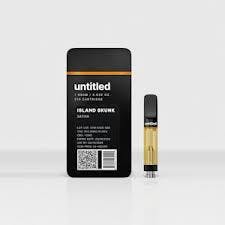
Sativa
All strains Island Skunk
1 live products in stock
Quick answer · What is the Island Skunk cannabis strain?
Island Skunk arrives like a warm coastal breeze — bright citrus lifted on a skunky, floral undercurrent that signals something both familiar and quietly transporting. A sativa-leaning cultivar with roots in two of cannabis culture's most storied lineages, it offers a clear-headed, sociable elevation that suits the unhurried afternoon as readily as the inspired evening. For those who appreciate complexity without aggression, Island Skunk is a considered choice.
Shop Island Skunk · 1 of 1 live products
About Island Skunk
Everything to know about Island Skunk.
Lineage & origin
Island Skunk is generally understood to be a cross of Skunk #1 and a Hawaiian-derived cultivar, though some phenotypes on the market trace slightly different paths and the precise breeder of record has not been universally confirmed across public cannabis databases. Skunk #1 itself is one of the foundational pillars of modern cannabis breeding — a three-way hybrid of Acapulco Gold, Colombian Gold, and an Afghani landrace, stabilized in the late 1970s and early 1980s largely through the work of Sacred Seeds in California, before David Watson (Sam the Skunkman) brought genetics to the Netherlands, where they were refined further by Sensi Seeds. The Hawaiian parentage contributes the tropical, sun-drenched sativa character that softens Skunk #1's earthier edges and stretches the growth structure upward. The combination proved influential because it merged Old World skunky robustness with the open, cerebral qualities of equatorial Hawaiian genetics — an early template for what growers now call 'tropical skunks.' Genetic siblings or market relatives include cultivars such as Island Sweet Skunk, which is frequently discussed in the same breath and may share overlapping parental material depending on the seed source. The lineage is debated at the margins, but the Skunk #1 foundation is consistent across most credible sources, anchoring Island Skunk firmly in classic cannabis heritage.
Effects
Island Skunk's onset is characteristically sativa in its pace — noticeable within five to fifteen minutes when smoked or vaped, arriving first as a gentle brightening behind the eyes and a loosening of conversational inhibition. The initial phase is social and mentally agile rather than racey, which distinguishes it from more aggressive tropical sativas. Myrcene in the profile rounds the edges of the limonene-driven uplift, keeping the experience grounded enough to feel manageable across a range of settings. The peak tends to settle into a sustained, clear-headed focus punctuated by mild euphoria and a light warmth across the shoulders and upper body. This body component is modest — enough to ease physical restlessness without pulling the experience toward sedation. Duration is typically two to three hours for most consumers, with a gentle, even comedown that rarely carries a pronounced heaviness. The caryophyllene presence may contribute a subtle calming undercurrent during the descent. As with any sativa-dominant cultivar, those with sensitivity to THC are advised to start low and go slow, allowing adequate time between sessions to assess tolerance. The experience is widely reported as mood-elevating and conducive to light creative or social activity, rather than the introspective depth associated with indica-forward varieties. It is not a strain that demands solitude.
Aroma, flavor & terpenes
The aromatic profile of Island Skunk is layered and immediately recognizable to anyone familiar with its parent lineages. On the nose, the dominant impression is a marriage of bright citrus — lemon peel and sweet grapefruit — with the unmistakable skunky, almost savory base that Skunk #1 consistently passes to its descendants. This interplay is driven primarily by myrcene, which provides an herbal, slightly tropical muskiness, and limonene, responsible for the citrus lift that opens the profile and keeps it from feeling heavy. Secondary terpenes deepen the composition: caryophyllene introduces a faint spice and pepper note detectable on the exhale, while terpinolene contributes floral and slightly piney nuances that round the overall impression toward something almost perfumed. Trace ocimene can add a sweet, herbaceous brightness that some palates read as tropical fruit candy. Together, these terpenes create a profile that reads as both classic and sun-warmed. On the palate, Island Skunk smokes smoothly, with the citrus-skunk duality most pronounced on the inhale. The mid-palate opens into a subtle floral sweetness, and the finish is clean with a lingering herbal warmth. Vapor tends to clarify and amplify the citrus and floral notes while softening the skunk, making it a particularly coherent experience in a quality dry-herb vaporizer. The overall flavor impression is one of considered complexity rather than one-dimensional sweetness.
Appearance
Island Skunk buds present with a structure that reflects their sativa heritage — moderately dense, elongated calyxes that form loosely tapered colas rather than the tight, compact formations typical of indica-dominant varieties. The bud density is medium, with enough cohesion to suggest careful cultivation and a proper dry-and-cure, while retaining the airier architecture that allows the terpene profile to express freely. The color palette leans toward medium to bright green, often with warmer yellow-green undertones — a visual echo of the Hawaiian tropical genetics in the lineage. Pistils are typically amber to orange, appearing in moderate abundance and weaving through the structure with an easy elegance. Trichome coverage is generous for a sativa-leaning cultivar, lending the surface a frosted, resinous quality that catches light well and signals a robust cannabinoid and terpene load. When trimmed and cured to a high standard, Island Skunk has an appealing visual openness that feels consistent with its bright, airy character.
Growing notes
Island Skunk is considered a moderately approachable cultivar for home growers with some experience, though its sativa-dominant structure does require thoughtful management of vertical space, particularly indoors. Flowering time is typically reported in the range of eight to nine weeks under controlled indoor conditions, placing it on the shorter end for a sativa-leaning variety — a trait likely inherited from the Skunk #1 parentage, which was itself bred in part for adaptability and reasonable flowering windows. Indoor yields are described as moderate to above average when appropriate training techniques such as low-stress training or a screen of green (ScrOG) setup are employed to manage the stretch and maximize light penetration. Outdoors, Island Skunk performs well in warm, Mediterranean-style climates with generous sunlight, where it can develop fuller colas and an expanded terpene expression. Humidity management during the late flowering phase is advisable given the moderately open bud structure. For the cultivator-curious shopper, Island Skunk represents a window into classic tropical sativa genetics without the extreme vertical demands or extended flowering periods that can make equatorial landrace varieties challenging in domestic settings.
When it's best enjoyed
Island Skunk finds its clearest expression in the unhurried hours of a warm afternoon or early evening — the kind of session that accompanies a creative project, a long walk through a neighborhood in changing light, or a relaxed gathering where conversation moves freely and without agenda. Its sociable, clear-headed elevation makes it a natural companion for settings that call for presence and engagement rather than introspection or stillness. On the table, it pairs thoughtfully with dishes that share its citrus-forward terpene profile: ceviche dressed with fresh citrus, a composed salad with grapefruit and herbs, or a light Thai preparation with lemongrass and lime. The tropical undercurrent in the aroma makes it an interesting companion for music that balances structure with warmth — mid-period Joni Mitchell, Brazilian tropicália, or a well-curated jazz fusion playlist all offer a sympathetic sonic environment. For solo use, Island Skunk suits the creative practitioner who needs mental agility without overstimulation — the writer editing a draft, the visual artist reviewing work, or simply the reader who wants to engage with a text rather than drift away from it.
If you like Island Skunk, also explore
Island Sweet Skunk
Sharing closely related parentage and a similarly citrus-driven, sativa-leaning profile, Island Sweet Skunk offers fans of Island Skunk a familiar brightness with a slightly sweeter, more candy-like tropical edge.
Skunk #1
As one of Island Skunk's foundational parents, Skunk #1 appeals to those who want to understand the skunky, earthy backbone beneath Island Skunk's tropical brightness.
Super Lemon Haze
For consumers drawn to Island Skunk's limonene-forward citrus character and uplifting sativa arc, Super Lemon Haze delivers a comparably zesty, energizing experience with its own layered terpene depth.
Maui Wowie
A Hawaiian landrace descendant with a similarly sun-warmed, tropical-citrus profile and clear-headed sativa character, Maui Wowie speaks directly to Island Skunk's equatorial genetic heritage.
Amnesia Haze
Those who appreciate Island Skunk's sustained, mentally agile peak and complex terpene layering will find Amnesia Haze's cerebral intensity and citrus-earth profile a natural and rewarding step.
Common questions
Is Island Skunk indica or sativa?+
Island Skunk is a sativa-dominant cultivar, understood to be a cross of Skunk #1 and a Hawaiian-derived variety. Its growth structure, flowering behavior, and effect profile all reflect that sativa heritage — offering an uplifting, clear-headed experience rather than the heavier physical relaxation more associated with indica-dominant varieties. It occupies a comfortable middle ground, with just enough body warmth to feel balanced.
What does Island Skunk taste like?+
Island Skunk delivers a layered palate of citrus — lemon peel, grapefruit — carried on a classic skunky, herbal base. Secondary notes of mild spice and subtle floral sweetness emerge through the mid-palate, with a clean herbal finish. In a vaporizer, the citrus and floral qualities become more pronounced while the skunk softens into the background, making the overall flavor impression bright and composed rather than sharp or one-dimensional.
What are the typical effects of Island Skunk?+
Island Skunk typically produces a clear-headed, sociable uplift with onset within five to fifteen minutes of inhalation. The peak is mentally agile and mood-brightening, accompanied by modest physical warmth rather than deep body relaxation. Duration is generally two to three hours, with a gentle comedown. It is broadly regarded as a daytime or early-evening cultivar suited to creative activity, conversation, and engaged social settings.
What strains are similar to Island Skunk?+
Consumers who enjoy Island Skunk often find common ground with Island Sweet Skunk, which shares closely related genetics and a citrus-tropical character. Maui Wowie appeals to fans of the Hawaiian lineage, while Super Lemon Haze parallels the limonene-forward brightness and sativa arc. Skunk #1 offers a deeper look at the earthy, skunky foundation, and Amnesia Haze suits those drawn to Island Skunk's cerebral, sustained elevation.
Is Island Skunk good for beginners?+
Island Skunk can be approachable for beginners given its relatively balanced, clear-headed effect profile, but its sativa-dominant character means that those sensitive to THC may find the mental stimulation more pronounced than expected. As with any cannabis cultivar, starting low and going slow — beginning with a modest amount and waiting to assess the experience — is the most prudent approach, particularly for those newer to cannabis or sativa-leaning varieties.
What are the dominant terpenes in Island Skunk?+
The dominant terpenes in Island Skunk are generally understood to be myrcene, which contributes herbal and tropical muskiness; limonene, responsible for the characteristic citrus brightness; and caryophyllene, which adds a subtle spice and pepper note. Secondary terpenes including terpinolene and ocimene deepen the profile with floral, piney, and faintly sweet-herbaceous nuances, collectively producing a complex, layered aroma that reads as both classic and sun-warmed.
When is the best time of day to enjoy Island Skunk?+
Island Skunk is broadly considered a daytime to early-evening cultivar. Its clear-headed, sociable elevation and manageable body component make it well-suited to late-morning sessions, afternoon creative work, or the transitional hours before a social gathering. It is less commonly chosen as a late-night variety, as its sativa-dominant character tends to sustain mental engagement rather than encourage the physical and cognitive winding-down that many seek before sleep.
What is the lineage of Island Skunk?+
Island Skunk is most consistently documented as a cross between Skunk #1 — itself a foundational hybrid of Acapulco Gold, Colombian Gold, and an Afghani landrace — and a Hawaiian sativa-derived cultivar. The precise breeder of record has not been universally confirmed across public cannabis sources, and some phenotypes on the market may trace slightly varied lineage paths. The Skunk #1 parentage, however, is consistent and well-supported across credible databases.
Related strains