
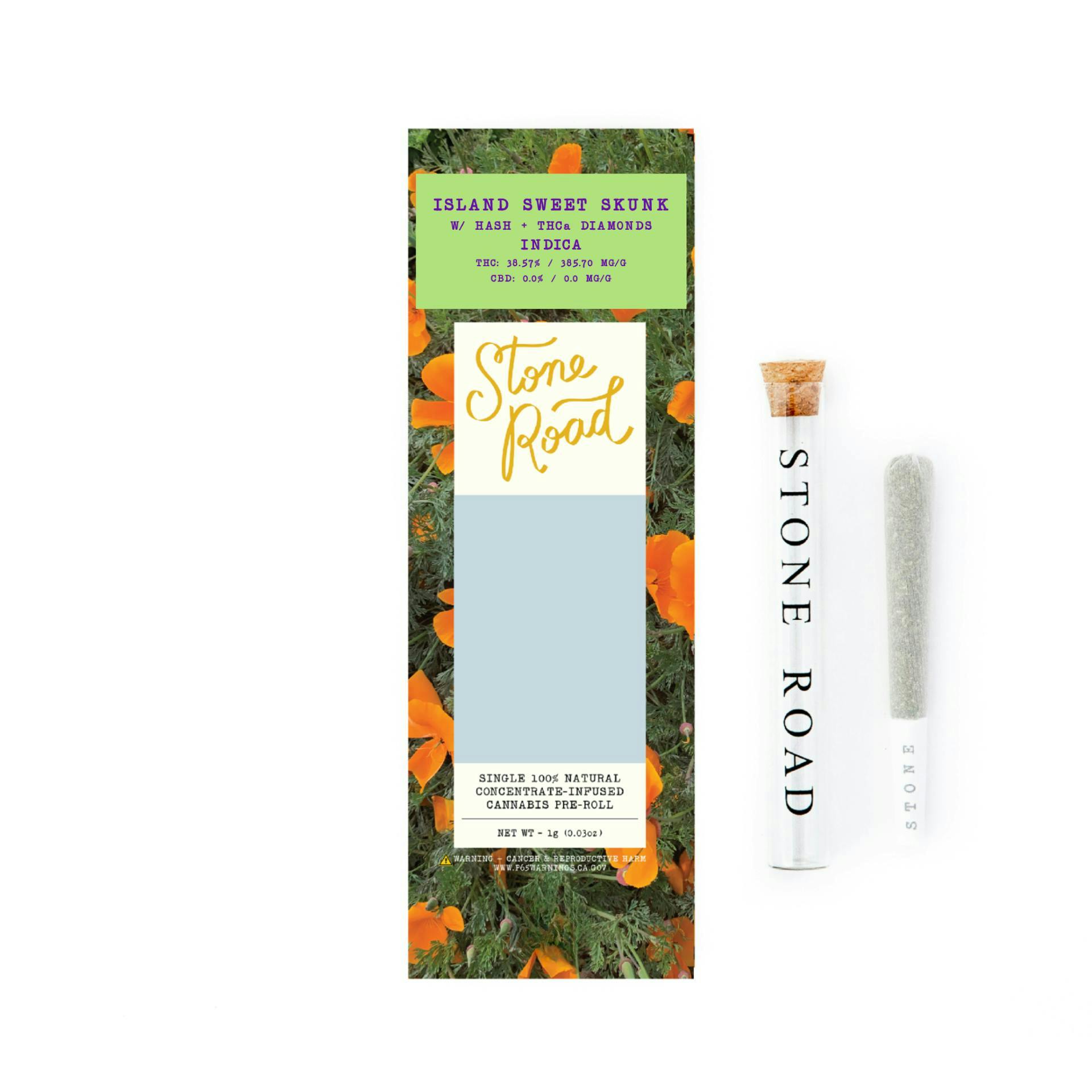
Indica
All strains Island Sweet Skunk
1 live products in stock
Quick answer · What is the Island Sweet Skunk cannabis strain?
Island Sweet Skunk carries the unhurried energy of a coastal afternoon — bright citrus on the nose, a lift that leans social and clear-headed, and a finish that softens without pulling you under. Bred in British Columbia and shaped by decades of Pacific Northwest cannabis culture, this sativa-leaning cultivar rewards those who prefer their elevation light and their palate tropical. It is a strain that invites conversation rather than silence.
Shop Island Sweet Skunk · 1 of 1 live products
About Island Sweet Skunk
Everything to know about Island Sweet Skunk.
Lineage & origin
Island Sweet Skunk — often abbreviated ISS — traces its roots to the fertile cannabis breeding culture of British Columbia, Canada, where it was developed during the 1990s by Federation Seed Company, a collective that became synonymous with regionally expressive West Coast genetics. The strain is widely documented as a descendant of Skunk #1, the foundational hybrid itself derived from Afghani, Acapulco Gold, and Colombian Gold stock that was stabilized in the Netherlands during the late 1970s by Sacred Seeds. Federation selected and crossed Skunk #1 phenotypes emphasizing tropical fruit expression over the traditional sulfurous skunk character, resulting in a progeny that retains Skunk's structural vigor while trading its earthier edges for pronounced sweetness. Some community sources and seed banks note a possible contribution from Sweet Pink Grapefruit, a lesser-documented BC landrace-influenced line, though Federation Seed Company has not formally confirmed this parentage in widely available public records, and the point remains debated among archivists of 1990s Canadian genetics. What is well-established is that ISS belongs to a cohort of BC-developed Skunk descendants — alongside strains such as BC Sweet Tooth and Early Skunk — that collectively demonstrated how Skunk #1's genome could be steered toward radically different aromatic destinations through deliberate phenotype selection. Island Sweet Skunk has remained in continuous cultivation since its introduction and holds a respected place in the lineage of modern fruity sativa hybrids.
Effects
Island Sweet Skunk is classified by most sources, including Leafly and Wikileaf, as a sativa-dominant hybrid, and its experiential arc reflects that designation with reasonable consistency. Onset typically arrives within five to ten minutes of inhalation — a clarifying pressure behind the eyes and temples that gives way to a brightened, upward mood. The cerebral lift that follows tends to be sociable and communicative rather than introspective or anxious, making early sessions feel energizing without the edge that some high-myrcene sativas can carry. The peak character is predominantly cerebral: thoughts move with a degree of fluency, creative associations feel accessible, and sensory perception — particularly of music and light — takes on a gently heightened quality. Body sensation is present but subordinate; a mild physical ease accompanies the mental lift without producing sedation. This balance is consistent with the strain's terpene profile, in which terpinolene and limonene are understood to contribute to mood elevation and focus, while modest myrcene levels provide just enough body softening to prevent overstimulation. Duration is typically moderate — two to three hours at meaningful intensity for most adults — with a comedown that is gradual and comfortable rather than abrupt. The tail of the experience tends toward a pleasant, low-key relaxation. Those newer to cannabis or sensitive to sativa-leaning cultivars are advised to follow the standard start-low, go-slow approach, as the clear-headed onset can occasionally mask the accumulating intensity of repeat inhalation.
Aroma, flavor & terpenes
The aromatic signature of Island Sweet Skunk is its most distinguishing and celebrated attribute. Terpinolene leads the profile in most well-grown expressions of this cultivar, contributing the dominant notes of fresh tropical fruit — specifically ripe mango, guava, and a suggestion of papaya — that make ISS immediately recognizable in a well-curated flower case. Terpinolene is a monoterpene associated with uplifting, floral-fruity aromas and is far less common as a lead terpene than myrcene or caryophyllene, which lends ISS a distinctive identity in a crowded market. Linonene serves as a prominent secondary terpene, amplifying the citrus dimension with sharp grapefruit and tangerine brightness that sits just behind the tropical body. Its presence sharpens the nose and contributes to the strain's reputation for a clean, almost effervescent aromatic opening. Myrcene rounds the profile in a supporting role, softening the citrus edges with a faintly musky, herbal undertone that prevents the fruit from reading as artificial or synthetic. A thread of ocimene — a terpene associated with sweet, herbaceous, and slightly woody nuance — can also be detected in higher-quality specimens, adding depth to what might otherwise be a one-dimensional fruit note. On the palate, Island Sweet Skunk delivers in close alignment with the nose. Smoked flower produces a sweet, citrus-forward inhale with a pleasingly smooth mid-palate and a finish that carries just enough of the classic Skunk earthiness to remind the consumer of the cultivar's lineage. In vapor, the tropical fruit notes resolve with greater precision and the herbal base becomes more evident. The exhale is generally clean and without harshness.
Appearance
Island Sweet Skunk produces medium to large buds with a structure that leans toward the airy, elongated formations associated with sativa-dominant genetics. The calyxes stack loosely, giving each flower an open, layered character rather than the compact density of indica-leaning cultivars. This structure is not a sign of underdevelopment — it is typical of the variety and allows for exceptional trichome surface area across the outer and inner surfaces of the bud. Trichome coverage is generous and visually apparent even without magnification, lending well-cured specimens a frosted, silver-white sheen over a base color palette that ranges from bright spring green to slightly deeper sage, depending on phenotype and grow conditions. Pistils are typically vivid orange to amber, curling in loose waves across the bud surface and providing warm chromatic contrast against the green and white. The overall visual impression is of a lively, light-toned flower — one that communicates the strain's tropical character before it is even brought to the nose.
Growing notes
Island Sweet Skunk is considered a moderately approachable cultivar for home growers with some prior experience, though its sativa-dominant structure does present certain expectations. Flowering time typically falls in the range of eight to nine weeks indoors, placing it within a practical window for most controlled growing environments. The plants tend to stretch considerably during early flowering — a trait inherited from its Skunk #1 lineage's broader gene pool — and benefit from low-stress training or light topping to manage canopy height and encourage lateral branching. Indoor yields are generally reported as moderate to above average when plants are given adequate horizontal space and consistent light exposure. Outdoor cultivation is particularly well-suited to the strain's origins: it performs well in the temperate, humid climates characteristic of the Pacific Northwest and similar regions, with outdoor harvest typically arriving in early to mid-October in the Northern Hemisphere. The cultivar shows reasonable resistance to mold and mildew — a practical adaptation to BC's coastal environment — but does benefit from good airflow around its open bud structure. Federation Seed Company has made seeds available through various channels over the years, maintaining accessibility for cultivator-curious consumers.
When it's best enjoyed
Island Sweet Skunk is at its most natural in the hours between morning and mid-afternoon — windows of the day when its clear, energizing character can be fully appreciated without interrupting sleep or evening obligations. It suits the solo creative at their desk as readily as it serves a small group gathered outdoors on a warm afternoon, where its sociable, communicative lift encourages easy conversation and shared sensory experience. The strain feels particularly well-placed before activities that reward both physical presence and mental engagement: a walk through a botanical garden, a visit to a gallery, or an unhurried session with a sketchbook. For food pairing, the strain's tropical terpene profile finds a natural counterpart in dishes with bright acidity and fruit-forward elements — a ceviche with citrus leche de tigre, or a plate of ripe stone fruit and aged cheese. Musically, ISS pairs well with warm, rhythmically open recordings: West African highlife, Brazilian tropicália, or early Joni Mitchell, where the melodic detail can be savored without strain. It is a cultivar that rewards a degree of intentionality in how the session is framed, returning that care with a graceful, unhurried elevation.
If you like Island Sweet Skunk, also explore
Tangie
Tangie shares Island Sweet Skunk's terpinolene-and-limonene-driven citrus brightness and similarly sociable, clear-headed sativa lift, making it a natural next exploration for ISS admirers.
Jack Herer
Jack Herer offers a comparable cerebral clarity and creative energy with a complementary piney-spicy terpene counterpoint for those who enjoy ISS's uplifting character but want greater herbal complexity.
Durban Poison
Durban Poison's clean, focused sativa energy and sweet anise-and-citrus aromatic profile will resonate with consumers drawn to ISS's functional, daytime-appropriate elevation.
Super Silver Haze
As a Skunk #1 descendant, Super Silver Haze shares lineage with ISS and offers a similarly energizing arc with a slightly more complex, spiced citrus aromatic character.
Strawberry Cough
Strawberry Cough's sweet fruit-forward nose and mood-lifting, sociable effects mirror the experiential qualities ISS admirers most frequently seek in a sativa-leaning cultivar.
Common questions
Is Island Sweet Skunk indica or sativa?+
Despite the type listed in some retail contexts, Island Sweet Skunk is widely documented across Leafly, Wikileaf, and Federation Seed Company's own materials as a sativa-dominant hybrid. Its effects arc — cerebral, uplifting, and sociable — align with that classification. The indica label occasionally appears in retail databases but does not reflect the strain's established genetic character or its typical experiential profile.
What does Island Sweet Skunk taste like?+
Island Sweet Skunk delivers a predominantly tropical fruit palate led by mango, guava, and grapefruit — a direct expression of its dominant terpinolene and limonene content. A faint herbal and musky earthiness, contributed by myrcene and a background note of ocimene, grounds the sweetness without diminishing it. In vapor, the fruit notes become more precise; in smoked flower, a light earthy finish echoes its Skunk #1 ancestry.
What are the typical effects of Island Sweet Skunk?+
The experience typically begins with a clarifying cerebral lift that arrives within five to ten minutes of inhalation, brightening mood and encouraging social engagement. The peak is primarily mental — fluent, open, and gently creative — supported by a mild physical ease that prevents overstimulation. Duration is generally two to three hours, with a soft, gradual comedown. Those new to cannabis are advised to begin slowly, as the clean onset can mask accumulating intensity.
What strains are similar to Island Sweet Skunk?+
Consumers who enjoy Island Sweet Skunk's tropical aromatics and sociable sativa lift tend to respond well to Tangie for its citrus brightness, Jack Herer for its creative clarity, and Durban Poison for its clean functional energy. Super Silver Haze shares the Skunk lineage and a similarly animated character, while Strawberry Cough mirrors the fruit-forward nose and mood-elevating arc that define ISS's appeal.
Is Island Sweet Skunk good for beginners?+
Island Sweet Skunk can be approachable for beginners given its relatively clean, non-sedating onset and absence of pronounced anxiety-inducing qualities. However, its sativa-dominant character means that its stimulating cerebral effects can feel intense for those unaccustomed to cannabis. The standard start-low, go-slow guidance applies: allow ample time between inhalations to assess the full arc of the experience before deciding whether to continue.
What are the dominant terpenes in Island Sweet Skunk?+
Terpinolene is the lead terpene in well-expressed Island Sweet Skunk, responsible for its signature tropical fruit and floral-mango aroma. Limonene follows closely, contributing citrus brightness and mood-elevating character. Myrcene is present in a supporting role, adding a soft herbal and musky base note. Ocimene, though less prominent, appears in higher-quality specimens and lends a subtle sweet, woody depth to the overall profile.
Who bred Island Sweet Skunk and where does it come from?+
Island Sweet Skunk was developed by Federation Seed Company, a British Columbia-based breeding collective active since the 1990s. The strain emerged from the Pacific Northwest cannabis culture of that era and is rooted in Skunk #1 genetics, with phenotype selection oriented toward tropical fruit expression. It remains one of Federation's most recognized and enduring releases, and seeds have been available through various channels over the decades.
When is the best time of day to enjoy Island Sweet Skunk?+
Island Sweet Skunk is best suited to morning through mid-afternoon use, when its clear-headed, energizing character aligns naturally with the day's activity. Its sociable lift makes it a reasonable companion for creative work, outdoor activities, or unhurried social gatherings. Evening use is possible for experienced consumers, but those sensitive to sativa-leaning stimulation may find it interferes with the natural wind-down toward sleep.
Related strains