
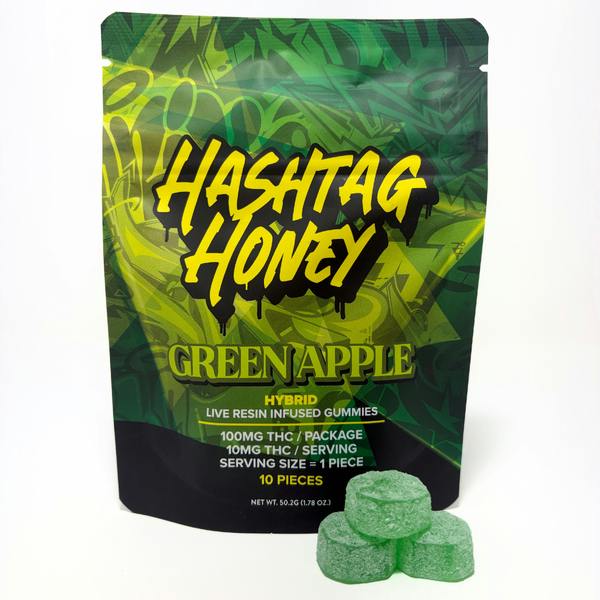
Hybrid
All strains Green Apple
3 live products in stock
Quick answer · What is the Green Apple cannabis strain?
Green Apple is a crisp, well-balanced hybrid whose name announces exactly what arrives on the palate: a tart, orchard-fresh brightness undercut by subtle earthiness. Neither purely energizing nor heavily sedating, it occupies that coveted middle register where conversation flows and focus sharpens without urgency. For the discerning consumer seeking a daytime companion that rewards attention, Green Apple offers a composed, layered experience from first inhale to gentle close.
Shop Green Apple · 3 of 3 live products

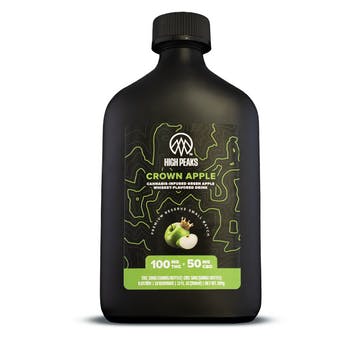
THC 0.02%·CBD 0.01%Hybrid
High PeaksHigh Peaks | Beverage | Green Apple Whiskey | 100mg 12Oz · .1g
$30.09
$34after tax
About Green Apple
Everything to know about Green Apple.
Lineage & origin
Green Apple's precise lineage is not definitively settled in public breeder documentation, and multiple phenotypes marketed under this name circulate across the United States cannabis market. The most widely referenced version is understood to descend from a cross involving Sour Apple — itself a hybrid of Cinderella 99 and Sour Diesel — and a second parent that varies by breeder, with Afghani and Skunk No. 1 derivatives appearing most frequently in cultivator accounts. A separate lineage attributed to some Pacific Northwest cuts suggests influence from Apple Fritter genetics, though this remains anecdotal rather than formally documented. What is consistent across documented cuts is the strong presence of Sour Diesel heritage, which contributes the characteristic cerebral lift and fuel-tinged brightness, tempered by an indica-leaning parent that rounds the experience toward balance. The Cinderella 99 influence, well-documented through its own lineage via Mr. Soul of Brothers Grimm Seeds, lends a fruity, almost tropical brightness that in this cross resolves as green apple tartness rather than pineapple or citrus. Green Apple does not have a single celebrated originating breeder in the way that landmark strains do, and it has developed something of a regional identity — appearing with particular frequency in California and Pacific Northwest markets before migrating eastward into licensed adult-use programs. Its influence lies less in genetic dominance over other strains and more in demonstrating how terpene expression can define a strain's entire consumer identity.
Effects
Onset with Green Apple is typically measured, arriving within five to ten minutes when smoked or vaped, with an initial brightening of mental focus that many consumers describe as a gentle clarification rather than a sharp stimulant rush. The cerebral character asserts itself first — a sense of mild alertness and an openness to sensory detail — before the body begins to register a corresponding ease that keeps the experience grounded. This dual onset is characteristic of well-balanced hybrids with both Sour Diesel and indica heritage, where the sativa-leaning terpene profile initiates the arc and the physical undercurrent follows. At peak, Green Apple tends to occupy a pleasant middle state: the mind remains accessible and social, without the racing or anxious edge that some pure sativa expressions can produce, while the body settles into a relaxed readiness rather than heaviness. Terpenes likely play a meaningful role here — myrcene's known sedative-adjacent qualities modulating the more stimulating influence of limonene, producing equilibrium rather than dominance in either direction. Duration runs moderate, typically two to three hours for most consumers under standard inhalation conditions, with a gradual, unhurried comedown that fades rather than drops. There is little report of abrupt fatigue at session's end, which makes Green Apple a practical choice for afternoon use where an evening obligation remains. As always, individual response varies considerably; those new to cannabis should begin conservatively and allow adequate time to assess.
Aroma, flavor & terpenes
The aroma profile of Green Apple is its most immediately distinctive quality and the foundation of its market identity. The dominant terpene across most documented cuts is limonene, which here expresses not as sweet citrus but in its sharper, greener register — closer to lime zest or unripe apple skin than to orange or lemon. Limonene is well-established as a mood-elevating terpene with a bright, clean aromatic presence, and in Green Apple it gives the cultivar its signature tartness. Myrcene appears as a significant secondary terpene, contributing an underlying earthiness and a slight herbal warmth that prevents the profile from reading as purely acidic. Myrcene's known aromatic contribution — musk, clove, and damp soil — provides ballast beneath the sharp fruit notes. Caryophyllene, a spicy sesquiterpene that interacts with CB2 receptors, adds a faint peppery depth on the back palate and is responsible for the mild complexity that distinguishes well-grown Green Apple from simpler fruit-forward cultivars. On inhalation, the smoke or vapor presents as clean and moderately smooth, with the tart apple character most pronounced on the front of the tongue and a light, grassy finish that lingers without heaviness. Vaped at lower temperatures, the limonene and myrcene fractions are particularly expressive, delivering what experienced consumers often describe as a near-literal green apple candy impression. The exhale carries a faint earthiness that grounds the experience, leaving a palate that is refreshed rather than coated.
Appearance
Green Apple typically presents in medium-to-large, moderately dense buds with a structure that leans toward the hybrid middle ground — neither the tight, blocky calyxes of a pure indica nor the elongated, airy formations of sativa-dominant cultivars. The color palette is predictably verdant: lime green at the bud's interior gives way to deeper forest and sage tones across the outer leaves, with some phenotypes expressing faint yellow-gold highlights as the plant approaches the end of flowering. Pistils run a warm amber-orange, distributed evenly across the bud surface and providing visual contrast against the green canopy. Trichome coverage is generous on well-cultivated specimens, with a resinous, frosty veneer visible across both the calyxes and the sugar leaves, lending the buds a slightly luminous quality under direct light. The overall impression is of a clean, well-finished product — not theatrical in its appearance, but composed and precise in a way that aligns with the strain's broader character.
Growing notes
Green Apple is generally considered a moderately approachable cultivar for home growers with some prior experience, though its variable lineage means performance characteristics can differ between seed sources and clonal cuts. Indoor cultivation is the more commonly documented path, where the plant rewards growers who provide consistent environmental controls — temperatures in the low-to-mid 70s Fahrenheit, moderate humidity managed carefully through flowering to protect the resinous trichome layer from mold pressure. Flowering time indoors runs approximately eight to nine weeks, consistent with its hybrid heritage. Yield potential is moderate to generous under well-managed conditions, with some cultivators reporting that light stress training techniques improve canopy evenness and light penetration into the mid-zone. Outdoors, Green Apple performs best in temperate, Mediterranean-adjacent climates where warm days and cool nights in late summer encourage terpene development. Harvest outdoors typically falls in early to mid-October in the Northern Hemisphere. The plant's moderate stature and branching habit make it compatible with indoor spaces of reasonable scale, and its terpene profile tends to intensify noticeably in the final two weeks of flowering.
When it's best enjoyed
Green Apple is a strain that earns its place in the afternoon — after the morning's obligations have been met but before the day has fully closed, in that stretch of time when attentiveness and ease can coexist without conflict. It suits solo creative work particularly well: writing, sketching, playlist curation, or any pursuit that benefits from mild perceptual brightening without the impatience that stronger stimulants can introduce. The clarity it offers is unhurried, which suits tasks that benefit from sustained engagement rather than urgency. In a social context, Green Apple holds its own at a small dinner gathering or an outdoor afternoon with close company — its balanced nature makes it neither isolating nor overwhelming in conversation. For food pairing, its tart limonene-forward profile finds natural resonance with fresh cheeses, cured charcuterie, or a dry, mineral-forward white wine service. Musically, the strain's equilibrium suggests something with both texture and accessibility — jazz with clean production, or acoustic folk that rewards close listening. A post-farmers-market afternoon, with good bread and shareable snacks within reach, represents perhaps its most fitting natural habitat.
If you like Green Apple, also explore
Sour Apple
As a likely parent strain, Sour Apple shares the tart, fuel-tinged apple character and balanced cerebral lift that defines Green Apple's experience.
Apple Fritter
Apple Fritter's rich fruit-forward terpene profile and even-handed hybrid effects appeal to the same consumer palate that gravitates toward Green Apple's orchard brightness.
Cinderella 99
Sharing probable lineage through Sour Apple, Cinderella 99 offers a comparable mood-lifting, creative cerebral onset for consumers who enjoy Green Apple's energized clarity.
Green Crack
Consumers drawn to Green Apple's daytime focus and limonene-driven brightness often find Green Crack's sharp mental clarity a natural adjacent experience, though it skews more stimulating.
Durban Poison
Durban Poison's clean, terpene-rich profile and alert, clear-headed effects attract consumers who appreciate the same composed daytime functionality Green Apple delivers.
Common questions
Is Green Apple indica or sativa?+
Green Apple is classified as a balanced hybrid, meaning it carries meaningful characteristics of both indica and sativa lineage. It does not lean heavily in either direction — the onset is cerebral and mildly energizing in the manner of sativa-influenced strains, while a body ease associated with indica genetics provides grounding. This equilibrium is a core part of its appeal for consumers who find pure sativa expressions overstimulating and pure indicas too sedating.
What does Green Apple taste like?+
Green Apple delivers a notably tart, orchard-fresh flavor that lives up to its name. The dominant impression on inhalation is of unripe apple skin and lime zest, driven primarily by limonene. Secondary notes of earth and mild spice — contributed by myrcene and caryophyllene respectively — provide depth beneath the fruit-forward brightness. The exhale is clean and lightly grassy, leaving a refreshed palate without any heavy or lingering resinous aftertaste.
What are the typical effects of Green Apple?+
Consumers typically report a mildly uplifting, clarifying onset that settles into a balanced state of mental ease and physical relaxation. The experience is social and accessible without becoming sedating, making it a practical choice for daytime or early evening use. The arc is gradual — onset within five to ten minutes, a moderate peak lasting one to two hours, and a gentle comedown with little reported fatigue. Individual responses vary; those new to cannabis should begin with a conservative amount.
What strains are similar to Green Apple?+
Consumers who enjoy Green Apple's tart fruit profile and balanced hybrid effects often find resonance in Sour Apple, Apple Fritter, and Cinderella 99, all of which share either direct lineage or closely related terpene profiles. For those primarily drawn to the daytime clarity and focus, Green Crack and Durban Poison offer comparable functional energy with their own distinct flavor identities. The common thread across these suggestions is a limonene-forward brightness paired with accessible, even-handed effects.
Is Green Apple good for beginners?+
Green Apple's balanced hybrid character makes it a relatively approachable option compared to high-potency sativa or indica cultivars, but no strain is without consideration for those new to cannabis. The terpene profile and hybrid balance mean the experience is unlikely to feel overwhelming in modest amounts. As with any cultivar, the standard guidance applies: start with a small amount, allow sufficient time to assess the effects before consuming more, and choose a comfortable, familiar environment for an initial session.
What are the dominant terpenes in Green Apple?+
Limonene is the most prominently expressed terpene in Green Apple, responsible for its characteristic tart, bright citrus-fruit aroma. Myrcene appears as a significant secondary terpene, contributing earthy, herbal warmth that balances the profile. Caryophyllene adds a mild spicy complexity on the back palate. Together, these three terpenes account for the strain's signature freshness, its mood-elevating onset associations, and the subtle grounding body quality that distinguishes it from purely citrus-forward cultivars.
When is the best time of day to consume Green Apple?+
Green Apple is well-suited to afternoon consumption, occupying the productive middle of the day where mental clarity and physical ease are equally useful. Its balanced effects make it less ideal for early morning use — where a lighter, more stimulating profile might be preferred — and somewhat unnecessary late at night, when more sedating cultivars serve the purpose better. That said, individual preference and tolerance shape timing considerably, and some consumers find it a comfortable early-evening social companion.
How is Green Apple best consumed?+
Green Apple's terpene profile is particularly well-expressed through vaporization at low-to-moderate temperatures, where limonene and myrcene fractions remain intact and the flavor character is most precise and clean. Smoking via pipe or rolled flower remains entirely valid and delivers the full sensory experience, though some of the more delicate terpene nuance may be less distinct at combustion temperatures. As with all inhalation methods, the experience is relatively fast-acting, which allows for measured, considered consumption.
Related strains