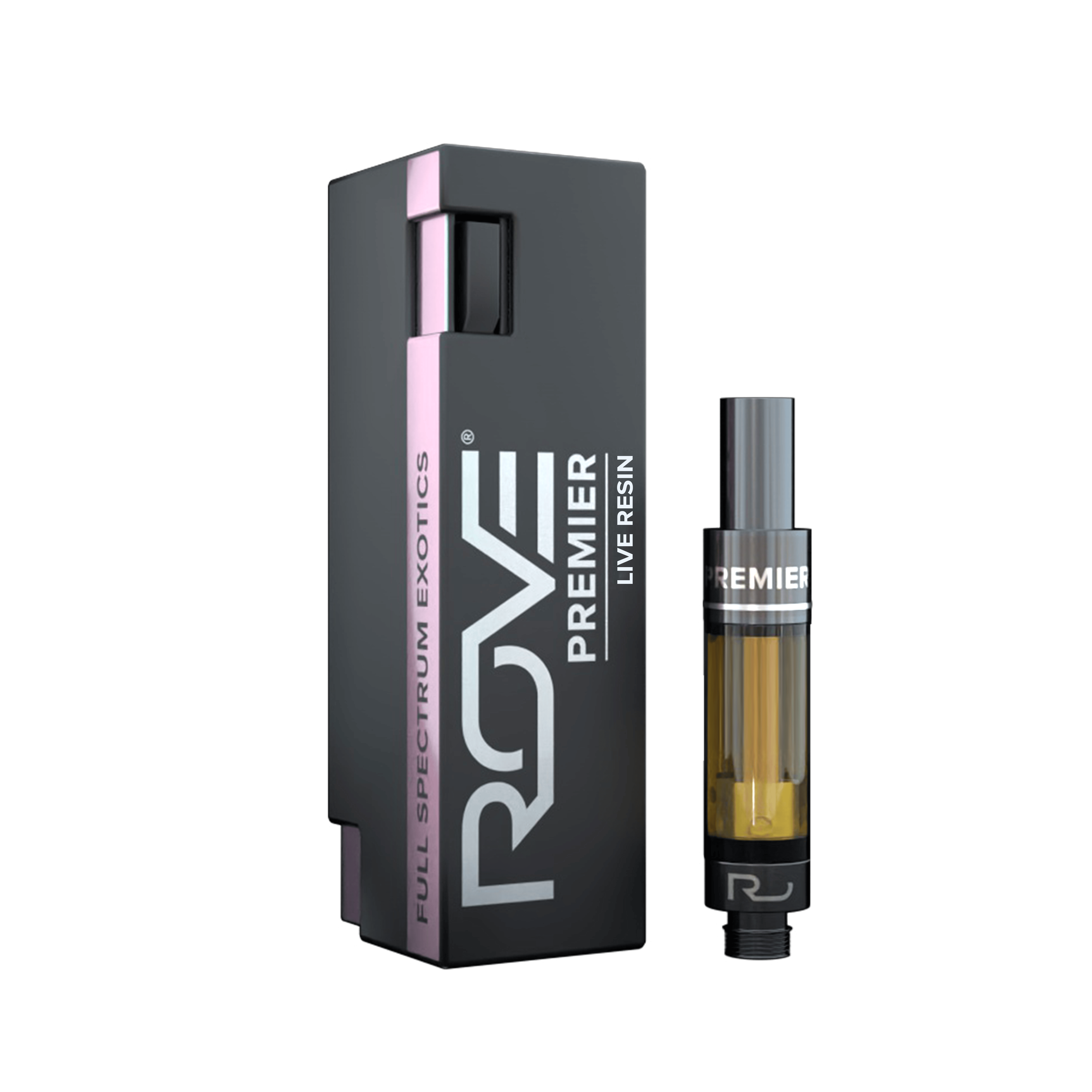
THC 79.7%·CBD 0.24%Sativa
RoveDurban Guava | Premier Live Resin Cartridge | 1g · 1g
$70.00
$79after tax

weeddispensarynearme.com
You must be 21 years or older to enter. By entering, you confirm you’re of legal age in your state to purchase cannabis.
For use only by adults 21+ • Keep out of reach of children
1 live products in stock
Quick answer · What is the Durban Guava cannabis strain?
Durban Guava arrives like a warm afternoon in an equatorial garden — bright, tropical, and unhurried. A sativa-leaning cultivar that draws its backbone from the legendary Durban Poison lineage, this strain offers a clear-headed lift with a fruit-forward aroma that lingers long after the first exhale. At ZenZest, it represents the kind of thoughtful cultivation that rewards the curious adult consumer who values experience as much as effect.
$79after tax
About Durban Guava
Durban Guava is understood to be a cross between Durban Poison and a guava-phenotype cultivar, though the precise second parent and originating breeder have not been uniformly documented across public cannabis registries. What is well-established is the Durban Poison foundation. Durban Poison is one of the most storied landrace sativas in the modern cannabis canon, originating from the port city of Durban on South Africa's eastern coast. It was introduced to Western seed banks in the 1970s largely through the work of American activist and breeder Ed Rosenthal, who brought specimens back from South Africa, with subsequent stabilization credited to Dutch seed breeders including the influential cultivar producer Mel Frank. Durban Poison became a cornerstone parent across decades of hybridization, lending its characteristic uplifting, cerebral energy and high-terpinolene profile to countless progeny. The guava-expression parent — often speculated to be a tropical hybrid carrying myrcene-heavy, fruit-forward terpene genetics — contributes the distinctive aromatic softness that differentiates Durban Guava from its more resinous, anise-tinged ancestor. This pairing mirrors a broader trend in modern sativa breeding: anchoring the raw intensity of landrace genetics with a domesticated, approachable terpene layer. Phenotypic expression can vary depending on the cut and cultivator, meaning consumers may encounter versions that lean more sharply toward the Durban character or, conversely, more deeply into the guava-adjacent sweetness. No widely recognized F1-stabilized sibling lines have been formally documented in public sources at the time of this writing.
The onset of Durban Guava tends to arrive within five to fifteen minutes of inhalation — a timeline characteristic of the Durban Poison lineage's sativa-dominant architecture. The initial impression is one of mental clarification rather than stimulation: a gentle lifting of ambient mental noise that creates space without inducing the anxious edge sometimes associated with high-THC sativas. This quality is likely tied to the terpinolene-dominant profile inherited from Durban Poison, a terpene associated in preliminary research with an uplifting, non-sedating character. As the experience deepens into its peak — typically between thirty and ninety minutes after consumption — a warmth begins to settle into the shoulders and chest without pulling toward sedation. The cerebral quality remains primary: conversations feel more fluid, creative associations more accessible, sensory input more vivid and pleasurable. This is not an introspective, couch-oriented experience but rather an outward-facing one, suited to engagement with people and environments. The comedown is notably gradual and gentle, a trait consumers familiar with Durban Poison lineage will recognize. Rather than a sharp drop-off, the effects taper into a mild, pleasant ease — rarely accompanied by the heavy-lidded fatigue associated with indica-heavy cultivars. Duration of notable effects typically ranges from two to three hours for most consumers, with residual ease extending somewhat beyond that window. As with any cannabis product, those new to sativa cultivars are well-served by the principle of starting low and going slow.
The terpene architecture of Durban Guava is where the strain most clearly defines its own identity distinct from its parentage. Terpinolene, the compound most associated with the classic Durban Poison profile, contributes a fresh, slightly resinous top note — reminiscent of pine sap or unripe citrus peel — that greets the nose immediately upon opening a well-cured container. Beneath it, myrcene introduces a riper, rounder sweetness that softens the terpinolene's sharpness and is principally responsible for the guava impression: a lush, tropical fruitiness that is musky and warm rather than sharp or acidic. Ocimene frequently appears as a secondary terpene in this cultivar's profile, adding a faintly herbal, almost floral effervescence — not unlike fresh basil or sweet verbena — that gives the aroma complexity without weight. Some phenotypes exhibit a mild limonene presence, lending a clean citrus brightness on the upper register that reinforces the tropical character without tilting into aggressive lemon territory. On the palate, whether consumed via flower or vapor, Durban Guava delivers a smooth, fruit-forward inhale with a clean exhale that avoids the harshness sometimes associated with high-terpinolene cultivars when combusted at lower temperatures. Vaporization tends to preserve the guava and ocimene notes with greater fidelity. The finish is faintly sweet and herbaceous, with minimal bitterness — an approachable and pleasurable sensory arc from first draw to last.
Durban Guava buds carry the structural hallmarks of its sativa lineage: elongated, somewhat airy calyxes that form loose, tapered clusters rather than the dense, compressed nuggets typical of indica-leaning cultivars. This structure is not a sign of underdevelopment but rather an expression of the open, breathable bud architecture that sativa-dominant genetics produce to thrive in humid, high-airflow equatorial climates. Trichome coverage is generous for a sativa-dominant flower, with a fine crystalline frost visible across the calyxes and sugar leaves under magnification — a trait that speaks to the preserved potency of the Durban lineage. The color palette typically presents in soft, medium greens with occasional yellow-gold undertones, particularly in well-flushed, late-harvest phenotypes. Pistils tend toward a warm amber-orange, deepening in hue as the flower reaches full maturity. Overall, the visual impression is one of lightness and luminosity — a bud that looks as fresh and alive as its aroma suggests.
Durban Guava reflects the cultivation demands of its sativa-dominant genetic heritage, favoring warm, well-ventilated environments with consistent light and humidity management. Indoors, flowering typically runs between nine and eleven weeks — somewhat longer than the average for hybrid cultivars, a patience tax that experienced growers regard as worthwhile given the terpene reward at harvest. Indoor yields are moderate, benefiting from training techniques such as low-stress training or topping to manage the natural vertical stretch that Durban Poison ancestry tends to impart. Outdoors, the strain performs well in temperate-to-warm climates with long, dry autumns — conditions that allow the extended flowering period to complete without the moisture-related pressures that can compromise open-air sativa cultivation in wetter regions. Growers with experience raising landraces or sativa-dominant hybrids will find the plant's behavior familiar, if occasionally assertive in its upward growth. For the cultivation-curious consumer, Durban Guava represents an intermediate-level undertaking: rewarding and distinctive, but best approached with some prior growing experience rather than as a first project.
Durban Guava is at its most expressive in the daylight hours — mid-morning through late afternoon — when its clear-headed lift can be directed toward purposeful activity rather than unwinding. It is particularly well-suited to solo creative work: writing, sketching, musical exploration, or any practice that benefits from a relaxed but alert mental state. The terpinolene and ocimene combination creates a sensory environment that feels conducive to lateral thinking without the restlessness that more aggressive sativas can introduce. Socially, it holds its own at a small, unhurried gathering — the kind of afternoon where conversation is the activity. For food pairing, the guava and tropical terpene profile finds a natural complement in dishes built around stone fruit, fresh herbs, or light acidity: a ceviche, a Thai green mango salad, or a simply dressed charcuterie board with honeydew and prosciutto. On the music side, the strain's particular balance of brightness and warmth pairs well with something similarly layered and unhurried — Brazilian jazz, early-era Khruangbin, or a well-curated ambient playlist. It is not a late-night strain by disposition, but for those who find evenings are their creative hours, it adapts gracefully.
Durban Poison
As the foundational parent, Durban Poison shares the uplifting, terpinolene-driven cerebral clarity that defines Durban Guava, making it the most direct point of comparison for consumers who want to understand the lineage's core character.
Strawberry Cough
Strawberry Cough's fruit-forward sweetness and sativa-dominant, socially engaging effect profile offer a similar approachable brightness for consumers drawn to Durban Guava's tropical aroma and clear-headed lift.
Pineapple Express
Pineapple Express shares the tropical terpene character and balanced, energized-but-smooth effect arc that makes Durban Guava appealing to consumers who prefer fruit-expressive sativas without sharp edges.
Jack Herer
Jack Herer's creative, intellectually stimulating sativa energy and herbal-piney terpene complexity appeal to the same consumer who gravitates toward Durban Guava's focused uplift and refined aromatic profile.
Tropicana Cookies
For consumers who appreciate the citrus-tropical terpene dimension of Durban Guava, Tropicana Cookies delivers a similarly vibrant, fruit-accented sensory experience with an accessible, uplifting effect character.
Durban Guava is a sativa-dominant cultivar, rooted in the Durban Poison landrace lineage from South Africa. Its effect profile reflects that heritage: onset is cerebral and clarifying rather than sedating, and the physical sensation remains light and peripheral rather than deeply body-oriented. Consumers seeking a daytime, outward-facing experience will find Durban Guava aligned with classic sativa expectations.
Durban Guava delivers a smooth, tropical palate built around ripe guava sweetness, softened by faintly herbal and floral notes from ocimene and a clean, resinous freshness from terpinolene. The inhale is fruit-forward and gentle; the exhale leaves a mildly sweet, herbaceous finish with minimal bitterness. Vaporization tends to express the guava and floral complexity most faithfully.
Typical effects include a clear-headed mental lift, improved sensory engagement, and a sociable, outward-facing energy — characteristics consistent with its Durban Poison ancestry. A mild warmth in the body accompanies the cerebral experience without pulling toward sedation. Effects generally onset within fifteen minutes and taper gradually over two to three hours. As with any cannabis product, adults new to this cultivar are encouraged to start low and go slow.
Consumers who enjoy Durban Guava will likely find common ground with Durban Poison for its shared lineage and cerebral clarity, Strawberry Cough for its fruit-forward approachability, Jack Herer for its creative sativa energy, Pineapple Express for its tropical terpene profile, and Tropicana Cookies for its citrus-bright, uplifting character. Each offers a variation on the theme of energized, aromatic sativa experience.
Durban Guava can be approachable for adults new to cannabis, particularly those drawn to sativa-dominant effects, given its relatively smooth onset and gradual comedown. That said, sativa-dominant cultivars can occasionally heighten sensory sensitivity or mental activity in unfamiliar ways. The general principle applies: begin with a conservative amount, allow adequate time to assess the experience, and adjust from there.
Durban Guava's terpene profile is led by terpinolene — inherited from the Durban Poison lineage — which contributes a fresh, resinous, slightly citrus-peel quality. Myrcene follows as a key secondary terpene, providing the ripe, tropical guava softness central to this strain's identity. Ocimene adds herbal and floral effervescence, and some phenotypes express a mild limonene presence that brightens the overall profile.
Given its sativa-dominant, clear-headed effect profile, Durban Guava is best suited to daytime or early-evening consumption — particularly mid-morning through late afternoon. Its uplifting, outward-facing character makes it a natural companion for creative work, social engagement, or active leisure rather than wind-down rituals. Most consumers find that consuming it close to bedtime interferes with their preferred sleep onset, though individual responses vary.
Durban Guava is understood to descend from Durban Poison, the iconic South African landrace sativa introduced to Western cultivation in the 1970s. The identity of the guava-expressive second parent and the originating breeder have not been definitively or uniformly documented in public cannabis registries. Phenotypic variation between cuts suggests the cultivar may not be widely stabilized as a named F1 line by a single recognized breeder.
Related strains
Pick your store
We'll show pricing, deals, and delivery zones for the store you pick. You can switch any time from the header.