
THC 33.53%Sativa
HER HighnessHer Highness | Infused Pre-Ground Flower | Cotton Candy · 14g
$79.65
$90after tax

weeddispensarynearme.com
You must be 21 years or older to enter. By entering, you confirm you’re of legal age in your state to purchase cannabis.
For use only by adults 21+ • Keep out of reach of children
2 live products in stock
Quick answer · What is the Cotton Candy cannabis strain?
Cotton Candy arrives with the kind of disarming sweetness that earns its name without effort — a dense, trichome-laden indica whose candy-shop perfume gives way to a deeply grounding body experience. Rooted in a distinguished genetic lineage, this strain rewards the patient consumer with a gradual, enveloping calm that makes it a natural companion for quiet evenings and unhurried moments. Its balance of aromatic complexity and physical ease has sustained a devoted following across decades of cannabis culture.
$90after tax
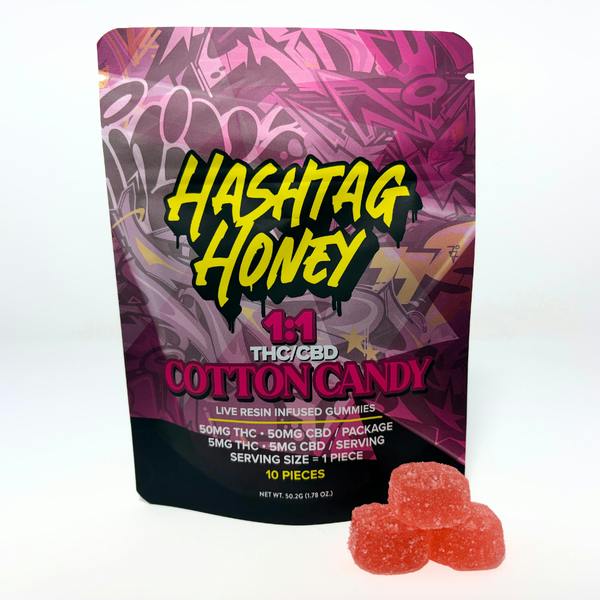
$18after tax
About Cotton Candy
Cotton Candy is most commonly attributed to the Dutch seed company Delicious Seeds, which released the strain in the mid-2000s and saw it claim a Cannabis Cup award in 2009 — a distinction that helped cement its reputation internationally. The widely accepted parentage pairs Power Plant, a South African sativa-dominant variety known for its clean, energetic output, with Lavender (also known as Lavender Jones or Soma's Lavender), a complex indica-dominant hybrid itself descended from Afghan Hawaiian, Super Skunk, and Big Skunk Korean genetics. This layered ancestry explains the strain's terpene richness and its nuanced push-pull between gentle mental lift and pronounced physical relaxation. It is worth noting that the name "Cotton Candy" appears across multiple unrelated genetic lines, which creates meaningful confusion in the broader market. Some phenotypes circulating under this name claim Skunk or Bubble Gum heritage rather than the Delicious Seeds lineage, so provenance from a verified source matters when seeking a consistent experience. The Delicious Seeds version remains the most documented and competition-recognized iteration, and it is that lineage this profile addresses. Genetic siblings in the Delicious Seeds catalog and among Lavender-influenced crosses — including certain Soma Seeds offerings — share the floral, sweet aromatic signature, though Cotton Candy tends to lean more heavily into pure sweetness than its relatives, which often carry more pronounced earthiness or spice.
The onset of Cotton Candy is characteristically measured for an indica-leaning strain, typically unfolding over ten to twenty minutes after inhalation. Early impressions are gently euphoric — a mild brightening of mood and a softening of mental chatter that reflects the Power Plant sativa influence threading through its genome. This initial phase is rarely disorienting; instead, it carries an easy sociability and a slight uplift in sensory appreciation that makes the first portion of the experience quite pleasant for those who might otherwise approach heavy indicas with caution. As the session progresses toward its peak, the body component becomes increasingly prominent. Muscles relax with a deliberate, unhurried quality — less a sedative collapse than a steady release of accumulated tension. The Lavender parentage is evident here, contributing the kind of full-body ease associated with linalool and myrcene-forward profiles. Duration tends to run moderate to long, commonly spanning two to three hours for mid-tolerance consumers, with a gentle taper rather than an abrupt conclusion. The comedown is one of Cotton Candy's more agreeable qualities: there is a natural drift toward restfulness that feels organic rather than forced. Consumers prone to sensitivity should approach this strain with the standard guidance to start low and allow adequate time between sessions, as the indica body character can become more sedating in larger quantities. Evening and late-afternoon use aligns well with the overall arc of the experience.
The aromatic profile of Cotton Candy is anchored by myrcene, the most prevalent terpene in many indica-dominant cultivars, which contributes the foundational sweetness and a faintly musky, herbal depth beneath the candy-forward top notes. Alongside myrcene, linalool — inherited directly from the Lavender parent — imparts a soft floral quality that elevates the overall bouquet above simple sugar sweetness into something more genuinely complex. These two terpenes together create the signature impression: a confectioner's display case with a florist's counter just behind it. Secondary terpene contributions include caryophyllene, which introduces a subtle, peppery warmth that anchors the sweetness and prevents it from reading as one-dimensional, and terpinolene, which in certain phenotypes adds a faint fruity, almost apple-skin brightness to the mid-register of the aroma. Traces of ocimene can contribute a herbal, slightly waxy quality on close inspection of well-cured flower. On the palate, Cotton Candy delivers with reasonable fidelity to its nose. Vapor tends to emphasize the floral and fruit notes more cleanly, while combustion draws out the earthier, spicier contributions of caryophyllene and myrcene, producing a smooth, full-bodied smoke that finishes sweetly with minimal harshness. The exhale carries a lingering, almost powdered-sugar quality that is, for many consumers, the most memorable element of the strain's sensory profile.
Cotton Candy produces buds that reflect its indica heritage in structure: compact, densely packed calyxes that form medium to large formations with relatively tight internode spacing. The surface is generously coated in trichomes — a crystalline layer that gives well-cured examples a frosted, almost luminescent quality under direct light, consistent with its strong resin production and the reputation that helped it perform well in competition environments. The color palette is a study in contrast: deep forest and olive greens form the base, punctuated by streaks of soft purple that emerge in phenotypes exposed to cooler temperatures during the final weeks of flowering, a trait inherited through the Lavender lineage. Pistils are warm amber to russet orange and curl outward in tight spirals against the trichome-heavy surface. When properly dried and cured, the density of the bud gives it a substantial, almost sculptural feel in hand, and the break reveals an interior that is equally resinous — a reliable indicator of quality in the finished flower.
Cotton Candy is considered a moderately approachable cultivar for home growers with some prior experience, though it rewards careful attention to environmental consistency. Indoors, it typically reaches the end of its flowering period in approximately eight to nine weeks, producing yields that land in the moderate-to-generous range — generally well-suited to controlled grow environments where humidity and temperature can be managed precisely. The strain's tendency to develop purpling requires a deliberate drop in nighttime temperatures during late flowering to coax out the full visual expression of its Lavender ancestry. Outdoors, Cotton Candy performs well in temperate to warm climates with reliable sun exposure and low humidity during the final weeks before harvest, which typically falls in early to mid-October in the Northern Hemisphere. The dense bud structure that makes the finished flower so appealing also creates a degree of vulnerability to mold and botrytis if airflow is inadequate or moisture accumulates — a consideration worth factoring into spacing and training decisions. For the cultivator-curious shopper, this is a strain that communicates the value of provenance and careful post-harvest handling, qualities that translate directly into the superior aromatic and sensory experience of well-grown, properly cured Cotton Candy.
Cotton Candy occupies a specific and well-defined niche in the experiential calendar: the transitional evening hour when the demands of the day have concluded and the night has not yet fully committed to sleep. It is a strain for sofas with good cushions, for low-light rooms, and for the kind of companionship — whether social or solitary — that does not require performance or engagement on a schedule. Its balance of mild initial euphoria and deepening physical ease makes it adaptable across solo and small-group contexts without the social friction that more intensely sedating indicas can introduce early in a session. For food pairing, the floral-sweet terpene profile finds a natural complement in fresh stone fruit — peaches, white nectarines, or a soft-ripened cheese served alongside fig preserves. The caryophyllene warmth in the mid-palate responds well to mild spice, making a lightly seasoned Thai or Vietnamese spread a considered accompaniment. Musically, the strain's arc — bright opener, deep middle, gentle resolution — aligns with artists who build texture without urgency: ambient composers, late-period jazz, or the more spacious corners of neo-soul. For the solitary consumer, Cotton Candy is a reliable companion for drawing, reading, or the kind of unhurried film watching that allows a narrative to fully settle.
Lavender
As a direct parent of Cotton Candy, Lavender shares the floral linalool-driven aroma and the same measured, full-body indica ease that defines the Cotton Candy experience.
Zkittlez
Consumers drawn to Cotton Candy's candy-sweet terpene profile and relaxed indica character will find Zkittlez occupies a similar aromatic and experiential register with a comparably smooth, fruity palate.
Gelato
Gelato's dessert-forward nose and balanced hybrid arc — initial euphoria resolving into body warmth — will appeal to Cotton Candy enthusiasts seeking something with slightly more cerebral engagement at the peak.
Granddaddy Purple
For consumers who particularly appreciate the purple phenotypes and deep body relaxation of Cotton Candy, Granddaddy Purple delivers a similar visual profile and myrcene-rich sedating character.
Bubble Gum
Sharing the same sweet, confection-adjacent aromatic territory with a gentle indica lean, Bubble Gum is a natural recommendation for those who arrive at Cotton Candy through its flavor profile rather than its lineage.
Cotton Candy is classified as an indica-dominant hybrid. Its lineage — Power Plant crossed with Lavender — introduces a modest sativa influence that produces a mild early euphoria, but the overall experience is defined by the indica body character that becomes increasingly pronounced as the session develops. Most consumers and source databases categorize it as indica or indica-dominant hybrid.
Cotton Candy tastes closely aligned with its aroma: a soft, sweet, almost powdered-sugar quality dominates, supported by floral undertones inherited from the Lavender parent. A subtle peppery warmth from caryophyllene adds depth beneath the sweetness. On the exhale, particularly when vaporized, the fruity and floral mid-notes emerge more distinctly, leaving a gentle, candy-like finish on the palate.
Consumers commonly report a pleasant mood elevation in the first ten to twenty minutes, followed by a steady, deepening body relaxation that becomes the dominant quality of the experience. The physical ease is grounding rather than abruptly sedating in moderate quantities, though higher consumption tends to carry the session toward restfulness. The overall arc is smooth, with a gradual tapering that suits evening and wind-down contexts.
Strains with comparable aromatic profiles or experiential arcs include Lavender, which shares direct genetic lineage; Zkittlez, for its sweet, candy-forward terpene character; Granddaddy Purple, for its purple phenotype expression and indica body depth; Bubble Gum, for its confectionary sweetness; and Gelato, for consumers seeking a dessert-profile hybrid with a slightly more cerebral initial phase.
Cotton Candy's measured onset and smooth experiential arc make it less abrupt than some high-potency indica cultivars, but the deepening body effect at peak can be more pronounced than first-time or infrequent consumers anticipate. The standard guidance applies: start with a very small amount, allow the full twenty-minute onset window before reassessing, and choose a comfortable, low-commitment environment for an initial session.
The terpene profile is led by myrcene, which contributes the foundational herbal sweetness and supports the indica body character, and linalool, inherited from the Lavender parent, which provides the distinctive floral quality that sets Cotton Candy apart from simpler sweet strains. Caryophyllene adds a grounding peppery warmth, while terpinolene and traces of ocimene contribute brightness and complexity in well-expressed phenotypes.
Given its indica-dominant character and the sedating quality that develops toward the peak of the session, Cotton Candy is most naturally suited to evening or late-afternoon use — after the day's obligations are concluded. It is not well-matched to contexts requiring sustained focus, physical coordination, or alert social performance, and most experienced consumers position it as a wind-down or nighttime cultivar.
The most recognized and competition-documented version of Cotton Candy was developed by Delicious Seeds, a Dutch seed company, and gained significant attention following a Cannabis Cup win in 2009. It is worth noting that the name Cotton Candy appears across multiple unrelated genetic lines in the broader market, so verifying the source of any given batch is advisable for consumers seeking the specific Delicious Seeds lineage profile.
Related strains
Pick your store
We'll show pricing, deals, and delivery zones for the store you pick. You can switch any time from the header.