
Sativa
All strains Candyland
3 live products in stock
Quick answer · What is the Candyland cannabis strain?
Candyland arrives like a bright afternoon in late autumn — sweet, golden, and unhurried. A sativa-dominant hybrid born from celebrated California lineage, it carries a confectionery sweetness undercut by subtle earthiness and a faint spice that keeps the experience from tipping into excess. The high is sociable and clear-headed, making it one of the more approachable choices for those who want uplift without anxiety.
Shop Candyland · 3 of 3 live products
About Candyland
Everything to know about Candyland.
Lineage & origin
Candyland is the product of two deeply respected California cultivars: Granddaddy Purple and Bay Platinum Cookies. The strain was developed by Ken Estes — the same cultivator credited with popularizing Granddaddy Purple — and gained significant attention after winning the Gold Medal at the 2012 KushCon in Denver, Colorado. That early competition success helped cement its reputation in the premium West Coast market and pushed it into wider cultivation across North America. Granddaddy Purple, itself a cross of Purple Urkle and Big Bud, contributed a structural density and certain aromatic depth to the genetic profile. Bay Platinum Cookies — a phenotype of the storied Girl Scout Cookies family originating in the San Francisco Bay Area — brought the sweet, doughy, and slightly spicy character that defines Candyland's nose and palate. The union leaned decisively sativa in expression, defying the indica-dominant reputation of both parents. Several phenotypes circulate in the market, and growers have noted variation in color expression and terpene intensity between them. No widely recognized backcrosses or named siblings have been formally released by Estes, though the strain's popularity has produced numerous informal cuts held by Bay Area collectives. As with many legacy California strains, phenotype consistency can vary between seed-run and clone-only versions.
Effects
Onset typically arrives within five to ten minutes when inhaled — a gentle brightening of mood that settles behind the eyes and along the temples before expanding into broader mental clarity. The opening character is distinctly cerebral: thoughts move with a little more ease, conversation feels lower in friction, and creative tasks that may have seemed effortful become more inviting. Myrcene's sedating undercurrent is present but restrained, allowing the more stimulating terpenes to hold the foreground during the peak. The peak experience, which tends to arrive within twenty to thirty minutes, is defined by an energetic warmth that is social and outward-facing rather than introspective or contemplative. Physical sensations are mild — a light relaxation in the shoulders and jaw, a subtle increase in sensory appreciation — without the full-body heaviness associated with indica-leaning cultivars. Caryophyllene may contribute a grounding quality that keeps the experience from tipping into overstimulation, a characteristic often noted by those who find purely sativa-dominant strains too edgy. Duration runs roughly two to three hours for most consumers, with a gradual comedown that is easy rather than abrupt. As the peak subsides, a quiet contentment often lingers for an additional hour. Those newer to cannabis or sensitive to THC are encouraged to begin with a conservative amount and allow the full onset window to pass before considering more — the uplift can accumulate.
Aroma, flavor & terpenes
The aromatic profile opens with a pronounced sweetness that is closer to caramelized sugar or spun candy than to fruit — an impression shaped primarily by terpinolene and caryophyllene working in concert. Terpinolene, one of the dominant terpenes in this cultivar, is responsible for the fresh, slightly floral top note that shimmers above the sweetness, adding a complexity that prevents the profile from reading as simple or one-dimensional. It is the terpene most responsible for Candyland's namesake quality. Secondary terpenes introduce layering. Caryophyllene — a bicyclic sesquiterpene also found in black pepper and cloves — contributes a subtle, dry spice on the exhale that grounds the overall impression. Myrcene is present in modest amounts, lending a faint earthiness that surfaces more clearly in the mid-palate. Pinene appears as a background note, offering a clean, almost resinous brightness that lifts the blend and keeps the sweetness from feeling heavy. On the palate, combusted flower delivers a smooth, sweet smoke with a caramel-forward entrance that transitions through a brief spice mid-note before finishing with a clean, slightly herbal exhale. Vapor from a dry-herb device tends to amplify the terpinolene character, making the floral and candy qualities more prominent and the spice more refined. The aftertaste is pleasantly lingering — sweet without being cloying, and resolved cleanly on the breath.
Appearance
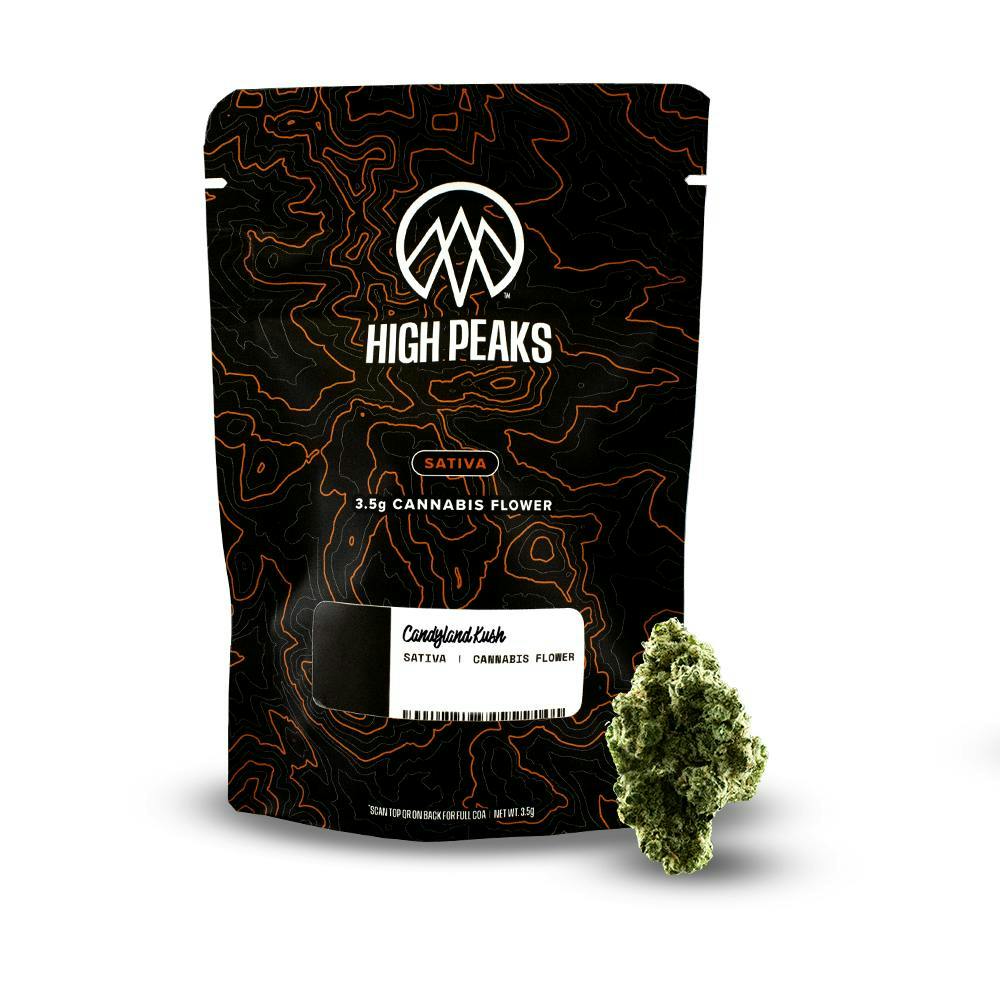
Candyland's buds are medium to large in structure, typically forming elongated, slightly airy calyxes that reflect the sativa influence in the genetic profile rather than the compact, chunky density one might expect from its Granddaddy Purple heritage. The overall architecture leans toward a somewhat open arrangement of leaves, which contributes to above-average airflow during the grow — a practical trait for cultivators managing humidity. Coloration across well-grown specimens tends toward a warm, golden-green palette: pale sage leaves dusted with amber pistils that curl and deepen to a rich rust or burnt orange at maturity. In cooler finishing conditions, faint hints of lavender or purple can emerge along the inner leaves, a quiet nod to the Granddaddy Purple ancestry. Trichome coverage is generous and even, coating both the sugar leaves and calyxes in a pale, crystalline layer that lends the buds a frosted appearance under direct light — one of the visual signatures that made this cultivar a presence on dispensary shelves.
Growing notes
Candyland performs reliably in both indoor and outdoor environments, though it rewards cultivators who can manage its slightly above-average height — a direct expression of its sativa-forward genetics. Indoors, growers typically work with a flowering window of approximately nine to ten weeks, with yields that fall in the moderate-to-generous range when supported by adequate light intensity and consistent feeding. Training techniques such as low-stress training or screen-of-green setups are well suited to managing its vertical tendency. Outdoors, the strain thrives in warm, Mediterranean-style climates with long, sunny seasons — the Northern California environment in which it was originally developed remains an ideal reference point. Harvest in outdoor settings typically arrives in mid to late October in the Northern Hemisphere. The open bud structure that characterizes the finished flower also helps reduce susceptibility to mold and mildew in fluctuating humidity, making it a relatively forgiving choice for intermediate cultivators. Difficulty is generally assessed as moderate: not demanding enough to discourage an attentive home grower, but expressive enough in its environmental preferences to reward careful attention.
When it's best enjoyed
Candyland belongs most naturally to the daytime and early evening — specifically to those stretches of time that benefit from a lighter mood and a more engaged presence without the demand for deep sedation. A Saturday morning at a farmers market, an afternoon spent sketching or writing, or a casual social gathering that calls for easy conversation rather than intensity are all contexts where this cultivar tends to land well. Its clear-headed quality makes it a companion for activity rather than rest. For food pairings, the terpinolene and caryophyllene profile aligns beautifully with stone fruits — apricots, peaches, and dried figs — as well as with mild aged cheeses and honeycomb. A light sparkling water or a cold-brew coffee served alongside can complement the cultivar's crisp brightness without competing with it. Musically, the experience pairs with rhythm-forward, mid-tempo sound: think classic soul, early funk, or Brazilian jazz — genres that match Candyland's warmth and momentum without demanding the kind of full attention that would feel at odds with its sociable, open energy.
If you like Candyland, also explore
Golden Goat
Fans of Candyland's sweet, candy-like nose and sativa-leaning uplift will find a familiar brightness in Golden Goat's tropical sweetness and similarly energizing cerebral effect.
Strawberry Cough
Both strains share an approachable, mood-lifting character and a sweetness-forward aromatic profile that appeals to consumers who prefer their sativa experience free of harsh edges.
Mimosa
Mimosa's citrus-bright, socially focused effect arc and terpinolene-influenced nose make it a natural companion recommendation for those drawn to Candyland's daytime, conversational quality.
Durban Poison
For Candyland consumers who want to explore a purer sativa lineage with a similarly clear-headed and energetic character, Durban Poison offers a comparable cerebral clarity with a more pronounced anise and pine edge.
Tangie
Tangie's terpinolene-dominant profile and uplifting, creative-leaning effects share significant common ground with Candyland's aromatic character and sociable high.
Common questions
Is Candyland indica or sativa?+
Candyland is classified as a sativa-dominant hybrid. Despite being bred from two cultivars with notable indica heritage — Granddaddy Purple and Bay Platinum Cookies — it expresses a predominantly sativa character in both its growth structure and its effects. Consumers typically report the clear-headed, energizing qualities associated with sativa-leaning genetics rather than the heavy physical relaxation more common in indica-dominant varieties.
What does Candyland taste like?+
The flavor profile is anchored by a caramel-like sweetness on the inhale, shaped largely by the terpene terpinolene. A dry, subtle spice from caryophyllene emerges in the mid-palate and carries into the exhale, lending a pleasant complexity that prevents the sweetness from feeling one-dimensional. The finish is clean and slightly herbal. Vapor tends to emphasize the floral, candy-forward notes, while combusted flower brings a slightly earthier, spiced character.
What are the typical effects of Candyland?+
Candyland's effects are generally described as uplifting, clear-headed, and sociable. Onset is relatively prompt, with an initial brightening of mood followed by a sense of mental ease and light physical warmth. The experience is well suited to daytime use — active and outward-facing rather than sedating or introspective. As with all cannabis, individual responses vary, and those new to the cultivar are encouraged to begin conservatively and allow the full onset window to pass before consuming more.
What strains are similar to Candyland?+
Consumers who enjoy Candyland's sweet aromatic profile and sativa-leaning uplift often gravitate toward Golden Goat, Tangie, or Mimosa for a comparable daytime character. Strawberry Cough shares a similar approachable sweetness and mood-lifting quality. Those interested in exploring a more classically sativa lineage with analogous clarity may find Durban Poison a useful reference point, though its terpene profile leans more toward anise and pine.
Is Candyland good for beginners?+
Candyland is considered more approachable than many sativa-dominant cultivars because its caryophyllene content helps moderate the experience, reducing the risk of overstimulation that some consumers associate with high-energy sativas. That said, it remains a potent strain, and all adult-use consumers — particularly those new to cannabis — are encouraged to follow standard start-low, go-slow guidance. Beginning with a small amount and waiting through the full onset window before reassessing is always a sound approach.
What are the dominant terpenes in Candyland?+
Terpinolene is widely cited as the primary terpene in Candyland, contributing the characteristic floral sweetness and subtle candy-like aroma. Caryophyllene is a significant secondary terpene, adding a dry spice note and a grounding quality to the experience. Myrcene is present in modest amounts, contributing faint earthiness, while pinene appears as a background note, lending a clean brightness to the overall aromatic profile. Terpene expression can vary between phenotypes and cultivation conditions.
Who bred Candyland and when was it released?+
Candyland was developed by Ken Estes, a California-based cultivator and advocate also known for his work on Granddaddy Purple. The strain gained public recognition after winning the Gold Medal at the 2012 KushCon in Denver. Its roots are firmly in the Bay Area cannabis scene of the early 2010s, and it remains a legacy cultivar within California's heritage market. Seed-run versions and informal clone cuts have since spread the genetics widely across North American cultivation.
When is the best time of day to enjoy Candyland?+
Candyland is best suited to daytime and early-evening use. Its clear-headed, energizing character aligns with mornings, creative afternoons, and low-key social occasions rather than winding-down routines or pre-sleep rituals. The moderate physical relaxation in the come-up makes it manageable for active pursuits, while the sociable peak lends itself to conversation-forward settings. Those sensitive to stimulating effects may find the early evening — after the day's primary obligations — a more comfortable window.
Related strains