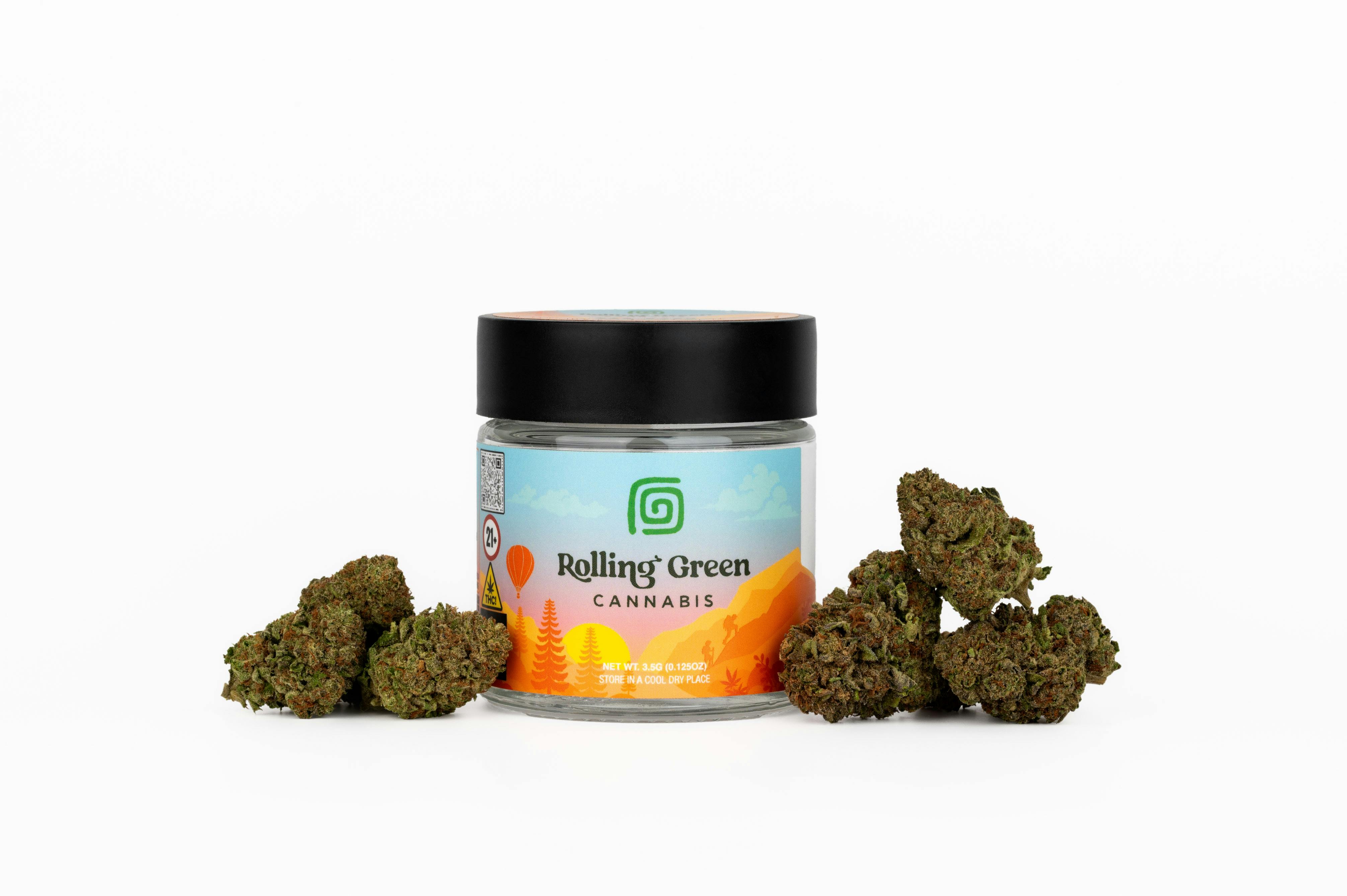
THC 30.88%Sativa-Hybrid
Rolling Green CannabisRolling Green | Big Detroit Energy | Flower · 3.5g
$44.25
$50after tax

weeddispensarynearme.com
You must be 21 years or older to enter. By entering, you confirm you’re of legal age in your state to purchase cannabis.
For use only by adults 21+ • Keep out of reach of children
1 live products in stock
Quick answer · What is the Big Detroit Energy cannabis strain?
Big Detroit Energy arrives with the confidence of its namesake city — bold, electric, and uncompromising. A sativa-leaning hybrid that carries the structural density of its indica heritage while delivering a bright, clear-headed lift, this strain suits those who move through their day with intention. Its layered terpene profile reads like a well-composed playlist: citrus up front, earth underneath, and a faint spice that lingers long after the exhale.
$50after tax
About Big Detroit Energy
Big Detroit Energy is a relatively recent entry in the contemporary hybrid canon, and its precise lineage has not been fully disclosed by its breeder in public documentation. The name suggests strong ties to Michigan's influential cannabis cultivation scene, which gained considerable momentum following the state's adult-use legalization in 2018. Michigan breeders have developed a reputation for producing potent, expressive sativa-forward hybrids, and Big Detroit Energy fits comfortably within that tradition. Based on its reported terpene profile and effect character, the strain is widely understood to carry genetics from sativa-dominant lineages common to the Great Lakes breeding community — potentially drawing from Lemon strains, Haze-adjacent crosses, or diesel-influenced cultivars that have long circulated in the Midwest underground market. Some accounts suggest a connection to familiar Michigan staples, though the breeder has not publicly named the parent strains in any confirmed documentation. What is clear from its phenotypic expression is that Big Detroit Energy leans on a well-stabilized genetic backbone. The consistency of its effect profile and aroma across different batches points to deliberate selection rather than a first-generation cross. As with many regionally celebrated strains, part of its appeal lies in its locality — a cultivar shaped by a specific place and a specific moment in American cannabis history.
The onset of Big Detroit Energy is notably measured for a sativa-leaning hybrid. Most consumers report the first signals arriving within five to ten minutes of inhalation — a gentle brightening behind the eyes and a subtle elevation in mental tempo that does not tip into anxiety. This initial phase is one of its more appreciated qualities: the lift feels earned rather than imposed, inviting engagement rather than demanding it. As the experience deepens toward its peak, typically within twenty to forty minutes, the cerebral character becomes more pronounced. Focus sharpens, conversation flows with greater ease, and creative associations tend to surface more readily. The body remains present but relaxed — a quality consistent with hybrid genetics that temper the racier tendencies of pure sativa lineage. Myrcene's contribution to physical ease is likely a factor here, grounding the more energizing influence of limonene and terpinolene. Duration for most consumers sits comfortably in the two-to-three-hour range, with a gradual, unforced comedown. There is little of the abrupt descent sometimes associated with high-energy sativas — instead, the experience softens steadily, leaving most people clear-headed and gently settled. Those new to cannabis or sensitive to THC-forward cultivars are well advised to begin conservatively, following a start-low, go-slow approach to find their individual threshold.
The aromatic opening of Big Detroit Energy is dominated by limonene, which presents here in its more refined expression — less candy-citrus, more freshly zested Meyer lemon or sun-warmed grapefruit rind. This brightness carries through from the first break of the flower to the initial moments of the exhale. Limonene is also associated with elevated mood in aromatic contexts, lending the strain a quality that feels inherently uplifting even before consumption. Underneath the citrus register, myrcene provides a soft herbaceous and slightly musky foundation that prevents the profile from reading as one-dimensional. Terpinolene adds a floral-herbal complexity — think fresh tarragon or dried wildflower — that distinguishes Big Detroit Energy from more straightforwardly citrus-forward hybrids. A quieter presence of beta-caryophyllene introduces a mild, warm spice note on the back of the palate, contributing a sense of depth and grounding the overall composition. On the palate, whether smoked or vaped at lower temperatures, the flavor experience is layered and relatively clean. The initial draw is citrus-forward and bright, transitioning through a herbal middle, and finishing with that faint caryophyllene spice. Vapor at moderate temperatures preserves the floral terpinolene notes most effectively. The smoke is smooth for a sativa-leaning cultivar, without the harsh edge sometimes associated with diesel-influenced genetics, making it an accessible choice for flavor-conscious consumers.
Big Detroit Energy presents with the kind of structural density that signals careful cultivation and intentional phenotype selection. The buds are medium to large, compact without being rock-hard, and hold their form well after curing. The calyx structure is tightly layered, giving each nugget a satisfying weight relative to its visual size. The color palette skews toward the vivid end of the green spectrum — bright sage to deep forest green, occasionally punctuated by subtle hints of pale gold where secondary pigments emerge during the final weeks of flowering. Rust-orange pistils are distributed generously throughout the bud structure, coiling outward with enough prominence to catch the eye. Trichome coverage is consistent and generous, with a resinous frosting that lends the flower a slightly luminous quality under direct light — a visual indicator of the terpene and cannabinoid density within.
Big Detroit Energy performs well in both indoor and outdoor environments, though controlled indoor cultivation appears to draw out its more expressive terpene characteristics. Indoor growers working with established genetics typically report a flowering period in the range of eight to ten weeks, consistent with many sativa-leaning hybrids of this profile. Yields are described as moderate to generous, rewarding attentive cultivation without being excessively demanding. Outdoor cultivation suits this strain well in climates that mirror the temperate-to-warm summers of its Michigan heritage — warm days, cool nights, and moderate humidity. The plant benefits from some training in vegetative growth to manage canopy height, as sativa-influenced genetics can stretch considerably during the early flowering transition. For the home cultivator curious about this strain, it is generally considered an intermediate-level grow — approachable for those with a season or two of experience, though not without the attentiveness that any expressive sativa-hybrid rewards. Proper drying and curing are essential to preserving the volatile terpenes that define this cultivar's distinctive aromatic character.
Big Detroit Energy is well suited to the hours that sit between obligation and leisure — the early evening creative session, the Saturday afternoon when a project finally demands attention, or the social gathering where conversation is the primary currency. Its balanced lift supports engagement without overpowering the room, making it a thoughtful choice for a dinner party setting where guests are still in the mood to move and talk rather than settle in. The limonene and terpinolene combination in the terpene profile pairs naturally with bright, textured cuisine — a well-dressed citrus salad, ceviche, or anything with fresh herb presence. Musically, the strain's energized yet grounded character finds a complement in jazz fusion or modern soul — think Robert Glasper or Hiatus Kaiyote, where structure and improvisation coexist without tension. For the solo consumer, it is a reliable companion to any creative work that benefits from both focus and a degree of free association: writing, design, or working through a complex culinary recipe where attention and flexibility are equally required.
Jack Herer
Fans of Jack Herer's clear-headed, terpinolene-forward cerebral elevation will find Big Detroit Energy's comparable sativa lift and herbal complexity immediately familiar.
Durban Poison
Those drawn to Durban Poison's energizing, focused quality and anise-adjacent terpene character will appreciate Big Detroit Energy's similarly bright, functional sativa profile.
Strawberry Cough
Strawberry Cough fans who value smooth, flavorful smoke with an uplifting social character will find Big Detroit Energy a natural and slightly more complex counterpart.
Mimosa
Mimosa's citrus-dominant terpene profile and mood-brightening hybrid effects make it a close companion for consumers who gravitate toward Big Detroit Energy's limonene-led aromatic character.
Tropicana Cookies
The citrus intensity and energized but grounded hybrid experience of Tropicana Cookies appeals to the same consumer who would reach for Big Detroit Energy during a creative or social occasion.
Big Detroit Energy is classified as a sativa-leaning hybrid. This means it carries qualities of both sativa and indica genetics, but its overall effect profile — characterized by a clear-headed, energizing lift paired with a grounded physical ease — tilts toward the sativa side of the spectrum. It is neither a pure sativa nor a sedating indica, making it a versatile choice for daytime or early-evening use.
Big Detroit Energy leads with bright citrus — think freshly zested lemon or grapefruit rind — followed by a layered herbal and floral middle note contributed by terpinolene. A quiet warmth of spice from beta-caryophyllene rounds out the finish. The overall palate experience is clean and well-structured, with the citrus and herbal notes most prominent in vapor at moderate temperatures and the spice character more detectable in combustion.
Consumers most often describe a measured, clear-headed cerebral lift that enhances focus and sociability without triggering restlessness. The onset is relatively smooth, arriving within five to ten minutes. Peak effects settle into a creative, engaged state with a relaxed physical undercurrent. The experience typically lasts two to three hours before tapering gently. Those sensitive to THC are encouraged to start conservatively and adjust based on individual response.
Consumers who enjoy Big Detroit Energy often gravitate toward Jack Herer for its comparable terpinolene-forward cerebral clarity, Durban Poison for its energizing functional quality, Mimosa for its citrus-dominant mood-brightening profile, and Tropicana Cookies for its uplifted hybrid character. Each of these strains shares some dimension of Big Detroit Energy's aromatic or effect profile, though no two cultivars are identical in expression.
Big Detroit Energy's sativa-leaning character means it can feel more stimulating than a balanced or indica-dominant hybrid. For consumers new to cannabis, the energized cerebral quality may feel intense at higher amounts. That said, its relatively smooth onset and lack of a harsh comedown make it more approachable than many pure sativas. Beginners are encouraged to follow a start-low, go-slow approach — beginning with a small amount and allowing adequate time before considering more.
The dominant terpenes in Big Detroit Energy are limonene, myrcene, terpinolene, and beta-caryophyllene. Limonene leads the aromatic profile with bright citrus character and mood-associated qualities. Myrcene provides an earthy, grounding base. Terpinolene contributes floral and herbal complexity that distinguishes this strain from simpler citrus profiles. Beta-caryophyllene adds a mild, warm spice note on the finish and is the only terpene known to interact with the endocannabinoid system directly.
Given its sativa-leaning effect profile — energizing, focus-supporting, and socially engaging — Big Detroit Energy is most aligned with daytime or early-evening use. It suits the hours when mental clarity and creative energy are assets rather than liabilities. Evening use is possible for those who do not find sativa-forward cultivars disruptive to their wind-down routine, though consumers sensitive to stimulating effects may prefer to keep it to afternoon hours.
The precise lineage of Big Detroit Energy has not been fully disclosed in public breeder documentation. The strain is associated with Michigan's robust cannabis cultivation community and its terpene and effect profile is consistent with sativa-forward hybrid genetics common to that regional scene — potentially involving Haze, citrus, or diesel-adjacent lineages. Until the breeder provides confirmed parent strain information, the specific genetic parentage remains undocumented in verifiable public sources.
Related strains
Pick your store
We'll show pricing, deals, and delivery zones for the store you pick. You can switch any time from the header.