
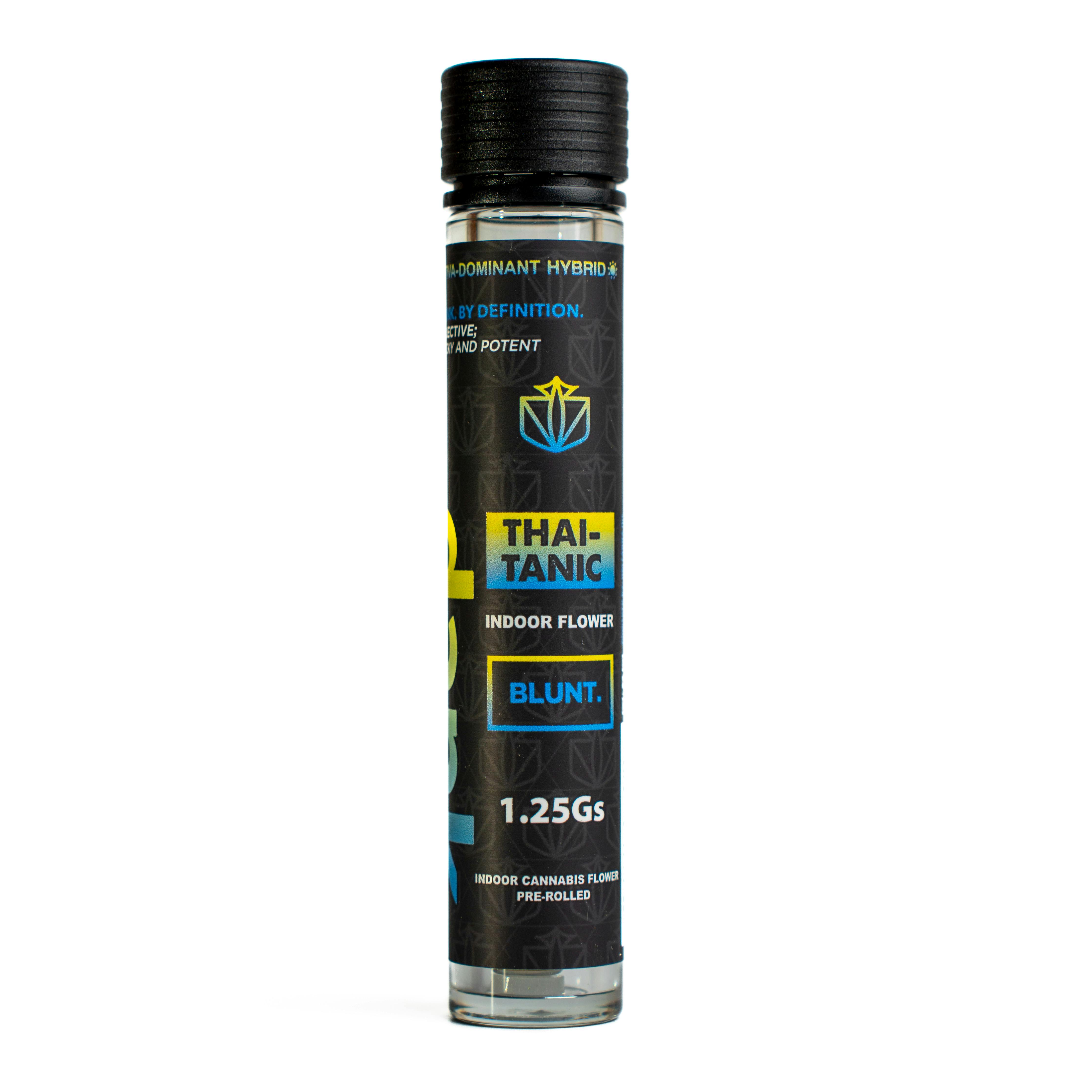
Sativa-Hybrid
All strains Thai-Tanic
1 live products in stock
Quick answer · What is the Thai-Tanic cannabis strain?
Thai-Tanic arrives like a slow tide gathering momentum — a sativa-leaning hybrid that draws on storied Southeast Asian landrace genetics to deliver a luminous, clear-headed lift grounded in just enough body ease to keep things graceful. Its bright citrus and spiced-earth aroma signals what is to come: a session that rewards curiosity, conversation, and the unhurried afternoon. For the discerning New York consumer, Thai-Tanic occupies that rare space between stimulation and poise.
Shop Thai-Tanic · 1 of 1 live products
About Thai-Tanic
Everything to know about Thai-Tanic.
Lineage & origin
Thai-Tanic is widely attributed to the Dutch seed company Flying Dutchmen, who released it in the early 2000s as a deliberate effort to harness the legendary sativa energy of Thai landrace genetics while tempering the notoriously long flowering cycles and unpredictable structure those equatorial lines carry. The cross pairs a Thai landrace — one of the most historically significant cannabis varieties in the world, cultivated across generations in the highlands and river valleys of mainland Southeast Asia — with an IC (Ice Cool) hybrid that introduces Northern Lights lineage into the equation. That Northern Lights influence, itself descending from Afghani indica stock, contributes the structural stability and resin density that pure Thai plants rarely offer in a commercial setting. The result sits at the intersection of two very different cannabis traditions: the soaring, almost psychedelic clarity of old-world Thai sativas and the measured, resinous body of classic Dutch breeding. Flying Dutchmen positioned Thai-Tanic as a collector's cultivar — a way to experience near-landrace sativa character without the 14- to 16-week flower times that made authentic Thai genetics impractical for most growers. The strain earned a following among connoisseurs who valued its cerebral transparency over brute potency. No widely documented sibling phenotypes have been formally named, though cultivators working with the original seed stock report meaningful phenotypic variation, with some expressions leaning more toward the Thai parent's wispy, pale-green architecture and others showing the denser, frost-covered structure characteristic of its Northern Lights heritage.
Effects
The onset of Thai-Tanic tends to announce itself within five to fifteen minutes of inhalation — a gentle but unmistakable brightening behind the eyes, accompanied by an uptick in mental alertness that feels less like a push and more like the lifting of a gauze curtain. This is the Thai landrace character speaking directly: a cerebral quality that sharpens focus and invites associative thinking without the anxious edge that can accompany less balanced sativa-dominant cultivars. Myrcene and terpinolene, both present in most well-grown expressions of this strain, play complementary roles — terpinolene contributing to the energetic, almost effervescent quality of the early experience, while myrcene lays a gentle sedative foundation that keeps the mind from outpacing the body. At its peak, Thai-Tanic reads as predominantly cerebral: social, engaged, and creatively permissive. Conversations flow with an ease that feels earned rather than chemically imposed. The body remains functional, lightly relaxed rather than anchored, making this a strain well-suited to movement and activity. Duration is typically moderate, running two to three hours in most consumers before softening into a calm, grounded comedown that asks little of the user except to slow down slightly. Those newer to sativa-leaning cultivars are encouraged to approach with a measured hand — the clear-headed character can intensify with higher consumption, occasionally introducing a heightened sensitivity to sensory input that some find less comfortable.
Aroma, flavor & terpenes
The terpene architecture of Thai-Tanic is where its Southeast Asian heritage becomes most legible. On the nose, the dominant impression is a bright, zesty citrus — limonene-driven, clean and slightly waxy, reminiscent of lemon peel with the white pith left on. Beneath that surface note lies a layer of warm, spiced earth that speaks to the myrcene and caryophyllene content: a grounding, almost incense-like quality that evokes dried herbs and soft wood resins. Terpinolene contributes a floral, lightly piney lift that gives the overall aromatic profile a fresh, almost greenhouse-like openness. On the palate — whether through flower or vapor — Thai-Tanic tends to express its citrus and floral notes most vividly on the inhale, with the spiced, peppery character of caryophyllene emerging more fully on the exhale. The smoke, when present, is relatively smooth and clean for a sativa-dominant cultivar, without the sharp herbaceous bite that can accompany some equatorial-influenced strains. Vapor delivery tends to amplify the lighter terpene notes — the lemon, the faint pine — while softening the earthier undertones. Secondary flavor impressions include a subtle sweetness on the mid-palate, likely tied to trace ocimene content in select phenotypes, and a lingering herbal finish that recalls green tea or fresh mint rather than anything sharp or acrid. It is, in summary, a refined and layered aromatic experience.
Appearance
Thai-Tanic buds carry the visible tension between their two parent lines. Phenotypes that express more of the Thai landrace influence tend toward longer, slightly airy, finger-like calyxes — classic sativa architecture with a loose bud structure that allows trichomes to catch light across a wide surface area. The Northern Lights influence tightens things up in other phenotypes, producing a denser, more compressed flower that still retains the characteristic pale-to-medium green coloration common to Thai-descended genetics. The pistil color runs from a warm amber to a deeper rust-orange at full maturity, providing a vivid contrast against the light sage and yellow-green of the surrounding sugar leaves. Trichome coverage is generous — particularly notable given the sativa lineage, which often sacrifices resin density for elongated structure. On well-cured flower, the trichome heads appear milky and fine under magnification, contributing a faint silver dusting to the surface of the bud. Overall, it is a visually elegant strain: not the bulky, eye-catching density of a classic indica, but something more considered and refined.
Growing notes
Thai-Tanic was developed specifically to address the cultivation challenges inherent in authentic Thai landrace genetics, and it largely succeeds on that front. Flowering time has been compressed to approximately nine to eleven weeks indoors — a significant improvement over the fourteen-plus weeks typical of pure Thai sativas — while still delivering the characteristic sativa growth pattern: tall, branchy plants with significant internode spacing that benefit from training techniques such as low-stress training or screen-of-green setups to maximize light penetration and lateral canopy development. Indoor cultivators can expect moderate yields that reward attentive environmental management — consistent temperatures in the 70 to 80 degrees Fahrenheit range, moderate humidity, and strong airflow to prevent moisture retention in the looser bud structures. Outdoor cultivation is feasible in temperate climates with a long growing season, though the strain performs best in conditions that approximate its Southeast Asian origins: warm, bright, and moderately humid. Difficulty is rated as intermediate — not recommended for first-time home cultivators, but manageable for those with a season or two of experience. The strain is noted for its relative resistance to mold, an important attribute given its partially open bud structure.
When it's best enjoyed
Thai-Tanic is perhaps best understood as a companion for the considered afternoon — the hours between obligation and evening when time belongs entirely to the individual. Its cerebral clarity and social ease make it a natural fit for gallery walks, studio sessions, or the kind of long, wandering conversation that only happens when no one has anywhere to be. Solo, it rewards creative pursuits: writing, sketching, or simply allowing the mind to move through ideas without the friction of distraction. The strain's terpene profile — citrus-forward, lightly spiced, florally complex — aligns particularly well with activities that engage the senses without overwhelming them. For food pairings, Thai-Tanic's limonene and caryophyllene backbone find natural harmony with Southeast Asian cuisine: the brightness of a fresh Vietnamese summer roll, the complex spice of a Thai larb, or the clean acidity of a yuzu-dressed dish. On the music front, the strain's rhythmic cerebral quality suggests something with structural complexity and forward momentum — mid-period Coltrane, West African highlife, or the more spacious end of contemporary electronic music. It is, ultimately, a strain for those who want their leisure to feel like an intentional choice.
If you like Thai-Tanic, also explore
Durban Poison
Fans of Thai-Tanic's clear, energetic sativa lift and sweet-spiced terpene character will recognize a familiar brightness in Durban Poison, another landrace-influenced cultivar prized for its focused, uplifting cerebral quality.
Golden Tiger
A Malawi-Thai cross from Ace Seeds, Golden Tiger shares Thai-Tanic's equatorial lineage and delivers a similarly luminous, thought-expanding experience for consumers drawn to authentic sativa character.
Chocolope
Chocolope's DNA Genetics lineage brings a comparable sativa-dominant profile with sweet, earthy aromatics and a motivating, creative mental effect that appeals to the same consumer who gravitates toward Thai-Tanic's cerebral transparency.
Strawberry Cough
The social ease, moderate body effect, and fruity-floral terpene register of Strawberry Cough make it a logical companion recommendation for those who enjoy Thai-Tanic's balance of mental engagement and physical comfort.
Amnesia Haze
Amnesia Haze shares significant Southeast Asian and South Asian landrace ancestry and delivers a comparable arc of bright, cerebral onset followed by a warm, functional body ease that Thai-Tanic enthusiasts tend to appreciate.
Common questions
Is Thai-Tanic indica or sativa?+
Thai-Tanic is classified as a sativa-leaning hybrid. It was developed by Flying Dutchmen by crossing a Thai landrace — a quintessential equatorial sativa — with an IC hybrid that carries Northern Lights indica genetics. The result leans clearly toward the sativa side in both its growth structure and its effect profile, though the indica lineage provides a grounding body component that distinguishes it from a pure sativa experience.
What does Thai-Tanic taste like?+
Thai-Tanic offers a layered flavor profile anchored by bright citrus — lemon peel with a slightly waxy quality — alongside notes of warm spiced earth and a light floral lift. On the exhale, a mild peppery character from caryophyllene becomes more apparent. Secondary impressions include a subtle sweetness on the mid-palate and a clean herbal finish reminiscent of green tea. The overall palate experience is refined and approachable, without harsh or sharp edges.
What are the typical effects of Thai-Tanic?+
Thai-Tanic is known for a clear, uplifting cerebral onset that typically arrives within five to fifteen minutes of inhalation. The peak experience is mentally engaging — social, focused, and creatively open — with a light body ease that keeps the experience grounded without producing sedation. Duration runs approximately two to three hours for most consumers, with a gradual, comfortable comedown. It is generally considered a functional, daytime-appropriate cultivar suited to active or creative use.
What strains are similar to Thai-Tanic?+
Consumers who enjoy Thai-Tanic's sativa-dominant character and landrace-influenced terpene profile often find common ground with Durban Poison, Amnesia Haze, Chocolope, Golden Tiger, and Strawberry Cough. Each of these shares some combination of energetic mental clarity, citrus or spice-forward aromatics, and a functional, non-sedating body effect that aligns with the Thai-Tanic experience.
Is Thai-Tanic good for beginners?+
Thai-Tanic can be enjoyed by newer consumers, though its sativa-dominant character warrants a measured approach. The cerebral lift it produces can intensify with higher consumption, occasionally leading to heightened sensory sensitivity. Those new to cannabis or to sativa-leaning cultivars are encouraged to follow general start-low, go-slow guidance — beginning with a small amount and allowing adequate time to assess the experience before consuming further.
What are the dominant terpenes in Thai-Tanic?+
The dominant terpenes in well-grown Thai-Tanic are typically limonene, myrcene, caryophyllene, and terpinolene. Limonene contributes the bright citrus character; myrcene provides a grounding, earthy base and gentle sedative quality; caryophyllene adds spice and warmth on the exhale; and terpinolene lends a fresh, floral-pine lift that gives the strain its characteristic energy and openness. Trace ocimene may appear in select phenotypes, adding a faint herbal sweetness.
Who bred Thai-Tanic and what is its origin?+
Thai-Tanic was bred and released by Flying Dutchmen, a Dutch seed company with a long history of working with rare and landrace genetics. The strain was introduced in the early 2000s as an effort to make the prized sativa qualities of Thai landrace genetics accessible to cultivators and consumers without the impractically long flowering times that pure Thai lines require. The IC hybrid parent, carrying Northern Lights genetics, provides structural stability and resin density.
When is the best time of day to consume Thai-Tanic?+
Given its sativa-dominant effect profile — clear-headed, energizing, and socially engaging — Thai-Tanic is best suited to daytime or early evening consumption. It fits naturally into the late morning, afternoon, or the hours preceding a social or creative activity. Most consumers would find its stimulating character less compatible with wind-down or pre-sleep routines, where a more indica-leaning or balanced hybrid might serve better.
Related strains