
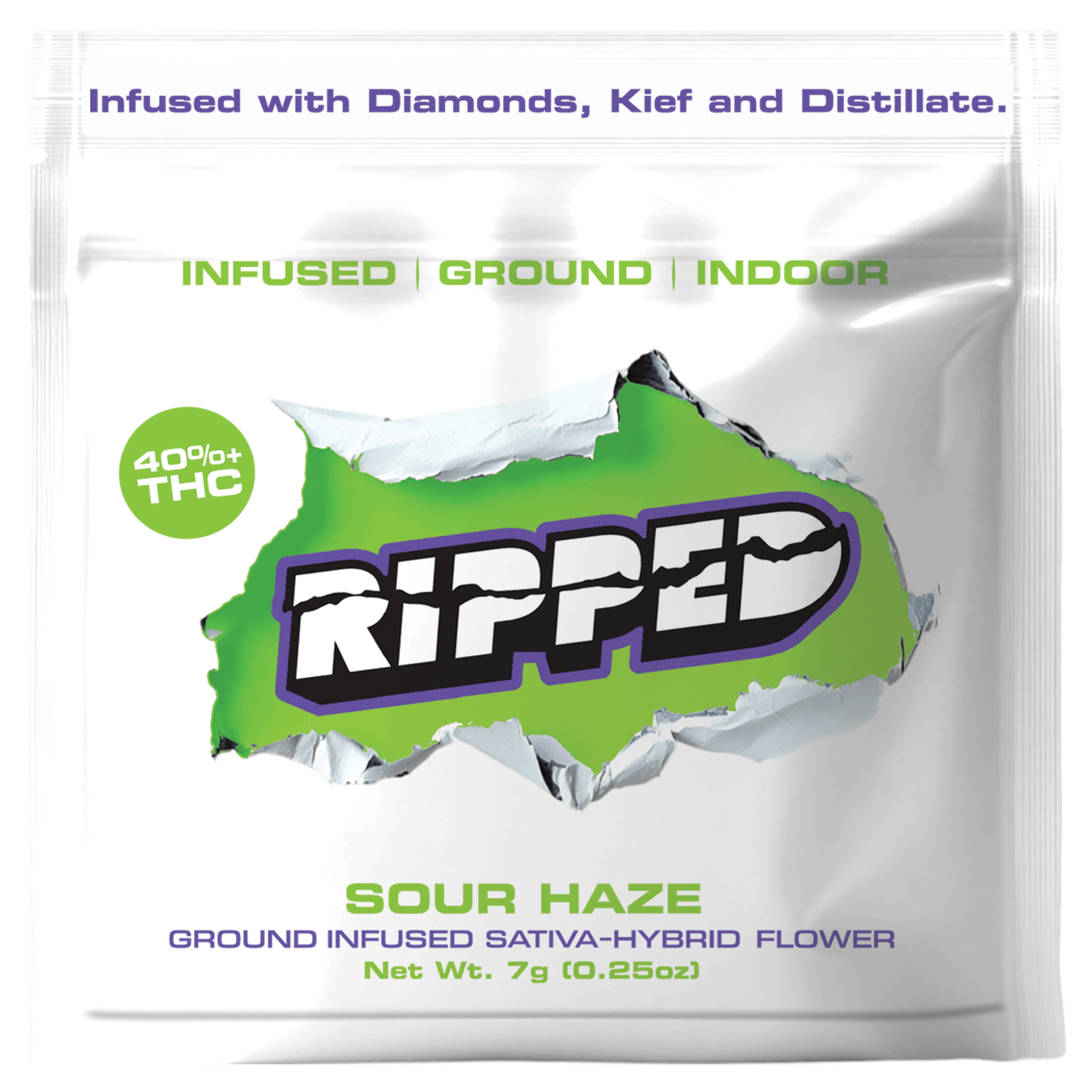
Sativa-Hybrid
All strains Sour Haze
1 live products in stock
Quick answer · What is the Sour Haze cannabis strain?
Sour Haze arrives at the intersection of two storied American sativa traditions, weaving the sharp, fuel-laced bite of Sour Diesel with the drifting, euphoric sprawl of Haze. The result is a strain that rewards patience — its effects build gradually before settling into a clear-eyed, expansive headspace that feels less like intoxication and more like a deliberate sharpening of focus. For the discerning adult-use consumer, Sour Haze occupies a refined niche between stimulation and serenity.
Shop Sour Haze · 1 of 1 live products
About Sour Haze
Everything to know about Sour Haze.
Lineage & origin
Sour Haze is widely understood to be a cross of Sour Diesel and Haze, two of the most influential sativa-leaning cultivars in modern cannabis history. Sour Diesel, itself a New York icon, traces its origins to the early 1990s East Coast scene, with a lineage most commonly cited as Chemdawg 91 crossed with Super Skunk and Northern Lights, though that ancestry remains partially contested among longtime cultivators. Haze, the other parent, is a foundational California cultivar developed in the 1960s and 1970s by the brothers known simply as the Haze Brothers in Santa Cruz; it draws from landrace genetics spanning Colombia, Mexico, Thailand, and South Asia, a heritage that accounts for its legendary cerebral profile and elongated flowering period. The specific breeder or seed company most responsible for stabilizing Sour Haze as a named variety is not universally agreed upon across public cannabis databases, and multiple phenotypes circulate under this name. Some expressions lean more heavily toward the Diesel side — sharper, more acrid, and quicker to onset — while others reflect the Haze parentage with longer-developing, more psychedelic character. Genetic siblings in the broader Haze family tree include Super Silver Haze, Amnesia Haze, and Lemon Haze, all of which share that signature upward-spiraling cerebral quality. Sour Haze sits comfortably within this lineage, distinguished by the grounding, petroleum-edged contrast that Sour Diesel contributes to the genetic conversation.
Effects
The experience of Sour Haze tends to follow the unhurried arc characteristic of Haze-dominant cultivars. Onset typically arrives within five to fifteen minutes of inhalation, beginning as a gentle brightening behind the eyes and a mild quickening of thought — the kind of mental clarification that makes a blank page feel less intimidating. This initial phase is driven in part by the strain's terpene profile, which works in concert with THC to deliver an energizing, mood-elevating quality that most consumers associate with the limonene and terpinolene content common in sativa-leaning genetics. The peak unfolds over the following thirty to sixty minutes into something more fully dimensional: a sustained, cerebral elevation accompanied by a soft, non-sedating physical ease. Unlike purely indica-leaning cultivars, Sour Haze rarely produces heaviness in the limbs; the body component reads more as a release of low-grade tension than a descent into relaxation. Caryophyllene, a terpene present in many Diesel-adjacent cultivars, may contribute a subtle grounding quality that keeps the experience from tipping into anxious territory for most consumers. The comedown is generally gentle and gradual, easing rather than crashing, which makes it a strain that transitions well into other activities. Duration for most consumers falls in the two-to-three-hour range. As with any sativa-leaning cultivar carrying notable THC levels, those newer to cannabis are well advised to start with a modest amount and allow adequate time before assessing the need for more.
Aroma, flavor & terpenes
The aromatic profile of Sour Haze is a study in layered contrasts, opening with a burst of sharp, diesel-forward pungency that owes its character to the caryophyllene and myrcene presence — terpenes that collectively deliver that fuel-meets-earth quality Sour Diesel devotees prize. On first encounter, the nose picks up a bracing tartness reminiscent of fermented citrus or green apple skin, a note commonly attributed to terpinolene, which appears with some frequency in Haze-lineage cultivars and contributes a fresh, almost floral-herbaceous complexity. As the initial sharpness settles, secondary layers emerge: a piney, resinous backbone that suggests the influence of pinene, which is associated with bright, forest-air clarity in the aroma register, and softer herbal notes that read as slightly spicy and woody — the hallmark of humulene, a terpene structurally related to caryophyllene. Limonene, when present in Sour Haze phenotypes that lean toward the citrus end of the Diesel spectrum, adds a clean, zesty lift that keeps the overall profile from feeling heavy or cloying. On the palate, Sour Haze delivers much of what the nose promises. Combustion or vaporization reveals a smooth, somewhat acrid smoke on the inhale — the Diesel heritage making itself known — followed by a surprisingly clean, bright exhale with light citrus and herbal finish. Vapor at moderate temperatures tends to foreground the citrus and floral notes more elegantly, allowing the terpene complexity to express itself without the edge that higher-heat combustion can introduce.
Appearance
Sour Haze buds reflect their sativa lineage in structure, typically presenting as elongated, somewhat airy formations rather than the compact, rounded nuggets associated with indica-dominant cultivars. The calyx arrangement is loose and leafy, consistent with the Haze genetic contribution, and the overall silhouette tends toward the tall and wispy end of the spectrum when the plant is grown to its full expression. The colour palette leans into bright, spring greens, occasionally punctuated by hints of sage or pale yellow-green depending on the phenotype and curing process. Pistils — the fine hair-like structures that signal maturity — run a warm amber to russet orange, offering a visual warmth that contrasts pleasingly with the lighter green of the underlying flower. Trichome coverage is present and respectable, coating the sugar leaves and bud surfaces with a fine, glassy frost that confirms the cultivar's potency without overwhelming the structure. Well-cured specimens carry a slight stickiness and a resinous sheen that speaks to the overall terpene density.
Growing notes
Sour Haze presents a moderate-to-challenging cultivation experience, largely due to the Haze parentage's preference for long flowering windows. Indoors, growers typically see a flowering period of nine to eleven weeks, which is on the longer end for a hybrid cultivar; patience is rewarded with yields that, in experienced hands, can be generous, particularly with training techniques that manage the strain's natural tendency toward vertical stretch. Outdoor cultivation is best suited to warm, Mediterranean-style climates with long, dry autumns, as the extended flowering period makes the plant vulnerable to early frost in northern latitudes. For the cultivator-curious consumer, it is worth understanding that Sour Haze's sativa structure means the plants can reach considerable height, making indoor grow space management an important consideration. The strain responds well to techniques like low-stress training and screen-of-green methods that encourage lateral branching and more even canopy distribution. Difficulty is generally rated as intermediate; the cultivar is not forgiving of humidity spikes late in flower, which can invite mold on the denser portions of the buds. When conditions are well-managed, the finished product justifies the additional attention the grow demands.
When it's best enjoyed
Sour Haze is a morning-to-afternoon cultivar by disposition, better suited to the earlier and more active hours of the day than to the quiet wind-down before sleep. Its cerebral, energizing character makes it a natural companion for creative endeavors — the kind of session where a notebook, sketchbook, or open browser tab full of half-formed ideas might actually yield something of value. The clear-headedness it tends to offer, rather than the dreamier dissociation of some Haze phenotypes, makes it productive without being restless. For food pairings, the strain's citrus and herbal terpene notes complement bright, acidic flavors well: a light brunch spread with poached eggs, capers, and herb-dressed salads, or a glass of sparkling water with a wedge of lemon, allows the palate to carry the citrus thread through the experience. Musically, Sour Haze aligns naturally with recordings that have a similar quality of forward motion and openness — jazz with space in it, post-rock instrumental work, or the kind of ambient electronic composition that rewards attentive listening. It is equally well-suited to a solo walk in Riverside Park or a quiet afternoon gallery visit where the desire is to look and think, rather than to drift.
If you like Sour Haze, also explore
Sour Diesel
Fans of the sharp, fuel-forward pungency and energizing cerebral onset in Sour Haze will find the Diesel parentage in full, uncut expression here, with the same New York sativa pedigree at its core.
Super Silver Haze
A Haze-family sibling that delivers the same upward-spiraling, sustained cerebral elevation, with a similarly complex terpene profile and an equally generous flowering window.
Amnesia Haze
Those drawn to the expansive, psychedelic quality of Sour Haze's peak will find Amnesia Haze shares the same Haze-lineage euphoria, rendered here with a warmer, lemon-earth character.
Lemon Haze
For consumers who favor the citrus end of Sour Haze's aroma spectrum, Lemon Haze isolates and amplifies that bright, zesty quality while preserving the Haze family's characteristic mental lift.
East Coast Sour Diesel
A phenotypic close relative of the Sour Diesel parent, sharing the acrid, tart, fuel-laced profile and New York sativa energy that defines the sharper side of the Sour Haze experience.
Common questions
Is Sour Haze indica or sativa?+
Sour Haze is classified as a sativa-leaning hybrid, the product of Sour Diesel and Haze — two of the most recognizable sativa-dominant cultivars in American cannabis history. Its effects skew toward the cerebral and energizing rather than the sedating, which aligns with the sativa-dominant character of both parent strains. Most consumers and retail databases list it firmly in the sativa or sativa-dominant hybrid category, though phenotype variation can shift this balance slightly.
What does Sour Haze taste like?+
Sour Haze carries a complex, layered flavor profile. The dominant note on the inhale is a sharp, fuel-edged pungency inherited from Sour Diesel, followed by a brighter, citrus-herbal exhale that reflects the Haze parentage. Secondary notes of pine, earth, and a faint floral quality round out the palate experience. Consumers who enjoy tart, acrid, or citrus-forward profiles tend to find Sour Haze particularly appealing, especially when vaporized at moderate temperatures.
What are the typical effects of Sour Haze?+
Sour Haze typically produces a clear-eyed, energizing cerebral elevation with a gradual onset that builds into a sustained, focused headspace. Physical effects tend toward a mild release of tension rather than sedation, making it a strain many consumers associate with daytime use, creative work, or social situations that benefit from mental engagement. The comedown is generally smooth. Those newer to cannabis are encouraged to start with a small amount and assess their response before continuing.
What strains are similar to Sour Haze?+
Consumers who enjoy Sour Haze often find common ground with Sour Diesel for its fuel-forward pungency and New York sativa energy, Super Silver Haze and Amnesia Haze for the same Haze-family cerebral elevation, Lemon Haze for its citrus brightness, and East Coast Sour Diesel for the acrid, tart profile that defines the Diesel side of the parentage. All five share some portion of Sour Haze's terpene character or effect arc.
Is Sour Haze good for beginners?+
Sour Haze warrants some caution for those new to cannabis. Its sativa-leaning character and typically notable THC content can occasionally produce heightened heart rate or mild anxiety in sensitive consumers, particularly if more than a modest amount is consumed at once. The standard guidance applies here: start with the smallest reasonable serving, allow fifteen to twenty minutes to assess onset, and find a comfortable, familiar environment for a first session. It is not the most forgiving choice for a first-time consumer.
What are the dominant terpenes in Sour Haze?+
Sour Haze's terpene profile is commonly anchored by caryophyllene, which contributes a spicy, fuel-adjacent note and may lend grounding qualities to the experience, alongside myrcene, which adds an earthy, herbal depth. Terpinolene appears in many Haze-lineage cultivars and accounts for the fresh, slightly floral complexity in the aroma. Limonene and pinene surface as secondary terpenes in certain phenotypes, contributing citrus brightness and piney clarity respectively. Humulene adds a subtle woody-herbal note in the background.
How long do the effects of Sour Haze last?+
Most consumers report that the effects of Sour Haze last approximately two to three hours from onset, with the most pronounced cerebral peak typically occurring in the first hour. The Haze parentage can extend the experience slightly compared to more Diesel-forward cultivars, and individual metabolism, tolerance, and consumption method all influence duration. Vaporization tends to produce a somewhat shorter, cleaner arc than combustion, while edible formulations derived from the cultivar would follow an entirely different timeline.
What is the best time of day to consume Sour Haze?+
Given its energizing, cerebral character, Sour Haze is generally best suited to morning or early-to-mid afternoon use, when its tendency to sharpen focus and elevate mood aligns with the natural rhythm of a productive day. Most consumers find it less appropriate for late evening or pre-sleep sessions, where a more calming, body-oriented cultivar would be better suited. It pairs naturally with outdoor activity, creative work, or any context where mental engagement is welcome.
Related strains