THC 87.34%Hybrid
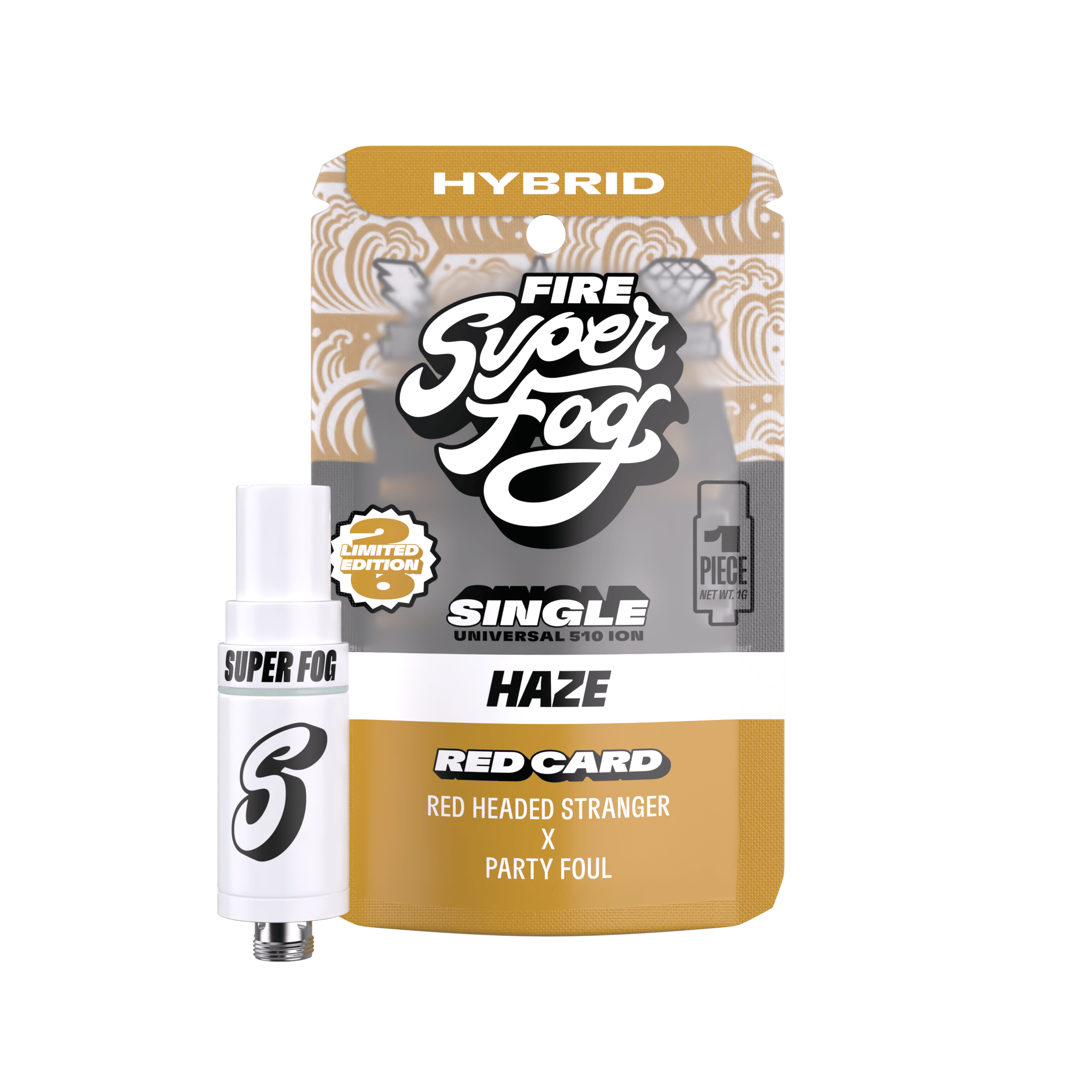
MfusedMFused FIRE ION Tank - Red Card (FC SUPER FOG LIMITED EDITION) · 1g
$35.40
$40after tax

weeddispensarynearme.com
You must be 21 years or older to enter. By entering, you confirm you’re of legal age in your state to purchase cannabis.
For use only by adults 21+ • Keep out of reach of children
1 live products in stock
Quick answer · What is the Red Card cannabis strain?
Red Card arrives with the quiet confidence of a strain that knows exactly what it is: a well-balanced hybrid that carries warmth in every exhale. Its name conjures a decisive moment on the pitch, and the experience follows suit — clear-headed enough to keep you engaged, grounded enough to ease the tension out of a long day. With a terpene profile that leans toward earthy sweetness and a bud structure that rewards a second look, Red Card earns its place in any considered rotation.
$40after tax
About Red Card
Red Card is a hybrid strain whose precise lineage has not been fully disclosed by its breeder in widely available public records, making definitive parentage difficult to confirm through sources such as Leafly or Wikileaf. What is documented in the community is that Red Card is associated with producers working within the Pacific Northwest and mid-Atlantic cannabis markets, with phenotypes appearing in dispensary menus across Oregon and New York in the early-to-mid 2020s. Its name and general character suggest a deliberate crossing aimed at producing a balanced hybrid that avoids leaning too heavily toward either sedative indica territory or racy sativa expression. The working theory among cultivators and reviewers is that Red Card may draw from a lineage that includes earthy, resin-heavy genetics common to strains like OG Kush or similar West Coast foundations, potentially crossed with something that introduces a brighter, more uplifting top note — though this remains speculative without official breeder documentation. The strain sits within a broader modern movement of intentionally balanced hybrids designed for the sophisticated adult-use consumer who is seeking nuance over extremity. Given the limited publicly verified genetic record, shoppers should treat any specific parent claims with appropriate skepticism. What is consistent across reported experiences and available terpene analyses is a profile that suggests careful selection for terpene complexity and a smooth, mid-range effect arc — hallmarks of deliberate breeding rather than accidental phenotype expression.
Red Card tends to announce itself gently, with onset typically felt within five to fifteen minutes when smoked or vaped. The opening phase is characterized by a mild lift in mood and a softening of mental noise — not a sudden cerebral jolt, but something more like the moment a room's ambient tension quietly dissipates. This quality makes the early experience well-suited to social settings or transitional moments between work and evening, where a sharp edge needs taking off without full disengagement from the world. At its peak, Red Card presents as a genuinely balanced hybrid. Cerebral clarity and a gentle body ease arrive in roughly equal measure, which is a less common achievement than the label 'hybrid' might suggest. The body component is relaxing without being sedative, while the mental component stays oriented and present rather than wandering into anxious loops. Myrcene's contribution to muscle ease and caryophyllene's subtle stress-modulating properties are both consistent with the grounded-but-alert quality most users report. The comedown is notably smooth. Rather than a cliff-edge drop into heaviness or fog, Red Card tends to taper gradually — leaving a residual calm that encourages rest without demanding it. Total duration is generally estimated at two to three hours at full effect, with a gentler tail extending somewhat beyond that. As with any cannabis product, individual response varies meaningfully, and the familiar guidance to start with a conservative amount and allow adequate time before reassessing remains entirely applicable here.
Red Card's aromatic profile opens with a foundation of damp earth and dried herb — the kind of green, almost botanical quality that signals a terpene profile anchored by myrcene, the most prevalent terpene in cannabis generally and one associated with herbaceous, mango-adjacent warmth. This earthiness is not heavy or dank in the way of an old-school indica; it reads as more refined, with a slight sweetness underneath that keeps the nose curious rather than overwhelmed. Layered above the myrcene base is what appears to be a meaningful presence of caryophyllene, the spicy, peppercorn-adjacent terpene that also interacts with CB2 receptors — giving the aroma a dry, slightly woody bite that adds complexity and prevents the sweetness from reading as cloying. Some users and reviewers note a secondary herbal brightness that suggests the possible presence of terpinolene or ocimene, both of which contribute fresh, almost floral or resinous green top notes without dominating the blend. On the palate, Red Card smokes with a smoothness that reflects its hybrid character. The inhale carries the earthy sweetness forward, while the exhale introduces the spicier, woodier caryophyllene note more prominently. Vapor tends to be clean and moderate in density, making it amenable to both flower and dry-herb vaporizer consumption. There is no harshness on the draw when the flower is properly cured, and the finish lingers briefly as a mild, pleasant herbal aftertaste — a quality associated with well-grown, terpene-rich cultivars.
Red Card's buds present with the structured density characteristic of a well-expressed hybrid phenotype — neither the loose, airy architecture common in tall sativa-leaning plants nor the compressed, rock-hard nuggets of a heavy indica. Calyxes stack with intention, forming medium-to-large colas that feel substantial in the hand without being unwieldy. The color palette runs through a range of muted forest greens, occasionally accented by deeper olive or sage tones depending on the specific phenotype and how the plant was finished in its final weeks. Pistils, the fine hair-like structures that signal maturity, tend toward warm amber and burnt orange in well-developed specimens — a visual cue that adds a layer of color contrast against the green backdrop. Trichome coverage is notable, lending the surface a frosted, slightly luminous quality under direct light that speaks to the resin production one expects from a thoughtfully selected hybrid. The overall visual impression is of a strain that takes its presentation seriously without relying on novelty coloration to command attention.
Red Card, consistent with most contemporary balanced hybrids, is understood to perform reliably in both indoor and outdoor cultivation environments, though detailed publicly available grow data specific to this strain is limited given its relatively recent emergence in the market. Indoor cultivators can expect a flowering window in the range of eight to nine weeks, which is standard for hybrid genetics of this type. Controlled indoor environments that allow for precise temperature and humidity management during the late-flowering stage tend to bring out the fullest terpene expression. Outdoor cultivation in temperate climates — the kind that defines much of the Northeast, including New York's Hudson Valley — is feasible, with harvest typically falling in the early-to-mid October window. Yields are reported as moderate to generous when plants are given adequate space and nutrition, though specific indoor or outdoor weight figures for Red Card have not been widely published. Difficulty is considered moderate, making it accessible to cultivators with some prior experience but perhaps not the ideal first grow for a complete beginner. Its hybrid structure means it benefits from light training techniques that encourage canopy evenness and airflow.
Red Card occupies a versatile position in the day's arc — one of those strains that adapts to context rather than imposing a single mood. Its most natural home is the transitional hour: late afternoon on a Friday when the workweek has finally released its grip, or the quiet stretch after a Sunday walk through the park before the evening's plans have fully crystallized. The balance between mental engagement and physical ease makes it genuinely usable across a range of settings without demanding that you reconfigure your environment around it. For the solo experience, Red Card pairs well with music that shares its character — something textured and unhurried, perhaps a well-recorded jazz quartet or a low-key electronic album with room for the mind to move through. At the table, the earthy, spiced terpene profile finds a complementary partner in dishes that lean savory and herbal: a charcuterie arrangement with aged cheeses, or a slow-cooked grain bowl with roasted root vegetables and fresh herbs. For those who prefer a social context, it functions as a thoughtful choice for a small gathering where conversation is the main event — present enough to participate, settled enough not to tip the evening into unpredictability.
Blue Dream
Fans of Blue Dream's approachable, balanced hybrid arc and smooth smoke will find Red Card occupies a similar middle ground between mental clarity and physical ease, with a somewhat earthier terpene character.
GSC (Girl Scout Cookies)
GSC lovers drawn to that strain's earthy sweetness and even-handed hybrid effect will recognize a kindred sensibility in Red Card's grounded, resinous profile.
Headband
Those who appreciate Headband's slow-building, pressure-behind-the-eyes onset and long-lasting balanced effect will find Red Card's gradual, smooth arc a familiar and refined alternative.
Cheetah Piss
Consumers who gravitate toward modern, terpene-forward hybrids with a spicy, complex edge and functional daytime quality will find thematic common ground with Red Card.
Jet Fuel (G6)
Jet Fuel fans who enjoy a hybrid that offers mental engagement alongside body warmth without veering into heavy sedation will find Red Card a more subdued but similarly composed experience.
Red Card is classified as a balanced hybrid, meaning it draws from both indica and sativa genetics without strongly favoring either direction. In practice, this translates to an experience that offers a mild mental lift alongside a relaxed body sensation — neither fully energizing nor sedating. It is a useful designation for consumers who find pure indica too heavy and pure sativa too stimulating, and who are seeking something that functions well across different moments of the day.
Red Card delivers an earthy, herbaceous flavor profile with a subtle sweetness on the inhale and a drier, slightly spiced finish on the exhale — consistent with a terpene blend anchored by myrcene and caryophyllene. The smoke is smooth and moderate in density when the flower is properly cured, with no notable harshness. The overall palate impression is of a well-rounded, botanically complex cultivar — grounded rather than fruity, with a mild herbal aftertaste that lingers briefly and pleasantly.
Red Card is typically described as producing a gentle mood lift followed by a body ease that settles in without inducing heavy sedation. The onset is gradual — usually within fifteen minutes — and the peak experience is characterized by mental clarity and physical relaxation arriving in roughly equal measure. The comedown is smooth and gradual, fading into a mild residual calm. Most users report a total effect window of two to three hours, with individual variation based on consumption method and personal tolerance.
Consumers who enjoy Red Card's balanced, earthy hybrid character may also appreciate Blue Dream for its approachable lift, GSC for its resinous sweetness, or Headband for its slow, even-building arc. Jet Fuel offers a similar functional hybrid quality with slightly more energy, while Cheetah Piss appeals to those drawn to terpene-forward modern hybrids with a spiced complexity. Each of these shares at least one dimension — terpene profile, effect balance, or smooth smoke character — with Red Card.
Red Card's balanced hybrid profile makes it a more approachable choice than strains that sit at the extreme ends of the indica-sativa spectrum. That said, no strain is universally appropriate for first-time or low-tolerance consumers. The standard guidance applies: begin with a small amount, allow sufficient time to assess how the experience develops before consuming more, and choose a comfortable, familiar setting. As with any adult-use cannabis product in New York, Red Card is intended for consumers 21 and older.
Based on available reports and general analysis consistent with its described aroma and effect profile, Red Card appears to be anchored by myrcene, which contributes the earthy, herbal warmth and mild relaxation quality, and caryophyllene, which adds a spiced, peppery complexity and a subtle grounding character. Secondary terpenes may include terpinolene or ocimene, which would account for the occasional fresh or resinous brightness noted in the aroma. Specific lab-verified terpene data should be reviewed at point of purchase for any given batch.
Most consumers report feeling Red Card's primary effects for approximately two to three hours when smoked or vaped, with a gentler, residual calm that may extend somewhat beyond that window. Duration is influenced by several individual factors, including personal tolerance, the amount consumed, and the method of consumption. Dry-herb vaporization tends to produce a slightly cleaner, more terpene-forward experience, while combustion may front-load the effect more immediately. As always, assessing your individual response before re-dosing is the sensible approach.
Red Card's balanced character makes it well-suited to the transitional hours of the day — late afternoon or early evening, when the demands of work have eased but the evening has not yet settled into full rest mode. Its mild mental engagement makes it functional enough for light social activity or creative leisure, while its body ease supports unwinding without inducing premature heaviness. Morning or midday use is possible for experienced consumers, though its relaxing undertone may be less compatible with high-output productivity demands.
Related strains
Pick your store
We'll show pricing, deals, and delivery zones for the store you pick. You can switch any time from the header.