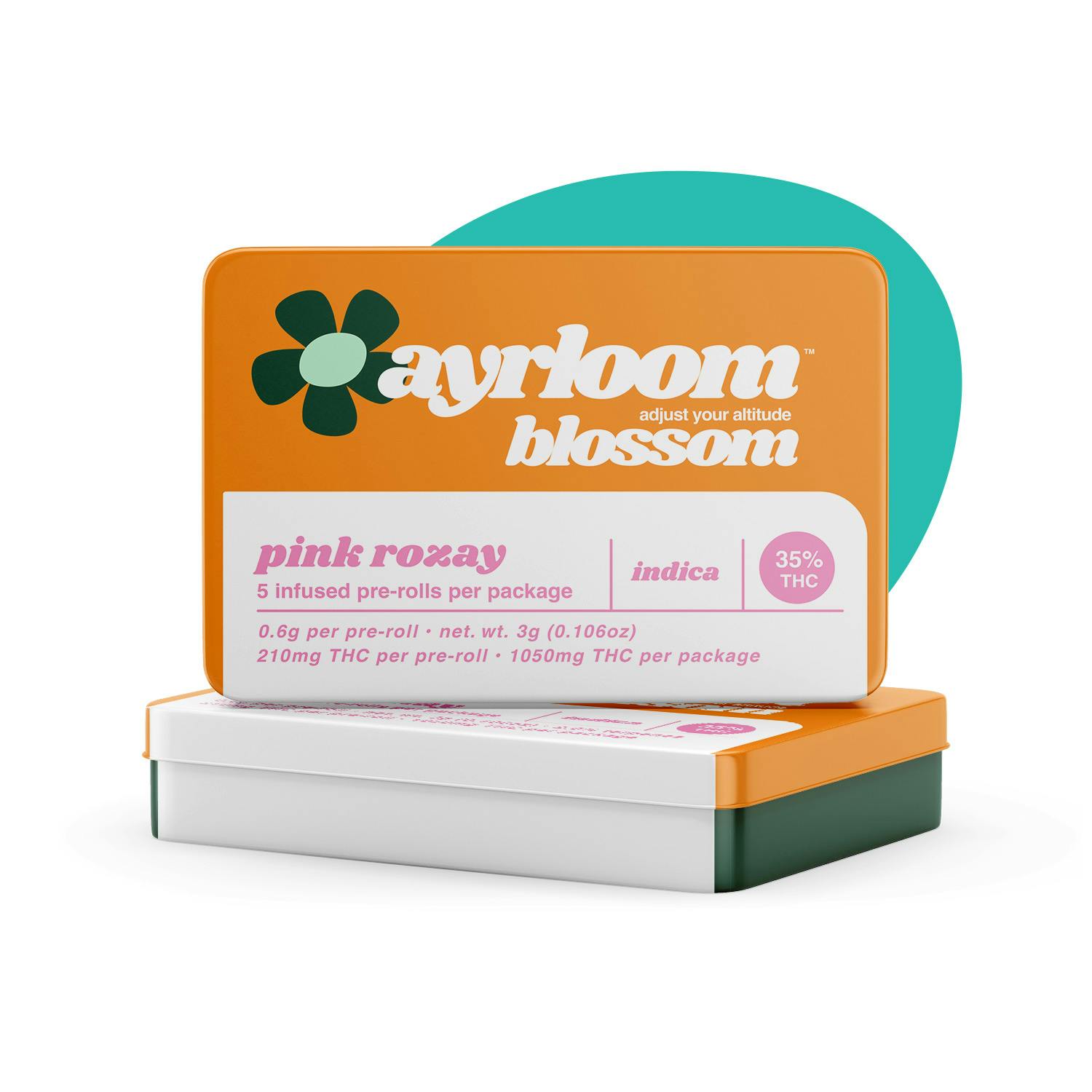
THC 37.12%Indica
ayrloomayrloom | Pink Rozay Infused Pre-Roll | 5 Pack | 3g · 0.6g5pk
$39.82
$45after tax

weeddispensarynearme.com
You must be 21 years or older to enter. By entering, you confirm you’re of legal age in your state to purchase cannabis.
For use only by adults 21+ • Keep out of reach of children
3 live products in stock
Quick answer · What is the Pink Rozay cannabis strain?
Pink Rozay arrives like a long exhale at the end of a considered evening — its blush-tinted buds and berry-forward perfume signaling a deeply relaxing indica experience rooted in Cookies genetics. Cultivated with the precision that has come to define the Cookies family's aesthetic, this strain offers a sensory encounter as polished as its name suggests, drawing equal admiration from the casual enthusiast and the seasoned connoisseur.
$45after tax
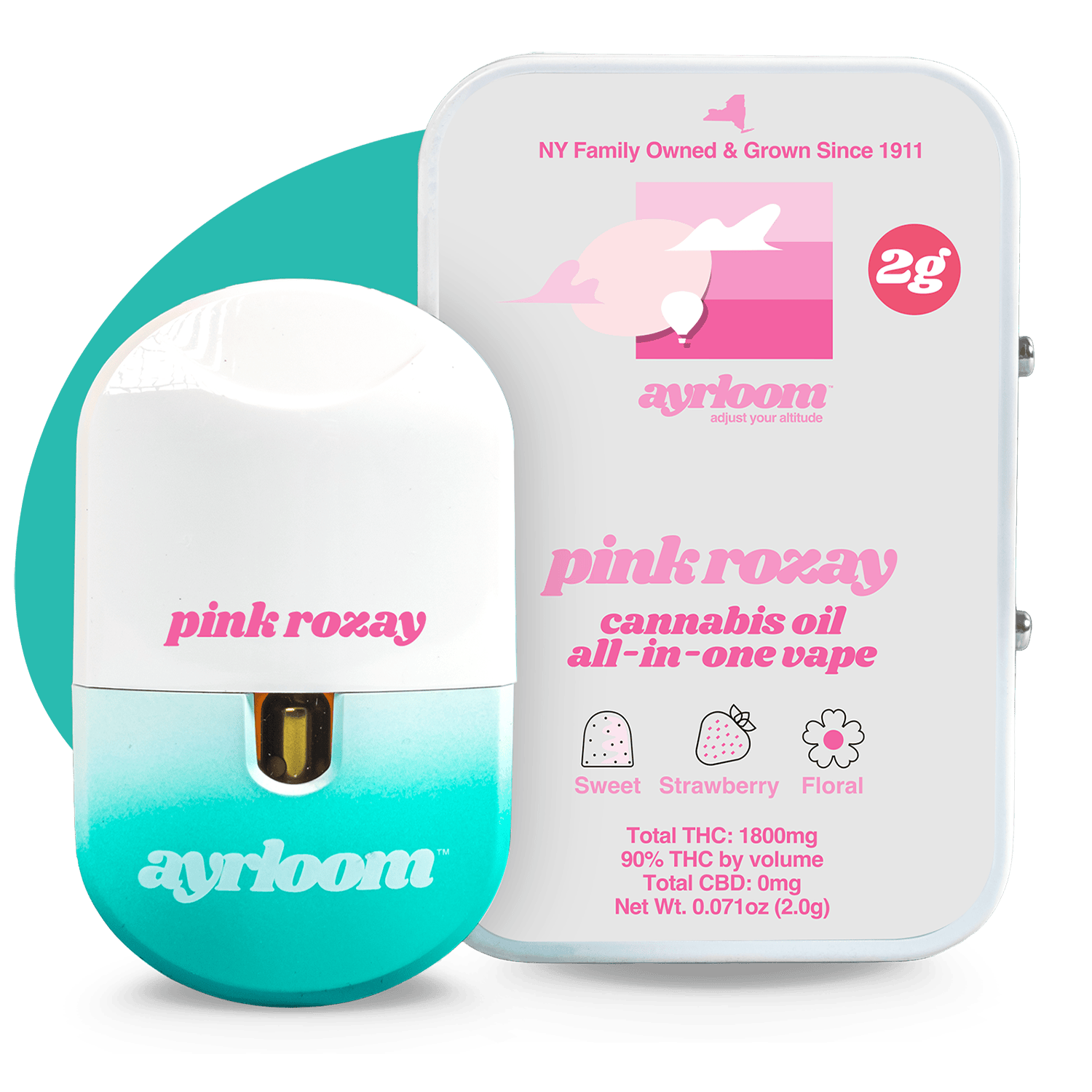
About Pink Rozay
Pink Rozay was developed by Cookies, the San Francisco-based cannabis brand founded by Berner and Jai, whose influence on contemporary cannabis culture is well-documented. The strain is understood to be a cross of Lemonchello 10 and LPC75 — two proprietary Cookies in-house selections — though Cookies, consistent with their general practice, has not released detailed public documentation of every generational cross involved in producing LPC75. What is publicly acknowledged is that the Lemonchello line carries Italian lemon-candy characteristics derived from its own complex heritage, while LPC75 contributes a robust indica architecture and the strain's signature pink and purple coloration. Pink Rozay emerged as a notable release in the Cookies catalog sometime in the late 2010s, a period during which the brand was rapidly expanding its proprietary genetics library and cementing its status as a defining force in luxury-tier cannabis. Its name is a deliberate nod to rosé wine culture — an alignment of the strain's color palette and aroma profile with a particular lifestyle register. Genetically, Pink Rozay occupies a space adjacent to other prominent Cookies releases such as Gelato and Wedding Cake, in that it layers fruit-forward terpene expression over a dense, resinous indica chassis. While no direct sibling phenotypes have been formally released under the Pink Rozay name, the strain has influenced subsequent Cookies drops that similarly prioritize aesthetic presentation alongside pharmacological depth.
The onset of Pink Rozay typically arrives within five to fifteen minutes when inhaled, presenting first as a gentle pressure behind the eyes and a quiet elevation of mood that is characteristically cerebral without tipping into anxiety. This initial phase is calm and focused — a settling rather than a launch — which reflects the influence of its indica-dominant architecture and what is likely a terpene profile anchored by myrcene, a compound associated with sedative and physically relaxing qualities. As the experience deepens over the subsequent thirty to sixty minutes, the body begins to register the strain's fuller indica character. A gradual warmth moves through the limbs, tension releases from the shoulders and jaw, and the mental state shifts from mild elevation toward something more introspective and still. The peak is neither forceful nor disorienting; rather, it is a well-modulated heaviness that invites rest without demanding it. The duration of the experience typically runs two to three hours for moderate consumers, with the comedown being notably gentle — a slow dimming rather than an abrupt drop. Those newer to cannabis or sensitive to THC are well advised to begin conservatively, as the cumulative body effect can become pronounced with larger amounts. The overall arc makes Pink Rozay well suited to the latter portion of an evening, when the day's obligations have concluded and a deliberate unwinding is the goal.
The aromatic identity of Pink Rozay is one of its most immediately arresting qualities. At the forefront sits a dense, jammy berry sweetness — reminiscent of overripe strawberry and black cherry — that is characteristic of a myrcene-rich profile working in concert with ocimene, which contributes floral and slightly fruity herbaceous lift. Together, these two terpenes produce an opening bouquet that is lush without being cloying, occupying a space somewhere between a confectioner's counter and a summer garden. On closer inspection, secondary notes emerge that add complexity and prevent the profile from reading as purely sweet. Caryophyllene, a terpene also found in black pepper and cloves, introduces a faint spice that grounds the fruitiness and lends a certain seriousness to the nose. A whisper of linalool — the floral compound shared with lavender — rounds the edges further, adding a soft, almost powdery dimension that reinforces the strain's reputation for calm. On the palate, Pink Rozay smokes with a smoothness that reflects quality cultivation and proper curing. The inhale carries the berry-candy sweetness forward cleanly, while the exhale reveals a faint earthiness and a lingering herbal spice from the caryophyllene. In vapor, these characteristics are rendered with greater fidelity — the floral and fruit notes in particular become more distinct and refined, making vaporization a particularly revealing way to explore this strain's aromatic architecture.
Pink Rozay's visual presentation is among the most distinctive in the Cookies portfolio. The buds are characteristically dense and compact in structure — the hallmark of a well-expressed indica phenotype — with a tight calyx formation that resists easy pulling apart. The color palette ranges from deep forest green at the core to striking violet and lavender hues throughout the outer leaves, with the purple expression intensifying when plants are finished in cooler temperatures during the final weeks of flower. Trichome coverage is abundant and visibly resinous, lending the buds a frosted, almost luminous quality under direct light that speaks to the strain's potency and the care taken in its cultivation. The pistils — the small hair-like structures winding through the bud — present in warm shades of peach and amber, providing a contrast to the cool purple tones that makes for an arresting visual. Overall, Pink Rozay presents as a collector's specimen: structured, colorful, and unmistakably premium in its physical character.
Pink Rozay is a proprietary Cookies genetic, which means that verified, authentic seeds or clones are not widely available through general retail channels — a deliberate aspect of Cookies' approach to protecting its intellectual property. Cultivators who do encounter legitimate cuts should expect a moderately challenging grow that rewards attentive management. The strain performs well indoors, where environmental variables can be controlled to bring out its signature purple coloration — a deliberate temperature drop to the low 60s Fahrenheit during the final one to two weeks of flowering encourages anthocyanin expression. Flowering time runs approximately eight to nine weeks. Indoors, yields are moderate, reflecting the plant's prioritization of resin and density over raw volume. Outdoors, the strain prefers a temperate, Mediterranean-style climate and typically finishes in mid to late October in the Northern Hemisphere. Its dense bud structure requires vigilant airflow management to mitigate the risk of mold or botrytis, particularly in humid environments. This is not a strain recommended for first-time cultivators without prior experience managing indica-dominant, high-resin varieties.
Pink Rozay is most at home in the quiet hours after dinner — the stretch of an evening when the agenda has dissolved and the only remaining obligation is to be present. Its combination of a gently elevated mood at onset and a progressively deepening body effect makes it particularly well suited to solo unwinding: a long bath, a slow read, or the kind of unhurried listening session that a demanding record rewards. For music pairings, the strain's berry-and-floral terpene profile and its measured, graceful effect arc align naturally with artists who operate in that same register of considered warmth — late-period jazz, neo-soul, or ambient electronic music that rewards sustained attention without requiring it. On the culinary side, Pink Rozay's sweetness and spice notes find a complementary echo in a well-aged soft cheese served with fruit preserves, or a dark chocolate with berry notes — pairings that share the strain's balance of richness and restraint. For social settings, it is best reserved for intimate gatherings rather than high-energy environments, as its indica depth encourages conversation to slow and deepen rather than accelerate.
Gelato
A fellow Cookies family strain with a similarly sweet, dessert-forward terpene profile and balanced indica-leaning effects, Gelato appeals to the same consumer who gravitates toward Pink Rozay's refined fruit character.
Wedding Cake
Sharing the dense, resinous bud structure and a rich, vanilla-and-earth aromatic profile that complements Pink Rozay's berry notes, Wedding Cake offers a comparably deep body effect within the same genetic tradition.
Runtz
Another Cookies-adjacent release built on fruity candy terpenes and a smooth, well-rounded effect profile, Runtz is a natural next step for consumers who appreciate Pink Rozay's aesthetic and aromatic sensibility.
Zkittlez
Zkittlez shares Pink Rozay's hallmark trait of vivid, multi-layered fruit aromatics anchored by a relaxing indica body effect, making it an intuitive recommendation for fans of the strain's sensory profile.
Biscotti
A Cookies-lineage indica with similarly deep purple coloration, dense structure, and a complex terpene profile that balances sweet and earthy notes, Biscotti occupies a closely adjacent position in both genetics and experience.
Pink Rozay is classified as an indica-dominant strain. Its Cookies lineage — understood to cross Lemonchello 10 with the proprietary LPC75 — produces the dense bud structure, deep body relaxation, and extended sedative arc that are characteristic of well-expressed indica genetics. While the early onset carries a subtle cerebral lift, the dominant experience is physical and calming, making it most appropriate for evening use.
Pink Rozay tastes primarily of jammy berry — think ripe strawberry and dark cherry — with a candy-like sweetness that is tempered by a faint herbal spice on the exhale. Secondary notes of floral softness and subtle earth emerge, particularly when vaporized, where the terpene profile expresses with greater nuance. The smoke is notably smooth, and the finish lingers with a pleasant sweetness that reflects the strain's myrcene and caryophyllene character.
Pink Rozay typically produces a gentle mood elevation at onset, followed by a progressive deepening of physical relaxation that can become quite pronounced. The cerebral component is calm and introspective rather than energizing, and the overall arc tends toward sedation over a two-to-three-hour window. Most consumers find the experience well-suited to evening unwinding. As always, individual response varies, and those new to cannabis should begin with a conservative amount.
Consumers who enjoy Pink Rozay tend to gravitate toward other Cookies-family indicas with sweet, fruit-forward terpene profiles and robust body effects. Gelato, Wedding Cake, Runtz, and Biscotti all share relevant characteristics in terms of lineage, aroma, or effect arc. Zkittlez is also frequently cited as a comparable option for those drawn specifically to Pink Rozay's vivid berry aromatics and relaxing physical character.
Pink Rozay can be enjoyed by newcomers to cannabis, but its indica depth warrants a careful approach. The cumulative body effect can become quite strong, and the experience tends to build gradually — meaning consumers who dose too quickly may find themselves more sedated than intended. A standard start-low, go-slow approach is advisable: begin with a small amount, allow fifteen to twenty minutes to assess the effect, and proceed from there with patience.
Pink Rozay's terpene profile is understood to be led by myrcene, which contributes the strain's characteristic berry earthiness and underlies its sedative, physically relaxing qualities. Caryophyllene adds a grounding spice note and is the only terpene known to interact with the body's endocannabinoid system directly. Linalool lends a soft floral dimension, while ocimene contributes fruity, herbaceous brightness to the top of the aromatic profile.
Pink Rozay was developed by Cookies, the influential cannabis brand co-founded by rapper and entrepreneur Berner, based in San Francisco. It emerged from the Cookies proprietary genetics program in the late 2010s and is understood to cross the Lemonchello 10 and LPC75 selections. As is typical for Cookies releases, the full generational lineage of both parent strains has not been publicly disclosed in complete detail.
Pink Rozay is best suited to evening use. Its indica-dominant effect profile — a gentle cerebral onset giving way to a deep, lasting physical relaxation — is well-aligned with the wind-down portion of the day. Most consumers find that its sedative tendencies make daytime or high-productivity contexts less appropriate. It excels in low-demand, restorative settings: a quiet evening at home, a slow dinner with close company, or a dedicated rest night.
Related strains
Pick your store
We'll show pricing, deals, and delivery zones for the store you pick. You can switch any time from the header.