On sale· 25% OFF
THC 38.46%Hybrid
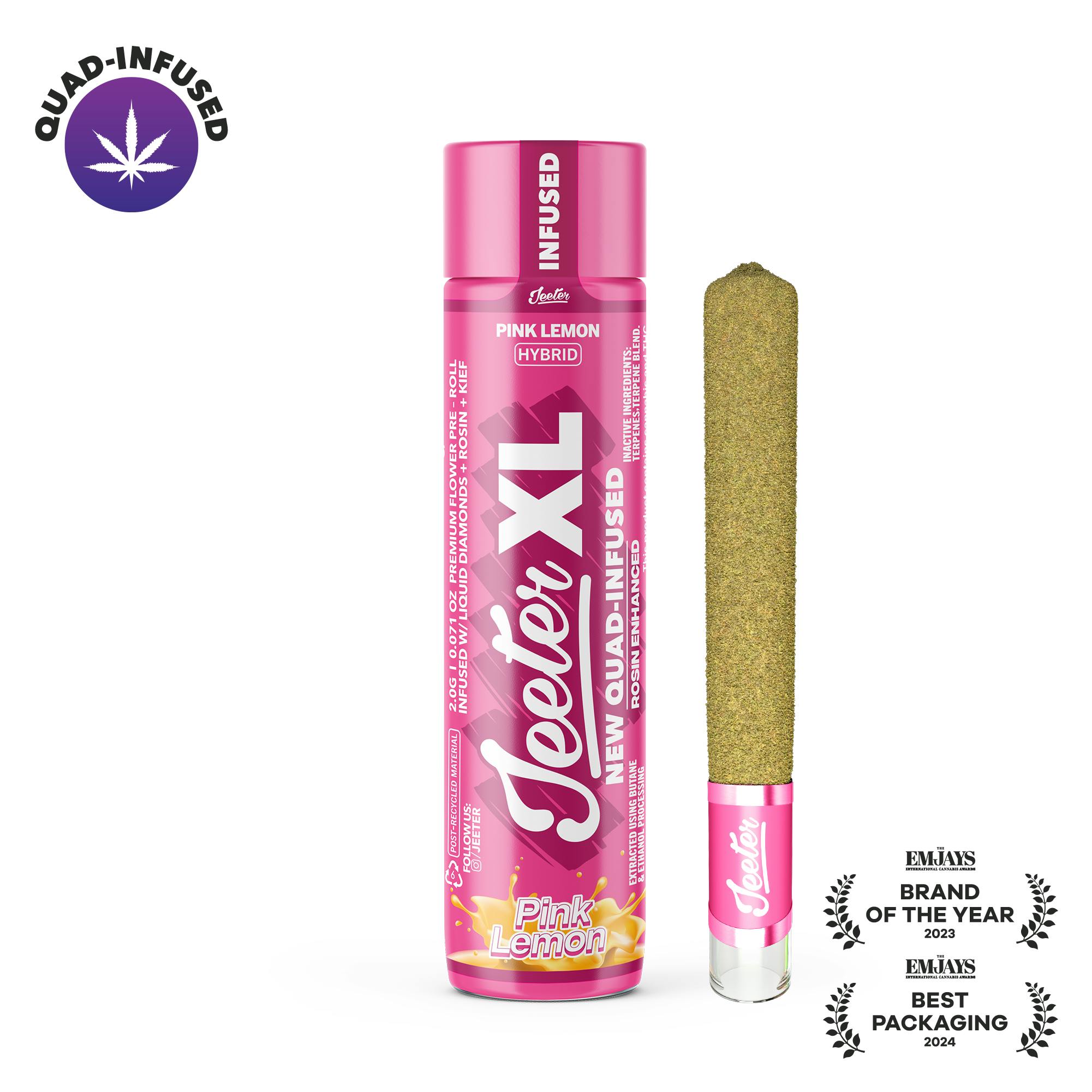
JeeterPink Lemon Quad-Infused XL Jeeter Joint | 2g · 2g
$29.86$39.82
$35after tax

weeddispensarynearme.com
You must be 21 years or older to enter. By entering, you confirm you’re of legal age in your state to purchase cannabis.
For use only by adults 21+ • Keep out of reach of children
4 live products in stock
Quick answer · What is the Pink Lemon cannabis strain?
Pink Lemon arrives at the intersection of citrus brightness and soft, floral warmth — a hybrid whose name is as evocative as its character. Pale sage and blush-pink calyxes give way to an aroma that recalls sun-warmed lemon zest and ripe stone fruit, while the experience itself traces a gentle, luminous arc. It is a strain for those who prize balance: alert enough for an unhurried afternoon, settled enough for a quiet evening.
$35after tax
$49after tax
$54after tax
About Pink Lemon
Pink Lemon is a hybrid whose precise lineage remains partially contested in public cannabis documentation. The strain is most commonly attributed to a cross of Pink Panties and Lemon Skunk, though some sources suggest an alternate parentage involving a Pink Kush phenotype crossed with a citrus-forward cultivar. The breeder has not made an official, universally cited public statement confirming the exact genetic pairing, so both accounts circulate in the enthusiast community. Pink Panties itself is a well-documented indica-leaning hybrid, generally credited to Archive Seed Bank and understood to descend from Burmese Kush and Florida Kush lineage, lending pronounced floral and stone-fruit qualities. Lemon Skunk, on the other hand, traces its roots to two select Skunk phenotypes known for exceptional citrus expression and is associated with breeders in the Netherlands and later popularized through DNA Genetics. That pairing — one parent heavy with resinous floral depth, the other sharp with limonene-driven brightness — explains much of Pink Lemon's terpene character. The strain emerged into broader market awareness during the mid-to-late 2010s as craft growers began seeking crosses that balanced photogenic aesthetics with a refined terpene palette. It has not spawned widely named phenotypes to date, but its visual and aromatic profile has made it a quiet fixture in premium dispensary menus on both coasts.
Pink Lemon's onset is typically felt within five to ten minutes of inhalation, arriving first as a mild pressure behind the eyes and a subtle brightening of sensory focus. The initial phase is cerebral in character: thoughts move with a touch more ease, conversation flows with less friction, and creative associations form with a lightness that feels natural rather than forced. This is not an overwhelmingly stimulating sativa-style rush; rather, it resembles the mental clarity that follows a well-rested morning. As the experience matures — generally between twenty and forty-five minutes in — a secondary wave of physical ease begins to settle across the shoulders and upper back. This is where Pink Lemon's indica heritage, traceable to its Pink Panties parentage, begins to assert itself without fully quieting the mind. The balance between the two phases is what defines the strain's character: functional yet unwound, present yet unhurried. Sessions typically sustain this plateau for one to two hours before a gradual, gentle decline. The terpene profile is thought to contribute meaningfully to this arc. Limonene, present in abundance from the Lemon Skunk side, is associated in cannabis research with uplifted mood and reduced tension. Myrcene, inherited in part from the indica-leaning parentage, tends to soften the edges and encourage the body ease that characterizes the mid-session experience. Those newer to cannabis are advised to start low and go slow, as the strain's hybrid balance can catch the uninitiated off guard during the transition between phases.
The first impression upon opening a well-cured jar of Pink Lemon is unmistakably citric — bright lemon zest with a candied quality, as though lemon curd has been set beside a bowl of ripe nectarine. This foreground is driven primarily by limonene, the dominant terpene, which contributes that clean, sharp citrus lift characteristic of the Lemon Skunk parentage. Beneath it, a secondary layer of floral sweetness emerges, reminiscent of dried rose petals or light bergamot, an aromatic signature associated with linalool, which appears in moderate concentrations in most phenotypes. Ground or broken apart, the flower releases a third aromatic register: a faintly earthy, damp-wood note undercut with mild spice. This is the contribution of caryophyllene, which in Pink Lemon adds depth without heaviness, and myrcene, whose herbal musk prevents the citrus profile from reading as purely confectionery. Trace amounts of ocimene may also be present in some phenotypes, adding a green, almost herbaceous brightness that amplifies the fresh-fruit quality. On the palate — whether smoked in a glass pipe or vaporized at low-to-mid temperatures — the initial draw delivers the lemon-and-floral notes faithfully. The mid-palate softens into a creamy, almost tropical sweetness, and the finish carries a faint, clean spice from caryophyllene that lingers without bitterness. Vapor expression at lower temperatures tends to preserve the floral and citrus register most faithfully, while combustion brings forward the earthier, woodier undertones.
Pink Lemon's visual appeal is a genuine distinguishing feature. The buds are typically medium to medium-large in size, with a structure that leans toward dense and compact — a trait inherited from its indica-adjacent parentage — though select phenotypes can present with slightly airier, more elongated calyxes. The color palette is one of the strain's most recognizable attributes: a base of pale sage green, often shifting toward soft olive or seafoam in well-grown specimens, is accented by unmistakable blush-pink to light lavender pistils that give the strain its name. Trichome coverage is generous and evenly distributed, lending the surface a frosted, almost pearlescent quality under direct light. The resin glands are predominantly capitate-stalked, visible to the naked eye and giving the bud a slightly sticky, plush density when handled. Calyxes are rounded and tightly stacked, contributing to the overall compact silhouette. When properly dried and cured, the flower holds its color well and breaks apart cleanly, revealing an interior that mirrors the exterior's color palette.
Pink Lemon is considered a moderately challenging cultivar — accessible enough for an attentive intermediate grower, but rewarding of the additional care that more experienced hands can provide. It performs well both indoors and in controlled outdoor or greenhouse environments, with a preference for stable temperatures in the 68–80°F range and moderate, consistent humidity during the vegetative phase. Flowering time falls in the range of eight to nine weeks indoors under standard photoperiod conditions, placing it on the shorter end of the hybrid spectrum. Indoor yields are typically moderate to moderately generous, with the plant responding well to low-stress training techniques such as screen of green (SCROG) methods that open the canopy and expose lower bud sites to light. Outdoor growers in temperate climates can expect harvest in early to mid-October in the Northern Hemisphere. The strain's tendency toward dense bud structure, while aesthetically desirable, does call for attentive airflow management to reduce the risk of moisture-related issues late in flower. For the cultivator-curious shopper, Pink Lemon represents a strain where genetic quality expresses most fully under deliberate, unhurried cultivation — fitting, given its character in the jar.
Pink Lemon occupies a particular kind of afternoon — the kind that arrives on a weekend with no fixed agenda. Its balance of gentle mental lift and soft physical ease makes it well-suited to solo creative work: sketching, writing, or the kind of low-stakes artistic exploration that benefits from a quieted inner critic. The citrus-forward terpene profile, led by limonene, tends to accompany moods that are curious and open rather than inward or contemplative. For social occasions, Pink Lemon is an agreeable companion at a small dinner gathering or a relaxed evening on a rooftop — settings where conversation is the primary entertainment and no one is looking to be overly challenged or sedated. It pairs naturally with light Mediterranean cuisine: a citrus-dressed ceviche, a lemon-herb roasted chicken, or a sharp, young chèvre served with honeycomb. Musically, the strain's character aligns with something unhurried but textured — acoustic jazz, or the quieter end of contemporary soul. Those who enjoy it in nature tend to favor late-afternoon walks or time spent near water, where its sensory brightening quality has room to unfold.
Lemon Skunk
As one of Pink Lemon's probable parent strains, Lemon Skunk shares the same sharp citrus terpene dominance and hybrid lift, making it an intuitive next step for anyone drawn to Pink Lemon's bright aromatic character.
Pink Panties
The other likely parent, Pink Panties delivers the same floral-meets-stone-fruit aromatic depth and relaxed body quality that Pink Lemon fans often cite as their favorite dimension of the experience.
Lemon Tree
A celebrated cross of Lemon Skunk and Sour Diesel, Lemon Tree shares Pink Lemon's citrus-forward profile and functional hybrid balance, appealing to the same palate with a slightly more complex, fuel-tinged finish.
Mimosa
Mimosa's citrus brightness and uplifted, sociable character closely parallel Pink Lemon's daytime hybrid arc, with an added tropical sweetness that will feel familiar to Pink Lemon enthusiasts.
Sunset Sherbet
For those most drawn to Pink Lemon's soft floral and berry-adjacent sweetness over its citrus brightness, Sunset Sherbet offers a comparable dessert-fruit profile with a similarly balanced, unhurried effect arc.
Pink Lemon is classified as a hybrid, drawing from both indica and sativa lineage. In practice, it leans toward a balanced expression: the onset carries a cerebral, sativa-adjacent brightness, while the mid-session experience introduces the physical ease more commonly associated with indica genetics. Neither quality dominates entirely, which is precisely what makes it appealing to those who find pure expressions of either type too one-dimensional.
Pink Lemon delivers a primary flavor of bright lemon zest with a candied, almost curd-like sweetness, followed by a mid-palate layer of floral softness — rose petal and light bergamot — and a clean, faintly spiced finish driven by caryophyllene. Vapor expression preserves the citrus and floral notes most cleanly, while combustion brings a deeper, earthier undertone. Overall, the palate experience is cohesive and refined rather than sharp or one-note.
Pink Lemon typically produces a gentle cerebral lift at onset — an easing of mental friction and a light brightening of sensory focus — that transitions over twenty to forty-five minutes into a more settled, body-aware state. The experience is functional and balanced rather than intensely stimulating or deeply sedating. Sessions generally sustain their plateau for one to two hours. As with any cannabis product, those new to the strain are encouraged to start with a modest amount.
Lemon Skunk and Pink Panties share the most direct genetic overlap with Pink Lemon and will feel immediately familiar in aroma and effect. Lemon Tree offers a comparable citrus-forward hybrid experience with added complexity, while Mimosa parallels its uplifted, social character. For those drawn to Pink Lemon's floral sweetness over its citrus edge, Sunset Sherbet offers a close aromatic cousin with a slightly richer, dessert-fruit profile.
Pink Lemon can be approachable for newer consumers, provided they follow the standard guidance of starting low and going slow. Its balanced hybrid character means it is unlikely to produce the anxiety that some strongly sativa-dominant strains can trigger, nor the heavy sedation of a dense indica. That said, the transition between its cerebral onset and its physical ease phase can catch the uninitiated off guard. A modest first session in a comfortable, familiar setting is always a sensible approach.
Limonene is the dominant terpene in most Pink Lemon phenotypes, responsible for the strain's signature citrus brightness and association with uplifted mood. Linalool contributes the floral, rose-like sweetness that softens the citrus edge, while caryophyllene adds mild spice and depth. Myrcene is present in lower concentrations, grounding the profile with a subtle herbal musk and contributing to the physical ease that characterizes the mid-session experience.
Pink Lemon is best suited to the afternoon or early evening — a window where its balance of mental engagement and physical ease feels most at home. It is functional enough to accompany creative or social activities without producing the heaviness that would make focus difficult, yet settled enough to serve as a gentle transition into a quieter evening. Most consumers find it less well-suited to early-morning sessions or to moments requiring sharp, sustained concentration.
To maintain the integrity of Pink Lemon's notably expressive terpene profile, store the flower in an airtight glass container away from direct light, heat, and humidity fluctuations. A cool, dark environment — such as a drawer or cabinet — is preferable to refrigeration, which can introduce condensation. Properly stored, the citrus and floral terpene expression can remain vivid for several weeks. Boveda humidity packs at 58–62% relative humidity are a widely recommended tool for long-term preservation.
Related strains
Pick your store
We'll show pricing, deals, and delivery zones for the store you pick. You can switch any time from the header.