THC 29% - 32%Indica
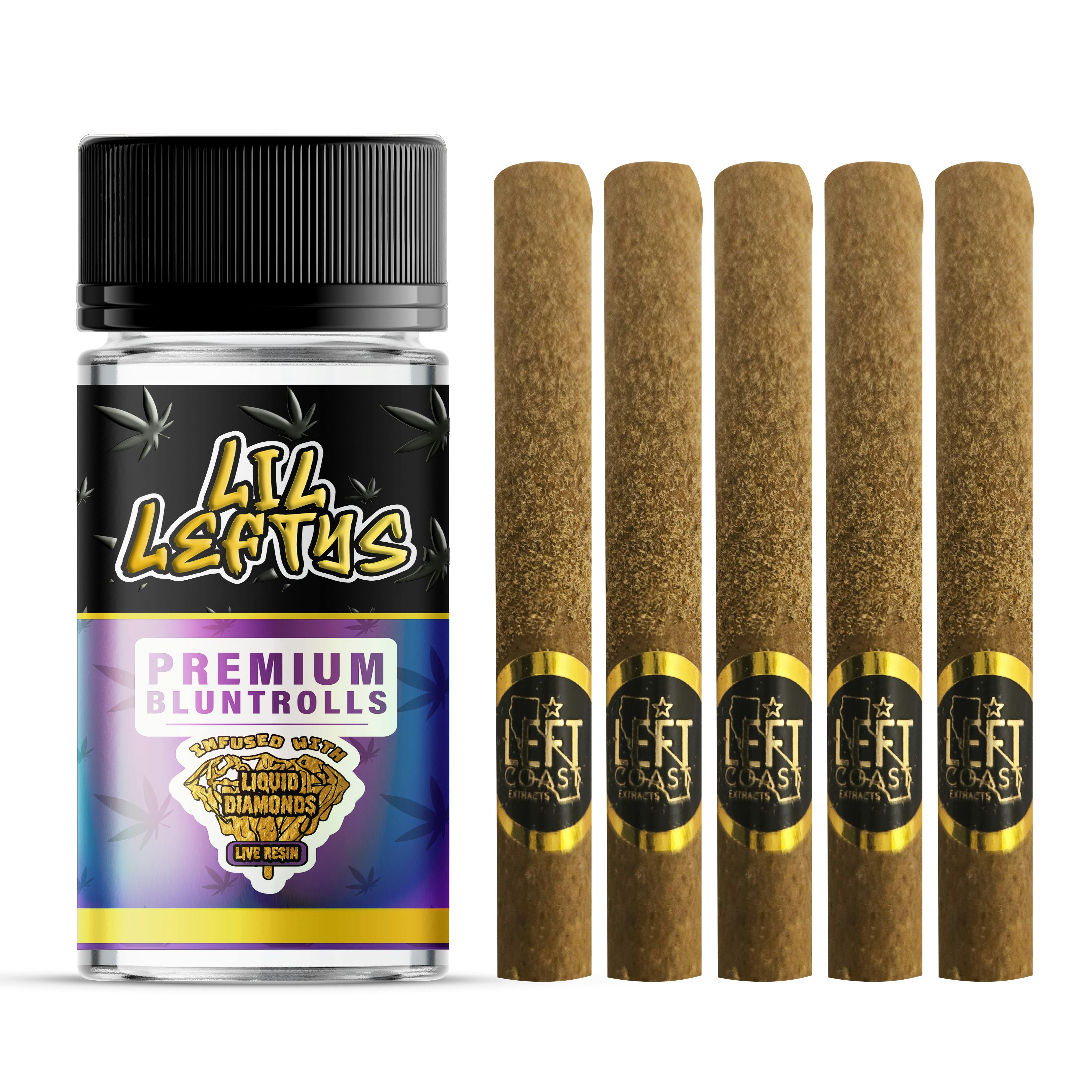
Left CoastLil Lefty's - MINI BLUNTS - Grape Cookies 🍇🍪 · 6.5grams
$59.29
$67after tax

weeddispensarynearme.com
You must be 21 years or older to enter. By entering, you confirm you’re of legal age in your state to purchase cannabis.
For use only by adults 21+ • Keep out of reach of children
1 live products in stock
Quick answer · What is the Grape Cookies cannabis strain?
Grape Cookies arrives at the intersection of two celebrated genetic lineages, offering a sensory experience that leans into deep fruit, warm earth, and a measured, full-bodied calm. Its violet-kissed buds and dessert-forward aroma make it one of the more visually and olfactorily distinctive indicas in the current New York market — a strain that rewards patience and intentionality in equal measure.
$67after tax
About Grape Cookies
Grape Cookies is widely understood to be a cross of Grape Ape and Girl Scout Cookies, two of the most consequential strains in modern cannabis breeding. Grape Ape, itself a three-way cross of Mendocino Purps, Skunk, and Afghani, was popularized by Apothecary Genetics and Barney's Farm in the mid-2000s and became a foundational reference point for deep indica character and Concord grape aromatics. Girl Scout Cookies — bred by the Cookie Fam out of the San Francisco Bay Area circa 2011 — brought its own celebrated lineage of OG Kush and Durban Poison into the equation, adding a layered sweetness, cerebral lift, and the dense trichome structure that made the Cookies family so broadly influential across a generation of hybrid breeding. The combination of these two parents yields a strain that leans indica-dominant while retaining a nuanced aromatic complexity drawn from the Cookies side. Phenotypic variation is not uncommon: some cuts express a more pronounced grape-candy quality, while others lean earthier and more doughy. The breeder of the definitive Grape Cookies cut is not consistently attributed across public sources, and multiple breeders have produced versions under the same name, which contributes to some variability in what consumers encounter. Genetic siblings or closely related expressions in the broader Cookies family — including Sunset Sherbet, Animal Cookies, and London Pound Cake — share overlapping terpene architectures and provide useful reference points for understanding Grape Cookies' overall character.
The experience of Grape Cookies tends to follow a deliberate, layered arc. Onset typically arrives within five to ten minutes of inhalation, often initiating with a subtle warmth behind the eyes and a gentle mental softening rather than a sharp cerebral spike. This early phase carries modest mood elevation — a quality traceable in part to the Cookies lineage's Durban Poison ancestry — before the indica character inherited from Grape Ape begins to assert itself more fully. At its peak, Grape Cookies is a body-oriented strain. Tension in the shoulders and upper back tends to ease, and a progressive physical heaviness settles in a manner that invites stillness rather than activity. The cerebral component does not disappear entirely; rather, it recedes to a quiet background warmth that supports a calm, unhurried mental state. This balance is consistent with a terpene profile in which myrcene plays a leading role, contributing to the sedative, muscle-relaxing quality many users associate with classic indica expressions. Duration is generally moderate to extended — most users report a peak window of one to two hours, with a gentle comedown that rarely involves disorientation. The transition out is gradual, often resolving into drowsiness in the evening context. As with any potent indica-leaning cultivar, a measured approach is advisable for those newer to cannabis, as the body effects can be pronounced.
Grape Cookies presents a terpene profile that reads as both immediately recognizable and genuinely complex on closer inspection. Myrcene is typically the dominant terpene, contributing the characteristic musk and ripe fruit undertones that define much of the strain's baseline aroma — think Concord grape skin, dark berry, and a faint herbal earthiness underneath. This foundation is what most consumers register first when the jar is opened. Caryophyllene appears as a meaningful secondary terpene, adding a subtle spice and a faint woody depth that keeps the sweetness from becoming cloying. It also contributes a mild peppery note on the exhale and is the terpene most associated with the strain's grounding physical character. Limonene, when present, provides a citrus brightness that lifts the aromatic profile slightly — a quality more evident in lighter phenotypes of the strain. Linalool rounds out the secondary palette in some cuts, lending a floral softness that complements the grape-forward primary notes without overwhelming them. On the palate, Grape Cookies tends to deliver in two distinct phases. The inhale is plush and fruity, carrying a sweetness reminiscent of grape candy or baked berry compote. The exhale shifts toward dough and earth — a signature Cookies-family quality — with a lingering warmth and mild spice that persists on the palate for several minutes. In vapor, the fruit notes are typically brighter and more precise; in combustion, the earthiness and hash-like depth come forward more prominently.
Grape Cookies produces buds that are compact and densely structured, a trait consistent with its indica-dominant genetics. Calyxes stack tightly and the overall architecture of the flower tends toward a chunky, rounded form rather than the elongated, spear-like profile associated with sativa-leaning cultivars. The color palette is one of the strain's more striking qualities: a deep forest green forms the base, frequently punctuated by hues of lavender and deep purple that develop during cooler finishing temperatures in the final weeks of flowering. These anthocyanin-driven pigments are a visible inheritance from the Grape Ape parentage. Trichome coverage is substantial, lending the surface of the buds a frosted, almost silvery appearance under direct light. Pistils are typically amber to rust-orange at peak maturity, providing warm contrast against the cooler tones of the underlying flower. The overall visual presentation is one that speaks clearly to the strain's pedigree — refined, resinous, and immediately identifiable as a premium cultivar.
Grape Cookies is considered a moderately challenging cultivar to grow, suited more comfortably to those with some prior cultivation experience than to first-time home growers. It performs well in both indoor and outdoor environments, though indoor cultivation with precise environmental control tends to produce the most expressive terpene development and the deepest pigmentation in the buds. Flowering time is generally estimated between eight and nine weeks indoors, consistent with the broader Cookies family's typical timeline. Indoor yields are moderate — the strain prioritizes density and resin production over bulk output, which is a common trade-off in high-quality indica-dominant genetics. Outdoors, Grape Cookies thrives in a warm, Mediterranean-style climate with low late-season humidity, as the dense bud structure can be susceptible to mold if moisture is not carefully managed. Cooler nighttime temperatures in the final two weeks of flowering are widely credited with enhancing the purple and lavender coloration that makes this strain visually distinctive. Training techniques such as low-stress training or light defoliation are recommended to improve canopy light penetration and airflow.
Grape Cookies is at its most resonant in the evening hours, when the demands of the day have been set aside and the conditions for genuine rest or unhurried reflection are in place. Its progressive body effect and measured mental calm make it a natural fit for solo unwinding — a long bath, a slow meal, or a quiet hour with a book or film that does not require sustained analytical attention. The strain's sensory profile, anchored in warmth and sweetness, pairs naturally with activities that engage the senses at a comfortable pace. For food pairing, the grape and berry aromatics of Grape Cookies find a coherent counterpart in aged cheeses, dark chocolate with moderate bitterness, or a charcuterie arrangement built around cured, savory elements — the caryophyllene's spice and the myrcene's earthiness both complement rather than compete with these flavors. For a musical pairing, the strain's physical weight and unhurried mental character suit low-tempo, texture-rich listening: late-period Bill Evans, ambient soul, or the quieter passages of classic R&B. It is not a strain designed for social performance or high-output creative work; it is designed for the deliberate, considered end of the evening.
Grape Ape
As a direct parent of Grape Cookies, Grape Ape shares the deep purple pigmentation, Concord grape aromatics, and heavy indica body effect, making it the most natural point of comparison for fans of either strain.
Animal Cookies
A fellow member of the broader Cookies family with OG Kush and Girl Scout Cookies in its lineage, Animal Cookies offers a similarly dense bud structure, resinous finish, and body-forward effect profile with a doughy, fuel-tinged aroma.
London Pound Cake
London Pound Cake shares the dessert-oriented terpene character and indica-leaning sedation of Grape Cookies, with its own grape and berry notes making it a closely aligned option for shoppers drawn to this flavor profile.
Granddaddy Purple
One of the most recognized purple indicas in the American market, Granddaddy Purple offers a comparable grape-forward aroma and deep physical relaxation for consumers who appreciate Grape Cookies' visual and sensory signature.
Sunset Sherbet
Bred from Girl Scout Cookies and Pink Panties, Sunset Sherbet shares the Cookies family sweetness and a layered fruit profile, offering a slightly more balanced experience for those who find Grape Cookies' full indica weight more than they prefer.
Grape Cookies is considered an indica-dominant hybrid. Its parentage — Grape Ape and Girl Scout Cookies — leans heavily toward indica genetics, and the resulting effects reflect that: a body-oriented, relaxing experience with moderate cerebral warmth rather than energizing or stimulating qualities. It is most commonly positioned as an evening or nighttime strain suited to unwinding and rest.
Grape Cookies delivers a dessert-forward palate with two distinct phases. The inhale tends toward sweet grape and dark berry, reminiscent of fruit candy or baked compote. The exhale shifts to a doughy, earthy quality inherited from the Cookies lineage, with a mild spice on the finish. In vapor, the fruit character is more precise; in combustion, the earthiness and warmth come forward more prominently.
Grape Cookies typically produces a progressive physical relaxation alongside a quiet, unhurried mental calm. Onset is gentle, often beginning with mood softening and mild warmth before the body effect deepens. At peak, users commonly report tension release and a pleasant heaviness that encourages stillness. The experience is body-dominant and moderately long in duration, with a gradual, drowsy comedown well-suited to evening use.
Consumers drawn to Grape Cookies often find common ground with Grape Ape, its direct parent and a natural reference point for the grape aroma and indica body. Within the Cookies family, Animal Cookies and Sunset Sherbet offer related terpene profiles and effect arcs. Granddaddy Purple appeals to fans of the purple-pigmented, berry-forward indica aesthetic, and London Pound Cake shares a similar dessert orientation.
Grape Cookies can be enjoyed by newer cannabis consumers, though its indica-dominant character and pronounced body effect warrant a measured approach. For anyone new to cannabis or returning after a period of abstinence, a conservative start — small inhalations with time allowed between — is advisable. New York adult-use guidelines recommend that all consumers, regardless of experience, start low and go slow with any new cultivar.
Myrcene is generally cited as the dominant terpene in Grape Cookies, contributing its characteristic earthy musk and ripe fruit quality alongside the sedative body character associated with classic indicas. Caryophyllene follows as a significant secondary terpene, adding spice and woody depth. Limonene and linalool appear in varying concentrations depending on the phenotype, contributing citrus brightness and soft floral notes respectively.
The purple, lavender, and violet hues visible in Grape Cookies buds are caused by water-soluble pigments called anthocyanins, which are activated when temperatures drop during the final weeks of flowering. This trait is directly inherited from Grape Ape, itself descended from Mendocino Purps. The coloration is aesthetic rather than indicative of potency or quality, though it has become one of the strain's most recognizable and sought-after visual characteristics.
Given its indica-dominant profile and the sedative quality attributed to myrcene-forward terpene expression, Grape Cookies is best suited to evening or late-night use. Its progressive body relaxation and tendency toward a drowsy comedown make daytime use less practical for most consumers who need to remain active or focused. It is well-positioned as a transitional strain for winding down after work or as a companion to a quiet, restful evening at home.
Related strains
Pick your store
We'll show pricing, deals, and delivery zones for the store you pick. You can switch any time from the header.