
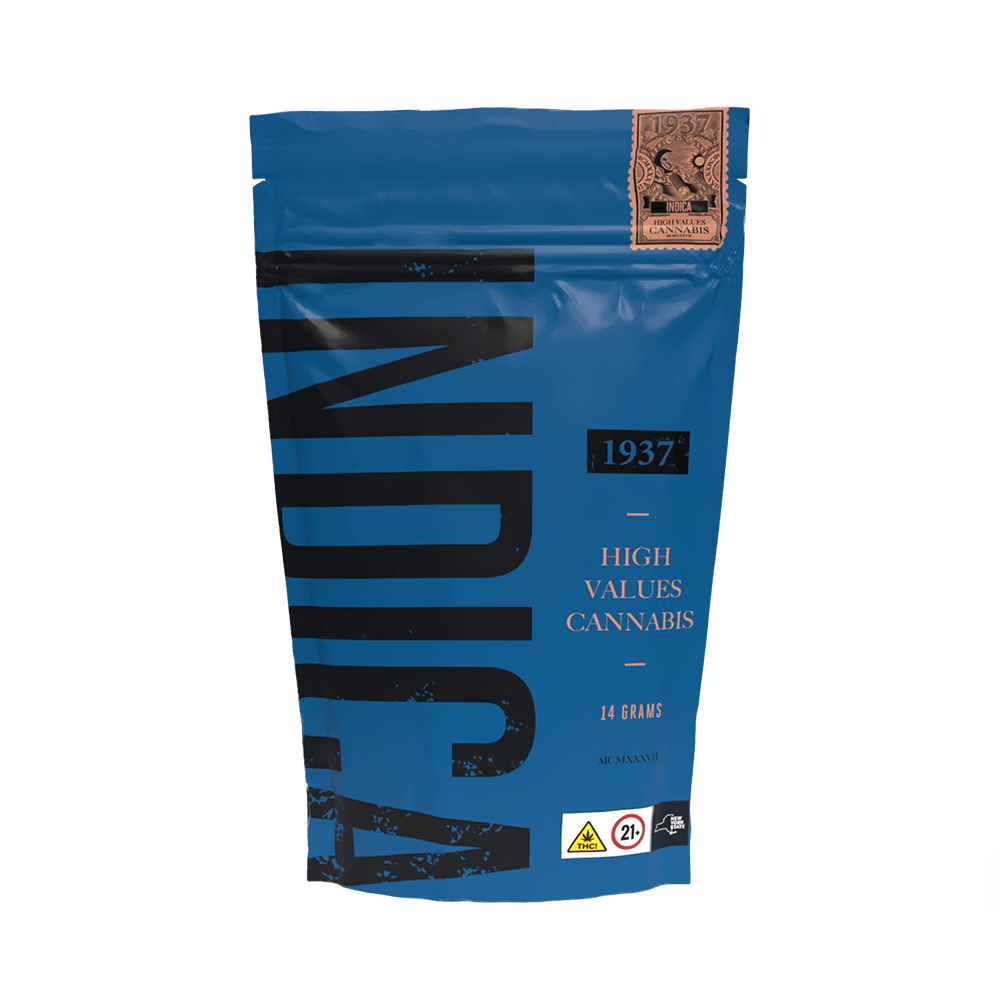
Indica
All strains Duct Tape
1 live products in stock
Quick answer · What is the Duct Tape cannabis strain?
Duct Tape is a resinous, mid-weight hybrid whose name signals exactly what it does — it holds things together. Born from a cross of Do-Si-Dos and Original Glue, it carries the dense, fuel-laced aromatics of its GG4 heritage alongside the sweet, floral depth of its indica-leaning parent. The result is a grounded yet clear-headed experience suited to the discerning adult consumer who values balance over extremes.
Shop Duct Tape · 1 of 1 live products
About Duct Tape
Everything to know about Duct Tape.
Lineage & origin
Duct Tape is the offspring of two modern American cannabis landmarks: Do-Si-Dos, the OGKB-derived cultivar developed by Archive Seed Bank in Portland, Oregon, and Original Glue (commonly known as GG4), the phenotype-selected cut made famous by GG Strains that went on to collect multiple Cannabis Cup accolades in the mid-2010s. The cross was popularized — and is most commonly attributed to — Archive Seed Bank, the same Oregon-based breeder responsible for numerous resinous, terpene-forward varieties that quietly shaped the Pacific Northwest's contemporary catalogue. Do-Si-Dos itself traces back to GSC (Girl Scout Cookies) and the elusive OGKB cut, lending Duct Tape a sweet, cookie-adjacent base. Original Glue, whose own lineage involves Chem's Sister, Sour Dubb, and Chocolate Diesel, contributes the diesel-and-pine backbone and the legendary trichome density for which GG4 became a benchmark. Together, the pairing produces a strain that reads as a thoughtful synthesis of late 2010s American craft cannabis. Several phenotype expressions circulate in the market, some leaning more floral and earthy, others tilting toward the sharp, chemical fuel notes of the Glue side. Genetic siblings from Archive's catalogue — including Papaya Cake and Mandarin Cookies — share a similarly resin-forward disposition. Duct Tape has since been used as a parent in a second generation of crosses, underscoring its growing influence as a breeding cornerstone.
Effects
Onset with Duct Tape tends to arrive within five to fifteen minutes of inhalation — relatively prompt by hybrid standards. The opening phase is characteristically cerebral: a mild clarifying lift that sharpens awareness without producing the anxious edge that higher-limonene cultivars can sometimes introduce. Conversations feel more fluid, creative associations come more readily, and there is a distinct sense of mental settling rather than mental acceleration. As the session progresses into its peak, the body component inherited from Do-Si-Dos becomes apparent. A gentle physical weight moves through the shoulders and limbs — not sedating in the couch-lock sense associated with heavy indicas, but grounding. This dual-character quality — the mind engaged, the body at ease — is precisely where Duct Tape earns its reputation as a functional hybrid. The myrcene and caryophyllene content is widely understood to contribute to this relaxed somatic quality, while the limonene fraction keeps the experience from feeling overly heavy. Duration for most consumers falls in the two-to-three hour range at moderate intake. The comedown is gradual and generally mellow, easing toward a comfortable tiredness rather than an abrupt drop. Consumers new to high-resin hybrids are well served by the standard principle of starting low and gauging their individual response before consuming more.
Aroma, flavor & terpenes
The nose on well-cured Duct Tape is immediately striking: a thick, resinous wave that blends sharp diesel fuel with undertones of pine and a quieter, earthier sweetness beneath. This top-note profile is largely attributable to the caryophyllene and myrcene combination that Duct Tape inherits from both parent strains. Caryophyllene — the only terpene known to interact with CB2 receptors — delivers the peppery, fuel-adjacent bite, while myrcene grounds the bouquet in a herbal, almost musky earth that keeps the aroma from reading as purely chemical. Secondary terpenes add appreciable complexity. Limonene brings a citrus brightness that surfaces most clearly when the bud is broken apart, a flash of lemon peel cutting through the heavier base notes. Pinene adds a subtle conifer freshness reminiscent of a forest floor after rain. Together, these four terpenes — caryophyllene, myrcene, limonene, and pinene — account for the majority of the aromatic character, though trace amounts of linalool have been reported in some phenotypes, imparting the faintest floral softness. On the palate, the smoke or vapor is moderately dense with a long-lingering finish. The exhale delivers the earthier, cookie-like sweetness from the Do-Si-Dos lineage more clearly than the nose suggests, rounding what might otherwise be an austere, fuel-forward profile into something considerably more nuanced and approachable. The retronasal finish is clean and resinous.
Appearance
Duct Tape produces buds that are immediately recognizable as the product of high-resin breeding: they are dense, tightly packed, and covered in a trichome layer thick enough to give the flowers a frosted, almost silver-white cast under direct light. The structure leans toward the compact, rounded calyxes of its indica heritage rather than the elongated, airy form of a sativa-dominant variety. The color palette sits in a rich mid-green range, occasionally accented by deeper forest green patches within the interior of the bud. Pistils are abundant and typically present in warm amber to burnt-orange tones at proper maturity, weaving visibly through the dense sugar leaf coverage. The trichomes themselves are notably bulbous — a characteristic associated with the GG4 lineage — lending a sticky, almost adhesive quality to the flower that reinforces the strain's fittingly named identity. Well-grown examples have a sculptural quality that rewards close inspection.
Growing notes
Duct Tape is considered an intermediate-level cultivar — manageable for experienced home growers but not necessarily forgiving for first-time cultivators. It performs competently both indoors under controlled lighting and outdoors in temperate, Mediterranean-style climates where humidity can be kept in check during the flowering period. The dense bud structure that defines its appeal also makes it susceptible to mold and botrytis if airflow is insufficient, so canopy management and adequate spacing are important considerations. Indoor flowering time is typically in the range of eight to nine weeks, and the plant rewards training techniques such as low-stress training or screen of green setups that open the canopy to light penetration. Indoor yields are generally described as moderate to above average for the effort invested. Outdoor cultivation suits the Northern Hemisphere's late-September to mid-October harvest window. The plant's resin production becomes visually dramatic in the final two weeks of flowering, which is part of the appeal for cultivator-curious consumers who appreciate understanding what they are purchasing.
When it's best enjoyed
Duct Tape occupies that productive middle ground between energizing sativas and sedating indicas, which makes it a natural fit for the hours between late afternoon and early evening — what a sommelier might call the aperitif window. It is well-suited to solo creative work that benefits from sustained focus without overstimulation: writing, illustration, music production, or the kind of slow, deliberate cooking that rewards full attention to process rather than speed. The terpene profile, with its earthy depth and resinous weight, pairs naturally with foods that share a similar savory-meets-sweet complexity. A charcuterie spread with aged cheeses, cured meats, and dark honey makes a compelling companion, as does a well-crafted pour of a peaty Scotch or a robust aged rum for those who consume alongside spirits. For a sonic pairing, the measured tempo and layered texture of early-period Massive Attack or the more contemplative works of Erykah Badu suit the grounded-yet-engaged quality of the experience. Duct Tape also lends itself to group settings — its balanced character makes it considerate of mixed tolerance levels within a social gathering.
If you like Duct Tape, also explore
Original Glue (GG4)
As Duct Tape's direct parent, GG4 shares the diesel-and-pine terpene backbone and exceptional resin density, making it an obvious reference point for consumers who enjoy the fuel-forward side of Duct Tape's profile.
Do-Si-Dos
The other parent in the cross, Do-Si-Dos offers the same cookie-sweet, earthy depth and relaxing body character that defines Duct Tape's calmer, more grounded register.
Wedding Cake
Sharing GSC and OGKB ancestry, Wedding Cake delivers a similarly sweet-and-earthy terpene profile with comparable hybrid balance, appealing to consumers drawn to Duct Tape's nuanced palate.
Grease Monkey
A cross of Gorilla Glue and Cookies and Cream, Grease Monkey occupies a similar fuel-meets-sweet terpene space and offers the same dense, resinous bud structure that Duct Tape consumers tend to appreciate.
Motorbreath
For consumers who are drawn specifically to the diesel and caryophyllene-dominant character of Duct Tape, Motorbreath offers that same pungent, fuel-heavy nose with an indica-leaning body effect.
Common questions
Is Duct Tape indica or sativa?+
Duct Tape is a hybrid strain, drawing from both the indica-leaning Do-Si-Dos and the balanced Original Glue. In practice, it presents as a mildly indica-leaning hybrid — the mind stays engaged and relatively clear, while the body settles into a comfortable, grounded ease. Neither side dominates entirely, which is precisely what makes it a versatile choice for adult consumers who prefer balance over intensity in either direction.
What does Duct Tape taste like?+
Duct Tape delivers a layered palate that opens with sharp diesel and pine on the inhale, courtesy of its caryophyllene and pinene content, and transitions on the exhale to a rounder, earthier sweetness that echoes the cookie notes of its Do-Si-Dos parentage. A subtle citrus brightness from limonene cuts through the heavier base. The finish is long, resinous, and clean — more complex than its utilitarian name might suggest.
What are the typical effects of Duct Tape?+
Consumers generally describe a two-phase experience: an initial cerebral clarity and mild mood lift that eases into a steady, grounding body relaxation as the session matures. The effect is often characterized as functional — engaged but not overstimulated, relaxed but not sedated. Duration typically falls in the two-to-three hour range at moderate intake. As with any high-resin hybrid, starting low and assessing individual response is the sensible approach.
What strains are similar to Duct Tape?+
Consumers who enjoy Duct Tape often find common ground with its parent strains — Original Glue for the diesel-and-resin profile, Do-Si-Dos for the earthy sweetness and body ease. Wedding Cake and Grease Monkey offer comparable hybrid balance with similar terpene characters, while Motorbreath appeals to those drawn specifically to the fuel-forward, caryophyllene-dominant side of Duct Tape's aromatic identity.
Is Duct Tape good for beginners?+
Duct Tape's balanced hybrid character makes it more approachable than heavily sedating indicas or sharply stimulating sativas, but its resin density and typically elevated cannabinoid content mean it is not without potency. Newcomers to cannabis or those returning after a period of abstinence are encouraged to follow the standard guidance: start with a small amount, allow adequate time to assess the effect fully, and adjust from there. It is not the most demanding cultivar, but it warrants respect.
What are the dominant terpenes in Duct Tape?+
The terpene profile is led by caryophyllene, which contributes the peppery, fuel-adjacent bite and is the only terpene known to interact with the body's CB2 receptors. Myrcene follows closely, adding the earthy, herbal muskiness that grounds the aroma. Limonene provides a secondary citrus lift, and pinene lends a quiet conifer freshness. Some phenotypes carry trace linalool, introducing a faint floral nuance to an otherwise savory, resinous profile.
Who bred Duct Tape and where does it come from?+
Duct Tape is most commonly attributed to Archive Seed Bank, a Portland, Oregon-based breeder with a catalogue built around resin-forward, terpene-rich genetics. The cross pairs Archive's own Do-Si-Dos with Original Glue (GG4), and it emerged in the context of the late 2010s Pacific Northwest craft cannabis scene — a period defined by a deliberate pursuit of complex terpene profiles alongside high cannabinoid expression. Some alternative versions of the cross exist, but Archive remains the most cited origin.
What is the best time of day to consume Duct Tape?+
Duct Tape is best suited to the late afternoon or early evening window — after the obligations of the day have concluded but before the intention to sleep. Its balanced hybrid arc keeps it from being ideal as a morning cultivar for most consumers, yet its grounding body quality means it does not demand a commitment to full sedation. Think of it as a transitional strain: one that helps ease the shift from the activity of the day into the quieter hours of the evening.
Related strains