
Sativa
All strains Delphi Diesel
1 live products in stock
Quick answer · What is the Delphi Diesel cannabis strain?
Delphi Diesel arrives with the measured confidence of a strain that knows exactly what it offers: a luminous, fuel-edged sativa experience grounded in one of cannabis's most storied lineage traditions. Its aroma opens bright and citrus-forward before yielding to the signature petroleum undertone that defines the Diesel family. For the discerning adult-use consumer in New York seeking clarity, creative momentum, and a pronounced but composed elevation, Delphi Diesel occupies a refined place in the daytime rotation.
Shop Delphi Diesel · 1 of 1 live products
About Delphi Diesel
Everything to know about Delphi Diesel.
Lineage & origin
Delphi Diesel belongs to the broader Diesel genetic family, a lineage whose roots trace back to the New York cannabis scene of the early-to-mid 1990s. The original Diesel — often referred to as Original Diesel or Chemdawg Diesel — is widely understood to share ancestry with Chemdawg, a strain whose own origins remain one of the most debated stories in cannabis culture. The Chemdawg lineage is commonly traced to a batch of seeds obtained at a Grateful Dead concert in 1991, later cultivated and stabilized by the grower known as Chemdog. From that foundation, breeders crossed Chemdawg with Massachusetts Super Skunk and Old World Paki Kush, ultimately giving rise to Sour Diesel — arguably the most famous Diesel expression and a cultural touchstone for East Coast cannabis. Delphi Diesel, as a named cultivar, is a more recent expression. The breeder of record has not been definitively established in widely available public databases, which is not uncommon for boutique sativa-leaning phenotypes that circulate through craft-growing communities before reaching the licensed market. Its name nods both to the oracular tradition of ancient Delphi — a fitting reference for a strain associated with clarity and mental illumination — and to the Diesel heritage it carries forward. In terms of genetic siblings, Delphi Diesel sits alongside expressions such as NYC Diesel, East Coast Sour Diesel, and Turbo Diesel, all of which share the characteristic fuel-and-citrus terpene architecture and the alert, cerebral effect profile that defines the family. Delphi Diesel leans toward the sativa end of the spectrum, distinguishing it from heavier Diesel hybrids that temper the family's uplifting character with indica sedation.
Effects
The onset of Delphi Diesel is characteristically prompt for a sativa-dominant cultivar, with most experienced consumers noting the first effects within five to ten minutes of inhalation. The initial impression is cerebral: a gentle but distinct brightening of mental focus that moves quickly into heightened sensory awareness. Colors may appear slightly more vivid, conversation more engaging, and creative associations more fluid. This is not an edgy or anxious elevation — the Diesel lineage tends to deliver stimulation with an underlying steadiness, and Delphi Diesel follows that tradition. At peak, the experience is predominantly head-forward, with the body remaining functional and largely unencumbered. This makes Delphi Diesel well-suited to movement and activity rather than stillness. The dominant terpene profile — likely featuring limonene and caryophyllene — contributes to this character. Limonene is associated in the scientific literature with mood elevation and alertness, while caryophyllene's interaction with CB2 receptors may lend a subtle, grounding physical ease without crossing into sedation. Duration is moderate, typically running ninety minutes to two and a half hours depending on individual tolerance and consumption method. The comedown is generally gradual rather than abrupt, with alertness softening into a calm, grounded baseline. As with all high-potency sativa cultivars, those newer to cannabis are encouraged to start with a conservative amount and allow adequate time before reassessing. The experience is immersive but not disorienting for most seasoned consumers.
Aroma, flavor & terpenes
The aromatic profile of Delphi Diesel is a study in productive contradiction: sharp and volatile on the surface, with an earthy, almost mineral depth beneath. The first impression from a freshly broken bud is unmistakably Diesel — a pungent, acrid fuel note that is the hallmark of the family. This petroleum quality is widely attributed to the presence of certain volatile sulfur compounds and terpene combinations characteristic of Chemdawg-derived genetics, rather than any single terpene in isolation. Beneath the diesel signature, limonene makes its presence known as a bright citrus top note — lemon peel more than sweet orange, with a slight pithy bitterness. Myrcene, common across much of the cannabis spectrum, contributes an herbal, slightly musky base that rounds the profile's sharper edges. Caryophyllene adds a dry, peppery warmth that becomes more perceptible on the exhale, lending complexity to what might otherwise be a one-dimensional fuel note. Secondary terpenes may include pinene, which introduces a faint evergreen, almost resinous quality reminiscent of pine sap, and terpinolene, which can contribute a floral-herbal nuance in some phenotypes. On the palate, Delphi Diesel smokes with a pronounced, full-bodied character. The inhale delivers the citrus-fuel combination cleanly, and the exhale lingers with pepper and earth. In vapor, the fuel note softens and the citrus becomes more prominent, making the experience somewhat more approachable without losing the strain's essential identity. The finish is long and slightly resinous.
Appearance
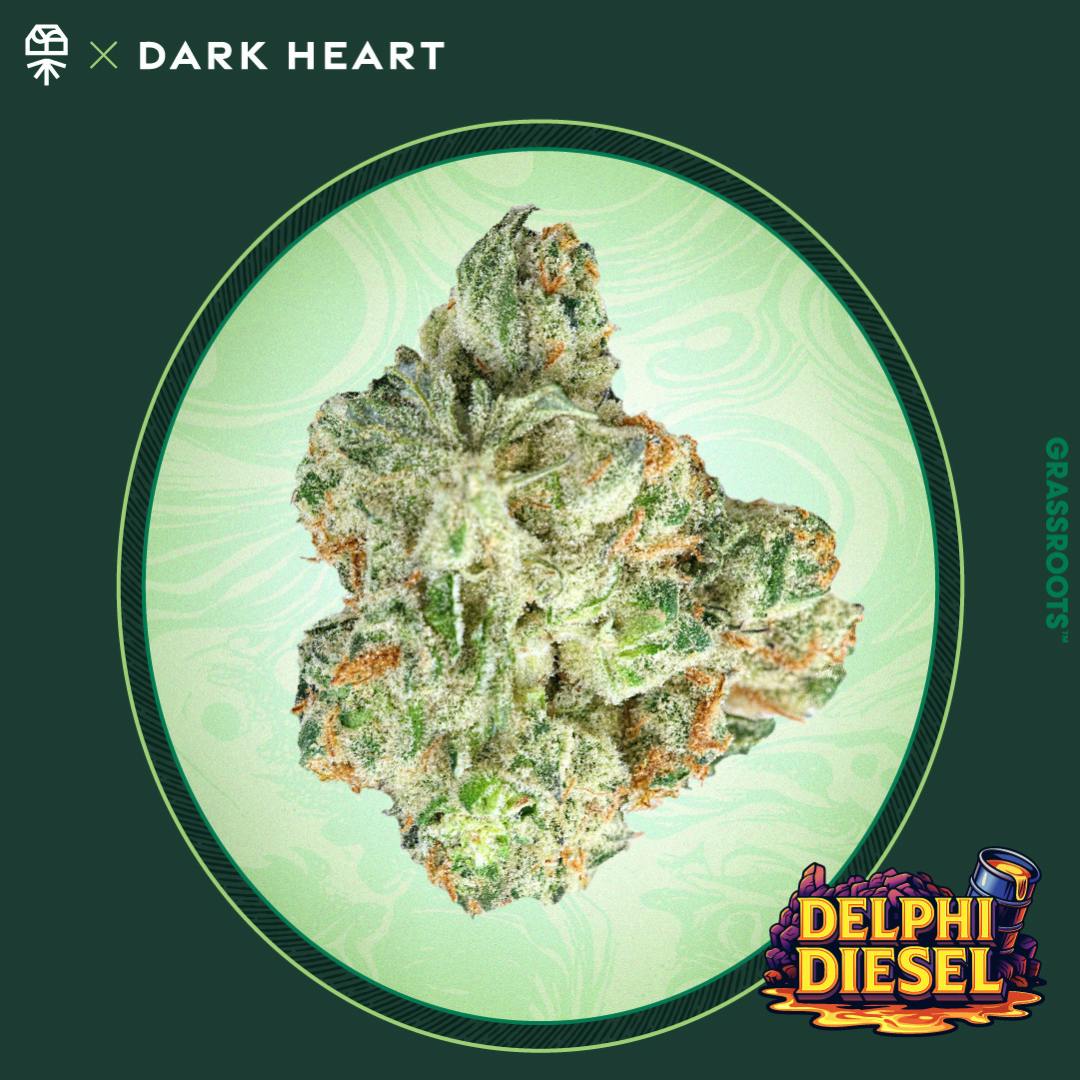
Delphi Diesel produces buds that reflect its sativa-dominant heritage in structure: somewhat elongated and loosely formed compared to the compact, rock-dense architecture of indica-leaning cultivars. The calyxes stack in open, spear-like formations that allow air circulation — a trait that also signals lower susceptibility to mold in humid conditions. Despite the airier structure, well-cultivated Delphi Diesel is generously frosted, with a notable density of clear to milky white trichomes that catch light with a subdued luminescence. The color palette sits in the mid-to-deep green range, often with olive and sage tones that deepen toward the interior of the flower. Pistils — the fine, hair-like structures winding between calyxes — present in warm amber to rust-orange tones, a contrast that adds visual warmth against the cool green of the leaves. Bag appeal is quietly assured rather than flamboyant: this is a cultivar whose quality reads through texture and trichome density rather than theatrical coloration.
Growing notes
Delphi Diesel, consistent with the broader Diesel lineage, is considered an intermediate-to-advanced cultivar for home growers due to its vigorous vertical growth and sensitivity to environmental fluctuations. Sativa-dominant plants in the Diesel family are known for their height — indoor cultivators typically employ low-stress training or screen-of-green techniques to manage canopy and maximize light penetration. Flowering time runs approximately ten to eleven weeks under controlled indoor conditions, which is on the longer end for commercial cultivators but rewarded by the quality of the final product. Indoor yields are moderate, and the strain rewards precise humidity management — Diesel genetics can be prone to mold when air circulation is insufficient, particularly given the open bud structure. Outdoor cultivation is viable in temperate climates with a long warm season, and harvest typically falls in mid-to-late October in the Northern Hemisphere. For the cultivator-curious consumer, Delphi Diesel represents the kind of crop that demands patience and attention but delivers a highly expressive, terroir-responsive flower when conditions are right.
When it's best enjoyed
Delphi Diesel is unambiguously a daytime strain — its sativa-forward character and cerebral onset make it a natural companion for the hours between morning and early afternoon when mental engagement is at a premium. It pairs well with creative solitary work: writing, visual art, or the kind of deep-focus problem-solving that benefits from an expanded associative range. The mental clarity it tends to produce, without the body sedation that would make physical tasks difficult, makes it equally suited to an urban Saturday morning walk through a neighborhood market or a visit to an art gallery. In social settings, Delphi Diesel functions well as a conversation accelerant — it tends to sharpen wit and verbal fluency rather than encourage quiet introversion, which makes it a reasonable choice before a dinner party or a cultural outing with close friends. For food pairing, the strain's citrus-and-pepper terpene profile finds a natural counterpart in dishes with bright acidity and herbaceous complexity: a well-dressed ceviche, a Sicilian-style agrodolce, or a simple lemon-dressed pasta. Musically, the elevated, propulsive quality of Delphi Diesel aligns with jazz fusion, post-rock, or the layered, textured productions of artists like Kamasi Washington or Massive Attack — music that rewards active listening and reveals new detail with attention.
If you like Delphi Diesel, also explore
Sour Diesel
The most iconic expression of the Diesel lineage, Sour Diesel shares the fuel-citrus aroma and alert cerebral elevation that defines Delphi Diesel's character, making it the natural reference point for any fan of the family.
NYC Diesel
A slightly sweeter, more tropical-inflected Diesel expression, NYC Diesel appeals to consumers who appreciate the lineage's uplifting sativa energy with a softer, more approachable aromatic edge.
Chemdawg
As the ancestral root of the Diesel family, Chemdawg offers a fuel-forward, cerebral experience with added chemical complexity that will resonate with consumers drawn to Delphi Diesel's depth and potency.
East Coast Sour Diesel
A phenotype closely related to classic Sour Diesel with an emphasis on the sharp, acrid top notes and sustained mental clarity that Delphi Diesel fans tend to seek.
Durban Poison
While genetically distinct, Durban Poison shares Delphi Diesel's clean, focused sativa elevation and would appeal to consumers who value daytime function and mental acuity over sedation.
Common questions
Is Delphi Diesel indica or sativa?+
Delphi Diesel is classified as a sativa-dominant cultivar. Its growth structure, effect profile, and terpene character all reflect the Diesel family's longstanding sativa lean. Consumers can expect an experience oriented primarily toward mental clarity and alertness rather than physical sedation — a profile that places it firmly in the daytime-use category for most adults.
What does Delphi Diesel taste like?+
Delphi Diesel delivers a characteristic Diesel palate: a sharp, fuel-forward inhale undercut with bright lemon-citrus from limonene, followed by a dry, peppery finish driven by caryophyllene. Earthy and slightly resinous base notes persist through the exhale. In vapor, the citrus becomes more prominent and the fuel note softens, offering a more nuanced version of the same essential profile.
What are the typical effects of Delphi Diesel?+
The typical Delphi Diesel experience begins with a prompt, cerebral onset — a brightening of focus and heightened sensory awareness that arrives within five to ten minutes of inhalation. Peak effects are head-forward and energizing, with the body remaining comfortable and unencumbered. Duration runs approximately ninety minutes to two and a half hours, with a gradual, grounded comedown. It is widely considered a clear-headed, functional sativa experience.
What strains are similar to Delphi Diesel?+
Consumers who enjoy Delphi Diesel tend to gravitate toward other members of the Diesel family — Sour Diesel, NYC Diesel, and East Coast Sour Diesel are the closest points of comparison in terms of aroma and effect. Chemdawg, as the ancestral cultivar, offers additional depth for those curious about the lineage's roots. Durban Poison provides a similar daytime sativa energy through a distinct genetic pathway.
Is Delphi Diesel good for beginners?+
Delphi Diesel's sativa potency and pronounced cerebral effects make it a cultivar best approached with some prior experience. Those new to cannabis may find the alert, fast-onset elevation more intense than anticipated. If you are new to adult-use cannabis, the general principle of starting with a small amount and waiting to assess before consuming more applies with particular relevance here. More moderate or balanced hybrids may be a more comfortable starting point.
What are the dominant terpenes in Delphi Diesel?+
Delphi Diesel's terpene profile is anchored by limonene, which contributes the bright citrus top note and mood-elevating character, and caryophyllene, which adds dry pepper warmth and a subtle grounding quality. Myrcene provides an herbal, musky base. Secondary contributors may include pinene, lending a faint evergreen note, and terpinolene, which can add a floral-herbal nuance depending on the phenotype and growing conditions.
When is the best time of day to enjoy Delphi Diesel?+
Delphi Diesel is best suited to morning or early-afternoon use, when its sativa-forward energy profile aligns naturally with active, engaged hours. Its cerebral clarity and lack of sedating body weight make it a functional companion for creative work, social engagement, or physical activity. Evening use is generally not recommended for consumers who are sensitive to stimulating effects, as it may interfere with the transition to rest.
What is the lineage of Delphi Diesel?+
Delphi Diesel belongs to the Diesel genetic family, whose origins trace back to Chemdawg — a storied 1990s East Coast cultivar with debated but widely documented roots. The Diesel line descends through crosses involving Massachusetts Super Skunk and Old World Paki Kush genetics. The specific breeder of Delphi Diesel as a named cultivar has not been definitively confirmed in major public cannabis databases, which is not uncommon for newer boutique expressions within established lineage families.
Related strains