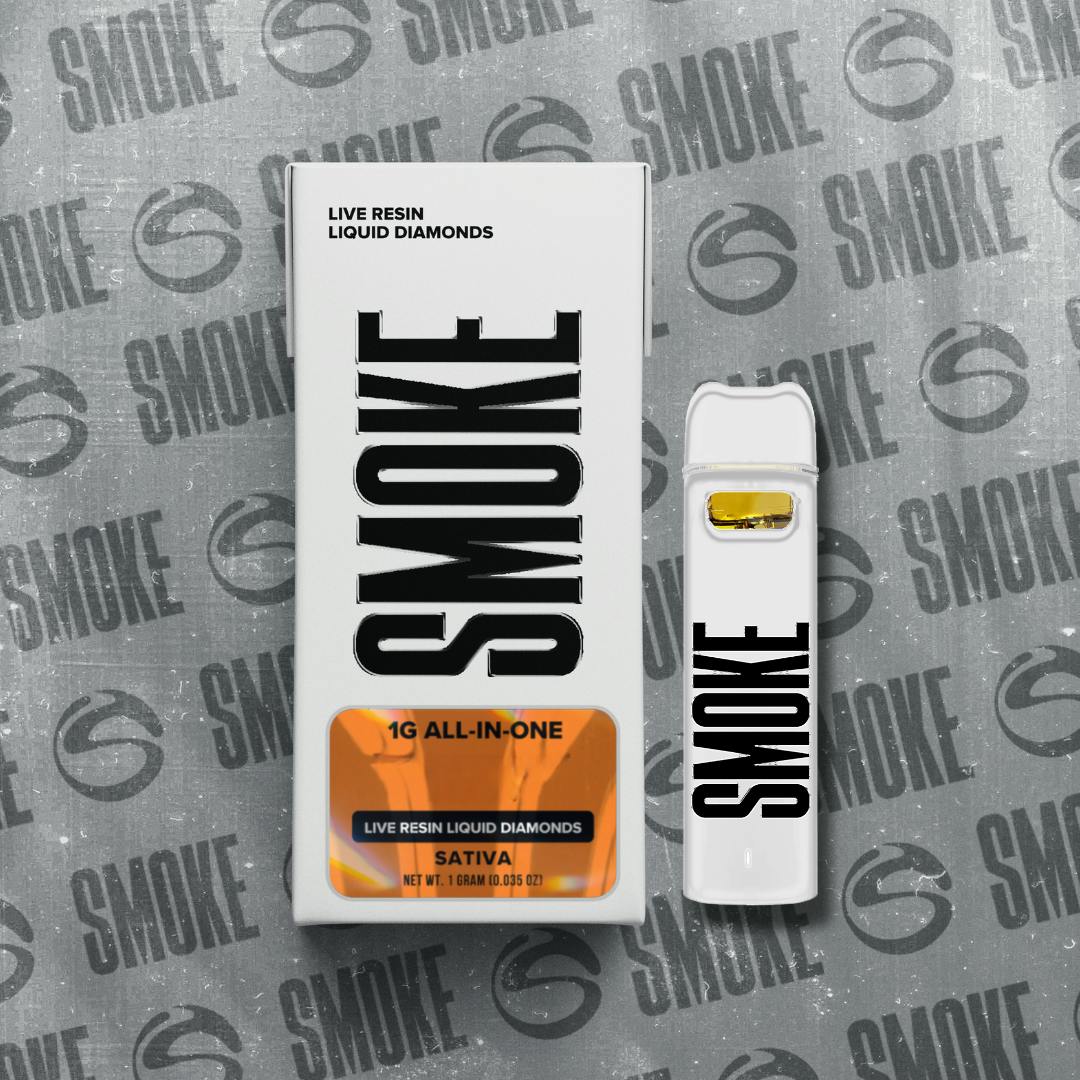
THC 80.92%Sativa
Smoke OilSmoke Daybreak Fuel Live Resin Liquid Diamonds AIO Disposable · 1g
$20.00
$23after tax

weeddispensarynearme.com
You must be 21 years or older to enter. By entering, you confirm you’re of legal age in your state to purchase cannabis.
For use only by adults 21+ • Keep out of reach of children
1 live products in stock
Quick answer · What is the Daybreak Fuel cannabis strain?
Daybreak Fuel arrives as its name suggests — with the clean, forward momentum of early morning light cutting through city fog. A sativa-leaning cultivar built for clarity and sustained engagement, it carries a terpene-forward profile that leans citrus-bright with an earthy undercurrent. Whether encountered on a quiet Tuesday or a spirited weekend, Daybreak Fuel rewards the attentive consumer with a well-composed, uplifting experience that feels purposeful rather than propulsive.
$23after tax
About Daybreak Fuel
Daybreak Fuel is a newer cultivar whose precise lineage has not been fully disclosed by any single verified breeder at the time of this writing. Based on its reported terpene expression and effect profile, cannabis analysts and community cultivators have suggested parentage rooted in fuel-forward genetics — likely drawing from the Chemdawg and Sour Diesel lineages that gave rise to much of the East Coast's characteristically sharp, petroleum-kissed sativa tradition. The 'Daybreak' qualifier points toward a secondary influence from lighter, more citrus-oriented cultivars, possibly a Tangie or a Lemon-derived line, though this has not been publicly confirmed. The Chemdawg lineage, for context, traces to a legendarily influential phenotype circulating at Grateful Dead concerts in the early 1990s, later developed in partnership with breeders including Chemdog (the user credited with its propagation online). Sour Diesel, its most celebrated offspring, defined a generation of New York cannabis culture. Any cultivar drawing from that lineage inherits a story as much as a chemistry. Until the originating breeder publicly names the parents, the full genetic picture of Daybreak Fuel remains open. Shoppers who love the Diesel family's wired, expansive cerebral quality — or the Tangie line's sun-saturated brightness — will find familiar resonance here.
The onset of Daybreak Fuel is comparatively swift for a sativa, with most consumers noticing a shift in mental tempo within five to fifteen minutes of inhalation. The initial impression is cerebral — a gentle brightening behind the eyes and a loosening of the kind of low-grade mental friction that accumulates over a busy day. Thoughts arrive with slightly more ease; ambient sounds and visual details take on a mild but pleasant vividness. There is little of the anxious edge that can accompany high-THC sativas when consumed carelessly. At its peak, the experience sits distinctly in the mind rather than the body. Physical sensation is present — a light warmth across the shoulders and a softening of muscular tension — but the dominant character is cognitive: engaged, curious, conversational. Creative tasks feel approachable. Long-form concentration is supported rather than scattered. This is where the terpene interaction with dominant cannabinoids is most legible: limonene's mood-elevating properties and the focusing quality associated with pinene work in measured concert. The duration runs moderate for a sativa, typically between ninety minutes and two and a half hours depending on tolerance and consumption method. The comedown is gentle — a gradual return to baseline rather than an abrupt drop. Newcomers are encouraged to start with a modest amount and allow the onset window to close before re-engaging.
On the nose, Daybreak Fuel opens with a bright citrus top note — sharp and zesty in the manner of freshly expressed lemon or orange rind — before the profile deepens into a diesel-adjacent earthiness that is unmistakably sativa in character. This top-to-bottom arc is driven by what appears to be a terpene stack led by limonene and myrcene, with terpinolene and caryophyllene playing meaningful supporting roles. Limonene, the terpene most responsible for that citrus brightness, is well-documented for its sharp, uplifting olfactory presence. Myrcene, despite its frequent association with indica-leaning cultivars, contributes here as an earthy, herbal floor that prevents the profile from reading as purely sweet or one-dimensional. Terpinolene adds a floral-herbaceous nuance — think dried wildflowers or fresh hay — that distinguishes Daybreak Fuel from simpler citrus cultivars. Caryophyllene, a spicy, peppery sesquiterpene capable of binding to CB2 receptors, rounds the aroma with a subtle warmth on the back of the palate. On the palate, whether smoked or vaped, the experience is cohesive. The inhale delivers that lemon-fuel brightness cleanly; the exhale lingers with a mild pepper and earth that echoes the aroma. The smoke is relatively smooth at measured temperatures. Vapor, run through a quality device, clarifies the citrus and floral notes considerably, making it the preferred method for those who want to appreciate the full terpene architecture.
Daybreak Fuel presents in the structural mode typical of well-grown sativa-forward genetics — buds that are elongated and somewhat loose in formation compared to the dense, compact architecture of indica-dominant cultivars. The calyxes stack in a tapered fashion, giving each bud an almost tapered, torch-like silhouette when well-trimmed. The colour palette leans toward bright, yellow-tinged greens, with occasional lime-green highlights that reflect the cultivar's citrus-forward terpene expression. Rust-orange pistils weave through the structure with moderate density, providing visual contrast without overwhelming the green base. Trichome coverage is substantial — a frosty, resinous layer that catches light with a cool silver luminosity and speaks to the cultivar's aromatic potency. The overall visual impression is clean and luminous, a fitting corollary to the experience it delivers.
Daybreak Fuel behaves as one might expect from a sativa-leaning cultivar: it stretches with some enthusiasm during the vegetative phase and benefits from training techniques — low-stress training or screen-of-green methods — that manage canopy height and encourage lateral branching. Indoor cultivators should plan for a flowering window in the range of nine to eleven weeks, which is on the longer side but consistent with sativa heritage. Indoor yields are moderate to generous when plants are properly trained and given adequate vertical space. Outdoor cultivation, in a warm, temperate climate with long, frost-free autumns, is where sativa genetics like this tend to truly express their aromatic complexity. The plant prefers consistent warmth and responds well to well-draining, nutrient-rich soil. Difficulty is rated as intermediate. Newer cultivators will find the stretch manageable with basic training knowledge, but should not underestimate the importance of humidity control during late flowering, when trichome-dense sativa flowers can be susceptible to mold if airflow is insufficient. For the cultivator-curious shopper, understanding these parameters adds depth to an appreciation of the care behind a well-grown batch.
Daybreak Fuel is, as its name proposes, a morning and midday companion — suited to the hours when the mind is available and the day has not yet accumulated its full weight. It pairs particularly well with solo creative work: writing, illustration, architectural sketching, or any task that benefits from sustained, curious attention without the scattered impulsivity that stronger sativas can introduce. For a food pairing, consider something that complements rather than competes with the terpene profile. A simple breakfast of poached eggs on sourdough with a squeeze of lemon, or a light citrus-dressed salad at midday, echoes the limonene character of the cultivar in a way that feels coherent rather than coincidental. On the music side, the cultivar's clean, forward-moving energy sits well alongside instrumental jazz — Art Tatum, Bill Evans — or the kind of mid-tempo electronic composition that encourages concentration without demanding attention. Among friends, it functions capably as a conversation-opener before a museum visit or a morning walk in Riverside Park. It is not ideally suited to the late evening; its cerebral lift and moderate duration can extend wakefulness beyond what a wind-down moment requires.
Sour Diesel
Fans of Sour Diesel's sharp, fuel-forward cerebral drive and East Coast sativa character will find Daybreak Fuel's lineage echoes many of the same aromatic and experiential notes.
Tangie
Tangie lovers drawn to bright citrus aromatics and a mood-lifting, creative headspace will recognize a kindred spirit in Daybreak Fuel's limonene-forward profile.
Jack Herer
Those who appreciate Jack Herer's clear-headed, focused sativa effects and earthy-pine complexity will find Daybreak Fuel a natural lateral move with a more citrus-dominant aromatic lean.
Durban Poison
Durban Poison's clean, energetic sativa uplift and terpinolene-forward anise-and-herb character share Daybreak Fuel's philosophy of purposeful, non-anxious daytime engagement.
Super Lemon Haze
Super Lemon Haze fans who value the intersection of lemon-citrus brightness and a talkative, sociable sativa experience will find much to appreciate in Daybreak Fuel's terpene architecture.
Daybreak Fuel is a sativa-dominant cultivar. Its effect profile — characterized by a cerebral, energizing onset and comparatively light body sensation — reflects its sativa heritage. The precise genetic ratio has not been publicly confirmed by a named breeder, but the experience and terpene expression are consistent with sativa-leaning genetics, making it most appropriate for daytime or early-afternoon use rather than evening wind-down sessions.
Daybreak Fuel delivers a layered palate experience that opens with bright, zesty citrus — lemon and orange rind are the most common descriptors — followed by an earthy, diesel-adjacent depth on the exhale. A mild pepper and dried-herb finish lingers pleasantly. The flavor is cleaner and more distinct through a quality vaporizer, which allows the citrus and floral terpene notes to express without the additional compounds introduced by combustion.
Consumers most commonly report an uplifting, focused cerebral experience with a gentle warming body sensation in the background. Onset arrives within five to fifteen minutes of inhalation. The peak character is alert and curious rather than sedating, with creative tasks and conversation feeling particularly accessible. Duration runs approximately ninety minutes to two and a half hours. As with any high-THC sativa, starting with a modest amount is advisable, particularly for those with lower tolerance.
Consumers who enjoy Daybreak Fuel's balance of citrus brightness and fuel-forward earthiness tend to also appreciate Sour Diesel, Tangie, Super Lemon Haze, and Jack Herer. All four share some version of the clean, cerebral sativa uplift and terpene-forward aromatic complexity that defines Daybreak Fuel's character. Durban Poison is also worth considering for those who prefer their daytime sativas clean and non-sedating.
Daybreak Fuel is approachable for beginners who have some familiarity with cannabis and understand their own sensitivity to THC. Its sativa-dominant nature means that the effects are primarily cerebral, which some newer consumers find more activating than expected. The standard guidance applies: start with a small amount, allow the full onset window to pass before consuming more, and choose a comfortable, familiar environment for early sessions. It is not among the more challenging sativas on the market.
Based on its reported aroma, flavor, and effect profile, Daybreak Fuel's terpene stack appears to be led by limonene, which contributes its characteristic citrus brightness and mood-elevating quality. Myrcene provides an earthy, herbal foundation, while terpinolene adds a floral and slightly sweet herbal nuance. Caryophyllene rounds the profile with a peppery warmth on the exhale. This combination produces the cultivar's distinctive citrus-over-earth aromatic arc.
Given its sativa-dominant character and uplifting cerebral effects, Daybreak Fuel is best suited to morning or midday consumption. It supports alert, engaged mental states and pairs well with creative tasks, light physical activity, or social outings. Consuming it in the late evening may extend wakefulness beyond what most consumers intend. Its name is not incidental — this cultivar performs most coherently when the day still has room ahead of it.
The originating breeder of Daybreak Fuel has not made a definitive public disclosure of the cultivar's parentage or development history at the time of this writing. Based on its terpene expression and effect character, cannabis researchers and community cultivators have speculated connections to the Chemdawg and Diesel lineage family, possibly crossed with a citrus-forward cultivar. Until a verifiable breeder source confirms the genetics, the full origin story remains partially open.
Related strains
Pick your store
We'll show pricing, deals, and delivery zones for the store you pick. You can switch any time from the header.