
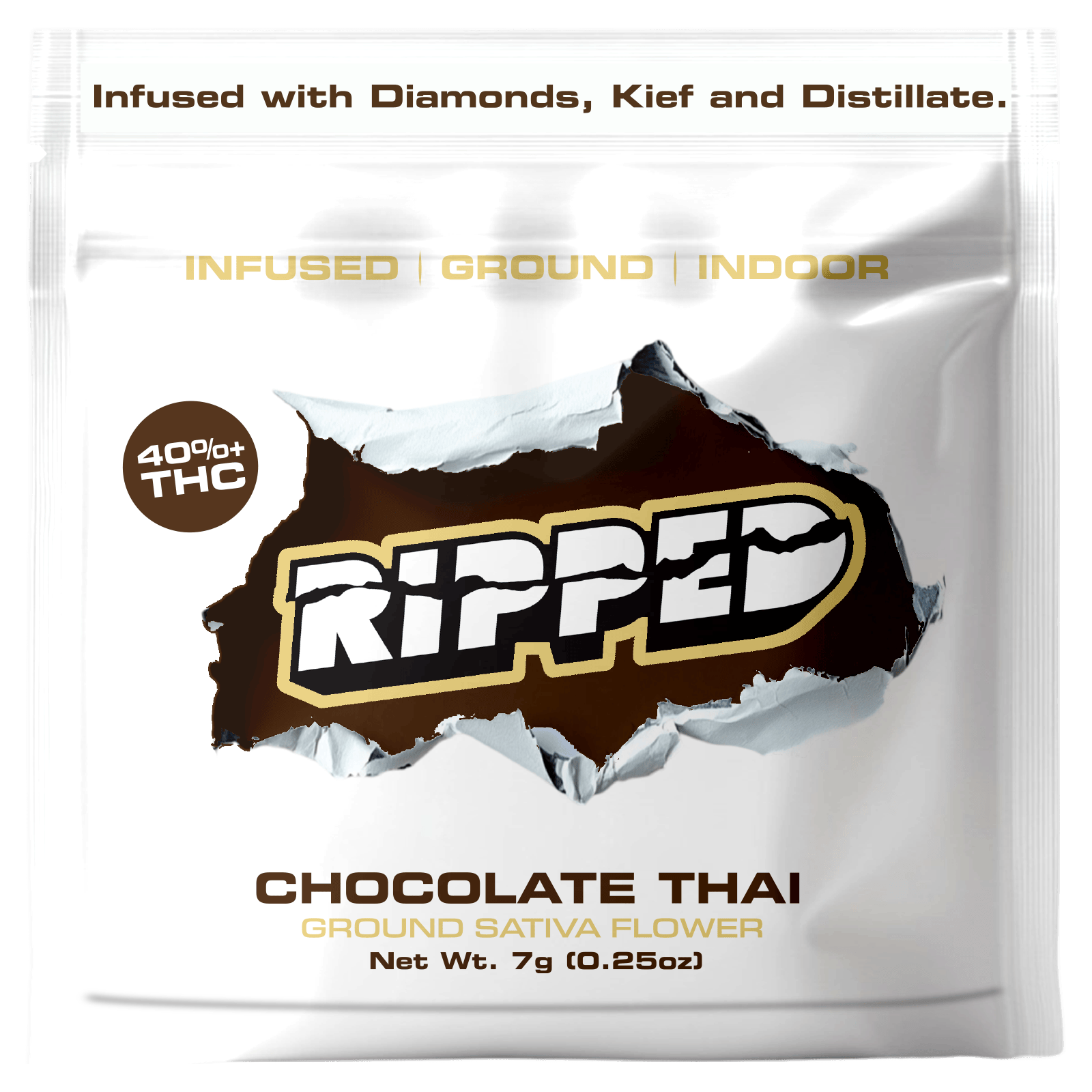
Sativa-Hybrid
All strains Chocolate Thai
1 live products in stock
Quick answer · What is the Chocolate Thai cannabis strain?
Chocolate Thai is a storied landrace sativa with roots stretching back to the Thai stick era of the 1970s, carrying with it a legacy that few modern strains can claim. Its earthy, dark-chocolate aroma and gently euphoric, cerebral lift speak to a quieter, more contemplative kind of cannabis experience — one that unfolds slowly, rewards patience, and reminds the discerning consumer that provenance and character matter as much as potency.
Shop Chocolate Thai · 1 of 1 live products
About Chocolate Thai
Everything to know about Chocolate Thai.
Lineage & origin
Chocolate Thai traces its origins to pure Thai landrace genetics, the same equatorial sativa stock that fueled the legendary Thai stick trade throughout the late 1960s and 1970s. These plants were cultivated in the highlands and river valleys of Thailand, traditionally hand-manicured around bamboo skewers and exported to the United States, where they earned a devoted following among connoisseurs for their unusually clean, soaring cerebral effects and unmistakable cocoa-tinged aroma. The strain as it is understood today is widely considered a stabilized or selectively preserved expression of those original Thai landrace genetics, though pinning down a single breeder or a precise release year is difficult — the lineage predates the modern seed-bank era, and much of its history passed through informal networks of collectors rather than commercial catalogues. Dutch Passion has been associated with preserving Thai genetics during the 1980s, and various American seed companies later worked with similar Thai stock, but Chocolate Thai specifically does not have one universally credited originator. Genetically, Chocolate Thai is sometimes cited as a parent or early ancestor of strains such as Haze and its many descendants, given that Thai sativa genetics contributed heavily to the original Haze line developed in Santa Cruz in the 1970s. This places Chocolate Thai in a historically significant position within the cannabis family tree, functioning as a progenitor rather than a derivative — a distinction that makes it genuinely rare in today's hybrid-saturated market.
Effects
The experience of Chocolate Thai is characteristically sativa in its arc, though its landrace origin gives it a texture that differs subtly from modern, high-THC sativa hybrids. Onset tends to be gradual — typically ten to twenty minutes when smoked, somewhat longer when vaporized at lower temperatures — building with a gentle, almost meditative pressure behind the eyes before expanding into a clear, open-headed mental state. There is little of the sharp, anxious edge that some potent sativas can produce; instead, the elevation feels measured and thoughtful. At its peak, the experience is primarily cerebral: associative thinking tends to flow freely, sensory perception is subtly heightened, and many consumers report an enhanced appreciation for music, visual art, or sustained conversation. The body remains relatively unencumbered, a hallmark of pure sativa lineage, which allows for continued physical activity rather than sedation. Duration aligns with its equatorial heritage — a slow, extended ride that can run two to three hours before a gentle, undramatic comedown. Terpene science offers some context: the strain's terpinolene content, where present, is associated with uplifting, occasionally euphoric qualities, while myrcene at modest levels contributes a mild physical ease without heaviness. Ocimene, another terpene documented in some Chocolate Thai phenotypes, is linked to light, airy mood elevation. As with any cannabis product, individual responses vary, and those new to sativa-leaning cultivars are encouraged to start low and go slow.
Aroma, flavor & terpenes
The aroma profile of Chocolate Thai is its most singular quality, and the attribute most frequently cited by long-term enthusiasts as the reason they return to it. The dominant impression is of roasted cacao — not sweet chocolate, but the dry, slightly bitter character of dark couverture or raw cacao nibs. Beneath that, a layer of warm earth and dry spice emerges, reminiscent of sandalwood, aged black pepper, and dried herbs. This complexity is largely attributed to a terpene profile in which myrcene provides the earthy, slightly musky base, and caryophyllene delivers the peppery, woody warmth. Terpinolene contributes a faintly floral and herbal brightness that lifts the heavier base notes without overwhelming them, while ocimene adds a sweet, almost tropical whisper that experienced palates may detect on the back of a slow exhale. Humulene, found in some phenotypes, introduces a subtle hop-like bitterness that reinforces the overall dryness of the profile. Together, these terpenes create a layered aroma that rewards close attention — opening up progressively as the material warms. On the palate, the smoke or vapor is notably smooth for a sativa of this lineage, with an initial cocoa and spice impression that transitions into a clean, slightly resinous finish. Vapor at moderate temperatures tends to preserve the lighter aromatic notes more faithfully, allowing the tropical and floral nuances to surface alongside the dominant chocolate-earth character. The aftertaste is long and dry, reminiscent of unsweetened espresso.
Appearance
Chocolate Thai carries the visual signature of its equatorial landrace heritage: buds tend toward an airy, elongated structure rather than the dense, compact formation associated with indica-dominant varieties. The calyxes are narrow and loosely stacked, forming long, tapered colas that retain the architecture of a plant adapted to hot, humid climates where tight bud structure would invite moisture-related issues. The color palette leans toward medium to deep green, occasionally showing olive or sage tones, with rust-colored to deep amber pistils that curl and twist across the surface in the manner typical of older sativa genetics. Trichome coverage is present but not particularly dense by contemporary standards — these are fine, crystalline glands that catch light with a subtle shimmer rather than the frosted, resinous blanket seen on modern OG or Cookies-family strains. In well-cultivated examples, the dried bud retains a slight stickiness and a pliable density that speaks to reasonable resin content despite the open structure.
Growing notes
Chocolate Thai presents a genuine challenge for home cultivators, and that difficulty is a direct function of its landrace sativa genetics. Originating near the equator, the plant is accustomed to long, consistent photoperiods and high humidity during its vegetative phase, followed by a gradual, extended transition into flower. Indoors, flowering time can range from eleven to fourteen weeks — significantly longer than most modern hybrids — which demands patience and careful environmental management. Vertical height can be considerable, requiring early and consistent training techniques such as topping or low-stress training to remain practical in a home-scale indoor setting. Outdoors, Chocolate Thai thrives in warm, subtropical climates with a long growing season and is best suited to regions where harvest can be delayed into late autumn without frost risk. Yield potential is moderate rather than prolific, reflecting the plant's energy investment in aromatic complexity rather than sheer floral mass. Difficulty is rated high for novice growers and intermediate to advanced for experienced cultivators. For the cultivator-curious dispensary shopper, understanding these parameters helps explain why authentic Chocolate Thai flower commands attention — the time and expertise required to bring it to market make it a comparatively rare find.
When it's best enjoyed
Chocolate Thai is well-suited to the unhurried hours of a creative afternoon or an early evening with no fixed itinerary. Its clear-headed, gently euphoric quality makes it a natural companion for activities that benefit from sustained focus without urgency — writing, sketching, exploring a new record collection, or wandering through a museum. The lack of heavy sedation means it does not foreclose physical engagement, making it equally appropriate for a slow walk through a park before the city quiets down. In terms of sensory pairings, the strain's roasted cacao and dry-spice terpene profile finds a natural counterpart in dark chocolate with high cacao content, or in a well-brewed single-origin pour-over coffee. On the musical side, the contemplative, layered nature of the experience aligns with jazz — particularly the kind of unhurried, modal recordings associated with the late 1950s and 1960s — or with ambient electronic music that rewards attentive listening. For those who enjoy social settings, Chocolate Thai lends itself to intimate conversation rather than large gatherings, encouraging depth over breadth and making it a thoughtful choice for a small dinner among people who like to talk slowly and well.
If you like Chocolate Thai, also explore
Haze
Sharing deep Thai sativa lineage, Haze offers a similarly cerebral, long-duration elevation with an earthy, spice-forward aroma that will feel immediately familiar to Chocolate Thai enthusiasts.
Durban Poison
Another pure landrace sativa, Durban Poison delivers the same clear-headed, focused mental lift and similarly complex terpene character for consumers who appreciate uncut genetic heritage.
Golden Tiger
A purposeful crossing of Malawi and Asian sativa genetics, Golden Tiger captures the same slow-building, expansive cerebral quality and exotic aromatic profile that defines classic Thai landrace strains.
Acapulco Gold
A fellow landrace sativa legend from the same era, Acapulco Gold shares the warm, earthy complexity and gentle, sustained euphoria that characterizes Chocolate Thai's experience arc.
Kali Mist
A sativa-dominant hybrid with Southeast Asian genetic roots, Kali Mist replicates much of Chocolate Thai's airy bud structure, clear functional high, and herbal-spice aromatic register.
Common questions
Is Chocolate Thai indica or sativa?+
Chocolate Thai is classified as a sativa-leaning cultivar, rooted in pure Thai landrace genetics that originate near the equator. Its effects align squarely with the sativa archetype — cerebral, clear-headed, and gently uplifting — with minimal body sedation. While most cannabis sold today exists on a hybrid spectrum, Chocolate Thai sits closer to the traditional sativa end of that continuum than nearly any commercially available strain.
What does Chocolate Thai taste like?+
Chocolate Thai has a distinctive flavor profile centered on roasted dark chocolate and dry earth, supported by notes of warm spice, sandalwood, and a faint tropical sweetness on the exhale. The smoke or vapor is smooth, finishing with a long, dry, espresso-like aftertaste. The cacao character is its most singular quality and the attribute most frequently cited by longtime enthusiasts as definitively recognizable.
What are the typical effects of Chocolate Thai?+
The experience is primarily cerebral and gently euphoric, with a gradual onset that builds into a clear, open-headed mental state over ten to twenty minutes. Associative thinking flows freely, sensory appreciation is mildly heightened, and the body remains largely unencumbered — allowing for physical activity or sustained focus. The experience tends to run two to three hours before a smooth, undramatic comedown. Those new to sativa strains are encouraged to start with a modest amount.
What strains are similar to Chocolate Thai?+
Consumers who appreciate Chocolate Thai's landrace character and cerebral lift often enjoy Haze, Durban Poison, Acapulco Gold, Kali Mist, or Golden Tiger. Each shares some combination of pure or near-pure sativa genetics, an earthy and complex aromatic profile, and a clear-headed, functional elevation that distinguishes older landrace and landrace-adjacent cultivars from contemporary high-THC hybrids.
Is Chocolate Thai good for beginners?+
Chocolate Thai can be approachable for beginners specifically because its potency tends to be moderate relative to modern hybrids, and its onset is gradual rather than abrupt. However, its sativa character means that those sensitive to cerebral effects, elevated heart rate, or racing thoughts should exercise caution. As with any cannabis product, starting with a small amount and waiting to assess the full effect before consuming more is the prudent approach.
What are the dominant terpenes in Chocolate Thai?+
Chocolate Thai's most frequently documented terpenes include myrcene, which provides the earthy, musky base; caryophyllene, responsible for the peppery, woody warmth; terpinolene, which contributes floral and herbal brightness; and ocimene, which adds a light, sweet, tropical note. Humulene is present in some phenotypes, lending a dry, hop-like bitterness. Together, these terpenes account for the strain's distinctive roasted cacao and spice aromatic signature.
Why is authentic Chocolate Thai so rare?+
Authentic Chocolate Thai is scarce for several interconnected reasons: its equatorial landrace origins make it genetically distinct from the indica-heavy hybrids that dominate commercial cultivation; its eleven-to-fourteen-week flowering period is economically impractical for most large-scale growers; and the original Thai stick seed stock has been difficult to preserve and stabilize over decades. Finding verified, well-grown Chocolate Thai flower represents a genuine discovery for the serious cannabis consumer.
What is the best time of day to consume Chocolate Thai?+
Chocolate Thai is best suited to daytime or early evening use. Its clear, cerebral elevation supports productive and creative engagement during daylight hours, while its lack of sedation makes it unsuitable as a nightcap for those who need to wind down toward sleep. The ideal window is an unhurried afternoon or the transitional hour between late afternoon and early evening, when its contemplative quality can be appreciated without competing demands on attention.
Related strains