THC 37.78%Sativa
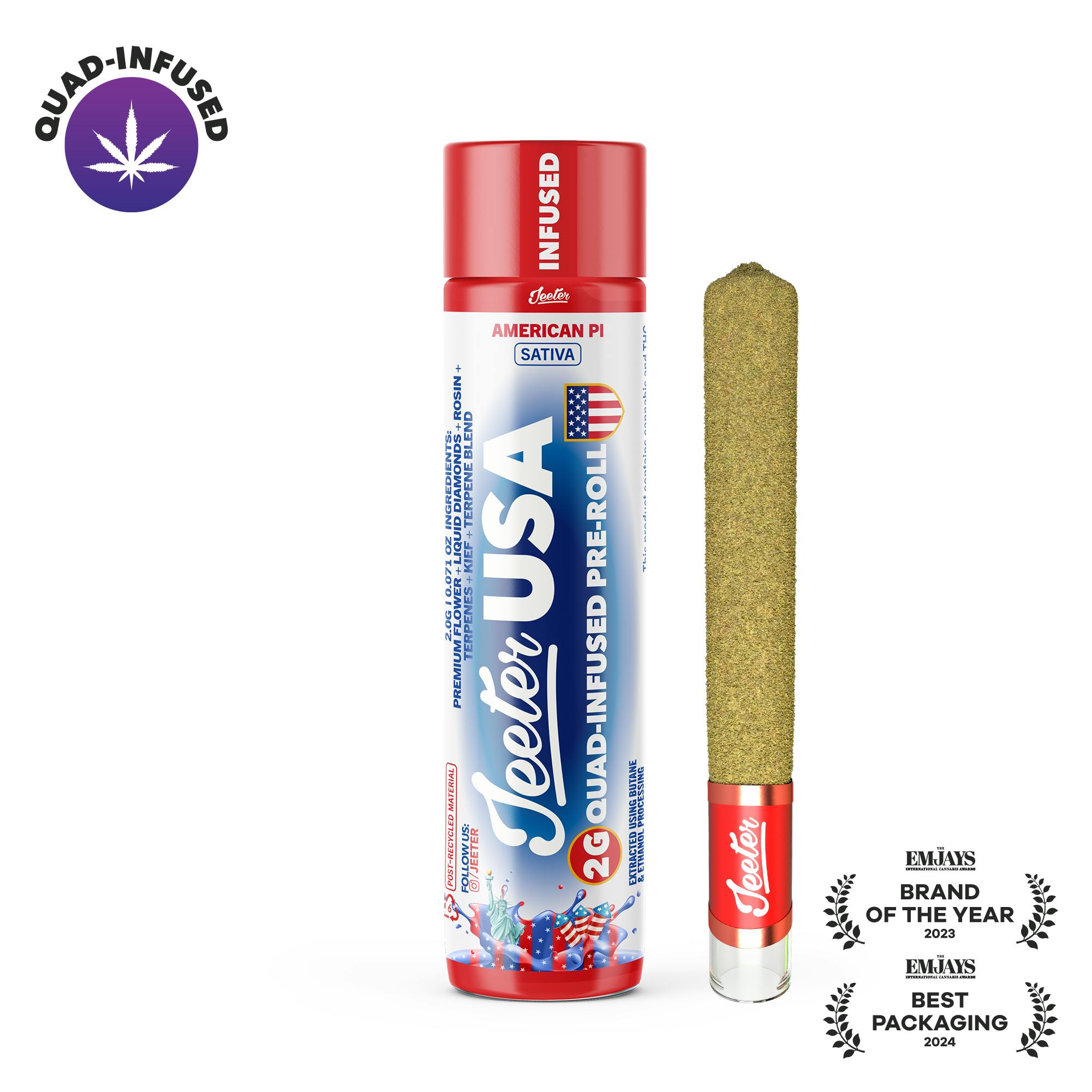
JeeterJeeter American PI Infused W/ Liquid Diamonds, Rosin, Dusted In Kief Glass Tip Joint - Sativa · 2g
$44.25
$50after tax

weeddispensarynearme.com
You must be 21 years or older to enter. By entering, you confirm you’re of legal age in your state to purchase cannabis.
For use only by adults 21+ • Keep out of reach of children
3 live products in stock
Quick answer · What is the American PI cannabis strain?
American PI carries the unhurried confidence of a classic sativa — a strain whose name nods to both patriotic terroir and the mathematical elegance of its construction. Earthy pine and bright citrus open the nose before a clear-headed, expansive cerebral lift settles in. This is flower for the curious mind: measured, articulate, and built for the kind of afternoon that rewards attention to detail.
$50after tax
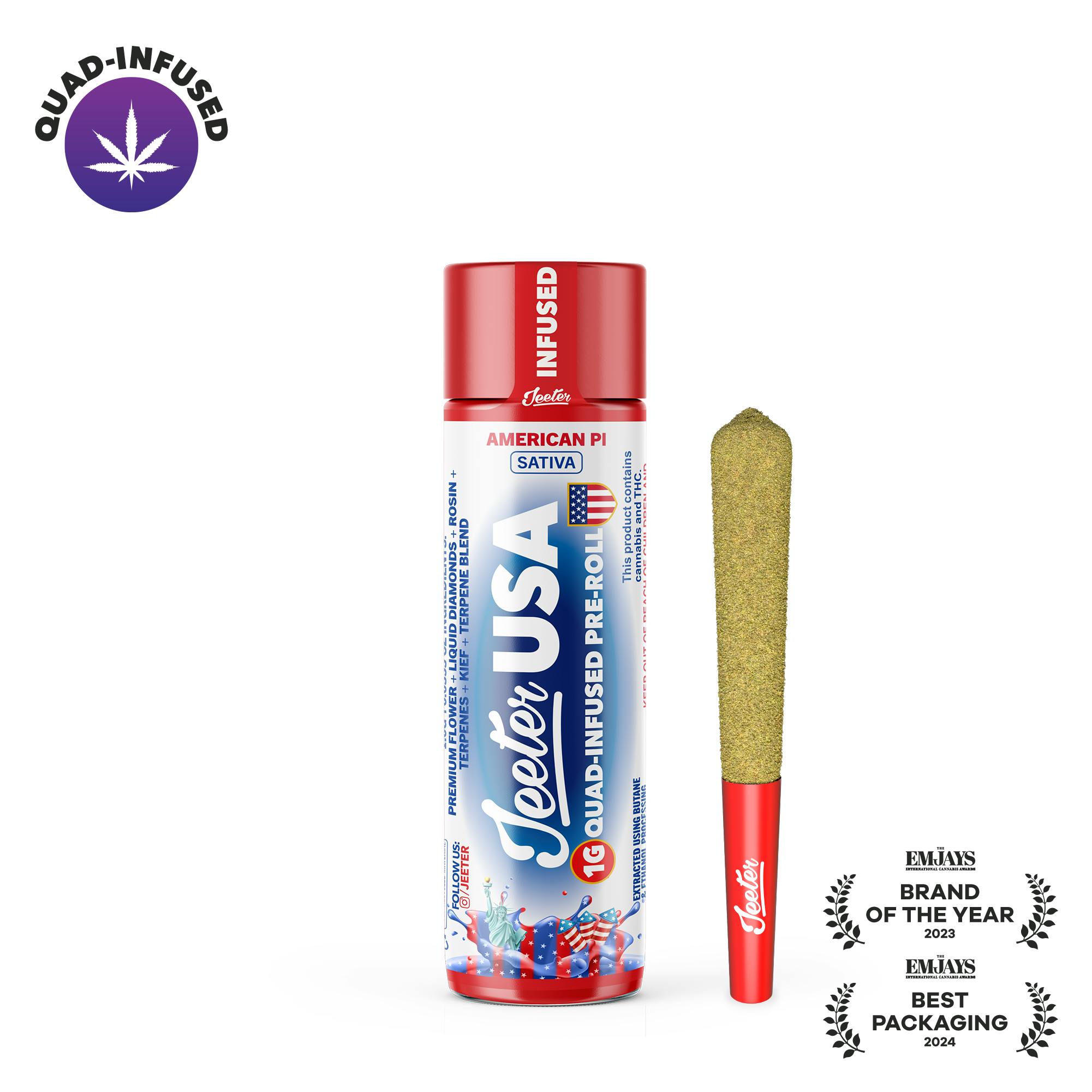
$29after tax
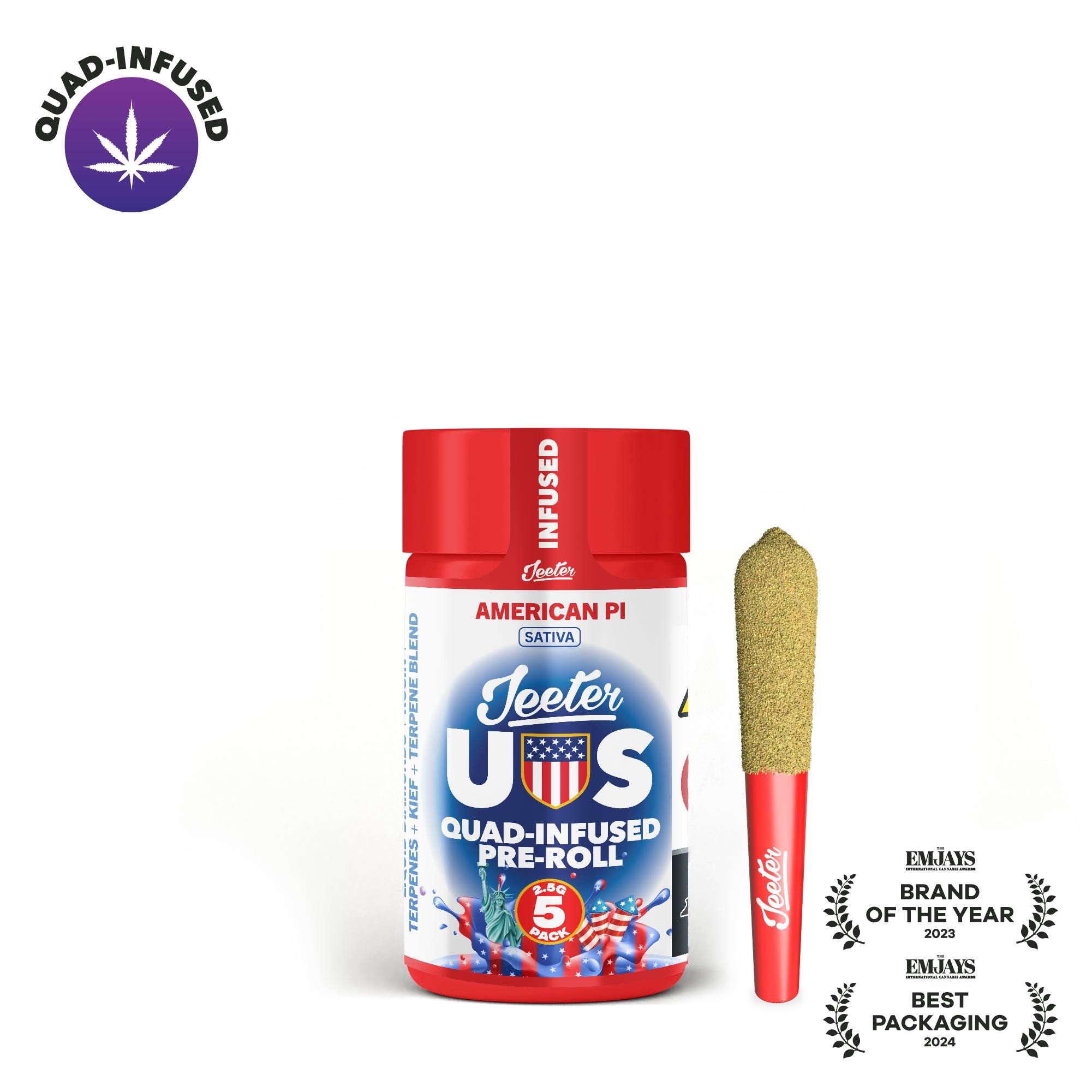
$62after tax
About American PI
American PI's precise genetic lineage has not been exhaustively documented in public breeder databases, which is not uncommon for craft sativa selections that circulate through independent American seed circles before reaching licensed cultivators. What is generally understood is that American PI draws from a heritage of domestic sativa-leaning genetics, likely tracing through classic American landrace-influenced lines that gained prominence in the Pacific Northwest and Northern California breeding scenes of the early 2000s. Some catalogues suggest an affinity with Haze-adjacent parentage — the kind of tall, resinous sativa architecture that defined American artisanal cultivation during that era. The 'PI' designation is sometimes interpreted as a reference to a specific phenotype index or an homage to the strain's layered, seemingly infinite aromatic complexity. The breeder of record has not made a formal public statement naming the precise cross, which means the lineage should be treated as partially contested. What distinguishes American PI within its genetic family is a notable terpene consistency across grows — a quality that suggests deliberate, stabilized selection rather than an accidental open-pollination. Genetic siblings or comparable expressions include other domestically bred sativa-forward hybrids that prioritize cerebral clarity and piney, citrus-forward terpene profiles. American PI occupies a lineage space that feels intentionally American in character — less tropical, more woodlands — separating it meaningfully from equatorial Haze descendants.
The onset of American PI tends to arrive within five to ten minutes of inhalation — relatively prompt for a sativa-leaning cultivar — presenting first as a gentle pressure behind the temples that quickly resolves into an expanded sense of mental space. Thoughts arrive with more velocity, associations form with ease, and the social register opens. This early cerebral character is consistent with elevated limonene and pinene expressions, both of which are associated in the research literature with mood elevation and alertness. At peak, roughly twenty to forty-five minutes in, American PI reveals a balanced quality that distinguishes it from more aggressive sativas: the mind remains active and exploratory, but a quiet physical ease prevents the session from tipping into anxious territory. This is not a strain that pins you to the couch, nor one that sends the heart racing. The body feels present — lightly warmed, peripherally relaxed — while the mental foreground stays clear. The duration is moderate, typically running two to three hours before a gradual, uneventful comedown. There is rarely a sharp drop; instead, the lifted quality softens into a calm, grounded state. Caryophyllene's known interaction with CB2 receptors likely contributes to the mild body ease that smooths the latter portion of the experience. Newcomers and seasoned consumers alike benefit from a measured, start-low-go-slow approach, particularly given the strain's clear initial sativa energy.
The terpene architecture of American PI is dominated by a triad of pinene, limonene, and myrcene, with caryophyllene playing a significant supporting role. Alpha-pinene leads on the nose with a crisp, forest-floor clarity — sharp without being medicinal, evoking fresh-cut Douglas fir and cool morning air in a conifer grove. Limonene adds brightness and lift, introducing a sun-warmed lemon rind quality that sits just beneath the pine and prevents the overall profile from reading as austere. On a more careful inhale, myrcene introduces a subtle earthy musk — faintly herbal, almost hoplike — that rounds the top notes and gives the aroma profile its depth and staying power. This earthy foundation is what separates American PI from purely citrus-forward sativas; there is genuine complexity here, a sense of terroir. Caryophyllene contributes a faint, dry spice note on the back end, not unlike fresh-cracked black pepper, which adds a savory dimension that carries over into the flavor. On the palate — whether consumed via flower or vaporizer — the smoke or vapor opens with that same pine-citrus clarity before settling into a smoother, slightly resinous mid-palate. The finish is clean, with a gentle herbal warmth and a whisper of spice. Vaporizing at lower temperatures (around 170–185°C) is widely reported to best preserve the limonene brightness and the more volatile pinene notes, producing a particularly refined and articulate flavor experience.
American PI's buds reflect its sativa heritage in structure: the calyxes tend to stack loosely rather than compressing into the dense, rounded nuggets associated with indica-dominant cultivars. The overall form is elongated and somewhat airy, with visible layers of leaf and calyx separation that give each bud a textured, architectural quality. This is not a strain that impresses through brute density alone; its appeal is more nuanced. The color palette runs from a medium sage green at the core to brighter, almost yellow-tinged lime at the tips of well-grown specimens — a characteristic often associated with elevated limonene content during final flower development. Pistils are plentiful and tend toward a warm amber-orange, weaving through the bud structure with an almost organic, unplanned elegance. Trichome coverage is generous for a sativa expression: a fine, even frost of capitate-stalked trichomes coats the sugar leaves and calyxes, catching light with a soft, silvery sheen that signals careful cultivation and a complete cure.
American PI is considered a moderately challenging cultivar, best suited to growers with at least one or two full cycles of experience under their belts. Its sativa lineage means it stretches considerably during the vegetative phase and can nearly double in height through the first weeks of flower — a trait that demands either significant vertical space indoors or a well-managed outdoor plot with room to spread. Indoors, a flowering window of approximately nine to ten weeks is generally reported, placing it on the longer end for domestically bred sativas. Yields are moderate to good under optimized conditions, with light-deprivation or carefully managed photoperiods helping to focus the plant's energy into resin-rich flower production rather than excessive foliage. Outdoor cultivation suits climates with long, warm growing seasons — Northern California and the Pacific Northwest represent its ancestral terroir — where the extra sun exposure allows the terpene profile to fully develop. Humidity management in the final weeks of flower is important given the looser bud structure, which can be more susceptible to moisture retention than tightly packed indica forms. For the cultivator-curious consumer, American PI rewards patience and attentiveness in equal measure.
American PI is most at home in the hours between late morning and early evening — the window when the day still holds possibility but the pressure of obligation has begun to ease. It suits solo creative work particularly well: the mental clarity and associative quality of the cerebral lift make it a natural companion for writing, drawing, or the kind of unhurried problem-solving that benefits from a looser, more lateral approach to thinking. It is equally at ease in an intimate social setting — a small gathering where conversation is the entertainment. The strain's balanced character means it does not isolate the consumer inside their own thoughts; rather, it tends to make verbal exchange feel more fluid and ideas more shareable. On the food pairing front, the pine and citrus terpene profile aligns naturally with herbaceous, bright-flavored cuisine: think grilled fish with preserved lemon, a shaved fennel salad, or a well-made gin and tonic for those who appreciate complementary botanical notes. For a sonic pairing, unhurried jazz — Evans, Coltrane's quieter recordings — or carefully produced ambient electronic music provides an ideal counterpoint to the strain's alert but unhurried character.
Jack Herer
Fans of Jack Herer's classic pine-and-spice sativa clarity will find American PI occupies a closely related terpene and effect space, with a slightly earthier, more grounded character.
Durban Poison
Those who appreciate Durban Poison's clean, energetic cerebral lift and anise-forward aromatic brightness will recognize a similar sativa intentionality in American PI, though American PI leans more toward pine than sweet anise.
Super Silver Haze
Super Silver Haze fans drawn to that cultivar's long-lasting, socially engaging head effect will find American PI delivers a comparable experience with a more distinctly domestic, woodsy terpene signature.
Green Crack
Consumers who seek Green Crack's sharp mental focus and citrus-forward aroma will find American PI offers a similar trajectory, with a softer physical component and a more complex aromatic middle register.
Trainwreck
Trainwreck admirers who value that strain's piney, lemon-diesel complexity and versatile sativa energy will find American PI a refined, somewhat calmer expression of the same broad terpene family.
American PI is classified as a sativa-leaning cultivar. Its growth structure, effect profile, and terpene expression all reflect sativa heritage — characterized by a tall, open bud structure, a cerebral and uplifting onset, and a relatively extended flowering window. While all modern cannabis cultivars carry some degree of hybrid genetics, American PI leans decisively toward the sativa end of the spectrum in both character and experience.
American PI delivers a layered palate built on fresh pine, bright lemon rind, and a subtle earthy musk. The finish carries a gentle, dry spice note — likely attributable to caryophyllene — that adds savory depth to what might otherwise read as a purely citrus-and-forest profile. On vapor, the flavor is particularly clean and articulate, with the pine and lemon notes most prominent at lower temperature settings.
American PI typically produces a clear-headed, cerebral lift that arrives within five to ten minutes and peaks as an expanded sense of mental energy, improved verbal fluency, and mild physical ease. It is neither sedating nor aggressively stimulating — a quality that makes it broadly approachable for daytime use. The experience tends to last two to three hours, with a gradual, uneventful comedown. As with any cannabis, a start-low-go-slow approach is recommended.
Consumers who enjoy American PI often find common ground with Jack Herer, Durban Poison, Super Silver Haze, Green Crack, and Trainwreck — all sativa-forward cultivars that share some combination of pine, citrus, or spice terpene character and a mentally engaging, uplifting effect profile. American PI sits among these with a distinctly domestic, woodsy quality that sets it apart from more tropical or fuel-forward expressions.
American PI is sativa-leaning and delivers a meaningful cerebral lift, which means beginners should approach it with appropriate care. The strain's relatively balanced character — physical ease tempering the mental energy — makes it more forgiving than some aggressive sativas. That said, first-time or infrequent consumers are always advised to start with a small amount, allow adequate time to assess the effect before continuing, and choose a comfortable, familiar setting for the session.
American PI's terpene profile is led by alpha-pinene, which delivers the strain's signature conifer and fresh-air aroma. Limonene follows closely, contributing the bright citrus character on both the nose and palate. Myrcene provides an earthy, herbal foundation that adds aromatic depth, while caryophyllene rounds the profile with a dry, peppery spice note. Together, these four terpenes define the strain's distinctive pine-citrus-earth signature.
American PI is best suited to daytime and early evening use. Its sativa-leaning, mentally activating character makes it a natural fit for the late morning through late afternoon window — ideal for creative sessions, active socializing, or any pursuit that benefits from mental clarity and a measured lift in energy. Consuming close to bedtime is generally not recommended for those sensitive to stimulating cultivars, as the cerebral quality may delay relaxation and sleep onset.
There is no widely documented record of American PI placing at major cannabis competitions such as the High Times Cannabis Cup or similar events in publicly available sources. This is not unusual for craft or regionally distributed cultivars that circulate primarily within licensed state markets rather than competing on an international stage. Its reputation appears to rest on consistent terpene quality and a loyal following among sativa enthusiasts rather than formal competition accolades.
Related strains
Pick your store
We'll show pricing, deals, and delivery zones for the store you pick. You can switch any time from the header.