On sale· 30% OFF
THC 32.8%Hybrid
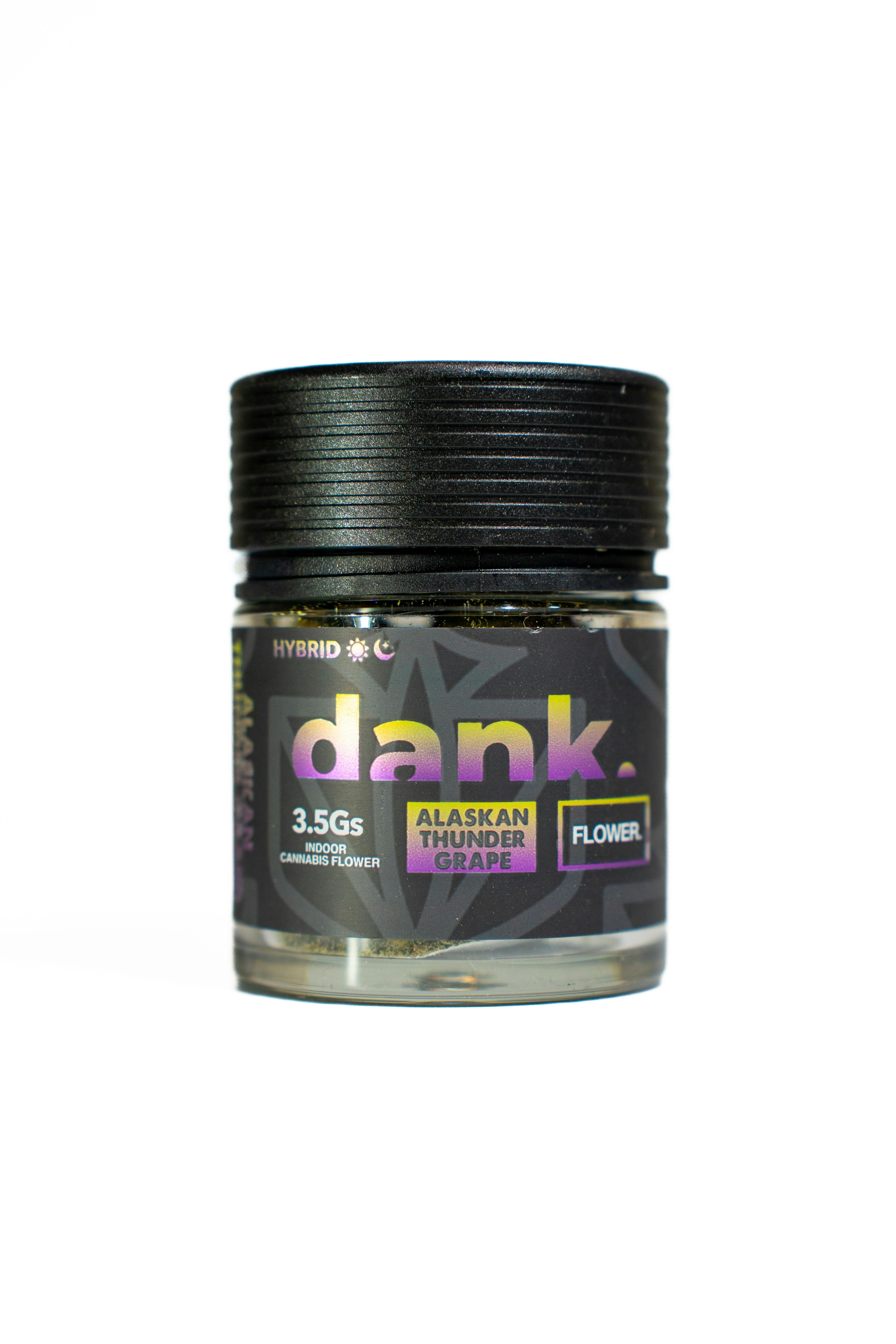
Dank By Definition.ALASKAN THUNDER GRAPE · 3.5g
$37.17$53.10
$44after tax

weeddispensarynearme.com
You must be 21 years or older to enter. By entering, you confirm you’re of legal age in your state to purchase cannabis.
For use only by adults 21+ • Keep out of reach of children
1 live products in stock
Quick answer · What is the Alaskan Thunder Grape cannabis strain?
Alaskan Thunder Grape arrives as a quietly compelling hybrid — a strain whose name conjures the raw, open wilderness of the far north and the deep, fruit-forward richness of a late-harvest vine. Balancing an energetic lift with a grounding undercurrent, it draws in those who seek both clarity and ease. The grape-tinged aroma is immediately distinct, and the experience that follows rewards the patient and the curious alike.
$44after tax
About Alaskan Thunder Grape
Alaskan Thunder Grape is understood to be a cross of Alaskan Thunder Fuck (ATF) and a grape-forward variety — most commonly cited as Grape Ape, though some phenotype discussions reference Grape Stomper or similarly terpene-rich purple cultivars. The breeder has not been publicly and definitively named in widely available sources, placing this strain in the category of community-cultivated genetics that emerged through the Pacific Northwest and Northern California underground market before finding broader commercial footing in the legal era. Alaskan Thunder Fuck, the foundational parent, is itself a legendary sativa-leaning landrace or near-landrace variety originating from the Matanuska Valley of Alaska. Its history stretches back to at least the 1970s, when it was cultivated in the Matanuska-Susitna Valley by local growers who reportedly crossed it with Afghani and possibly Ruderalis genetics over time, though the original strain's precise lineage remains a matter of some debate among cannabis historians. ATF became influential for its potent cerebral clarity and distinctive earthy-pine-fuel aroma. The Grape Ape parent — if confirmed — brings deep Afghani and Skunk No. 1 genetics by way of Mendocino Purps, contributing the vivid purple coloration and sweet, concord-grape fragrance that define Alaskan Thunder Grape's secondary personality. The pairing results in a hybrid that threads ATF's northern sharpness through a softer, fruit-laden genetic lens, producing a strain that feels simultaneously grounded and bright.
Onset for Alaskan Thunder Grape is typically measured, arriving within five to fifteen minutes of inhalation as a gentle cerebral brightening — a widening of focus rather than an abrupt jolt. This initial phase is consistent with ATF's sativa heritage and the likely presence of limonene and terpinolene, both associated with uplifting, mood-elevating qualities in the broader terpene literature. The mind tends to feel more open, observational, and lightly energized without tipping into restlessness or anxiety for most experienced consumers. As the experience deepens toward its peak — generally between thirty and sixty minutes in — the body becomes increasingly involved. A warmth settles through the limbs and shoulders, a nod to the indica-leaning grape parentage and its myrcene and caryophyllene load. The hybrid character becomes most apparent here: neither fully sedating nor purely cerebral, it occupies a comfortable middle register that many find well-suited to daytime or early-evening use. Conversation flows easily, creative thought moves at a productive pace, and physical ease arrives without the heaviness of a deeply sedating indica. The comedown is typically gradual and gentle, fading over one to two hours into a mild, pleasant relaxation. Those with lower tolerance are encouraged to approach this variety with the standard start-low, go-slow posture, as the balance between its two parent strains can read differently depending on the specific phenotype and individual biochemistry.
The aromatic profile of Alaskan Thunder Grape opens on a wave of sweet, dark fruit — concord grape and berry lead the nose, likely attributable to the terpene myrcene (earthy, musky, fruity) and the presence of ocimene (floral, sweet, herbaceous) in the canopy of volatiles. These are supported by a secondary note of pine and cool, green earthiness drawn directly from the ATF lineage, where alpha-pinene contributes that clean, almost glacial clarity reminiscent of northern boreal forests. Beneath the fruit and pine, a layer of spice and mild fuel-like sharpness surfaces — this is the signature caryophyllene (peppery, woody) and humulene (earthy, subtly hoppy) contribution, lending depth and preventing the profile from tipping into simple sweetness. Some phenotypes also display a trace of linalool, adding a barely perceptible floral note that softens the spice and rounds the overall bouquet into something more complete. On the palate, whether smoked or vaporized, Alaskan Thunder Grape presents as grape and berry on the inhale, with a piney, lightly spiced exhale. Vapor tends to highlight the fruit notes more cleanly, while combustion draws out the earthier, more resinous undertones from the ATF parentage. The finish is smooth and lingering, with a faint sweetness that remains on the palate for several minutes.
Alaskan Thunder Grape produces buds that reflect both sides of its parentage with notable visual character. The structure leans toward medium density — not the brick-hard compression of a pure indica, nor the loosely stacked, elongated form of a classic sativa. Calyxes are rounded and layered, coated in a generous and well-developed trichome frost that gives the surface a silver-white luminosity under direct light. Coloration is one of this strain's most immediately striking attributes. Deep forest green forms the base, threaded through with purple and violet hues in the leaves and sugar leaves — a direct inheritance from the grape parentage that is often intensified by exposure to cooler nighttime temperatures during the final weeks of flowering. Pistils are vivid rust-orange to amber, curling generously across the bud surface and providing warm contrast against the cooler tones of the underlying canopy. Overall, the visual presentation is rich and layered — a bud that reads as genuinely premium on the shelf.
Alaskan Thunder Grape is considered a moderately challenging cultivar, suited to growers with at least a season or two of experience behind them. Indoors, flowering typically concludes in approximately eight to nine weeks, with yields that fall in the moderate-to-generous range under optimized conditions — reflecting the productive genetics inherited from both ATF and the grape parent. Training techniques such as low-stress training or screen-of-green setups tend to reward growers by opening up the canopy and improving light penetration. Outdoors, this strain appreciates a temperate climate with warm days and cooler nights toward the end of the season — the temperature differential is what coaxes out the characteristic purple coloration in leaves and flowers. It tends to be reasonably resilient, though its dense bud structure warrants careful attention to airflow and humidity management to reduce the risk of mold in the final weeks. For the cultivator-curious shopper, understanding that this variety's visual drama — the deep purples, the silver trichome coverage — is in part a product of deliberate environmental management offers an appreciation for what goes into producing a well-grown expression of this cultivar.
Alaskan Thunder Grape occupies a pleasantly versatile position in the day: it suits the late morning or early afternoon when the desire for mental engagement remains but the body welcomes a degree of ease. It is a strain that pairs particularly well with creative work that requires sustained, low-pressure focus — illustration, writing, playlist curation, or slow photography walks through a city neighborhood. The ATF-derived clarity and the gentle grape-terpene warmth work together in a way that neither overstimulates nor sedates. For pairing, the deep fruit and earthy pine notes find a natural counterpart in a well-composed charcuterie arrangement — cured meats, aged cheese, dark fruit preserves, and a cracker with some mineral quality. Musically, something that threads structure with warmth aligns well: modern jazz with a contemplative pace, or ambient folk with an open, airy production. On cooler evenings, this strain transitions naturally into a social setting — a small gathering where conversation ranges across topics without particular urgency. It is not a strain for high-exertion activity, but it sits comfortably alongside the kind of purposeful leisure that marks a well-considered afternoon or evening.
Alaskan Thunder Fuck
As the foundational parent, ATF shares the cerebral clarity, piney earthiness, and northern-terrain character that define Alaskan Thunder Grape's upper register — a natural progression for those who want to understand the strain's genetic root.
Grape Ape
Sharing the deep grape aromatics, purple visual palette, and indica-leaning body warmth that define Alaskan Thunder Grape's softer dimension, Grape Ape offers a slower, more sedating expression of the same fruit-forward terpene profile.
Grape Stomper
A potent hybrid with a similarly sweet, grape-and-floral aroma and balanced cerebral-to-body effect arc, Grape Stomper appeals to consumers who value the fruit-forward nose of Alaskan Thunder Grape but prefer a slightly more euphoric peak character.
Purple Haze
For those drawn to Alaskan Thunder Grape's combination of sativa uplift, berry-sweet aroma, and striking purple coloration, Purple Haze offers a classic sativa-dominant expression of those same aesthetic and experiential notes.
Blue Dream
Blue Dream's approachable hybrid balance, blueberry-tinged sweetness, and gentle body ease make it a logical companion for Alaskan Thunder Grape fans seeking a widely available, similarly sessionable option with comparable terpene warmth.
Alaskan Thunder Grape is a hybrid, drawing from the sativa-leaning Alaskan Thunder Fuck and an indica-dominant grape variety, most commonly cited as Grape Ape. In practice, this means it tends to open with a brighter, more cerebral onset characteristic of its sativa parentage before settling into a body-easing warmth that reflects its indica heritage. Most consumers and cultivators classify it as a balanced to sativa-leaning hybrid depending on the specific phenotype.
The flavor profile centers on sweet dark fruit — concord grape and berry are most prominent — supported by a clean pine and light earthiness on the exhale. A subtle peppery spice from caryophyllene adds depth, preventing the profile from reading as purely sweet. Vaporizing the flower tends to accentuate the fruit notes, while combustion brings out a resinous, earthy quality drawn from the ATF parentage. The finish is smooth and gently sweet.
Consumers typically report an initial cerebral brightening — increased focus and a light, uplifted mood — followed by a gradual body ease that settles through the limbs without producing significant sedation. The hybrid balance makes it well-suited to daytime or early-evening use. Most accounts describe it as sociable and creatively engaging at moderate consumption levels. Individual experience varies, and those new to cannabis or with lower tolerance are encouraged to start slowly.
Consumers who enjoy Alaskan Thunder Grape often gravitate toward its parent strains — Alaskan Thunder Fuck for the cerebral clarity and earthy pine, and Grape Ape for the sweet fruit aroma and body ease. Grape Stomper offers a similarly euphoric, fruit-forward hybrid experience. Blue Dream and Purple Haze both share the accessible, berry-inflected character with a comparable balance of uplift and relaxation.
Alaskan Thunder Grape is a moderately potent hybrid, and while its balanced character is generally considered approachable, those new to cannabis should treat it with appropriate care. The sativa onset can feel more intense than expected for first-time consumers, and individual response to terpene-rich, hybrid cultivars varies. Adhering to a start-low, go-slow approach — beginning with a single small inhalation and allowing adequate time before continuing — is the sensible standard for any new consumer.
The dominant terpenes in Alaskan Thunder Grape are understood to include myrcene, which contributes the earthy, fruity base note; alpha-pinene, responsible for the clean piney sharpness; caryophyllene, which adds a peppery, spiced depth; and ocimene, which lifts the profile with sweet, floral-herbal brightness. Secondary contributors may include linalool and humulene, adding subtle floral and earthy complexity. This terpene combination accounts for both the distinctive grape-pine aroma and the strain's balanced effect character.
Alaskan Thunder Grape's hybrid balance positions it most naturally in the late morning through early evening window. The cerebral clarity of its ATF heritage makes it reasonably functional during daylight hours, while the body ease from its grape-indica side makes it equally suited to unwinding in the early evening. Most consumers find it less appropriate for nighttime use seeking deep sedation, and perhaps too settling for high-demand early-morning tasks, though individual response should always guide timing.
Alaskan Thunder Grape produces medium-density buds with a striking visual profile. Deep green calyxes are layered with purple and violet coloration — particularly pronounced in well-grown specimens exposed to cooler nighttime temperatures late in flowering. A generous silver-white trichome coverage gives the bud a luminous, frost-touched appearance, while vivid rust-orange to amber pistils curl across the surface, providing warm contrast against the cooler underlying tones. The overall presentation is visually distinctive and premium.
Related strains
Pick your store
We'll show pricing, deals, and delivery zones for the store you pick. You can switch any time from the header.