
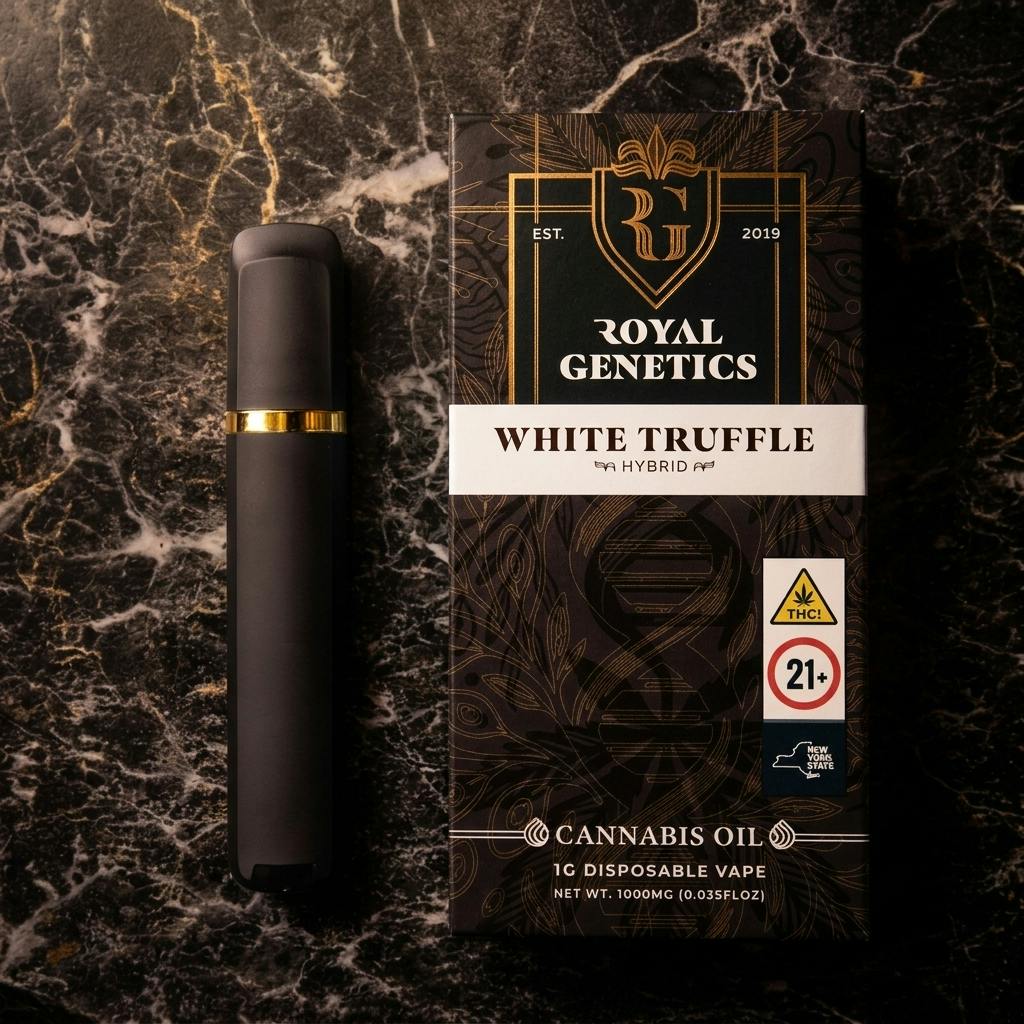
Hybrid
All strains White Truffle
2 live products in stock
Quick answer · What is the White Truffle cannabis strain?
White Truffle arrives with the quiet authority of a rare ingredient — earthy, pungent, and layered with a complexity that rewards the unhurried nose. An indica-leaning cultivar that has earned considerable respect in New York's adult-use market, it delivers a grounding, full-body experience anchored by a terpene profile as distinctive as its namesake fungus. This is a strain for the considered evening, not the hurried one.
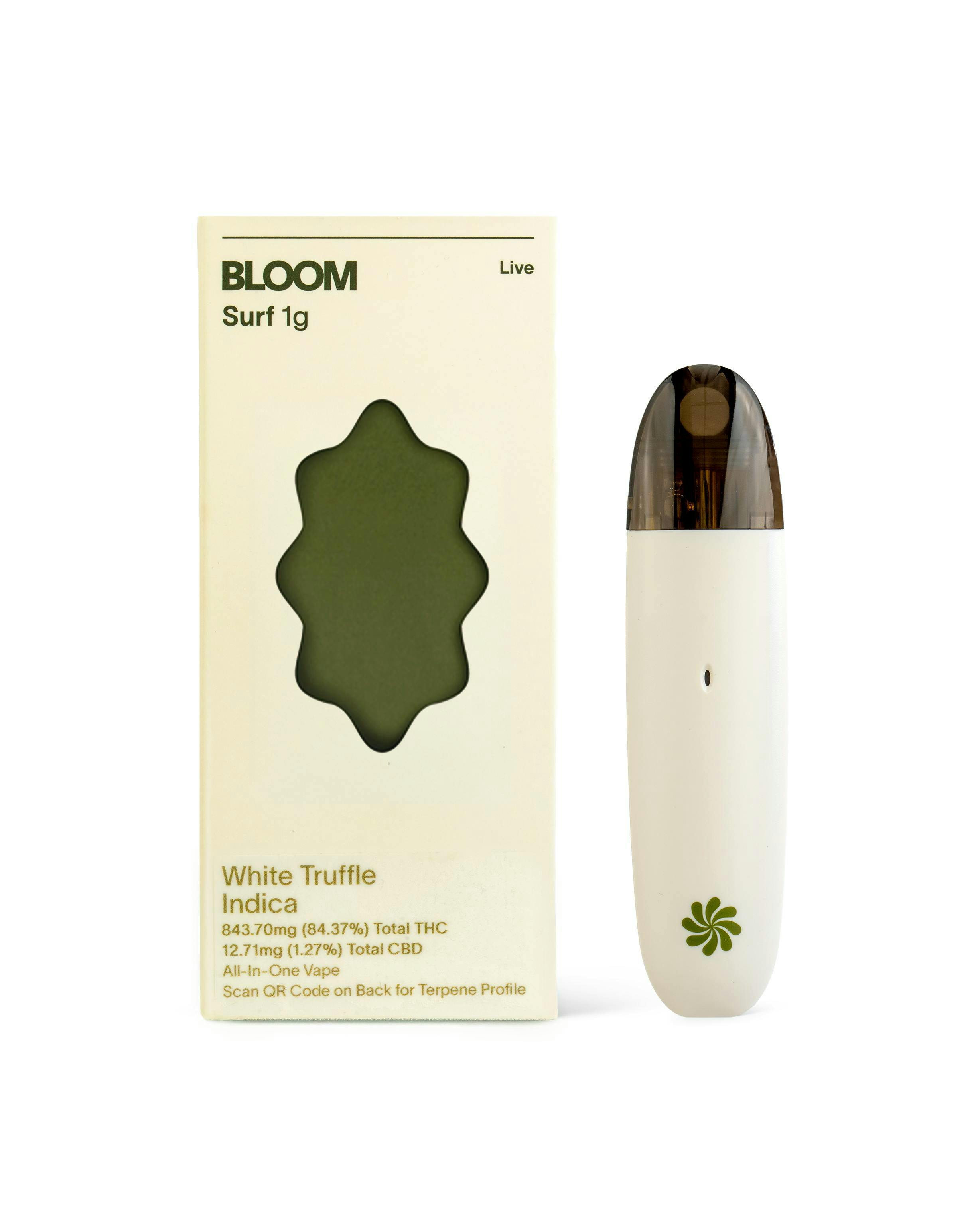
Shop White Truffle · 2 of 2 live products
About White Truffle
Everything to know about White Truffle.
Lineage & origin
White Truffle is generally attributed to Parabellum Genetics, a boutique breeding operation that gained underground recognition in the early 2020s for producing limited, high-quality cuts that circulated widely before formal commercial release. The strain is understood to be a phenotype selection of Gorilla Butter — itself a cross of Peanut Butter Breath and GG4 (formerly Gorilla Glue #4) — though some community sources describe White Truffle simply as a distinct Gorilla Butter pheno rather than a separate hybrid in its own right. Parabellum has not issued exhaustive public documentation of the precise selection process, which has led to some debate among cultivators and collectors about whether certain cuts marketed under the White Truffle name are true to the original. Gorilla Butter's parentage gives White Truffle a rich genetic foundation: Peanut Butter Breath, bred by ThugPug Genetics from Do-Si-Dos and Mendo Breath, contributes a nutty, floral sweetness and a sedating body character, while GG4 — one of the most decorated American hybrids of the 2010s — adds resin production and a diesel-forward pungency. White Truffle rose to prominence on the strength of its unusually dense trichome coverage and its funky, mushroom-like aroma, which differentiated it from the broader Gorilla Butter population. By 2022 and 2023, it had become a widely requested name in premium dispensaries along the East Coast.
Effects
White Truffle typically announces itself within five to ten minutes of inhalation — a gentle pressure behind the eyes and a softening of physical tension that signals its indica-dominant character. The onset is measured rather than abrupt, which gives newcomers a moment to calibrate before the experience deepens. Myrcene, present in notable concentrations, is associated in cannabis literature with sedating, muscle-relaxing qualities, and its influence becomes apparent as the session progresses. At its peak, White Truffle tends toward a heavy, whole-body warmth that anchors the user in place without entirely extinguishing mental clarity. Many who encounter it describe a pleasant cerebral haze — thoughts slow and soften rather than race — that coexists with pronounced physical ease. Caryophyllene, a terpene that interacts with CB2 receptors, may contribute to the strain's notably tranquil body quality, though the science on terpene-specific effects in whole-plant cannabis remains an evolving field. The experience typically sustains for two to three hours before tapering into a gradual comedown characterized by drowsiness and appetite stimulation. The finish is gentle rather than abrupt, making the transition into sleep or rest feel natural. Given the potency generally associated with GG4-lineage cultivars, those newer to cannabis are well served by the standard guidance: start low, go slow, and allow ample time between sessions.
Aroma, flavor & terpenes
The nose on White Truffle is its defining trait and the source of its name. The dominant aromatic impression is unmistakably earthy — damp forest floor, wild mushroom, and a faint petrichor quality that reads almost savory. This character is driven primarily by myrcene, whose herbal, musky profile forms the aromatic backbone of most indica-leaning hybrids with GG4 heritage. Secondary to myrcene, caryophyllene introduces a subtle spice — think cracked black pepper or clove — that adds dimension without sharpness. Digging deeper into the bouquet, a subdued sweetness emerges that echoes the Peanut Butter Breath parentage: faintly nutty, almost confectionary, with a whisper of vanilla or cream that softens the earthiness. Some phenotypes carry a discernible diesel or chemical note inherited from GG4, which adds an unexpected industrial edge to an otherwise organic aromatic profile. Linalool, when present, contributes a delicate floral quality that prevents the profile from becoming too heavy or one-dimensional. On the palate, White Truffle translates its aroma with reasonable fidelity. Combustion yields a thick, smooth smoke that coats the mouth with earthy funk and a lingering nuttiness on the exhale. Vapor at lower temperatures tends to foreground the floral and sweet notes while the earthiness recedes slightly, offering a cleaner read on the strain's more nuanced qualities. The finish is long, savory, and faintly resinous — appropriate for a strain named after one of the culinary world's most prized underground treasures.
Appearance
White Truffle's visual presentation reflects its genetic heritage without reservation. The buds are typically dense and compact — characteristic of indica-dominant structure — with a chunky, almost bulbous calyx formation that speaks to the GG4 influence. Trichome coverage is among the strain's most remarked-upon traits: a thick, frost-white resin layer blankets virtually every surface, including the sugar leaves, giving the flower a pale, almost silver-grey cast in certain lighting conditions. Beneath the trichome canopy, the underlying bud color ranges from deep forest green to a muted olive, with occasional phenotypes expressing subtle purple or lavender hues in the deeper leaf tissue — a response to temperature fluctuation during the final weeks of flowering. Pistils are typically amber to rust-orange and curl tightly against the calyxes, providing a warm contrast to the otherwise cool tonal palette. The overall impression is of a well-finished, premium-tier flower that requires little in the way of explanation.
Growing notes
White Truffle performs reliably in controlled indoor environments, where cultivators can manage temperature, humidity, and light cycles with precision — conditions that tend to maximize its trichome development and protect the aromatic profile from environmental degradation. Flowering time is generally reported in the range of eight to nine weeks, consistent with its indica-dominant genetics. Yields are considered moderate to moderately high indoors, with outdoor cultivation viable in temperate climates that can deliver a dry, warm finish to the season. The strain is considered intermediate in difficulty. Its dense bud structure, a trait inherited from both GG4 and Peanut Butter Breath, creates microclimates within the canopy that can invite moisture retention and the associated risks that entails, so airflow management and careful defoliation are noted considerations in the cultivator community. Training techniques that open the canopy — low-stress training or selective topping — are frequently recommended by experienced growers. For the cultivator-curious dispensary visitor, White Truffle represents an aspirational but achievable home grow project for those with some prior experience.
When it's best enjoyed
White Truffle is, by temperament, an evening strain — one that suits the hours after the workday's obligations have been satisfied and before sleep becomes the only ambition. Its grounding body quality and gentle mental softening make it well suited to solitary wind-down rituals: a quiet living room, low lighting, and an activity that rewards presence without demanding productivity. Reading, listening to music, or simply allowing the mind to drift are natural companions to its arc. For food pairings, the strain's savory, earthy terpene profile finds a natural counterpart in umami-rich dishes — a mushroom risotto, a well-aged cheese plate, or roasted root vegetables carry aromatic frequencies that harmonize rather than compete with the strain's character. On the audio side, the slow, layered compositions of artists in the ambient or jazz tradition — think late-period John Coltrane or Brian Eno's more contemplative recordings — match the unhurried pace White Truffle tends to encourage. It can, on occasion, serve a small and convivial gathering of friends comfortable with indica experiences, but its most natural audience is the solitary, intentional consumer who values depth over stimulation.
If you like White Truffle, also explore
Peanut Butter Breath
As a direct parent of White Truffle's Gorilla Butter lineage, Peanut Butter Breath shares the same nutty, floral earthiness and relaxing indica body quality that define the White Truffle experience.
GG4 (Gorilla Glue #4)
GG4 is the other foundational parent in White Truffle's genetic background, offering comparable resin density, a heavy-handed body effect, and the diesel-tinged pungency that anchors both strains.
Gelato 41
Fans drawn to White Truffle's premium trichome coverage and creamy exhale will find familiar comfort in Gelato 41's dense, frost-laden buds and its smooth, dessert-forward aromatic profile.
Mendo Breath
A grandparent strain by way of Peanut Butter Breath, Mendo Breath delivers a similarly sedating indica experience with a sweet, OG-adjacent earthiness that resonates with White Truffle's tonal character.
Grease Monkey
Another GG4-lineage indica hybrid with funky, diesel-meets-sweet terpene character and a pronounced body effect, Grease Monkey appeals naturally to those who appreciate White Truffle's earthy, resinous depth.
Common questions
Is White Truffle indica or sativa?+
White Truffle is an indica-dominant cultivar, generally understood as a phenotype selection of Gorilla Butter — a cross of Peanut Butter Breath and GG4. Its effects reflect that heritage: a grounding, body-forward experience with a gentle mental softening rather than the energetic, cerebral quality associated with sativa-leaning varieties. It is best approached as an evening or nighttime option rather than a daytime companion.
What does White Truffle taste like?+
White Truffle delivers a savory, deeply earthy palate experience that mirrors its namesake. The dominant impression on the inhale is damp, fungal earthiness underscored by subtle spice — caryophyllene contributing a pepper-like quality. The exhale carries a faint nuttiness and cream inherited from its Peanut Butter Breath lineage. Some phenotypes express a diesel note from the GG4 parentage. The finish is long, resinous, and distinctly savory.
What are the typical effects of White Truffle?+
White Truffle typically produces a measured, body-centered experience: physical tension releases gradually, muscles relax, and the mind settles into a comfortable, unhurried stillness. It is not strongly sedating in its early stages but tends toward drowsiness as the session progresses. Most people find the peak effect grounding and quietly euphoric rather than overwhelming, with the full experience lasting approximately two to three hours before easing into rest.
What strains are similar to White Truffle?+
Consumers who enjoy White Truffle are often drawn to its genetic relatives and aromatic neighbors: Peanut Butter Breath and GG4 share direct lineage and comparable resin output; Mendo Breath offers a similarly sedating, sweet-earthy profile; Gelato 41 appeals to those who value trichome density and a creamy finish; and Grease Monkey delivers the same GG4-adjacent funk with strong indica body character.
Is White Truffle good for beginners?+
White Truffle is an indica-dominant strain with a reputation for notable potency, owing to its GG4 and Peanut Butter Breath lineage. Those new to cannabis should approach it with standard adult-use caution: start with a very small amount, allow adequate time to gauge the onset before consuming more, and choose a comfortable, familiar setting. The effects build gradually, which can be deceptive — patience before re-dosing is the more prudent path.
What are the dominant terpenes in White Truffle?+
White Truffle's terpene profile is led by myrcene, which drives the strain's herbal, musky, earthy aroma and contributes to its relaxing body character. Caryophyllene follows, adding a peppery spice note and interacting with the body's CB2 receptors. Linalool may appear in certain phenotypes, contributing subtle floral softness. Together, this combination produces a complex, savory aromatic experience that distinguishes White Truffle from more fruit-forward or diesel-dominant contemporary cultivars.
Who bred White Truffle and what is its lineage?+
White Truffle is widely attributed to Parabellum Genetics and is generally described as a phenotype of Gorilla Butter — a cross of Peanut Butter Breath (Do-Si-Dos x Mendo Breath, by ThugPug Genetics) and GG4. Parabellum has not released exhaustive public documentation of the selection process, and some community debate exists around whether all commercially available White Truffle cuts trace authentically to the original Parabellum selection.
When is the best time of day to enjoy White Truffle?+
White Truffle is best suited to the evening or late afternoon — once the day's practical obligations are complete. Its indica-dominant effect arc, which moves from gentle physical relaxation toward drowsiness over two to three hours, does not pair naturally with tasks requiring focus, mobility, or sharp decision-making. It is a deliberate, wind-down cultivar, most at home in low-demand, comfortable settings where its slower, more introspective qualities can be fully appreciated.
Related strains